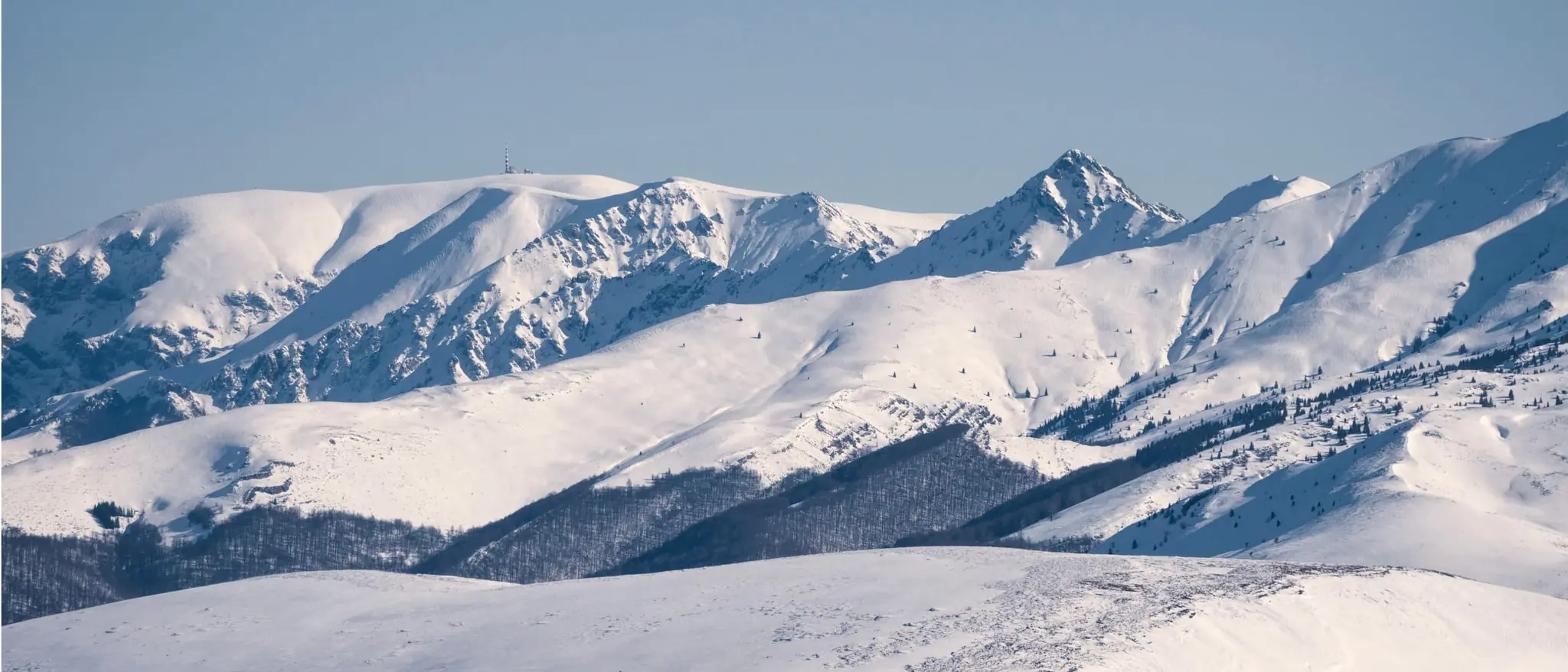
Ride a gondola up through frosted pines in the morning, eat lunch from a clay pot on the mountain, and by mid-afternoon sit in a mineral pool with snow melting off your hair. That is the Bulgarian winter, and it costs far less than the Alps. Bulgaria is not the Alps, and this guide will not pretend it is. What it offers is a real mountain holiday that is kind to the budget. When the lifts close, a stone-walled tavern, a thermal bath and a masked folk ritual that is still alive are waiting.
Three resorts dominate: Bansko, Borovets and Pamporovo, and this guide says what each is really like. It also follows the half of a Bulgarian winter that happens off the slopes: Revival towns under snow, spa days, Christmas tables and the kukeri, masked men with bells who are traditionally said to scare away evil spirits. It suits first-timers, families, groups and anyone comparing Bulgaria with a pricier alpine week, as well as partners and grandparents who would rather have a bath than a black run.
Pick a resort, pack warm layers and leave part of every day for hot water and a long dinner afterwards: the Bulgarian winter is remembered for what happens after the last run as much as for the pistes.
Good to know: this guide was checked in October 2026. Lift status, snow, season dates, opening hours, transport and road rules change, sometimes from week to week, so confirm every time-sensitive detail on the official resort, operator and railway websites before you book.
The Resorts Compared
The Bulgarian winter wins on price, character and closeness to Sofia, not on mountain height. The resorts are three different holidays: choose by who is travelling and how many days you have.
Pick Bansko for a first ski week or a mixed group.
Pirin
From Sofia airport
2.5–3 hours
Cost
Among the cheapest
- Terrain: Beginner to steep
- Season: December to mid-April
- Nightlife: Liveliest of the three
Pick Borovets for a short break from Sofia.
Rila
From Sofia airport
About 1 h 15
Cost
Dearer than Bansko
- Terrain: Intermediate, steeper higher up
- Season: Late December to early April
- Nightlife: Lively at weekends
Pick Pamporovo for small children and learners.
Rhodopes
From Sofia airport
The longest drive
Cost
Mid-range
- Terrain: Mostly gentle
- Season: Late December to early April
- Nightlife: Quiet, hotel evenings
Not sure where to start? Choose Bansko: the widest choice of runs, from beginner to steep, and an old town for anyone who does not ski. Borovets suits a short break, about an hour and a quarter from the airport. Pamporovo is the quietest, with the gentlest slopes, so it fits small children and learners.
Tip: pick one resort for the whole trip. The three are hours apart by road, and the drive between them costs you a ski day.
Bansko
Bansko puts a ski holiday and a Revival-era town in one place. The ski area is in the Pirin foothills, and the old town of stone houses is a short ski-shuttle ride away. Of the three resorts, it has the widest choice of runs and the liveliest evenings, at prices among the most affordable.
Ski Area and Gondola
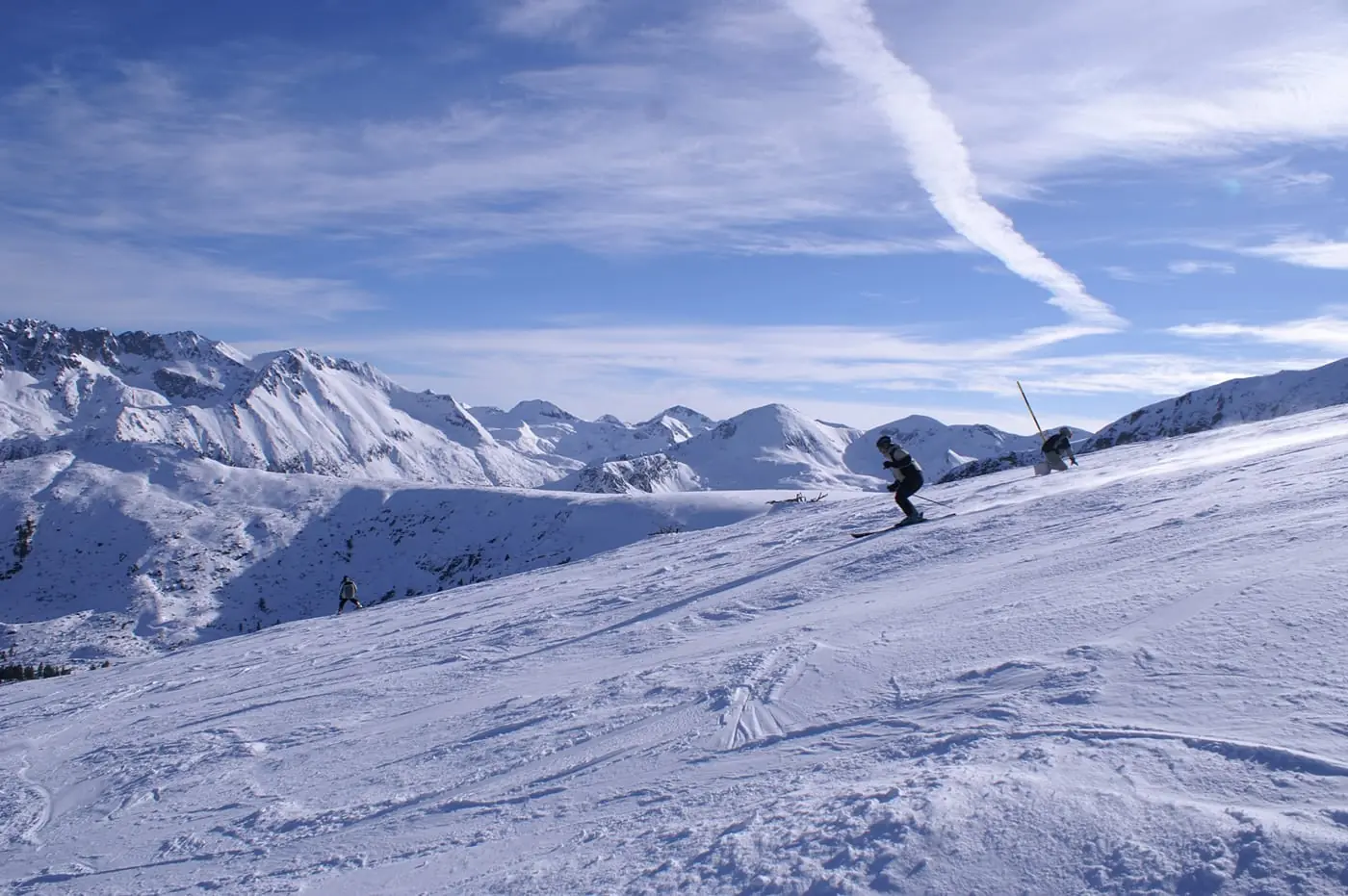
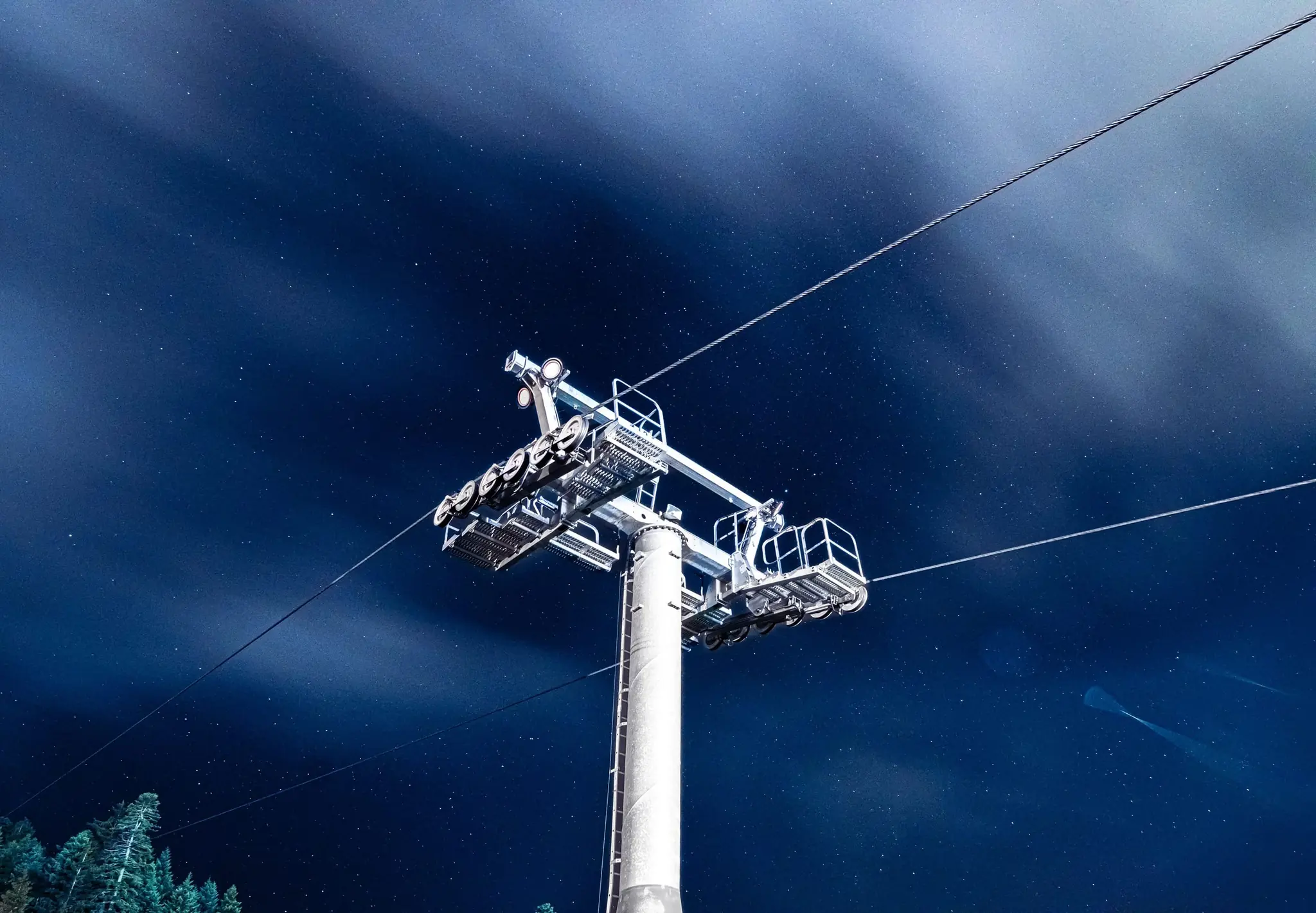
The ski area starts at the gondola’s base station, in the newer part of Bansko where the hotels are. From the old town it is a short ski-shuttle ride. The gondola lifts you into the Pirin foothills: long, sunny blue and red runs, beginner slopes high on the mountain and a few steeper pitches. Stronger skiers head on towards Todorka Peak.
The gondola was built in 2003, replacing a minibus ride up to Banderishka Polyana. The climb is about six kilometres and takes around 25 minutes, and the highest runs reach about 2,600 m, more than 1,600 m above the town. Bansko has also hosted Alpine Skiing World Cup races (between 2009 and 2012).
In the evening Bansko is the liveliest of the three resorts, from bars by the gondola to mehanas with live folk music, so it suits non-skiers too. The biggest weakness is the gondola queue on a peak morning, so plan your day around it.
Where to sleep? Our where to stay in Bansko page compares the gondola area, the old town and the thermal villages of Banya and Dobrinishte. For how Bansko stacks up against the Alps, see our best ski resorts in Europe.
Opening times:
| What | Hours |
|---|---|
| Gondola | 08:30–17:00 |
| Ski lifts | 08:45–16:15 |
| Season 2026/27 | 1 December–11 April (may change) |
Admission:
| Lift pass | Price |
|---|---|
| Adult season pass, bought by 1 December 2026 | €870 |
| Day passes 2026/27 | Not listed yet; see the official site |
Website:
- Buy your pass online in advance and be in the queue early; the ticket queue is separate from the boarding one.
- Ride midweek if you can and consider sleeping close to the base station: on a peak morning the queue can swallow an hour.
Old Town
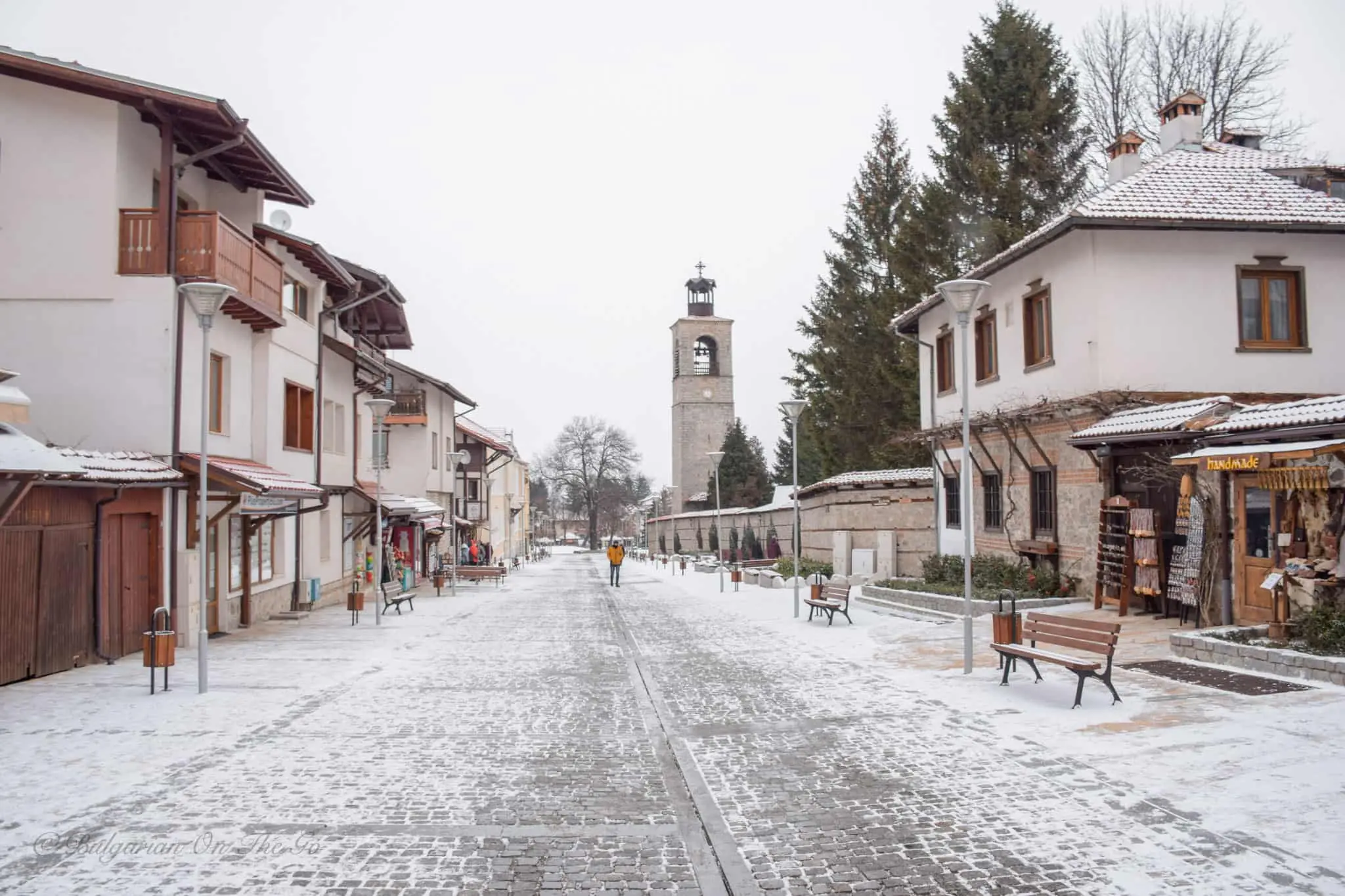
Old Bansko is a town of stone: high courtyard walls, heavy gates and Revival-era houses, raised when trade made the place rich. Cobbled lanes lead to open-hearth mehanas, and an evening by the fire is the best way to end a day here.
By tradition Paisii of Hilendar was born in Bansko, the monk who in 1762 wrote the Slavonic-Bulgarian History, the book many see as the first spark of the Revival.
Neofit Rilski (1793) also came from Bansko, and in 1835 he published his Bulgarian Grammar, the first grammar of modern Bulgarian. His home, Benin’s House, is a fortified 18th-century dwelling: a yard behind a thick wall and a wooden gate, a hiding place on the ground floor and a monastery school above it. Today the museum fills its rooms.
Next door to the museum stands the Holy Trinity Church of the 1830s, and it is low for a reason. The builders are said to have sunk the floor into the ground so the church would look smaller and slip past Ottoman limits on height.
After a day on skis, old Bansko is a good reason to come down off the slopes: the house-museum, the church and a mehana with a hearth are all close by.
Nikola Vaptsarov House-Museum
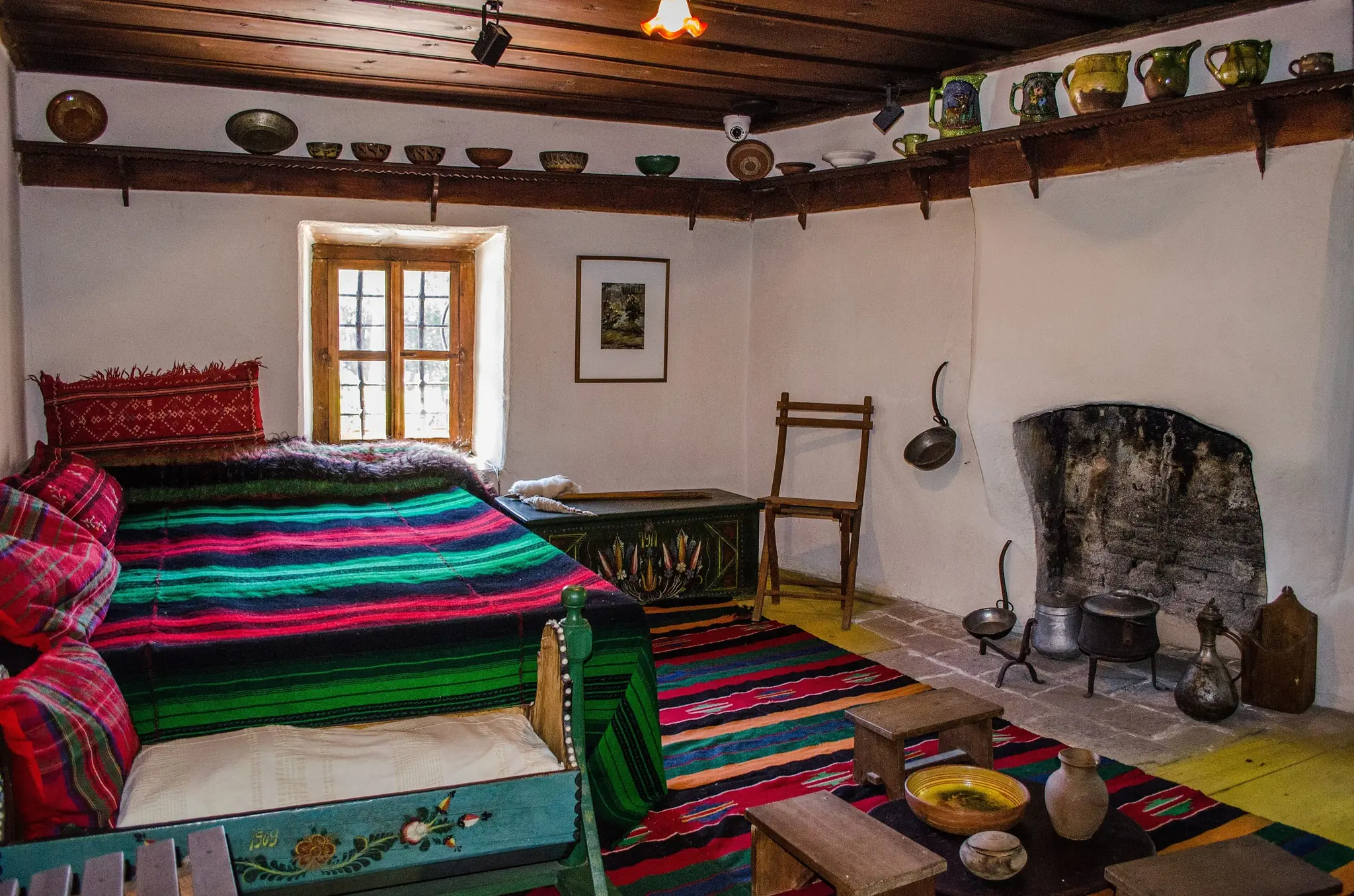
The poet Nikola Vaptsarov (1909–1942), executed in 1942, was also from Bansko. He trained as a ship’s machinist in Varna, and his only collection published in his lifetime is called Motor Songs. Today the square at the heart of the old town carries his name, and the house where he grew up holds his museum, opened in 1952 as the first in the Pirin region. Inside is a reconstruction of his childhood home, and upstairs are documents and photographs. It makes a good queue-free hour on a day when the snow is poor or the wind is up on the mountain.
Opening times:
| Days | Hours |
|---|---|
| Monday–Friday | 09:00–13:00 and 14:00–17:30 |
| Saturday–Sunday and holidays | 09:00–13:00 and 14:00–17:00 |
Admission:
| Ticket | Price |
|---|---|
| Adult | €3 |
| Pupil, student or pensioner | €2 |
| Person with a disability | €1 |
| Family | €5 |
| Guided tour | €5 |
Website:
Find a place to stay
Hotels, apartments and current prices for Bansko, all in one place.
See stays in BanskoBorovets
Borovets sits among old pines at the foot of the Rila Mountains, an hour and a quarter from Sofia airport, and is usually called Bulgaria’s oldest mountain resort. Its story starts long before the skiing.
Chamkoria
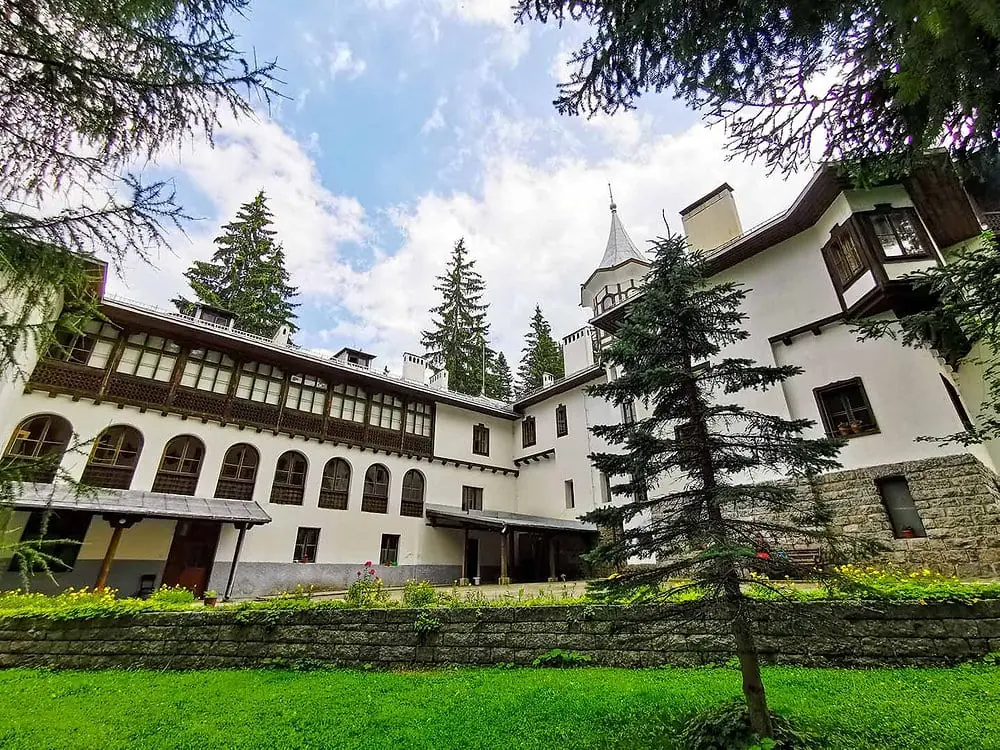
Before it was Borovets, the place was Chamkoria, Turkish for a pine forest, and today’s name is simply its translation. In 1896 Prince Ferdinand discovered the beauty of the Rila Mountains and built a summer residence and hunting lodges here, and Sofia’s elite soon followed with villas of their own.
The palace of Tsarska Bistritsa, built around 1898–1906 (sources differ), was a hunting residence for Ferdinand and his son Boris III. The main building has not been open to visitors since 2010, but the grounds can be visited.
Skiing arrived from Austria in the 1930s, and the first alpine race was held in 1930. The name Borovets appeared in the 1940s, and in 1974 the resort first made the FIS calendar.
Opening times:
| Days | Hours |
|---|---|
| Thursday–Sunday and public holidays | 09:00–17:00 |
| Monday–Wednesday | Closed |
Admission:
| Ticket | Price |
|---|---|
| Adult | €3.50 |
| Pensioner | €2.50 |
| Student | €2.00 |
Website:
- Closed to visitors from 26 October to 22 November 2026.
- Pets are not allowed.
Ski Area and the Yastrebets Gondola
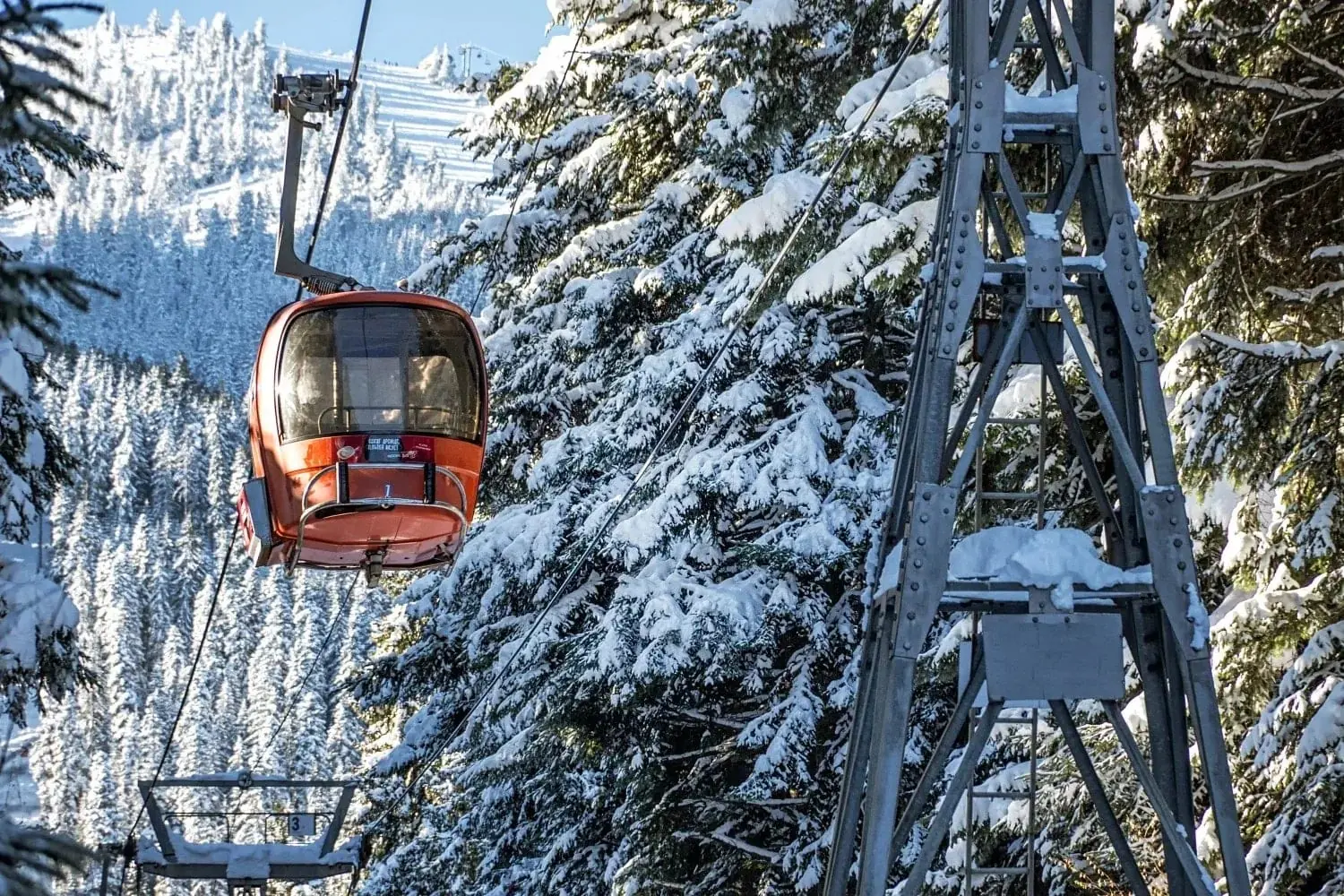
The resort is compact enough to cross on foot in a quarter of an hour, with the Yastrebets gondola and a strip of bars and restaurants at its base.
The skiing suits intermediates: the steeper terrain is higher up, in the Markudjik zone, and the runs are floodlit in the evening.
Borovets is ideal for a short break, though there is less to do off the slopes than in Bansko, and it costs noticeably more for the same week. Samokov, about ten kilometres down the hill, is cheaper but ties you to a daily bus. See where to stay in Borovets.
Opening times:
| Lift | Hours |
|---|---|
| Gondola (25-minute ride) | 08:30–18:00; last ride up 17:30 |
| Ski season | Generally mid- to late December to early April |
Admission:
| Pass 2026/27 | Adult (23–64) | Youth (14–22), 65+ | Child (7–13) |
|---|---|---|---|
| 1 day | €56.60 | €45.60 | €34.60 |
| 3 days | €144.60 | €115.60 | €90.60 |
| Gondola, two-way (listed for 2025/26) | €21 | €11 | €11 |
Website:
- Children under 7 ride free with an adult who has a valid pass.
- Weekends fill with day-trippers from Sofia, and midweek is calmer, with shorter lift queues.
Close by: from Borovets the gondola leads towards Musala, the highest peak in the Balkans (2,925 m), described in our Pirin and Rila hiking guide.Rila Monastery makes a good day trip: see our Sofia guide. In winter, check conditions and roads before you set out.
Pamporovo
Pamporovo is a sunny Rhodope resort with no centre: the hotels are scattered among the pines, and the day revolves around two lift stations and one peak, Snezhanka.
Ski Area and Snezhanka
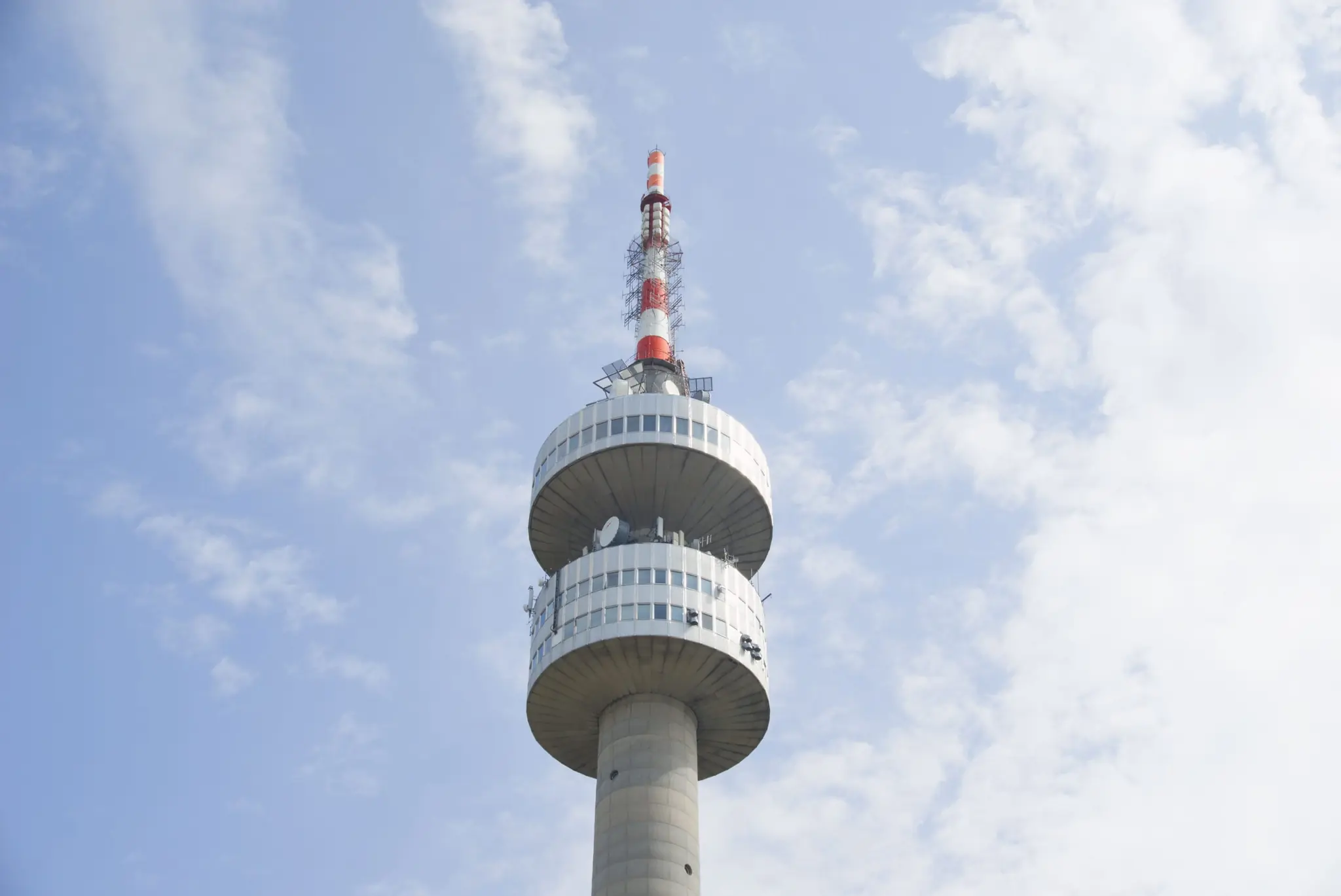
Above the resort rises Snezhanka, which is also the Bulgarian name of the heroine of the Snow White fairy tale. On its top, at about 1,930 m, stands a 156-metre television tower, built in the 1970s. Almost every run drops from here, and the two lift stations, Studenets and Malina, carry you back up.
The runs fall from about 1,930 m to about 1,450 m, almost all of them gentle and mostly covered by snowmaking. That makes Pamporovo the standard choice for learning to ski and a poor one for steep terrain: confident skiers find it small after a few days.
The best part is off the slopes. The tower has a viewing platform, and on a clear day the view is said to reach the Aegean, while the Greek border is about half an hour’s drive away. See where to stay in Pamporovo.
Orpheus Country: the Devil’s Throat
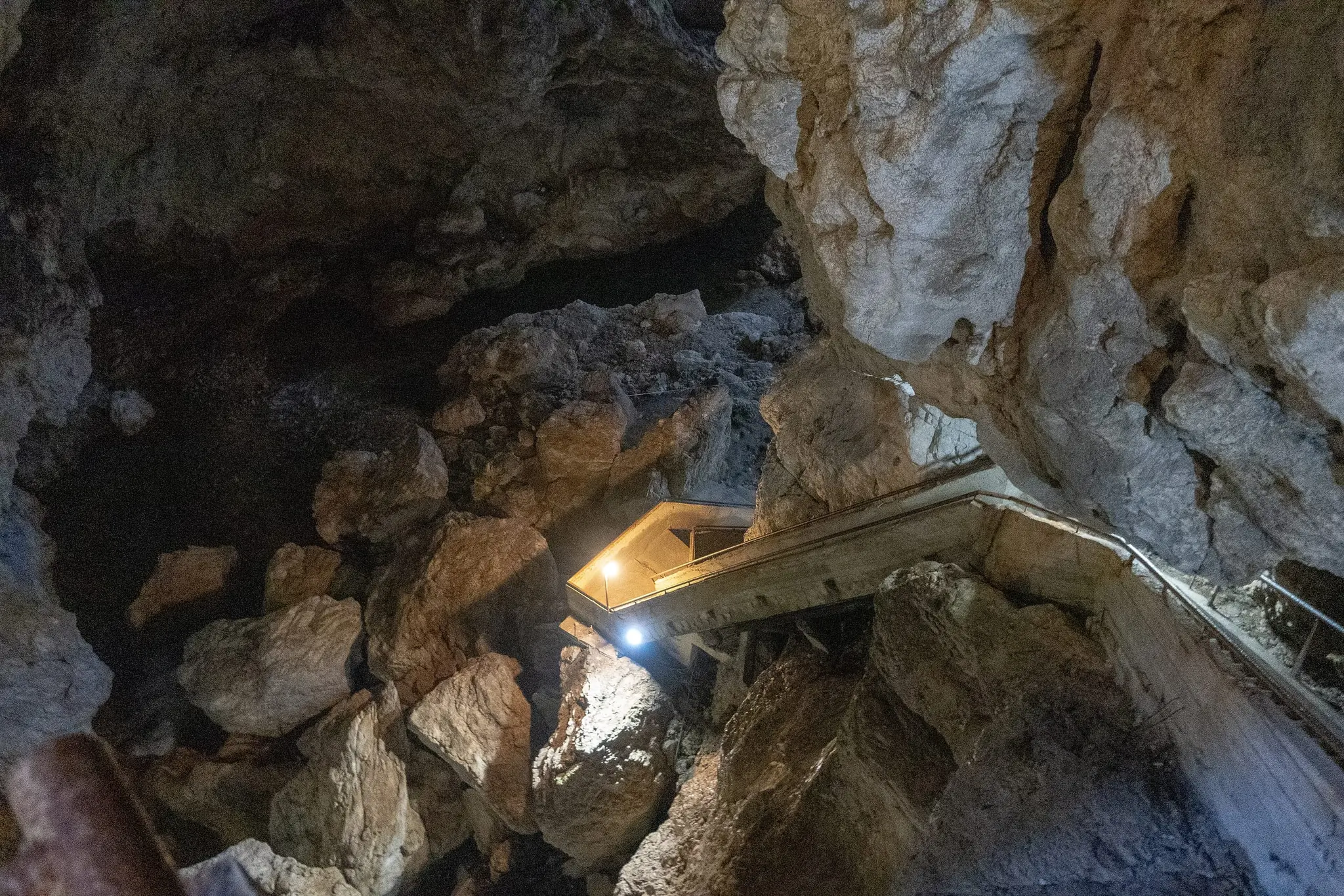
In the western Rhodopes lies one of Bulgaria’s oldest myths. Legend says it was through the Devil’s Throat cave near Trigrad that Orpheus went down into the underworld to bring back Eurydice. A flight of 301 steps leads down beside a waterfall of about 42 metres, the highest underground waterfall in the Balkans.
The cave has a darker story too. The river pours underground and does not give back what it takes. In 1970 two Bulgarian cave divers, Siana Ljutzkanova and Evstati Jovchev, set out to explore the flooded passage below the waterfall and never came back up: neither they nor their equipment were ever found. There is more on the place in Beyond the Cities.
Opening times:
Daily, no day off
May–September – 10:00–17:00
October–April – 10:00–16:00
Admission:
| Ticket | |
|---|---|
| Adult | €6.65 |
| Student and senior | €5.62 |
| Child aged 6–16 | €3.07 |
| Under 7, people with disabilities | Free |
- Entry is by guided tour only, and the tour is included in the ticket.
- It is cool inside, so bring a warm layer, and wear shoes with grip, because the steps can be wet.
For a real town: stay in Chepelare, which has its own ski area, or in Smolyan, with a good museum and much lower prices.
Passes, Lessons, Rental & Gear
Bulgarian skiing is simple to organise once you know the shape of it.
Lift Passes
Day, multi-day and season passes are sold. Passes are usually rechargeable cards, and each resort has its own operator, so a Bansko pass is not valid at Borovets or Pamporovo. New Year and the February school holidays are busiest, and midweek is cheaper and quieter. Ask about child discounts.
Lessons and Rental
Ski schools and rental shops cluster around the base stations and in hotels. Ask for an English-speaking instructor, and book lessons and gear early for New Year and February. Take care over boot fitting: sore feet ruin a week faster than poor snow.
What to Bring
Head and eyes
Hands and body
Off the slopes
Small extras
Safety, Insurance & Skiing with Kids
Two things about a ski holiday do not show up in the photos: your insurance and the edge of the piste. The emergency number is 112.
- Standard travel insurance often excludes winter sports
- Check it covers piste skiing, mountain rescue and helicopter evacuation
- The EHIC and the UK’s GHIC cover state healthcare, not rescue costs or repatriation
Read the winter-sports small print
- Ski only on the marked runs: they are patrolled, and the mountain beyond them is not
- Avalanche risk is real in Pirin and Rila
- Go off-piste only with a local guide and avalanche equipment
- Do not ski after a rakia lunch: it is strong and served generously
Marked runs, or a guide
- The Rhodopes can be foggy while Pirin is clear
- The emergency number is 112
- The Mountain Rescue Service handles mountain incidents
In an emergency, call 112
- Beginner slopes and ski schools used to complete novices
- Hotels with pools for bad-weather days
- Ask about children’s ski groups, helmet rules and minimum ages for lessons
Book children’s lessons early
Getting There & Around
Winter changes how you travel. In summer a hire car is the easiest way to see Bulgaria, as our country guide says. In winter, take a transfer to the ski towns and keep the car for the other legs.
Tip: for the ski towns, a pre-booked transfer or shuttle is calmer than driving a mountain road in snow. For the rest of Bulgaria, rent a car, but do not rely on the train.
Sofia (SOF)
Main gateway; book a transfer
To Bansko
About 2½–3 hours
To Borovets
About 1¼ hours
To Pamporovo
Longest; winding road at the end
Hotels can often arrange transfers.
- Winter rules: tyres, chains and lights; check your hire policy
- Mountain passes can close or need chains
- Busiest roads: Friday evening up, Sunday evening down
- A vignette is needed for most roads: see our country guide
- Use a car for the non-ski legs, such as Plovdiv, Velingrad or the Rhodope villages
Transfer to the ski towns, car for the rest
- Private coaches run from Sofia to Bansko
- For Borovets, take a coach to Samokov, then a local bus
- Sofia has more than one bus station: check which yours leaves from
Check the station before you go
- Bansko: ski buses and hotel shuttles
- Borovets: compact, so walk
- Pamporovo: a ski bus links hotels and lifts
- Taxis: take a clearly marked car from a reputable firm
Ask your hotel for ski bus times
No car? Book a tour
Guided winter day trips and activities in Bulgaria, with no driving needed.
Browse experiencesFood & Warm Drinks
Everything in the food section of our country guide applies in winter too, and the cold months add dishes that belong to the mountains. Here are six to look for in a mountain mehana.
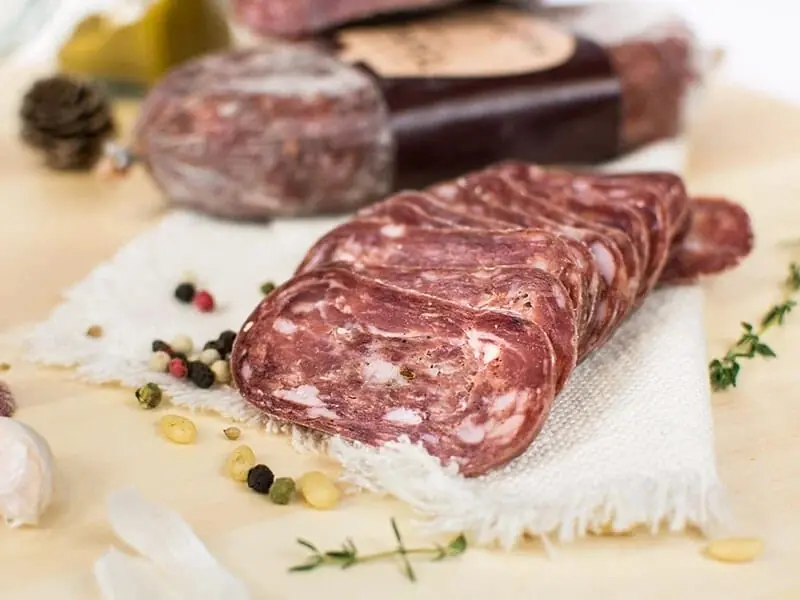
Banski starets
A dry-cured sausage associated with Bansko, sliced thin as a starter and good with red wine. Ask in the old town for the local version.
Source: Delicatessen
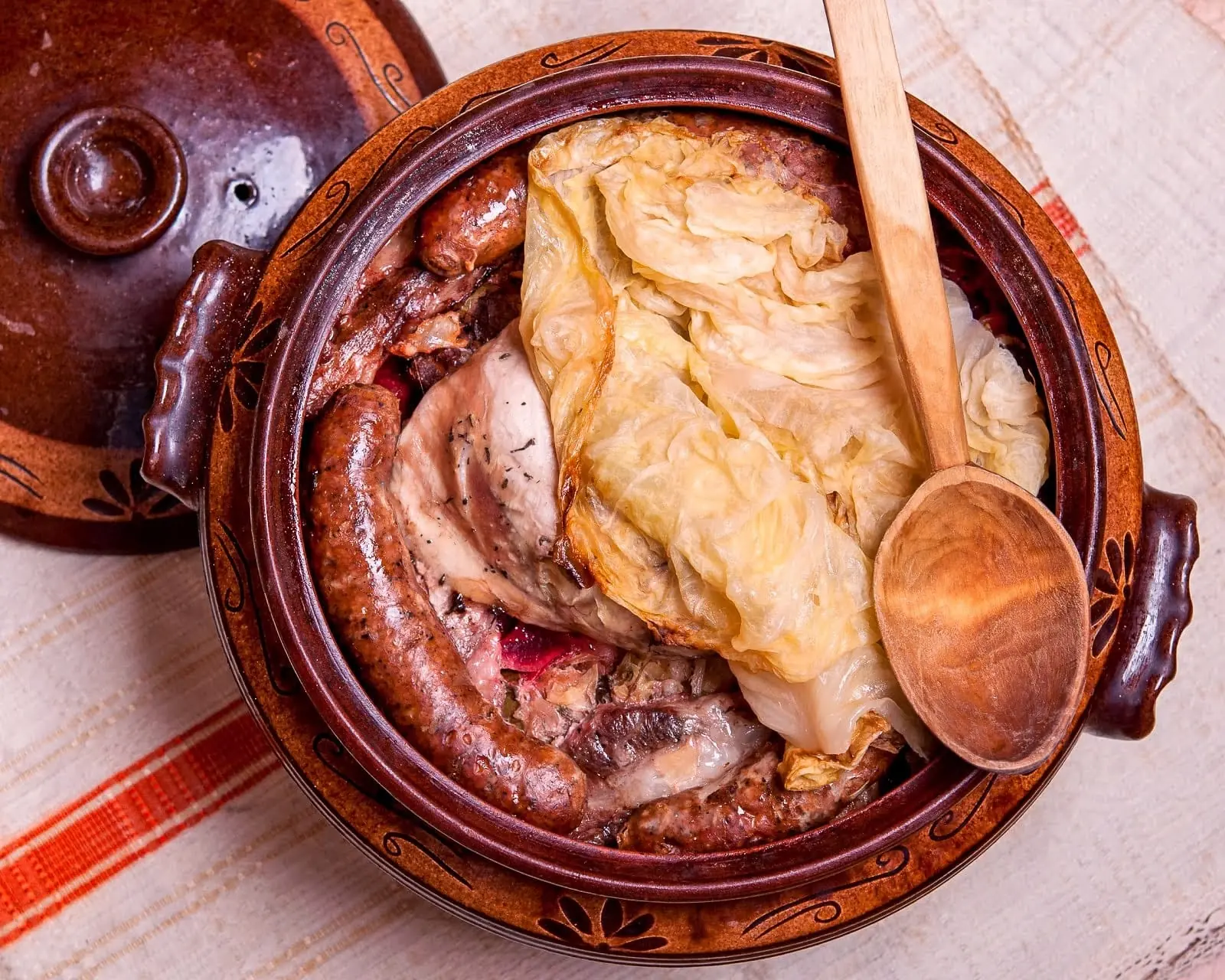
Kapama
A slow-cooked, layered stew of meats and sauerkraut, usually brought to the table in a clay pot. A mehana staple in winter, just right after a day on the slopes.
Source: Supichka
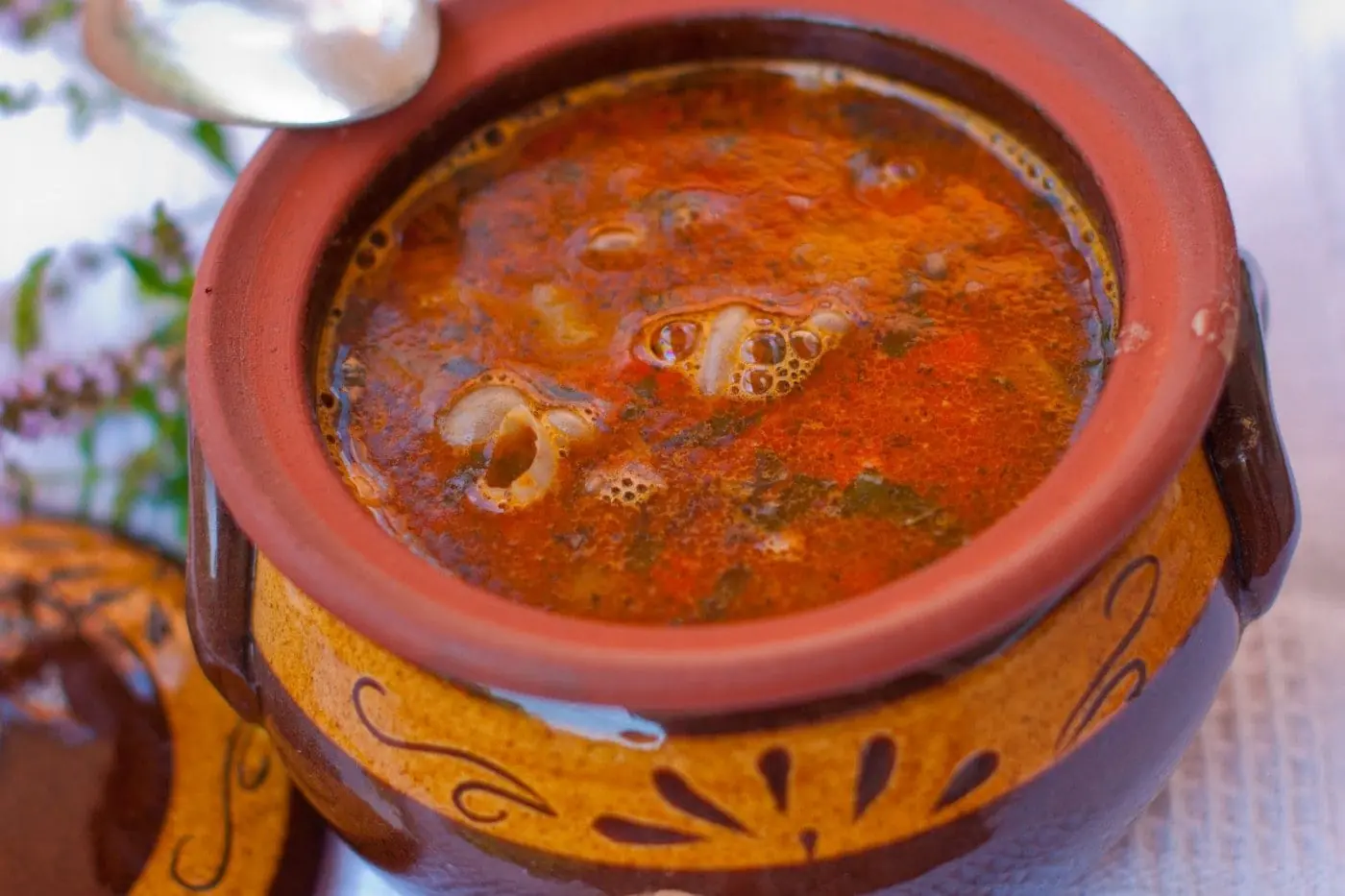

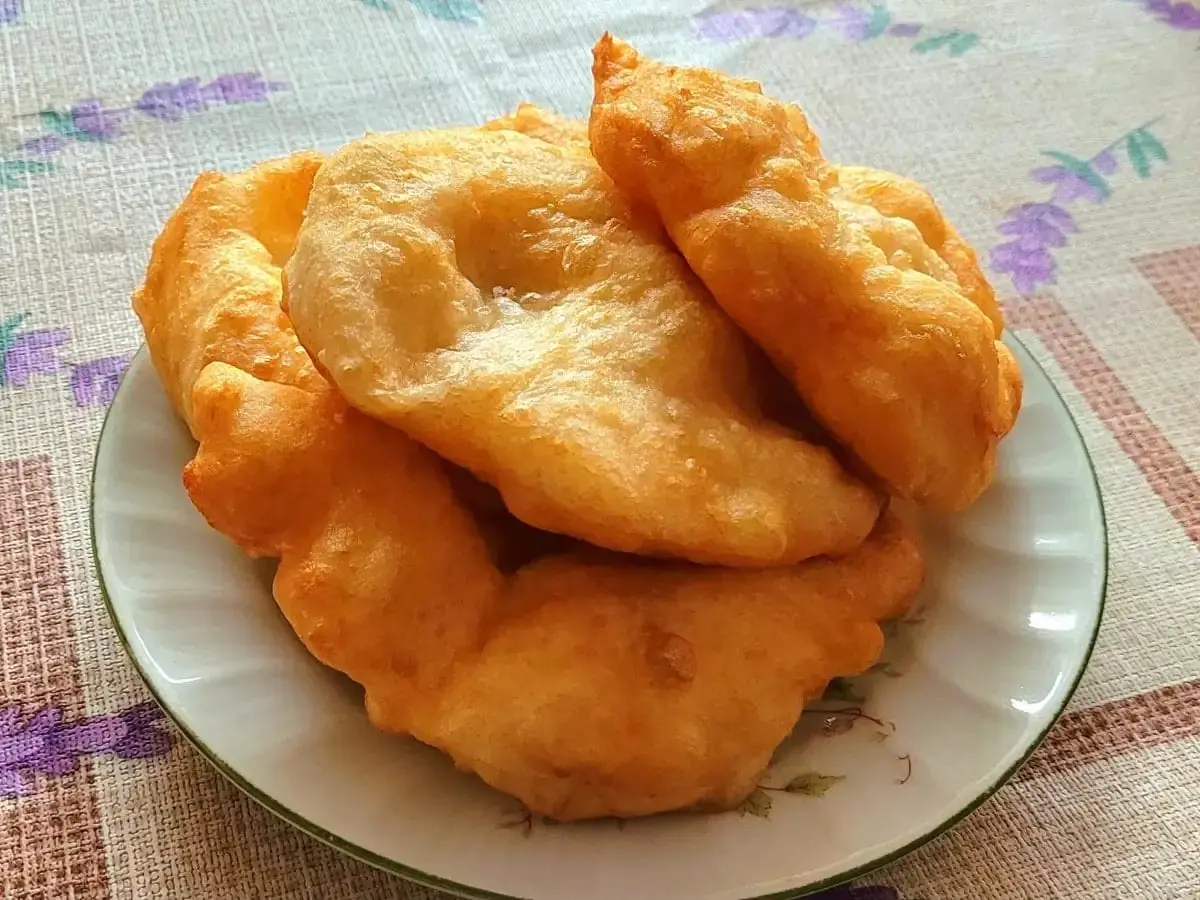

Warm Drinks
Greyano vino (греяно вино), mulled wine, is sold at slope-side cafés and Christmas markets, and greyana rakia (греяна ракия), warm rakia with honey or sugar and spices, is its stronger winter cousin, so sip it. After skiing, order hot chocolate, boza or mursalski chai, the Pirin mountain tea; in spa towns, expect herbal teas and warm mineral water. A local beer is a good end to the day once the lifts close.
Beyond the Slopes
Winter in Bulgaria is not only about skiing. The cold is when the country is at its cosiest, and there is plenty to fill the days between runs: thermal pools in Velingrad and around Bansko, a Rhodope village under snow, Sofia’s own ski mountain and the kukeri, the liveliest winter custom.
Thermal Pools After Skiing
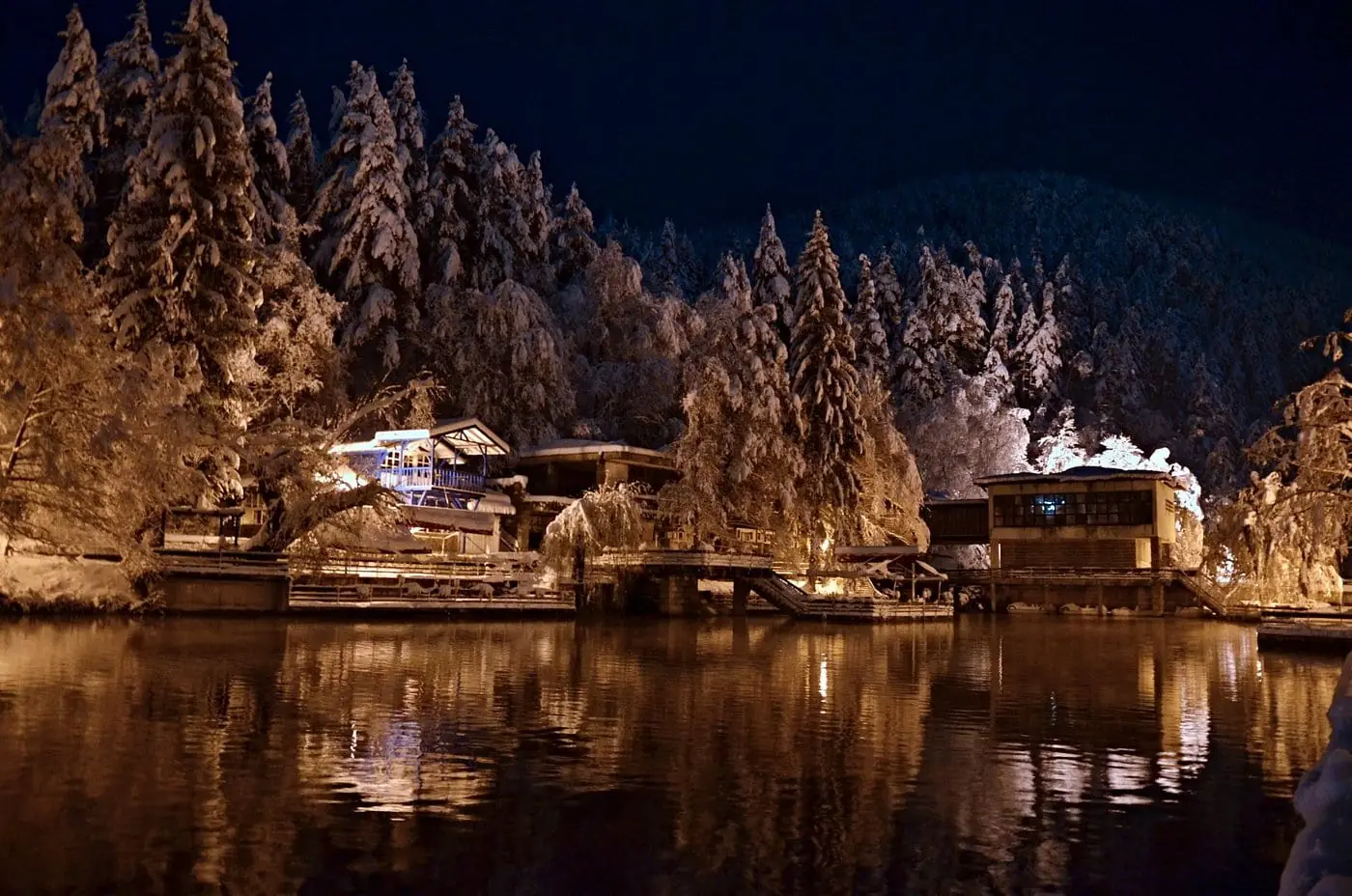
The other great winter pleasure is a hot pool after a cold day on the slopes. Closest to the skiing are Banya and Dobrinishte, two villages a few kilometres from Bansko, with thermal pools and rooms that cost less than in the resort. Book ahead for ski weekends.
Further on, over the Avramovo pass, lies Velingrad, often billed as the spa capital of the Balkans. It is a Rhodope town of mineral springs, set on the largest geothermal field in southern Bulgaria.
It is also young: in 1948 three villages, Chepino, Ladzhene and Kamenitsa, were merged into one town and named after the partisan Vela Peeva. They are still three distinct quarters. Ladzhene has most of the pool hotels, Chepino is the quiet part, and Kamenitsa is where the hottest springs rise.
Chepino also holds Kleptuza, the largest karst spring in Bulgaria. Legend says it burst out where the earth swallowed a girl fleeing the Ottomans. A walk around the water takes under half an hour.
Many spa hotels offer treatments and pool access to visitors who are not staying. A day in the pools and spa zone typically costs around €10–25 per person, depending on the hotel, so ask before you go. Packages are sold by the night, usually with half board: in late 2026 offers, a night with breakfast, dinner and the mineral pools ran from about €50 to €100 per person, and more at the top hotels. Bulgarians often book three or four nights, so weekends fill up and midweek is calmer and cheaper.
The cheapest option is the municipal mineral baths: simpler, but good value. Our post on Bulgaria’s spa towns goes further.
Shiroka Laka, a Rhodope Village in Snow
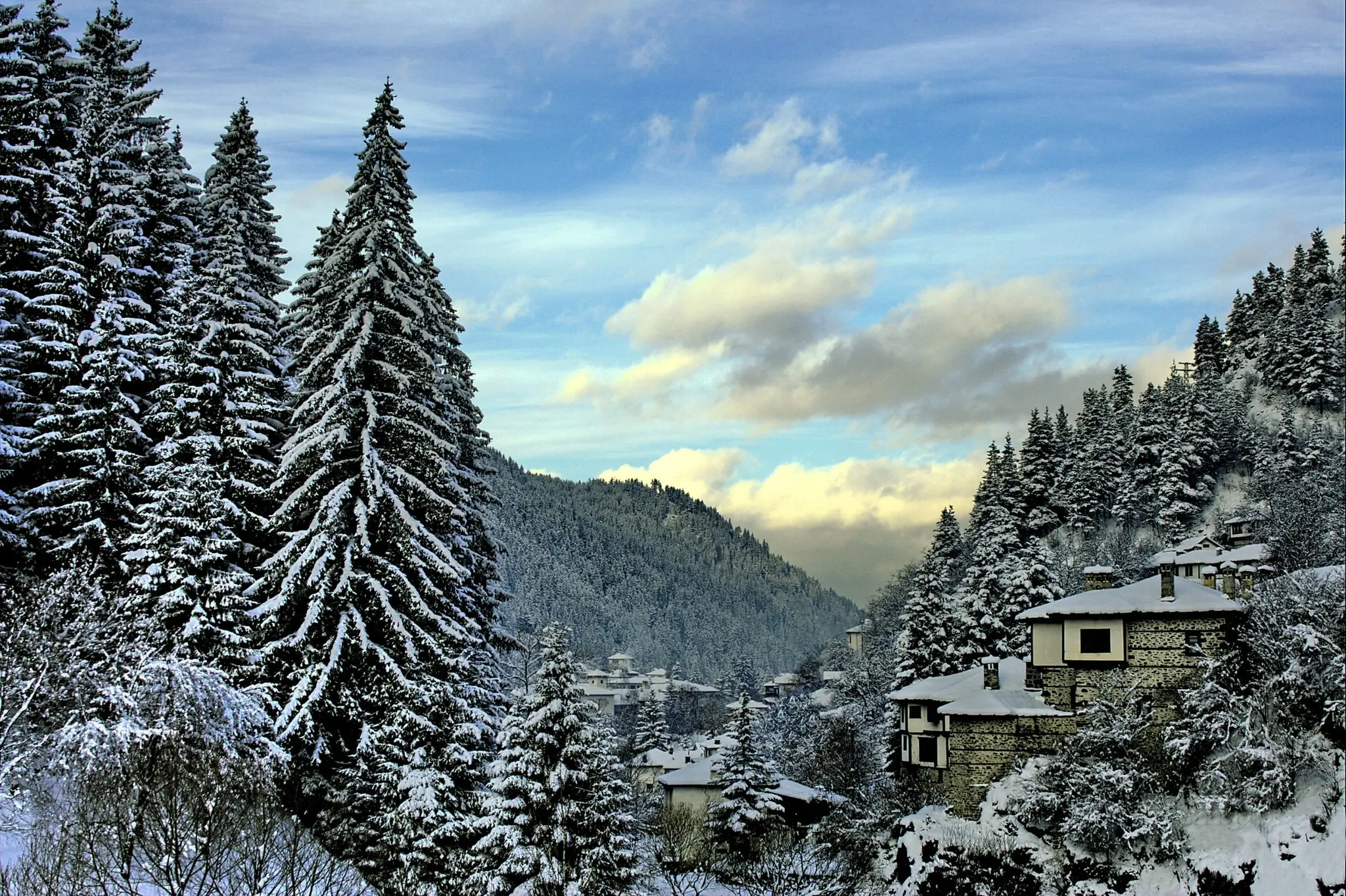
The name Shiroka Laka comes from the Old Bulgarian word лѫка, a bend. Stone-roofed Revival houses climb the hillside, and above the village a rock called Momata, "the Girl", is said to look like a young woman holding a distaff. By tradition the church of the Assumption was raised in 1834 in just 38 days, and its iconostasis is linked with the famous Zograf painters of Samokov.
Above all, the village is known for its music. It was home to Radka Kushleva, called "the Rhodope Nightingale", and since the early 1970s it has had a school of folk arts, where students learn Rhodope singing and the kaba gaida, the deep-voiced local bagpipe. In early March the kukeri take to the streets for the Pesponedelnik festival. It is quieter and far cheaper than the resorts.
Vitosha and Aleko, Sofia’s Ski Mountain
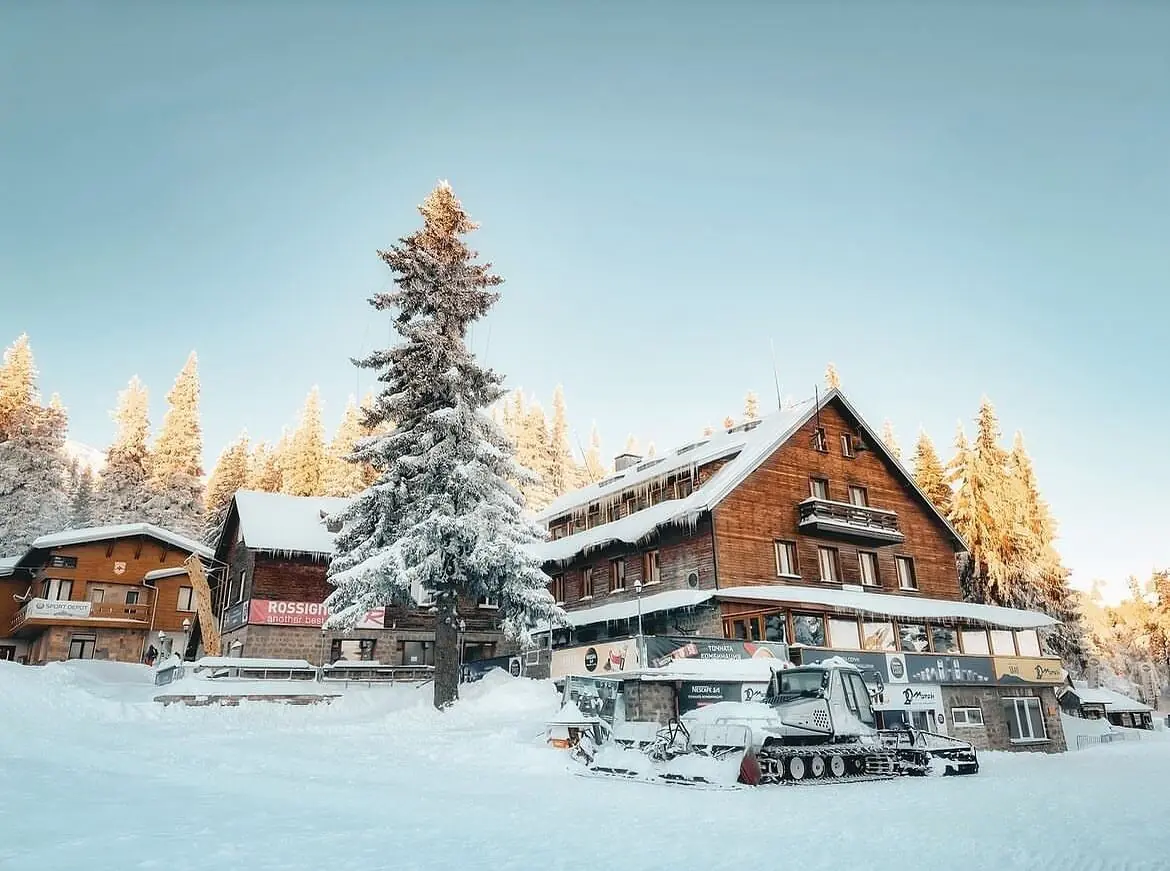
Few capitals have ski runs on the doorstep, but Sofia does. Vitosha rises at the end of the main boulevard, and up on the mountain Aleko has gentle slopes, a good taster for beginners or a half-day on skis added to a city stay. Check how to get there first, because access and lifts have varied.
Aleko takes its name from the writer Aleko Konstantinov. On 27 August 1895 he led some 300 people up Cherni Vrah, the walk seen as the start of organised tourism in Bulgaria. Almost forty years later, in 1934, Vitosha became the first nature park in the Balkans.
If the snow is poor, walk to the Golden Bridges instead, a "river" of huge boulders left by a glacial moraine. The mountain itself is older still: its dome began as volcanic fire, magma that pushed up beneath the rock.
Opening times:
| Aleko lifts | Hours |
|---|---|
| Day skiing | 09:00–16:00 |
| Night skiing | 18:30–22:00 |
Admission:
| Lift pass, winter 2025/26 | Adult | Pupil, student, pensioner | Child (under 12) |
|---|---|---|---|
| 1 day | €29 | €24 | €21 |
| Half day, 09:00–12:30 | €24 | — | €16 |
| Half day, 12:30–16:00 | €21 | — | €15 |
Website:
- Prices for the 2026/27 season were not yet published; check the official site before you go.
Kukeri and the Surva Festival, Pernik
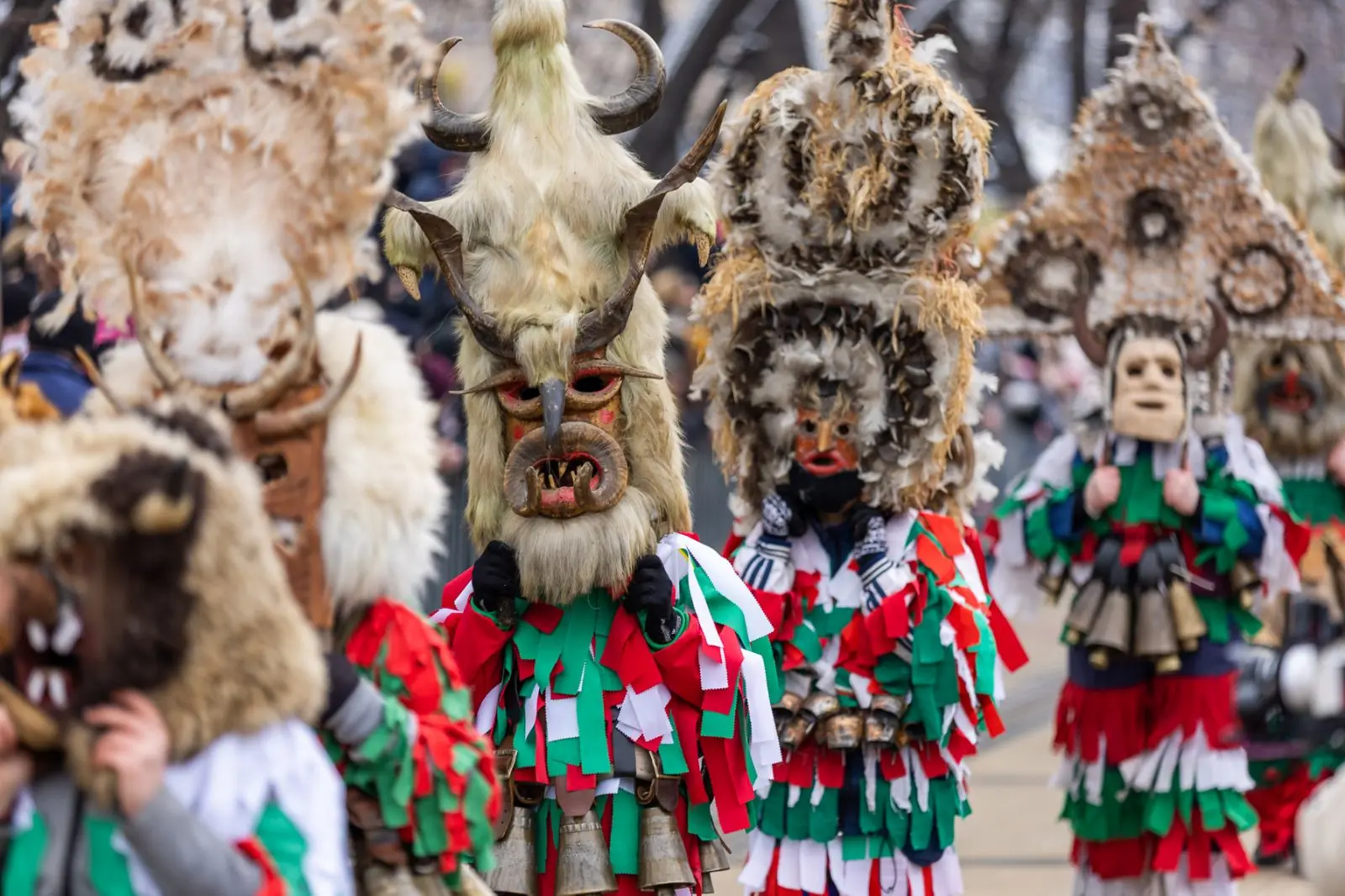
At the end of January, Pernik fills with horned creatures. Kukeri are masked men in shaggy fur, with masks of goats, bulls or rams and heavy copper bells on leather belts. By tradition their noise drives away evil spirits and brings health and a good harvest.
Their biggest gathering is the Surva festival in Pernik. It began modestly in 1966; today some 12,000 kukeri from all over Bulgaria and abroad parade through the town over three days, and you hear their bells long before you see them. It all grew from an old local custom, the Surova folk feast of the Pernik region, on UNESCO’s intangible heritage list since 2015.
If you are in Bansko, you need not go to Pernik: there and in Razlog the kukeri, locally called babugeri, take to the streets on 1 January.
Winter Season Calendar
The season runs from December to early April, and to mid-April at Bansko. Temperatures are averages for Bansko town (925 m); it is colder higher up.
Early Season
Mid-December
Day
5 °C
Night
−4 °C
Quieter and cheaper, though snow can be patchy lower down.
What’s on
- 24 DecemberChristmas EveA meatless table of an odd number of dishes.
Check the snow report.
New Year
Late December – early January
Day
3–5 °C
Night
−6 to −4 °C
The busiest and dearest weeks at all three resorts.
What’s on
- 1 JanuaryKukeri in Bansko and RazlogLocally called babugeri.
Book months ahead.
Deep Winter
January – February
Day
3–6 °C
Night
−6 to −4 °C
The best snow. Mid-February brings the school holidays.
What’s on
- Last weekend of JanuarySurva, Pernik
- 14 FebruaryTrifon ZarezanThe winegrowers’ day.
Ski midweek.
Spring Skiing
March – mid-April
Day
10–16 °C
Night
−1 to 4 °C
Sun and soft snow. Ski in the morning and spend the afternoon in a pool.
What’s on
- 1 MarchBaba MartaMartenitsi are exchanged for good health.
In April some hotels close.
Additional Resources
- Visit Bulgaria: the national tourism portal for regions, events and resorts.
- Bansko Ski: gondola and lift hours, passes and season dates for Bansko, plus live webcams from the town base to Todorka.
- Borovets: lift passes, prices and lift status at Borovets.
- Vitosha Ski: lift passes and slope hours at Aleko.
- Tsarska Bistritsa: days, hours and tickets for the palace at Borovets.
- Bansko museums: hours and tickets for the Nikola Vaptsarov house-museum.
- bgtoll.bg: the official place to buy the road vignette.
- Related guides: Sofia, hiking in Pirin and Rila, Beyond the Cities, plus our posts on the beach resorts and the spa towns.
All details here are approximate, so check official sources before you go.
A Bulgarian winter does not end with the last run. Mornings are for the slopes, afternoons for a hot mineral pool, and evenings for a clay-pot stew in a mehana with an open hearth while the snow falls outside. Buy your lift pass in advance, book your transfer and, if you can, catch the kukeri.
Приятно пътуване! (pree-YAHT-noh puh-TOO-vah-neh) — Pleasant travels!