In 1562, so the story goes, Sultan Suleiman the Magnificent was cured of his gout by the hot springs near Burgas, and he ordered a new bath built over them. He was neither the first nor the last to come to Bulgaria for its water. The country sits on hundreds of mineral springs, some of them close to boiling, and Bulgarians still plan their weekends around them.
What follows are the best spa towns in the country, what each one offers and what it costs. Prices were checked in November 2026 and change often, especially between summer and winter, so treat them as a guide and confirm before you go.
Table of Contents
- Velingrad: The Spa Capital
- Bansko, Banya and Dobrinishte: After the Slopes
- Sapareva Banya: The Hottest Water
- Devin: Orpheus’s Valley
- Hisarya: Roman Walls and Twenty-Two Springs
- Sandanski: Sunshine and Spartacus
- The Black Sea: Burgas, Pomorie and Varna
- Also Popular
- Before You Book
Velingrad: The Spa Capital
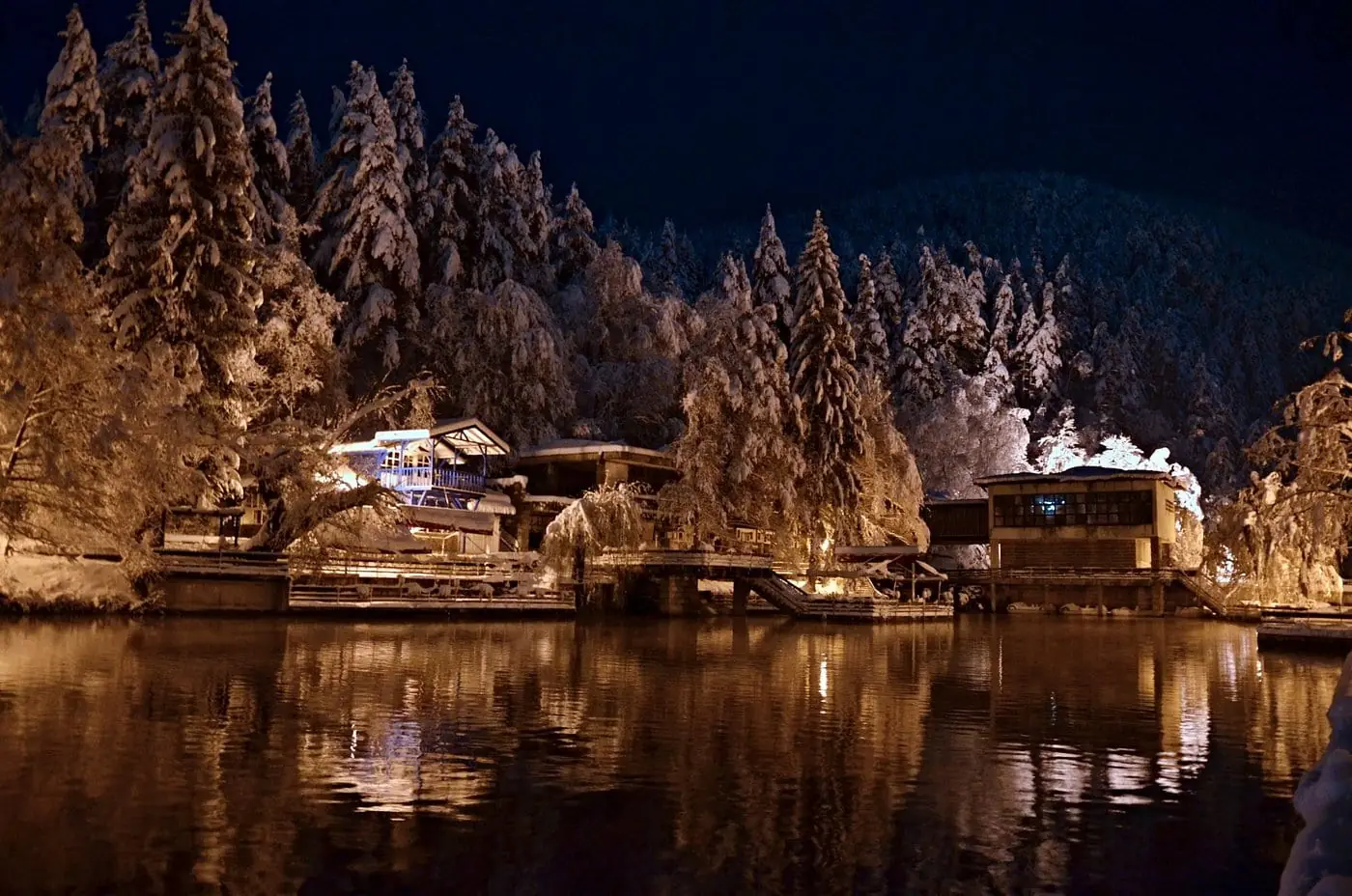
In Velingrad, warm water is everywhere. Some 70 mineral springs rise in and around the town, from about 46 °C to over 90 °C, and they feed its hotel pools, its public baths and even street taps, where locals fill bottles. In the quiet quarter of Chepino lies Kleptuza, the largest karst spring in Bulgaria. That is why Velingrad is billed as the spa capital of the Balkans: here the water is not a hotel feature but the town’s everyday supply.
Velingrad was formed in 1948 from three villages, and each still has its own character. Ladzhene has most of the pool hotels, Chepino is the quiet part, and Kamenitsa is where the hottest springs rise. For the simplest soak, the outdoor Central Mineral Beach costs about €4 for adults. A day package at a big spa hotel, with breakfast, dinner, the pools and the spa, costs about €85 on weekdays and €98 at weekends, and a night with half board and mineral pools starts at about €64 per person midweek in a four-star hotel.
Velingrad is open all year, sits in a pine-covered Rhodope valley and has hotels for every budget, which makes it the safest choice for a first spa break. Bulgarian families fill it at weekends, so come midweek. Our Velingrad stay page compares the three quarters, and the winter guide pairs the town with a ski week in Bansko.
Bansko, Banya and Dobrinishte: After the Slopes
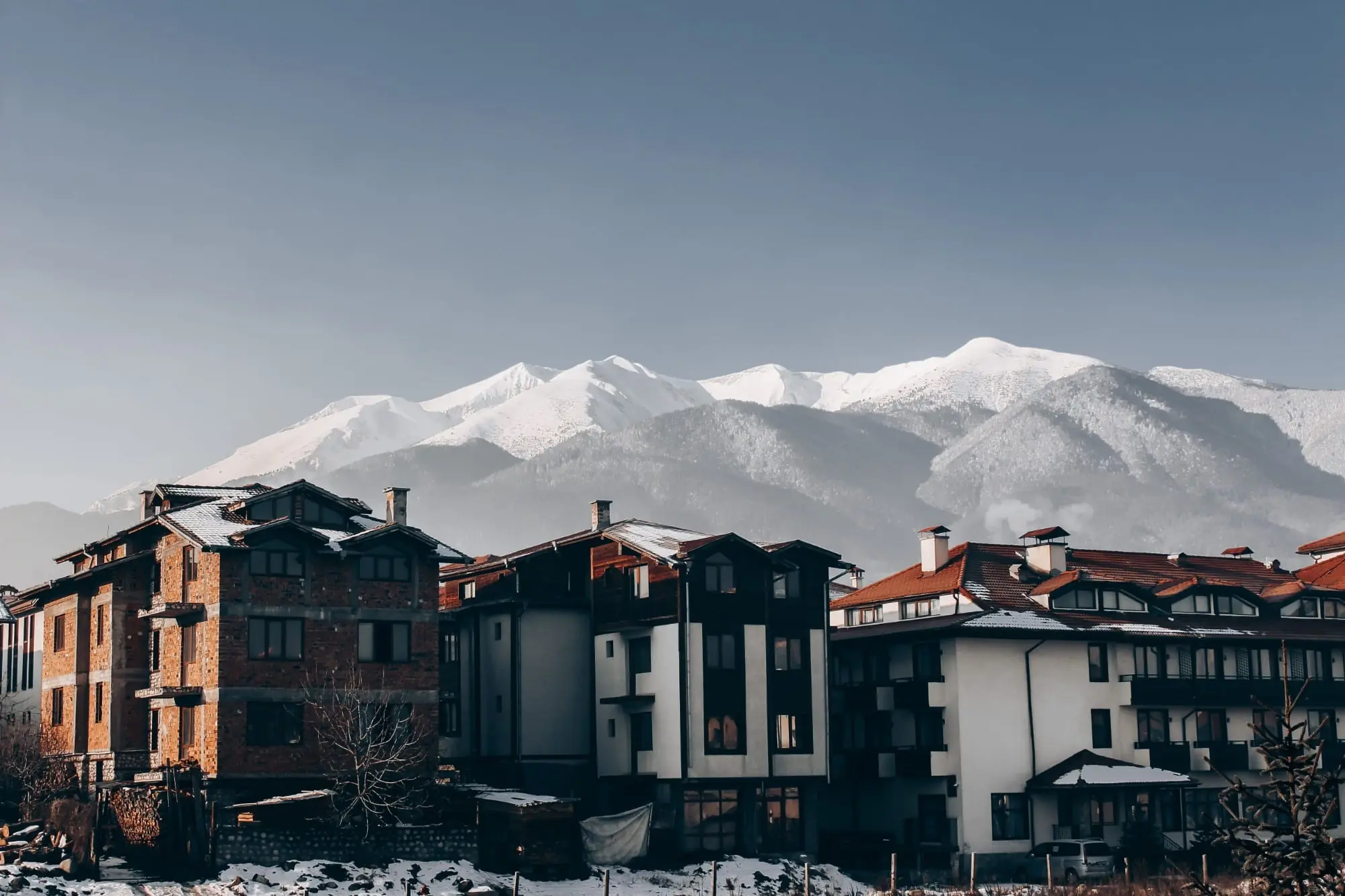
The Romans were soaking in these valleys long before anyone skied in Pirin. Remains of Roman baths have been found in the village of Banya, and in nearby Dobrinishte coins from the time of Emperor Nero turned up beside the spring the Romans are said to have called the "Silver Spring". The skiers came two thousand years later, and the water was still waiting for them.
Banya has more than 70 springs, and in June 2026, two years after building began, the village opened a new public mineral bath, where an adult pays just €5. Staying is cheap too, with half board in the village’s hotels from about €40–60 per person a night. Neighbouring Dobrinishte is cheaper still: its municipal bath, in a building from 1934, costs only a couple of euros, and its outdoor mineral pools are kept at 30–40 °C.
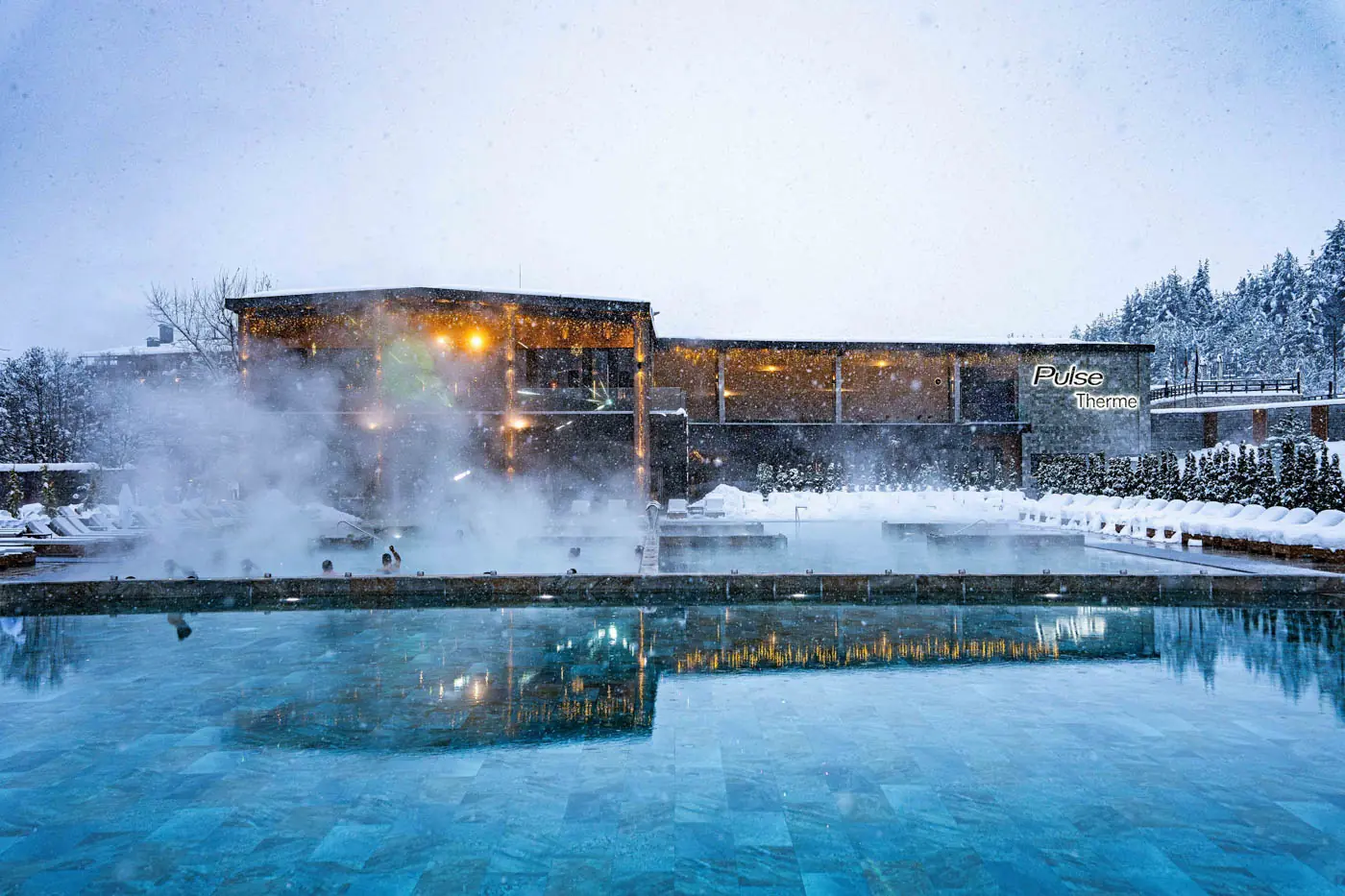
Then there is Bansko itself. The steaming pool on the cover of this post is Pulse Therme at Grand Hotel Bansko, where three outdoor and two indoor pools sit at 37–38 °C, and an afternoon in them costs about €31 for four hours or €41 for a full day. All three are at their best in winter, when you can ski in the morning and float in the snow by dusk, so book ahead for ski weekends. Our winter guide will help you pair the pools with a ski week, and in summer the same water is waiting after the walks in our hiking guide.
Sapareva Banya: The Hottest Water
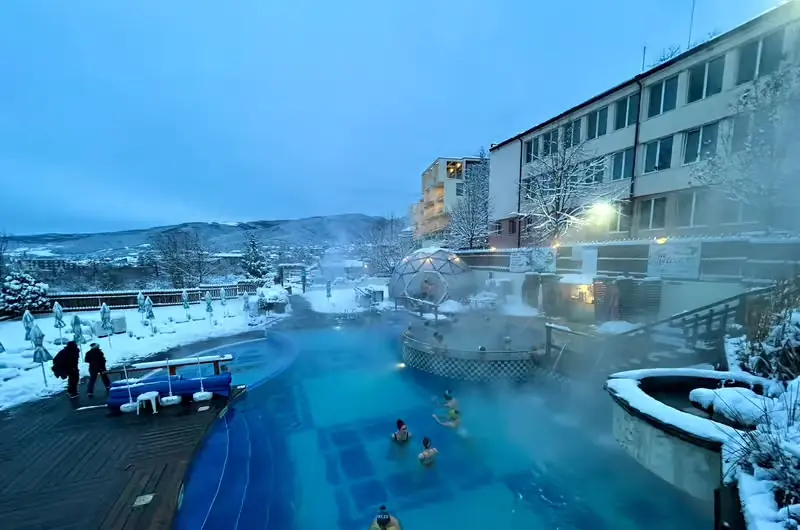
In 1957, a borehole in Sapareva Banya reached 73 metres, and the ground answered with a fountain of steam. The geyser that burst out that year still throws up water at 103 °C, and the town proudly calls it the hottest geyser in continental Europe. People were coming here for the water long before that: the Romans built the town of Germania on these springs, and the Byzantine general Belisarius is said to have been born nearby.
Today the same water fills four public pools and a municipal bath that is open all year, and soaking in it is still cheap. At the Mineralna Banya complex, the indoor pool costs about €8 on weekdays and €12 at weekends, and all the pools about €23 and €32. Staying is good value too, with half board in the town’s hotels from about €37–49 per person a night in autumn.
Sapareva Banya is small and practical rather than pretty, and that suits its real role: it is where you end a hard day in Rila. Our hiking guide will help you plan the walk to the Seven Rila Lakes or the Skakavitsa waterfall, and the hot pools here will take care of the rest. Summer is the busiest season, so come midweek if you can.
Devin: Orpheus’s Valley
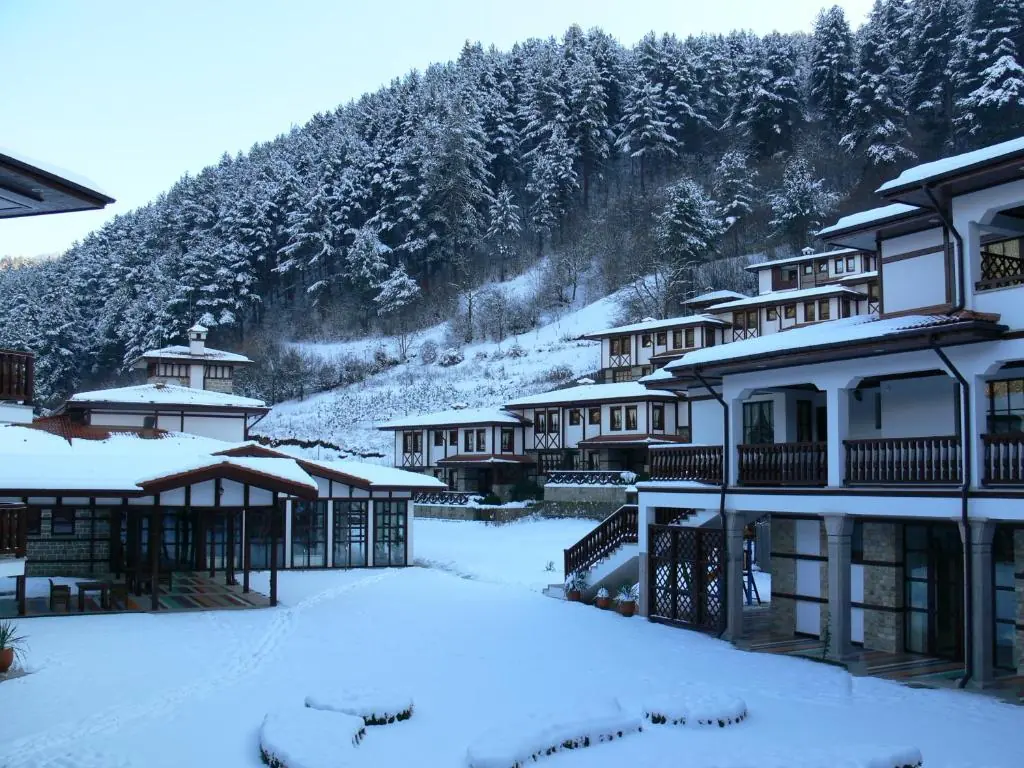
Legend says that Orpheus went down to the underworld through the Devil’s Throat, a cave in the gorges near Devin. The warm water that rises from beneath these mountains has its own long story: archaeology shows that people bathed here more than 2,000 years ago, and between 1972 and 1982 six boreholes, the deepest of them 1,201 metres, were drilled to bring it back to the surface.
Today Devin has two waters. The town’s own springs come up at about 42 °C, and its spa hotels are also fed with 76 °C water piped in from the springs of Bedenski Bani. Half board with spa access starts at about €56–60 per person a night, and some hotels also sell day passes to non-guests, though they do not publish the prices, so ask at reception.
Devin is quieter and greener than Velingrad, and that is its appeal: a small town in a deep Rhodope valley, with a handful of four-star spa hotels and little else to distract you. Spend a day in the gorges first, with the Devil’s Throat and Trigrad from our guide to Bulgaria beyond the cities, and end it in hot water, which is more than Orpheus managed.
Hisarya: Roman Walls and Twenty-Two Springs
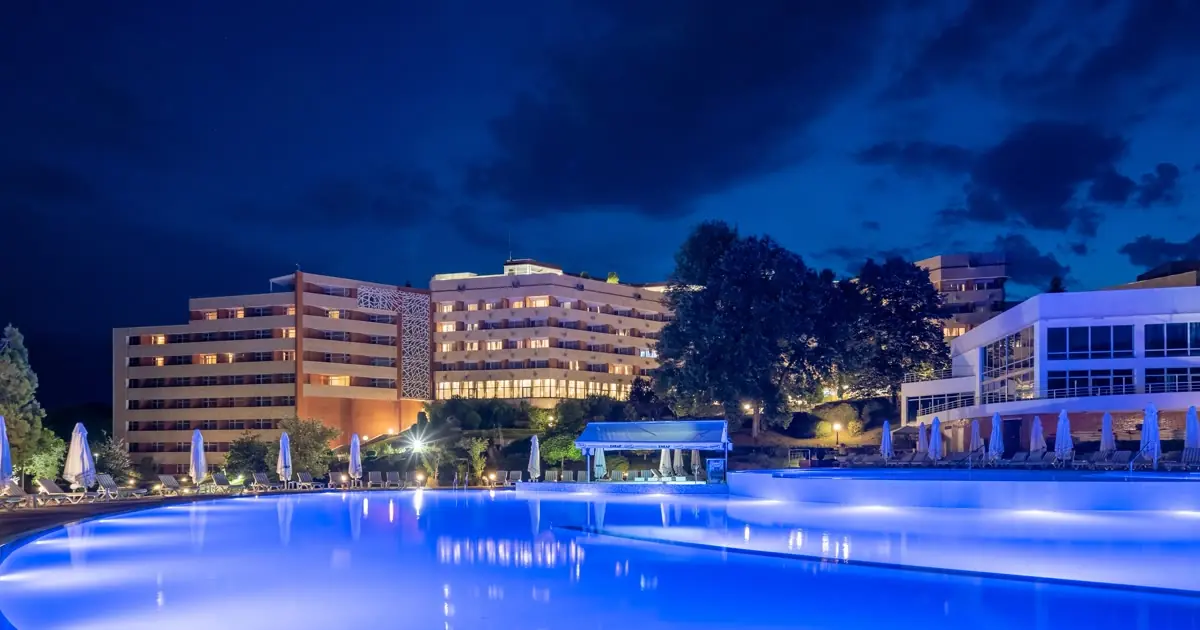
Legend says that a girl was burned at the stake in Hisarya, and that she wept so bitterly her tears became the town’s springs. One of them still carries her name: Momina Salza, the Maiden’s Tear. The Romans saw the water more practically. In 293 Emperor Diocletian made the place a town, and stretches of its Roman walls and towers still stand today, among the best-preserved Roman fortifications in Bulgaria.
Inside and around those walls rise some 22 mineral springs, at 41–52 °C, and locals will tell you that each tastes slightly different. Several spa hotels sell a day in their pools to visitors. At Terme di Hissar, a full day costs about €17 on weekdays and €22 at weekends in summer, and the Augusta spa hotel charges about €17 for the day or €10 for a weekday evening.
Hisarya is the town for history with your soak, best in spring and autumn, when walking the walls is a pleasure rather than a test of endurance. It is a short drive from Plovdiv, and the Thracian temple of Starosel is close by, so you can pair a morning in the past with an afternoon in the pools, as our Thracian Heritage Trail does.
Sandanski: Sunshine and Spartacus
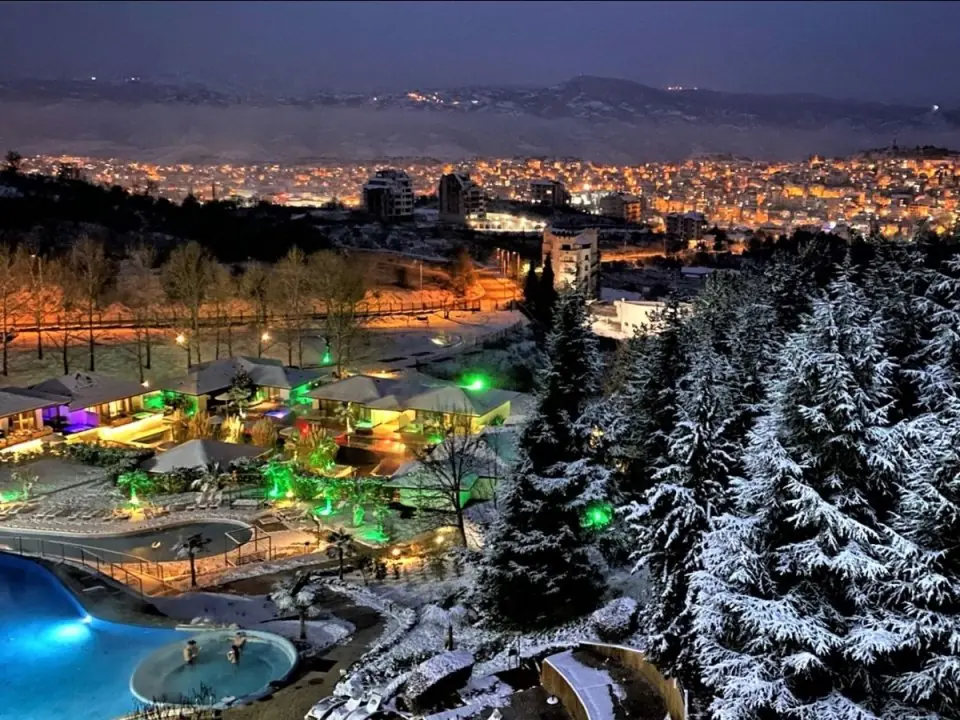
According to tradition, Spartacus, the gladiator who shook Rome, was born near Sandanski. Two thousand years later the town took its name from another rebel, the revolutionary Yane Sandanski. In between, the Romans built Parthicopolis here, a provincial town that, like so many in Bulgaria, grew up around its warm springs.
Those springs still feed the town. Some 16 of them rise in the valley, with water at up to about 80 °C, and the big spa hotels pipe it into their pools; the Interhotel Sandanski alone has three mineral pools, one of them an outdoor pool kept at about 38 °C. Half board with mineral pools and spa costs about €78–95 per person a night at one of the larger spa resorts.
What really sets Sandanski apart is the light. Lying in the warm Struma valley, it is known as the sunniest town in Bulgaria, which makes it the best choice in spring and autumn, when the mountain spa towns are still cold. Spend a day among the sand pyramids of Melnik and the Rozhen Monastery, both in our guide to Bulgaria beyond the cities, and come back to a warm pool in the sun.
The Black Sea: Burgas, Pomorie and Varna
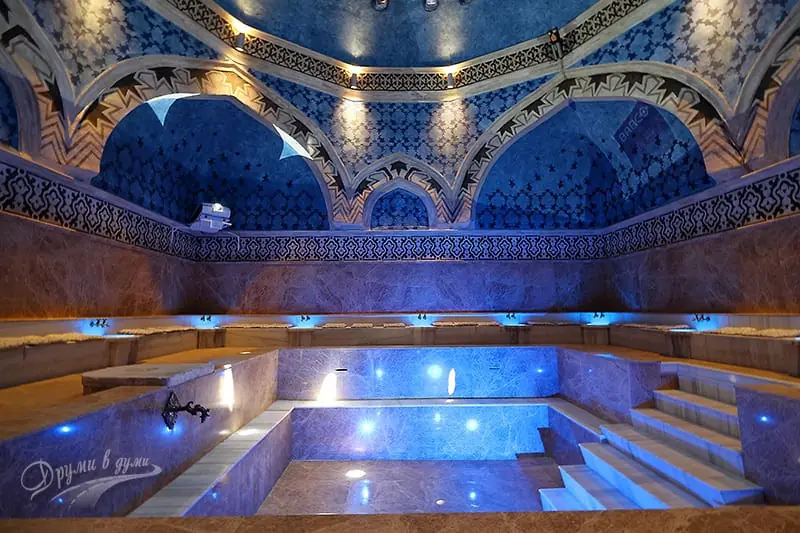
The bath that Sultan Suleiman ordered, the one this post began with, stands at Aquae Calidae, "warm waters", on the edge of Burgas, where two hot springs rise at 42–53 °C. Long before him, the Thracians worshipped three healing nymphs here, and archaeologists have found more than 4,000 coins that bathers threw into the spring’s pipes. Today the restored hamam is a museum, about €3.50 with a 3D show on its history, and the Aqua Centre next door lets you soak in the same water for about €8 an hour or €13 for three.
Twenty kilometres up the coast, Pomorie heals with something else: the mud of its salt lake, so salty that it still yields some 30,000 tonnes of salt a year. At Grand Hotel Pomorie the mud is piped straight in from the lake, a full-body mud bath costs about €20, and a day in the spa about €35 on weekdays and €40 at weekends.
Further north, near Varna, St Constantine and Helena calls itself the first Bulgarian sea resort, and its water comes from seven springs drilled up to two kilometres deep, at 40–60 °C. Its Aquahouse thermal centre, with pools at 30–42 °C, costs about €31 a day on weekdays and €36 at weekends. Unlike the beach resorts, all three stay open all year, so a spa with a sea view works even in winter; our Burgas Coast and Varna guides cover the rest of the coast.
Also Popular
Beyond the towns above, two more are well loved by Bulgarians. In Kyustendil, near the border with North Macedonia, water at about 74 °C fills Chifte Banya, a bath built on top of an Ottoman one from 1489 and a Roman sanctuary of healing before that. And in Bankya, a leafy suburb just west of Sofia, the Central Mineral Bath of 1911 is the easiest soak to reach from the airport.
Before You Book
Not every pool called a spa is filled from a spring, so the most useful question is whether the pool holds real mineral water. Bulgaria has three kinds of bathing: hotel spas with pools, saunas and treatments, often with a medical wing; municipal baths, simple and cheap; and open springs and taps, where you can fill a bottle wherever a sign allows it.
Bring a swimsuit, pool slippers and a swimming cap, which many pools expect, and shower before you swim. If you have a heart or blood-pressure condition, are pregnant or take regular medication, check with your doctor first, and keep your soaks short.
The spa towns are open all year, but each has its season: winter for the pools near the ski slopes, spring and autumn for Sandanski and Hisarya, and late autumn, midweek, for a pool almost to yourself. Start with Velingrad, then follow the warm water wherever your trip takes you.