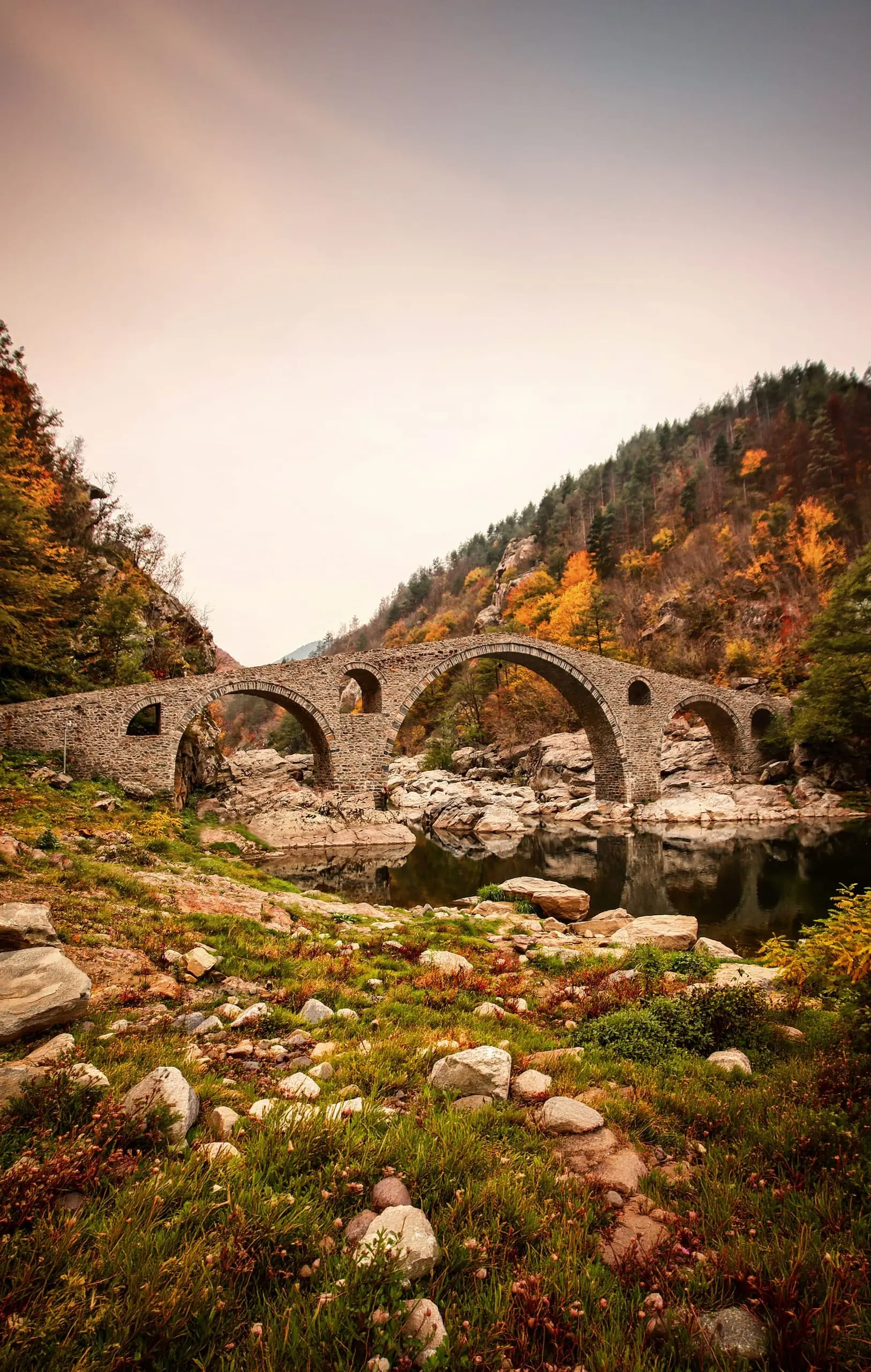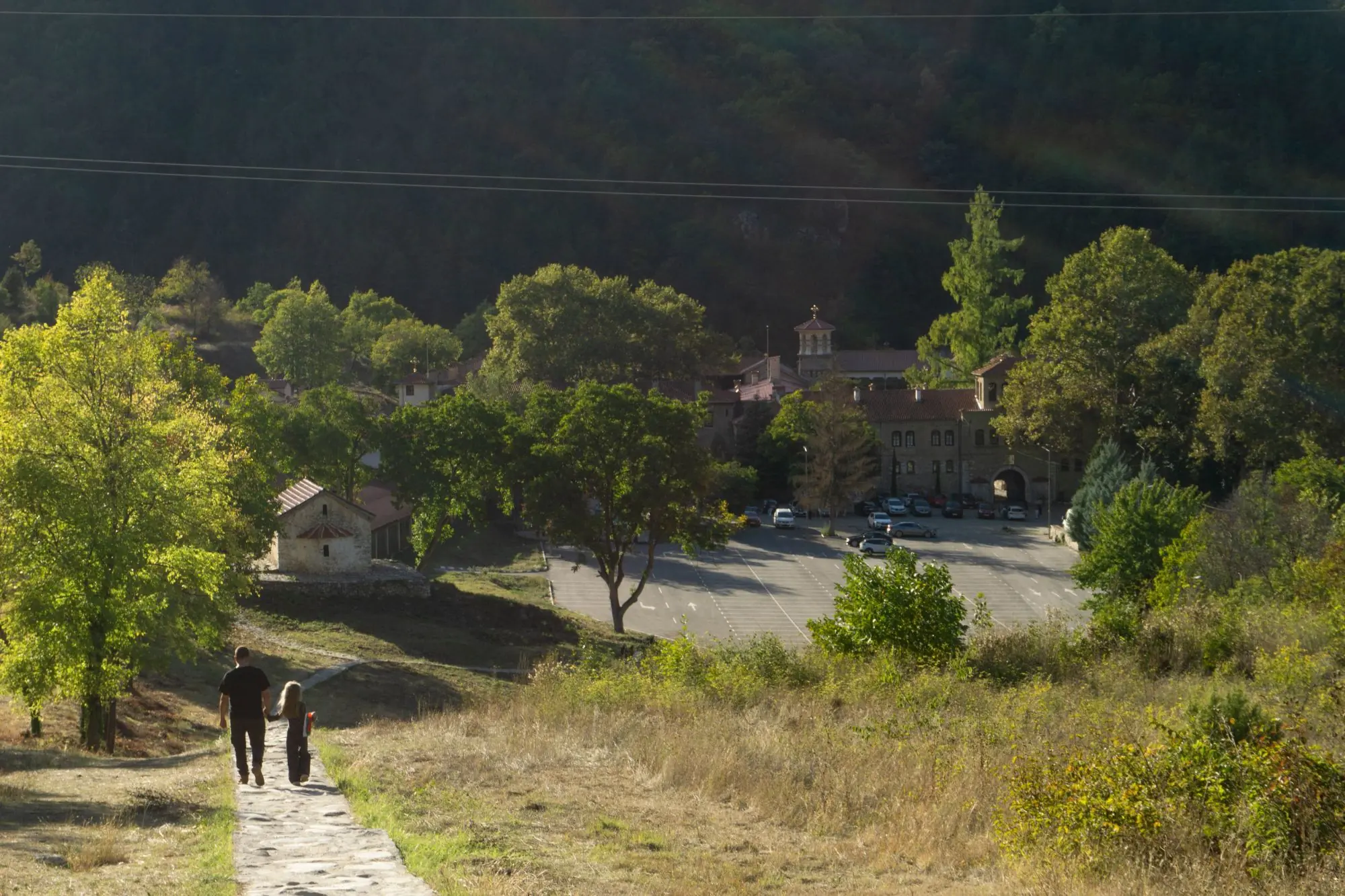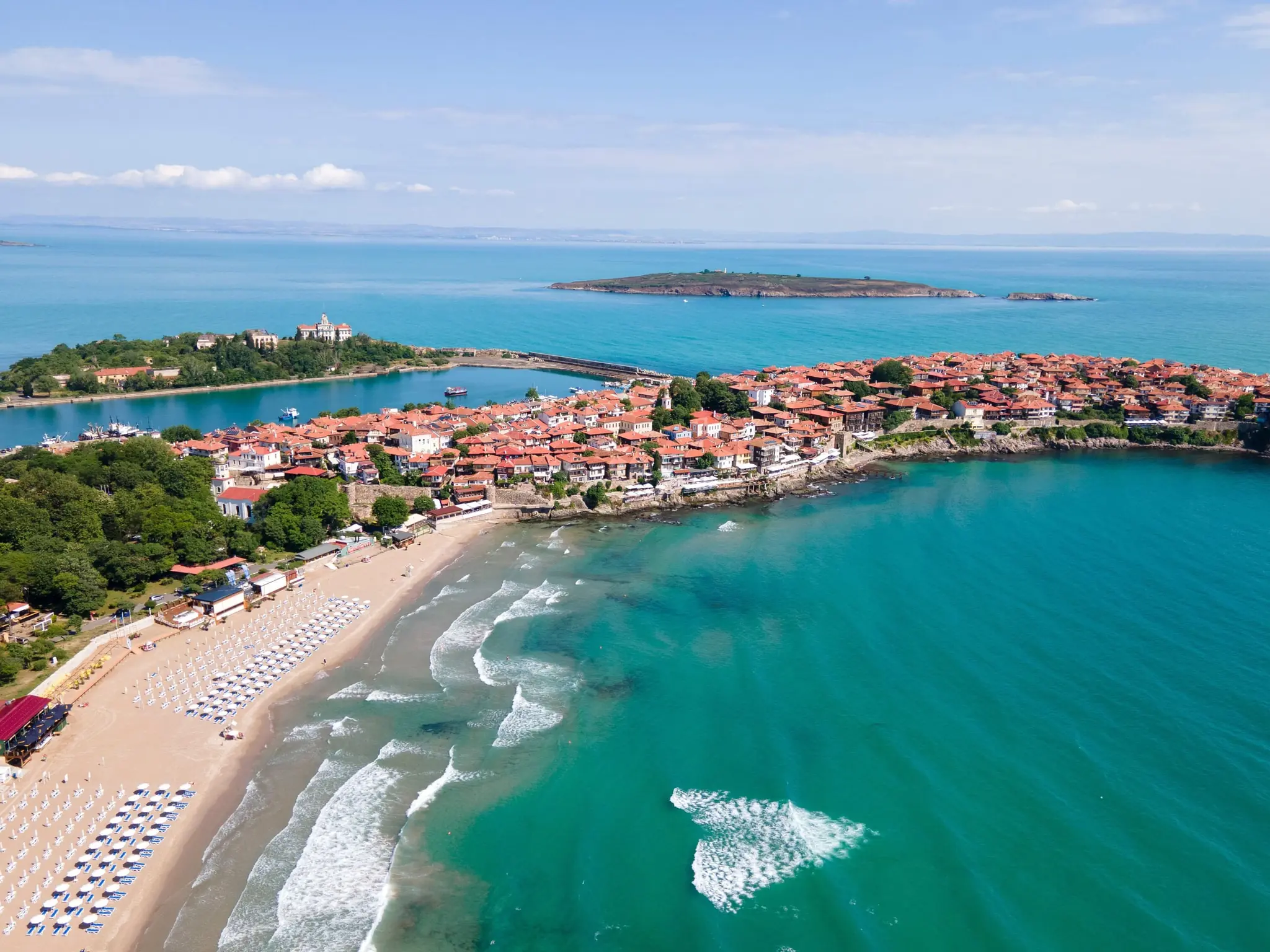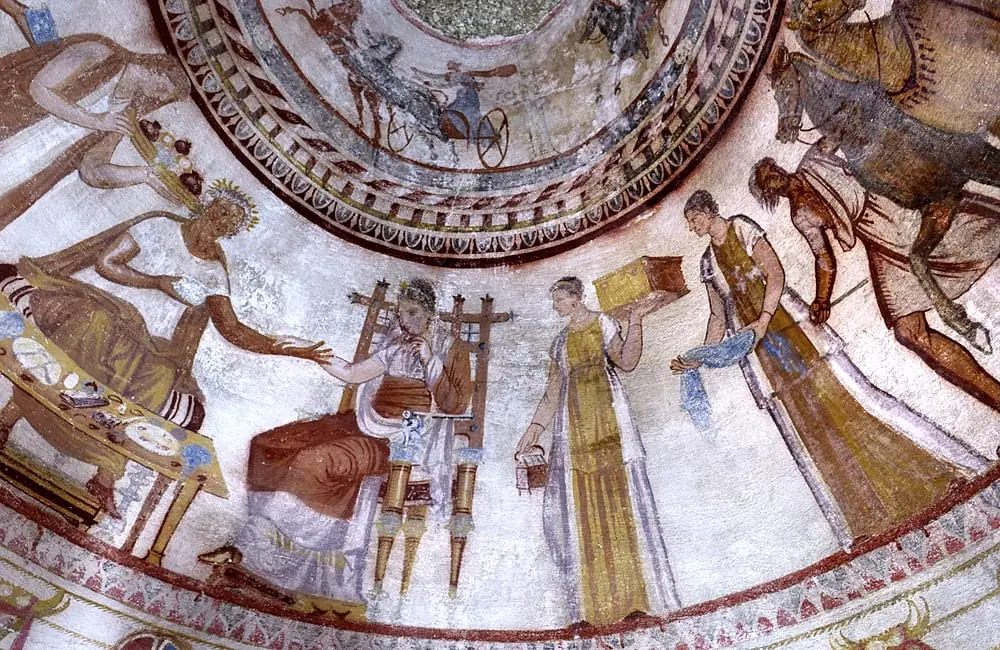
In 1944, soldiers digging a trench near Kazanlak broke into a small round chamber. Under its dome a painted couple clasped wrists at a funeral feast, in a painting some 2,300 years old. The original is now sealed to protect it, and visitors see an exact replica nearby. That is the whole Thracian trail: mounds, copies and treasure behind glass, and behind each of them a story worth hearing.
This route follows what the Thracians left behind. It runs through the Rose Valley, Starosel, the Eastern Rhodopes with Perperikon and Tatul, and the north-eastern tomb of Sveshtari, while the silver of Rogozen is worth a detour to Vratsa. Along the way you will step into the stone tombs of Thracian rulers, climb to the rock where, legend says, an oracle foretold the future of Alexander the Great, and learn of a royal city that lies beneath the waters of a reservoir.
Good to know: this guide was checked in October 2026. Small rural sites keep short hours or open only on request, so confirm hours and prices on the official sites. We give prices only where an official source confirms them.
Who Were the Thracians?
The story of these lands begins with gold. Long before the Thracians, around 4600–4200 BC, people near Varna buried their dead with ornaments that are among the oldest worked gold in the world; our Varna guide covers them. Thousands of years later, the Thracians would carry on the same custom.
They enter written history through Greek eyes. In the fifth century BC Herodotus wrote of them:
The Thracians are the most numerous people after the Indians. If they had one ruler, or could agree among themselves, they would be invincible.
They never did: the Odrysians, Getae, Triballi, Serdi and Bessi stayed separate tribes. Herodotus also reports that Thracians wept at a birth and celebrated at a funeral, which may be why they put so much wealth into their graves. The Greeks also gave them their most famous singer, Orpheus, whose lyre could move rocks and rivers. Legend says he went down to the underworld to bring back Eurydice, and the Devil’s Throat cave in the Rhodopes is said to be his way in.
In the fifth century BC the Odrysians built the strongest Thracian state, the Odrysian kingdom. A century later, though, Philip II of Macedon, Alexander’s father, brought much of Thrace under his rule. Yet the Thracian kings did not disappear. In the late fourth century BC the Odrysian king Seuthes III raised a capital of his own near Kazanlak, Seuthopolis. Then came Rome: in AD 46 Thrace became a Roman province, and Thracian names and gods lived on in Roman reliefs.
More than two thousand years later both the city and the king came back to light: Seuthopolis while a dam was being built in 1948, and the bronze head of Seuthes III in a mound near Shipka in 2004. You will hear both stories along the trail.
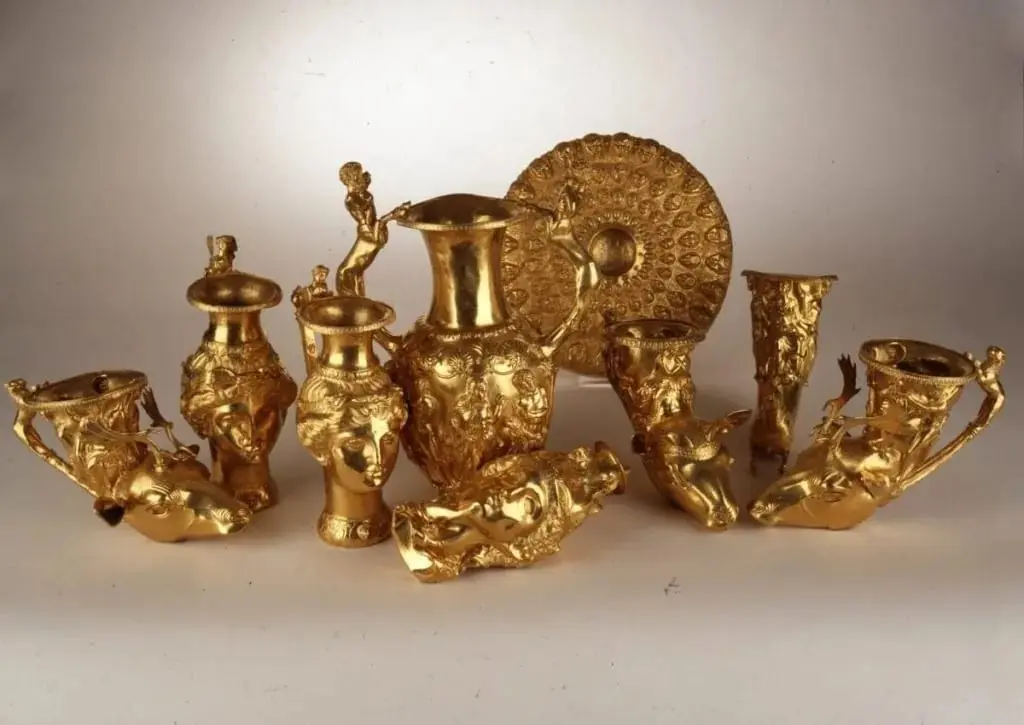
The Thracians left no books, so their graves tell the story: gold, silver, bronze and stone chambers under the mounds. But graves are not chronicles: the dates of the finds are approximate, and archaeologists still argue over many of them. That is why this route runs from mound to mound: each tomb adds a page to the tale.
The Trail, Day by Day
The trail is a single seven-day drive: from Sofia through the sanctuaries of Starosel, the gold in Plovdiv, the rock cities of the Eastern Rhodopes and the royal tombs around Kazanlak to Sveshtari and the ancient gold of Varna. Each day is laid out so you never double back, and under its heading you will see how far you drive. If you have one more day, at the end you will find a trip to the silver treasure in Vratsa.
Tip: the finds are in the museums, while at the sites themselves you will see mounds, rock sanctuaries and tombs. So, where you can, start at the museum: once you have seen the gold in its case, the empty mound it came from starts to make sense.
Without a car: the trains are old and do not reach the sites, and regional buses link Kazanlak, Kardzhali, Razgrad and Vratsa only with larger towns. The last stretch to each site is rarely served, so without a car it is easier to join an organised tour.
No car? Book a tour
Guided day trips and activities in Bulgaria, with no driving needed.
Browse experiencesDay 1: Starosel
Sofia → Starosel: about 2 h
Starosel → Plovdiv, for the night: about 1 h
Before you set off: pick up the car in Sofia on the morning of day one. A vignette is needed for most roads: see our country guide. Save every site as a pin in your navigation app now, as signs to them can be sparse.
In Starosel the vineyards run right up to the mounds. Here, at the foot of the Sredna Gora, the Thracians built temples for their kings. The sites make most sense with a guide.
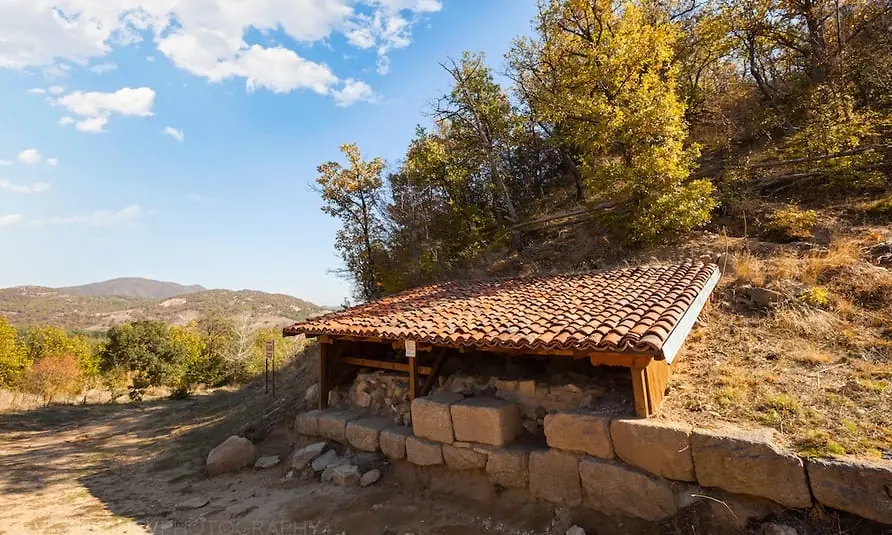
In 2000 the archaeologist Georgi Kitov excavated the Chetinyova Mound and found something more than a tomb beneath it. The foot of the mound is ringed by a stone wall 241 metres long, and a stone staircase, once guarded by two lions, leads to the entrance. The lions were stolen, and today only three of their paws remain.
241metres
is the length of the stone wall ringing the Chetinyova Mound.
A corridor and an antechamber lead to a round hall 5.4 metres across, with ten columns around its walls. Kitov was convinced it was the temple of a deified king and linked it to Sitalkes; other scholars name Amadocus II. The debate goes on.
The Chetinyova Mound is not the only temple here, though. A short walk down the hill, under the Horizon mound, the Thracians built a second one, with a colonnade of ten Doric columns. And high in the mountains, on Kozi Gramadi peak, probably lived the nobles these temples were raised for. Their fortress fell to Philip II of Macedon in 341 BC. So in Starosel you see the whole Thracian world in one place: the fortress up in the mountains and the temples below, where the nobles were honoured even after death.
Opening times:
| Chetinyova Mound | |
|---|---|
| Daily | 08:30–16:00 |
| In summer | often until 17:30–18:00 |
Admission:
| Price | |
|---|---|
| Adult | about €1.50–€2 |
| Pupil, student or senior | about €0.50 |
| Guided tour in Bulgarian | about €3 |
Website:
- Parking by the Starosel sites is free.
Horizon: entry is free, and the site is open-air, so you can visit at any time. More information
Kozi Gramadi: entry is free, and the ruins are open-air with no staff. You reach them on a long hike or by 4x4; for a guide, ask the tourist information centre in Hisarya. More information
Day 2: Plovdiv and the Panagyurishte Treasure
A day in Plovdiv, no driving
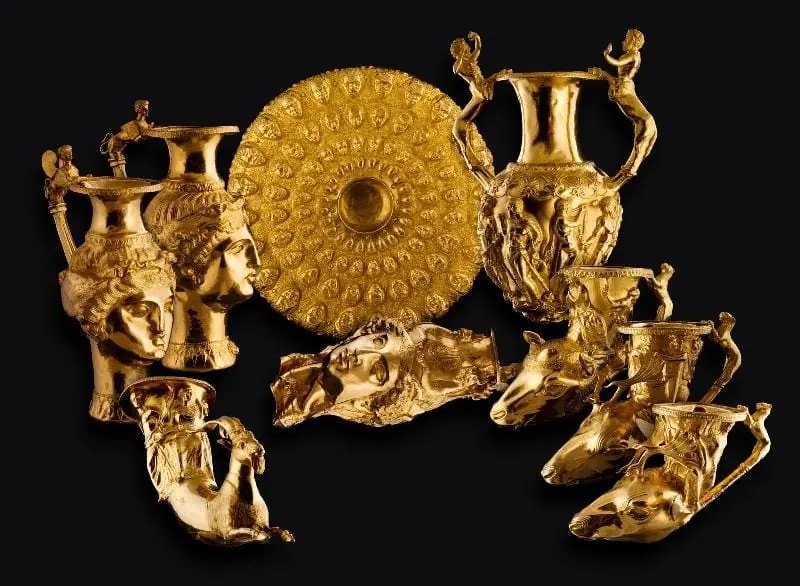
On 8 December 1949 three brothers, the Deikovs, were digging clay for the tile factory near Panagyurishte when they hit something hard. Out of the earth came nine gold vessels, about 6 kg of pure gold, shining as if they had been made yesterday. The brothers handed the find over, and it reached the museum in Plovdiv.
Only there did it become clear what they had found: a Thracian ruler’s entire wine service. It holds four rhyta, drinking horns shaped as animal heads, three jugs shaped as women’s heads, a large flat phiale and an amphora with handles in the shape of centaurs. Scenes from the Greek myths come alive on their sides.
The treasure dates from the late fourth or early third century BC and was probably buried in a time of danger, and its owner never came back for it. Today it is among the most famous Thracian finds in the world and often tours the great museums, so before you head to the Regional Archaeological Museum in Plovdiv, check that it is there.
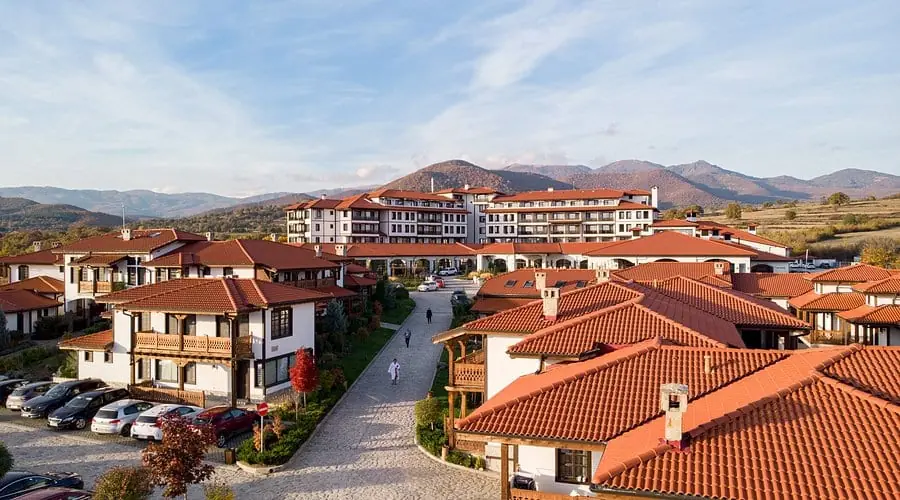
Find a place to stay
Hotels, apartments and current prices for Plovdiv, the best base for Starosel, the Rhodopes and the Panagyurishte gold.
See stays in PlovdivDay 3: Kardzhali and Perperikon
Plovdiv → Kardzhali: about 2 h
Kardzhali → Perperikon: 20–30 min
The further east you go in the Rhodopes, the fewer pine forests you see and the more bare, rocky ridges. Here, around the Kardzhali reservoir, the Thracians worshipped their gods not in temples but on the tops of rocks. Your base is the town of the same name, with its mixed Bulgarian and Turkish population, from where you can reach both sanctuaries.
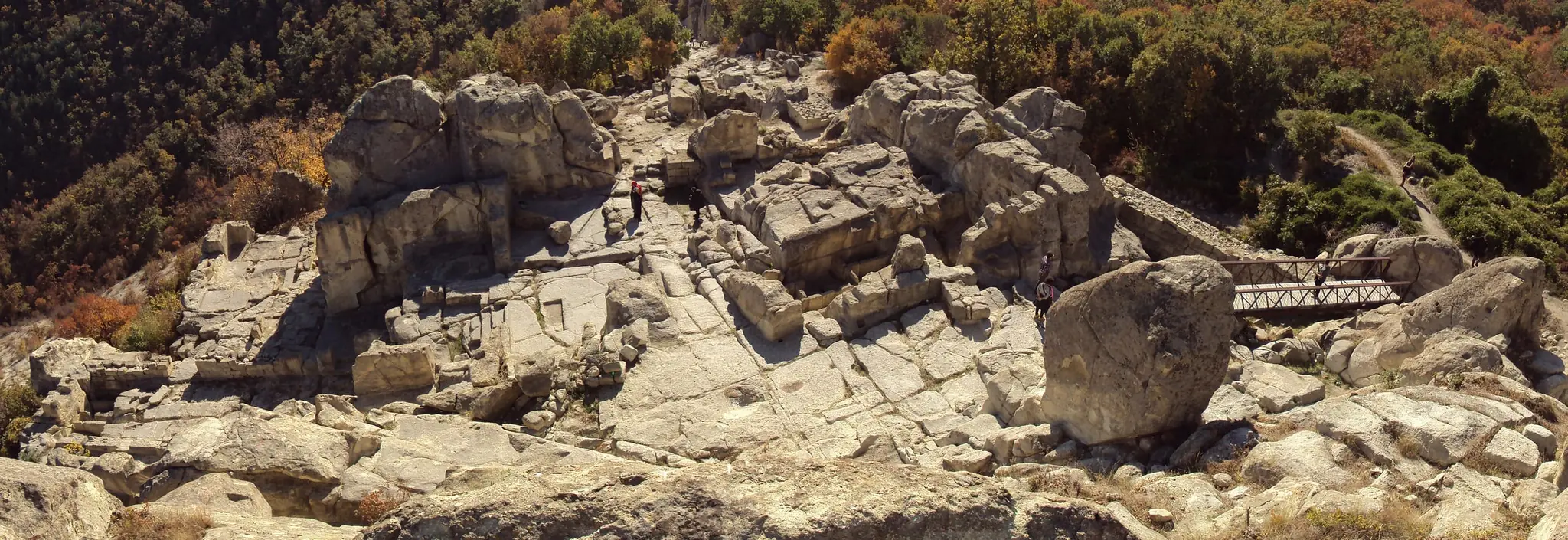
Legend has it that in 335 BC the young Alexander the Great came to the Rhodopes to ask the oracle of Dionysus what lay ahead. The wine poured on the altar flared so high that the priests read it as a sign: Alexander would conquer the world.
Three centuries later the Roman historian Suetonius tells of the same miracle before the father of the future emperor Augustus.
When the father of Augustus poured wine on the altar, a flame shot up above the roof to the sky, a sign that had come only to Alexander the Great at the same altar.
The archaeologist Nikolay Ovcharov, who excavates Perperikon, is convinced the famous altar stood right here, though not all scholars agree with him.
From afar the hill looks like an ordinary rock, until you notice the steps, corridors and halls cut into the stone. People came here to worship some 7,000 years ago, and over time the hill grew into a whole town. At the top is the acropolis, ringed by walls almost three metres thick. Below it lies the palace-sanctuary, a maze of more than 50 halls, rooms and stairways, and in one roofless hall stands a round rock altar about two metres across, perhaps the very one where the wine flared. Later the sanctuary became a bishop’s seat, and life here went on until the Ottomans arrived in 1362.
Opening times:
| Season | Hours |
|---|---|
| May–September | Daily, 08:00–20:00 |
| October–April | Daily, 08:30–18:00, or until dusk |
Admission:
| Ticket | Price |
|---|---|
| Adult | About €7 |
| Student, pupil or senior | About €3 |
| Family (2 adults + 2 children) | About €15 |
| Child under 7, visitor with a disability | Free |
| Group of 20 or more | 50% off |
| Guided tour (book ahead) | About €26 |
| Audio guide | About €4 (about €2 on your own phone) |
Website:
- The climb is about 30 minutes uphill over uneven stone steps, with almost no shade. Allow about two hours.
Day 4: Tatul
Kardzhali → Tatul: 45–60 min
Tatul → Kazanlak, for the night: about 2 h 30
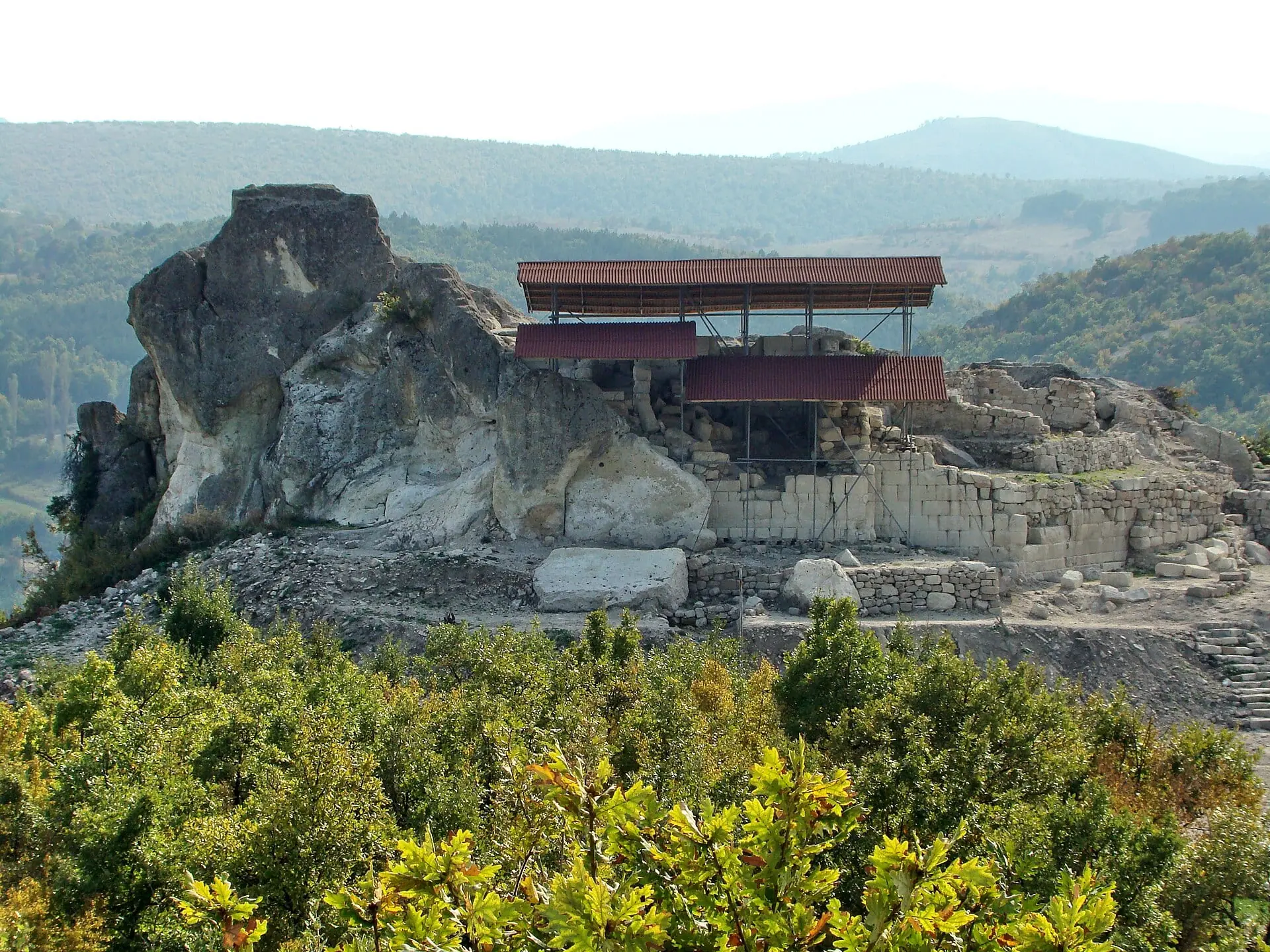
The Thracians counted Orpheus as one of their own: the singer whose lyre charmed wild beasts and opened even the gates of the underworld. When he lost his beloved Eurydice, he went down to the land of the dead to bring her back, but looked back too soon and lost her for ever.
Above the village of Tatul is a place that bears his name: Orpheus’ Sanctuary. Here the rock is carved into a truncated pyramid, two sarcophagi are cut into its top, and around it are a ring of altars and a well three metres deep. The idea that Orpheus was buried right here, though, dates only from the 1970s, and ancient writers disagree on where his grave lies.
Whatever lay in the sarcophagi, the place stayed sacred for a long time. Excavations turned up three model chariot wheels and part of a gold mask. Whether Orpheus ever lay here, we may never know. But stand on top of the rock and you will feel why the Thracians chose this very spot to be closer to their gods.
Opening times:
| Season | Hours |
|---|---|
| Summer | Daily, 09:00–20:00 |
| Winter | Daily, 09:00–17:00 |
Admission:
| Individual ticket | Group of over 20 | |
|---|---|---|
| Adult | about €3 | about €2 |
| Pupil, student or senior | about €1.50 | about €1 |
| Child under 7, person with over 90% reduced work capacity | Free | Free |
| Guided talk | about €13 | about €13 |
- The ground is uneven limestone with almost no shade.
After rain: some roads to the Rhodope rock sanctuaries are gravel, so check them before you drive on.
Day 5: Kazanlak and the Valley of the Thracian Kings
All the sites are a short drive from Kazanlak
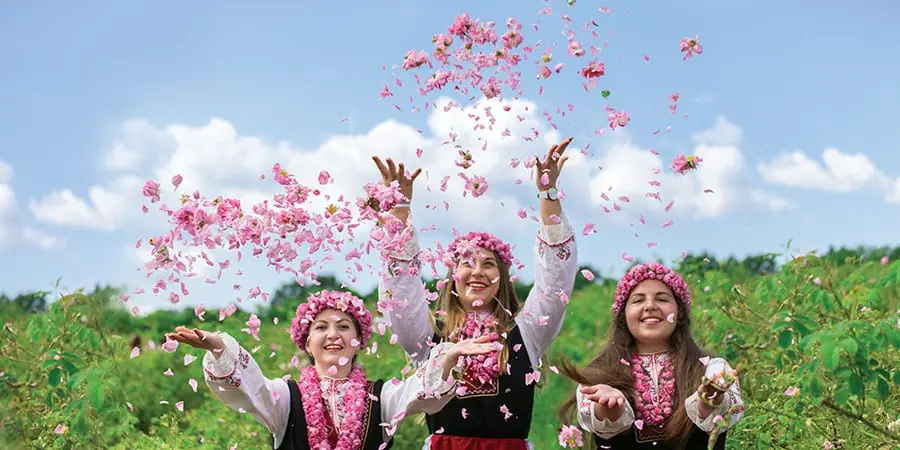
Kazanlak is the natural base for the core of the trail. It lies in the Rose Valley, where damask roses are picked by hand in late May and June. Picking starts early in the morning, because petals picked later hold less oil. At the height of the harvest, typically in early June, Kazanlak holds its Rose Festival. The town fills up then, so book your stay early.
Start at the museum, where the finds are, then go on to the replica tomb and the reservoir above Seuthopolis. Leave the mounds near Shipka for last: they take more walking, and some open only with a guide.
Iskra Museum, Kazanlak
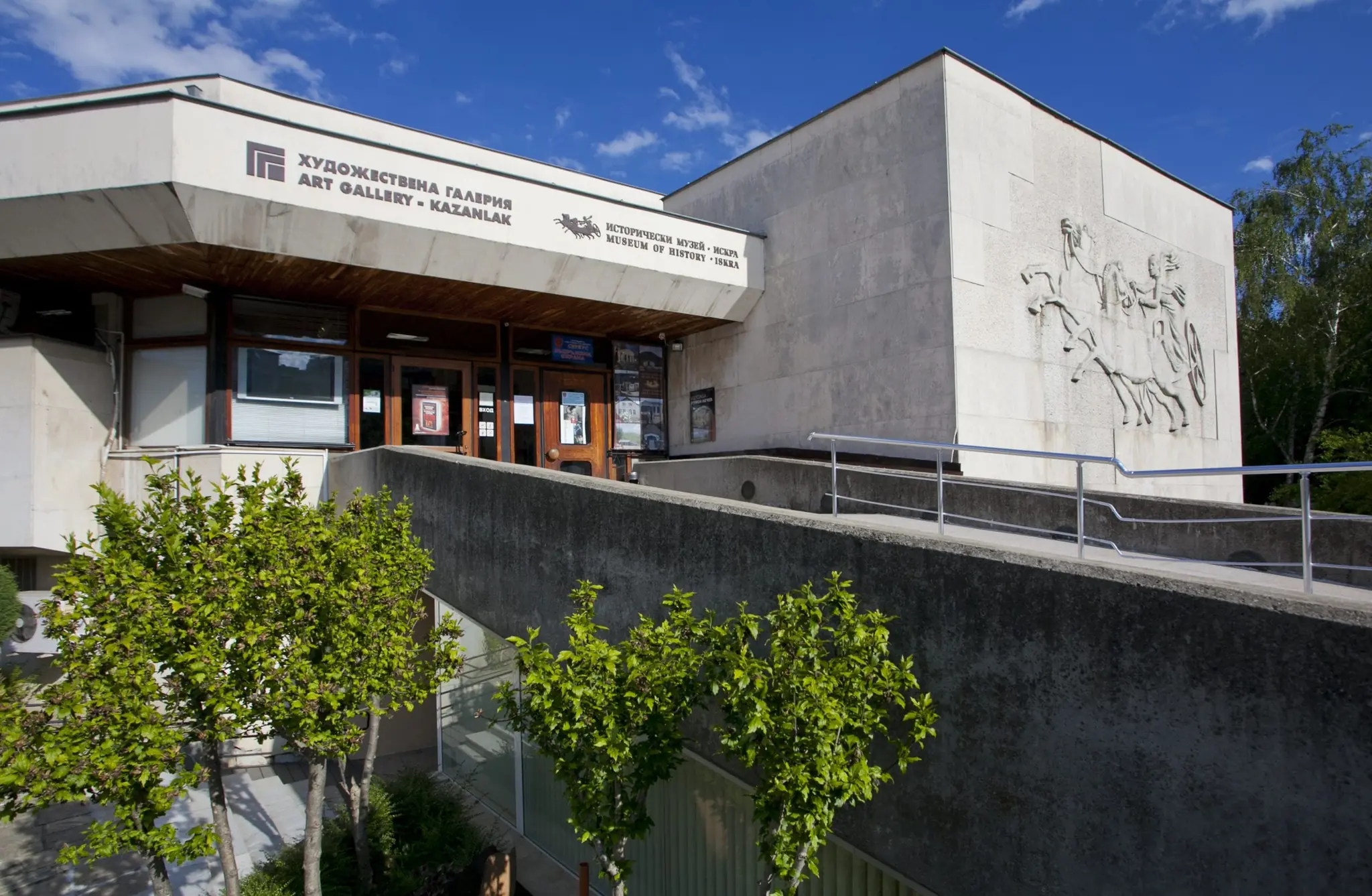
Most of the valley’s mounds are empty today. The gold, bronze and pottery buried with Thracian rulers are here, in the Iskra Museum, one of the oldest outside the capital, founded in 1901. Curiously, from 1930 to 1958 it was run not by an archaeologist but by the humorist writer Chudomir.
The star of the museum is the bronze head of Seuthes III, whose story we told above. Up close you can see every curl of the beard, and after 2,300 years the king’s gaze is still stern. The head sometimes travels to exhibitions, so ask whether it is in.
The museum also looks after the tombs in the valley: the Kazanlak Tomb replica, Kosmatka, Shushmanets, Helvetia, the Griffins and Ostrusha. This is where you find out which are open right now and which need a guide, before you set off for Shipka.
Opening times:
Daily, 09:00–17:30
Admission:
| Price | |
|---|---|
| Adult | €4 |
| Student | €1 |
| Child under 7 | Free |
| Guided tour in Bulgarian | €5 |
| Guided tour in a foreign language | €10 |
Website:
- Entry is free on the last Monday of every month.
Tomb of Kazanlak
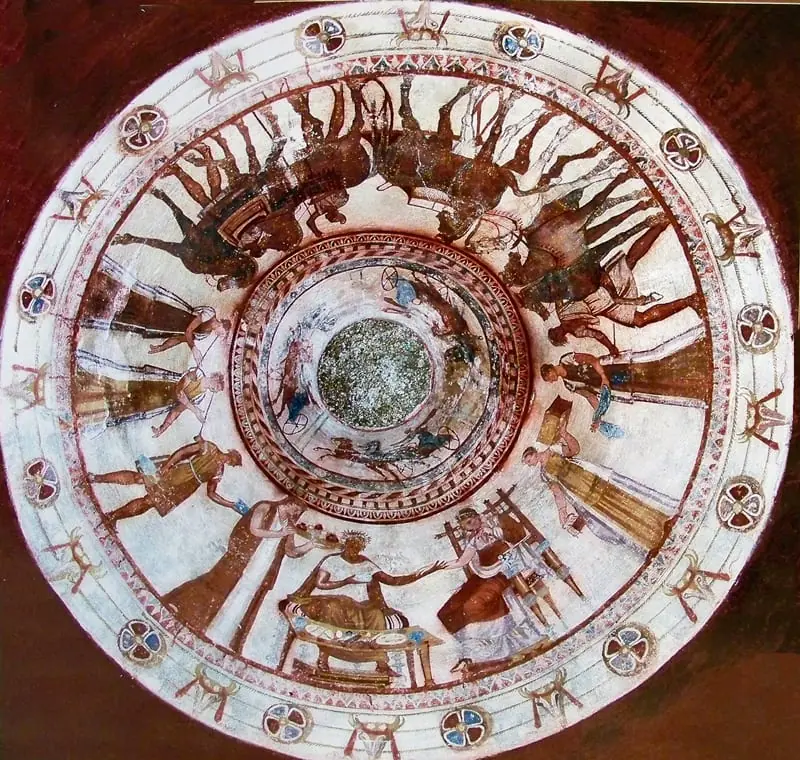
In April 1944 soldiers digging a trench on Tyulbeto hill in Kazanlak struck a brick wall. Behind it opened a narrow corridor painted with battles, and at its end a small round chamber. When the light reached the dome, faces emerged from the dark.
Up there, a Thracian ruler is saying goodbye to his wife. The two sit at a funeral feast; he gently holds her wrist, and her eyes are lowered. A procession of attendants with gifts and horses walks towards them, and around the crown of the dome chariots race. The scene was painted some 2,300 years ago.
The paintings proved so precious that in 1979 the tomb joined the UNESCO World Heritage list. They are also very fragile, so the original is closed, and visitors see an exact replica nearby, in the same park.
Opening times:
Replica: daily, 09:00–17:00
Admission:
| Price | |
|---|---|
| Adult | €3 |
| Senior | €2 |
| Pupil or student | €1 |
| Child under 7 | Free |
| Guided tour in Bulgarian | €2 |
| Guided tour in a foreign language | €5 |
Website:
- Entry is free on the last Monday of every month for individual visitors. Combined tickets covering several tombs and the museum cost €7.50 to €20.
Seuthopolis and Koprinka
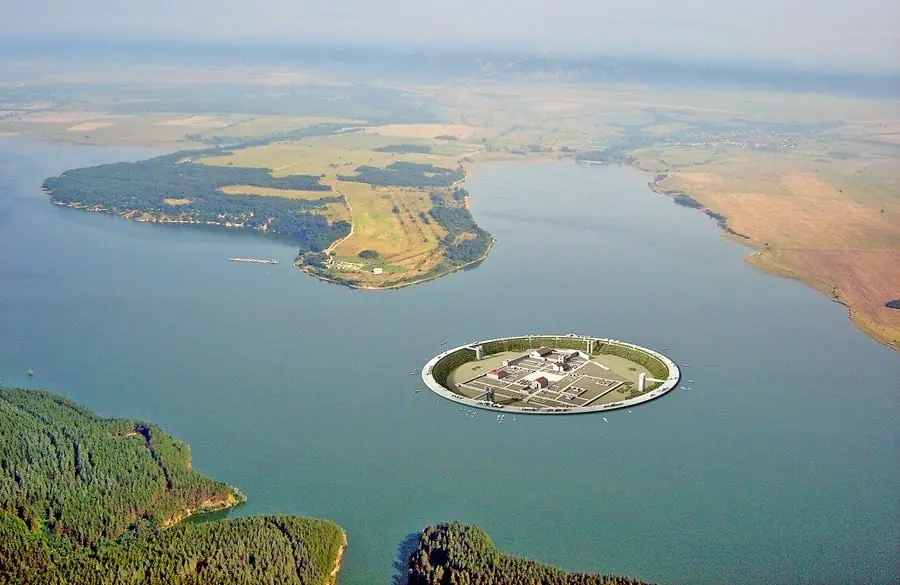
Stand on the shore of the Koprinka reservoir and look at the water. Some 20 metres beneath it lies Seuthopolis, the capital King Seuthes III built in the late fourth century BC and named after himself. His palace also served as a sanctuary, and around it, behind fortress walls, ran the streets and houses of his people.
In 1953 archaeologists found a stone slab with a Greek inscription in the palace. It records an oath in which the important decisions are made not by Seuthes but by his wife, Queen Berenike, together with their sons. That is why scholars believe the king was by then gravely ill or already dead.
The city itself was found by chance in 1948, when work on the dam began in the valley. Archaeologists were given six years to dig, but construction never stopped, and in 1954 the water flooded Seuthopolis. The finds are in the Iskra Museum; here on the shore, only the smooth surface keeps the city’s secret.
Mounds near Shipka
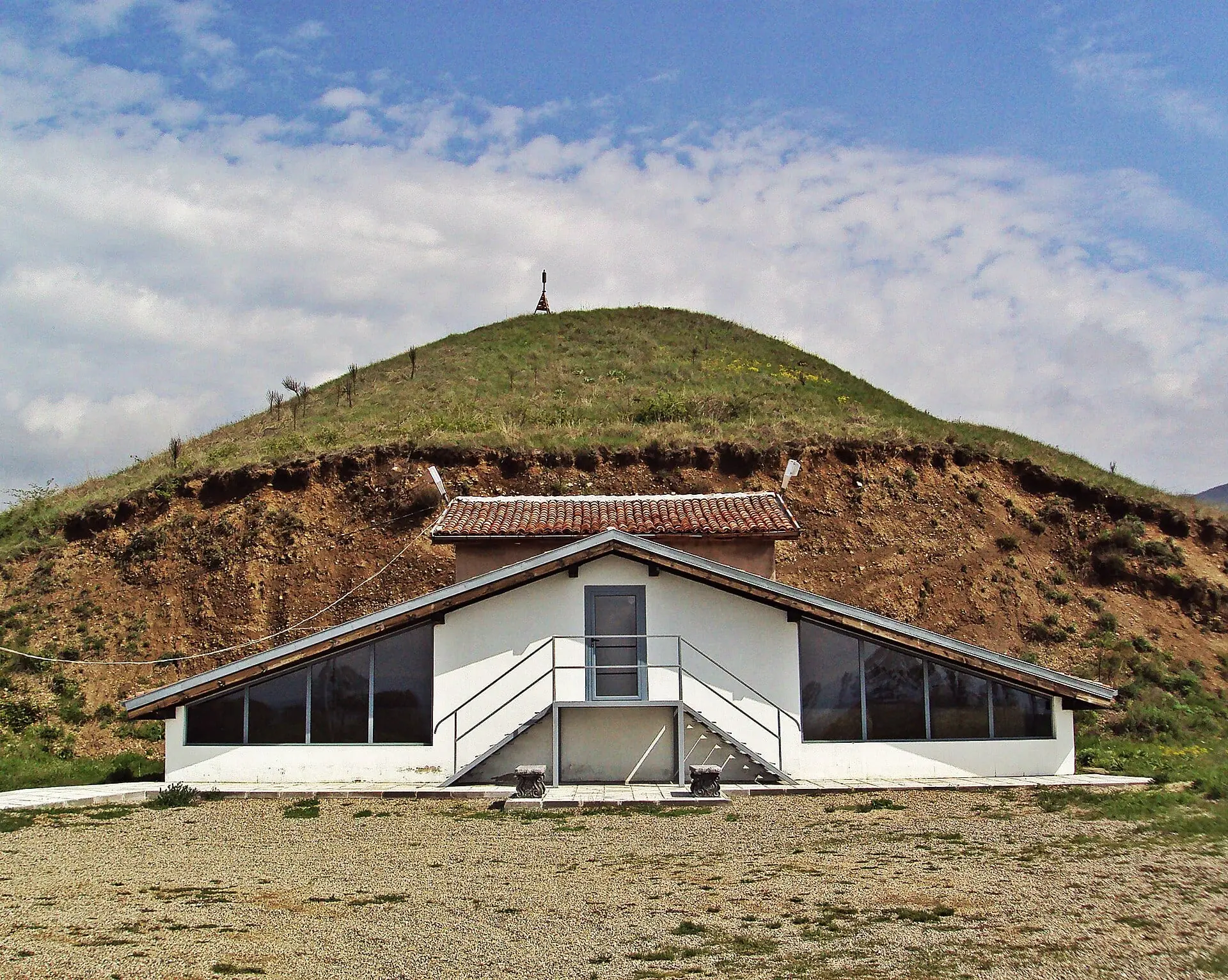
The road from Kazanlak to Shipka passes green hills you could easily take for natural ones. They are Thracian mounds, and many of them hide the tombs of rulers. Locals call one of them Golyamata Kosmatka, “the big hairy one”, for the trees that cover it.
In autumn 2004 Georgi Kitov’s team began to excavate it. In front of the entrance the archaeologists found the buried bronze head of Seuthes III, and on 4 October Kitov became the first person in 23 centuries to step inside. He passed through a chamber holding the skeleton of a horse, then a double stone door, and reached the burial chamber, carved from a single granite block of over 60 tonnes. Waiting there were a gold wreath of oak leaves and acorns, a gold wine cup, a bronze helmet bearing Seuthes’ name and greaves with gilded female faces.
60+tonnes
is the weight of the granite block the Golyamata Kosmatka burial chamber is carved from.
Close by is Ostrusha, a mound over 20 metres high hiding a tomb with six rooms. Its main chamber is carved from two huge granite blocks, and of its painted ceiling almost only one face survives: a young woman who still looks down at you. You can find out which tombs are open at the Iskra Museum, which looks after them.
Opening times:
Both tombs: daily, 09:00–17:00
Admission:
| Golyamata Kosmatka | Ostrusha | |
|---|---|---|
| Adult | about €3 | €3 |
| Senior | – | €2 |
| Student | about €1 | €1 |
| Child under 7 | – | Free |
| Guided tour in Bulgarian | – | €2 |
| Guided tour in a foreign language | – | €15 |
Website:
- A combined ticket of about €10 covers five tombs: Golyamata Kosmatka, Ostrusha, Shushmanets, Helvetia and the Griffins.
- At Ostrusha, entry is free on the last Monday of every month for individual visitors.
Day 6: Razgrad and Abritus
Kazanlak → Razgrad: about 3 h
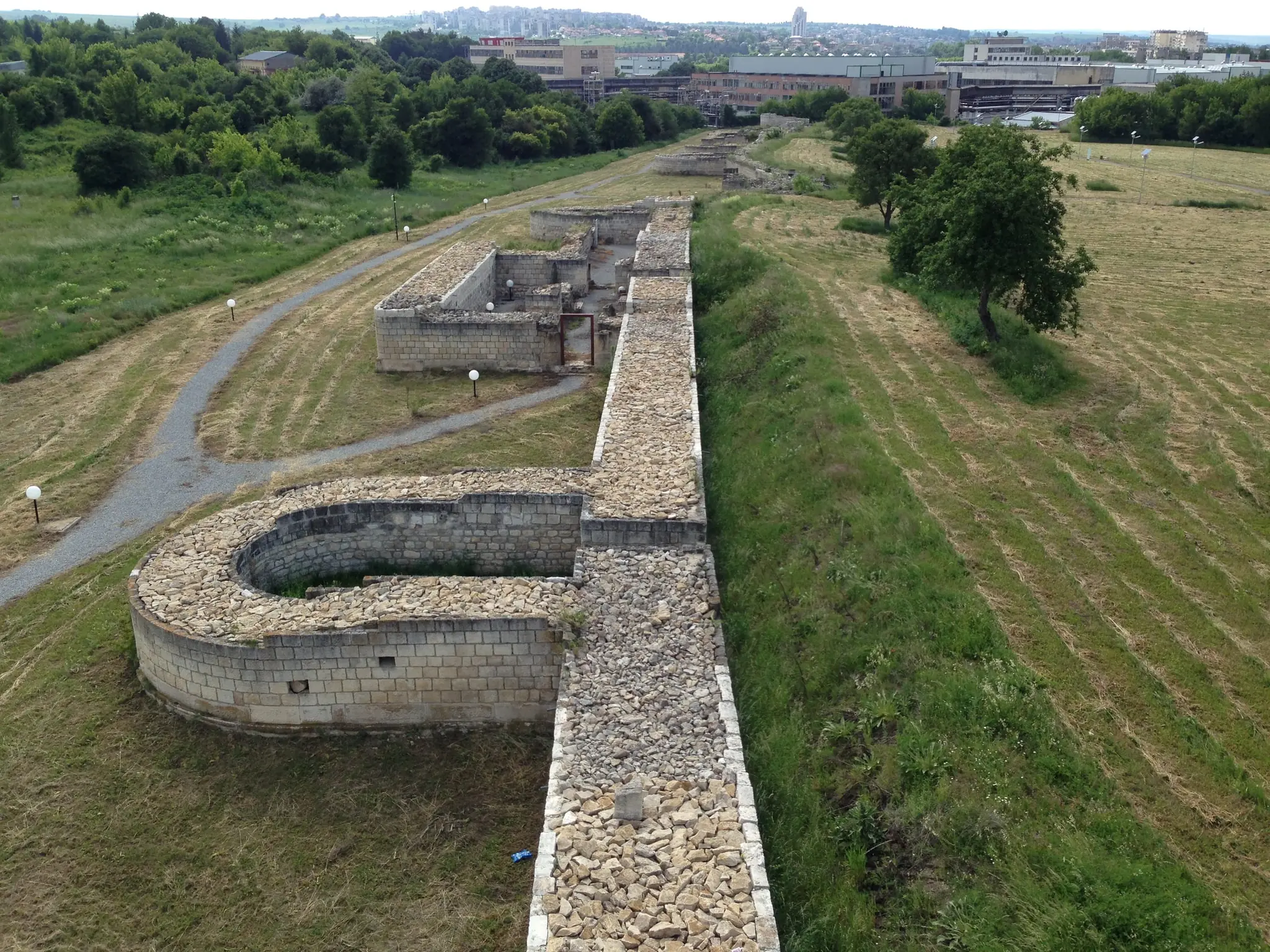
The Ludogorie is rolling farmland with small villages and a lot of sky. The drive is long, but two stories wait at the end of it: the field where a Roman emperor first died in battle against a foreign enemy, and the tomb of a king who outwitted one of Alexander the Great’s successors.
In the summer of AD 251 the emperor Decius was chasing the Goths of the chieftain Cniva, who were ravaging the Roman provinces south of the Danube. At Abritus the Goths lured him towards a marsh. Early in the battle an arrow killed the emperor’s son, Herennius Etruscus. According to the historian Jordanes, Decius did not halt the battle but told his soldiers:
Let no one mourn. The death of one soldier is no great loss to the state.
The Roman army sank into the marsh and was destroyed. Decius was killed and his body was never found: he was the first Roman emperor to die in battle against a foreign enemy.
Today Abritus is an archaeological reserve on the edge of Razgrad, with a stretch of fortress wall and a museum. Its greatest treasure is a hoard of 835 gold coins, buried centuries after the battle. Razgrad is also the handy place to stay the night before Sveshtari.
Opening times:
| Season | Hours |
|---|---|
| 1 April – 31 October | Daily, 09:00–17:00 |
| 1 November – 31 March | Monday–Friday, 09:00–17:00; weekends usually by appointment or closed |
Admission:
| Museum and lapidarium | Interactive museum | |
|---|---|---|
| Adult | about €3 | about €5 |
| Pupil, student or senior | about €1 | about €2.50 |
| Family ticket | about €5 | about €10 |
| Child under 7, visitor with a disability | Free | Free |
Website:
- Guided tours cost from about €5 to about €13, depending on the route and language.
Day 7: Sveshtari and Varna
Razgrad → Sveshtari: about 1 h
Sveshtari → Varna: 2 h 30 – 3 h
Tomb of Sveshtari
Around 292 BC Lysimachus, one of Alexander the Great’s successors, marched against the Getae and was taken prisoner. The Getic king Dromichaetes, though, did not kill him. Instead he held a feast: the Macedonians were served on gold and silver, the Getae from wooden bowls. Why, the king asked, would a rich ruler like you make war on a people who live so simply? Lysimachus went home alive, after making peace.
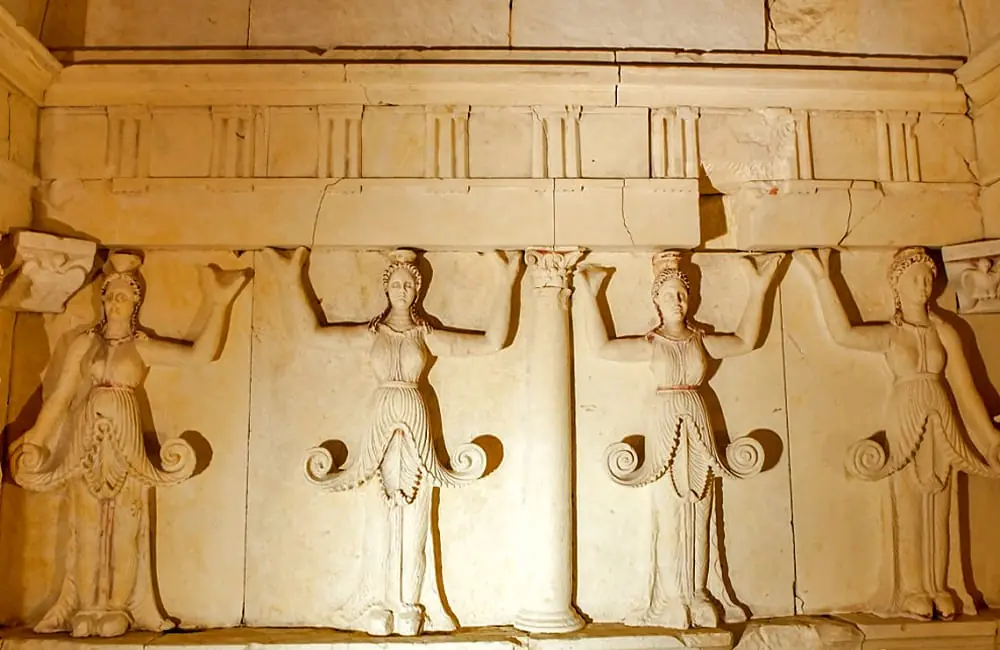
Then Dromichaetes vanishes from history. In 1982 archaeologists excavating Ginina Mound near Sveshtari stepped into three chambers with stone vaults. In the last one, ten stone women with raised arms, half human, half plant, were waiting for them, the only figures of their kind in Thracian lands. Above them a tall woman crowns a rider with a wreath: the moment the ruler becomes immortal.
The strange thing is that nothing here is finished, neither the painting nor the figures, as if the craftsmen put down their tools mid-work. Whether the tomb is Dromichaetes’ and whether the king died sooner than expected, no one knows. Since 1985 it has been on the UNESCO World Heritage list, and in the small chamber the mystery feels very close.
Opening times:
| Hours | |
|---|---|
| Season | mid-March to the end of November |
| Wednesday–Sunday | 09:00–12:30 and 13:00–16:30 (last entry 16:00) |
| Monday and Tuesday | Closed |
Admission:
| Ticket, prices listed in May 2026 | Price |
|---|---|
| Adult | €8.18 |
| Pupil or pensioner | €4.09 |
| Sborianovo combined ticket (the tomb, the ancient city of Helis and Demir Baba Teke), adult | €18.41 |
| Sborianovo combined ticket, pupil or pensioner | €9.20 |
| Child under 7, person with a disability | Free |
Website:
- You can only go inside on a guided group tour from the visitor centre, and groups are small, so on busy afternoons you may wait.
- Groups of more than 10 must book ahead.
No car to Sveshtari: if you come by taxi from Isperih or Razgrad, take a clearly marked car from a reputable company and agree the ride back before you set off, as the tomb is far from town.
Varna Archaeological Museum
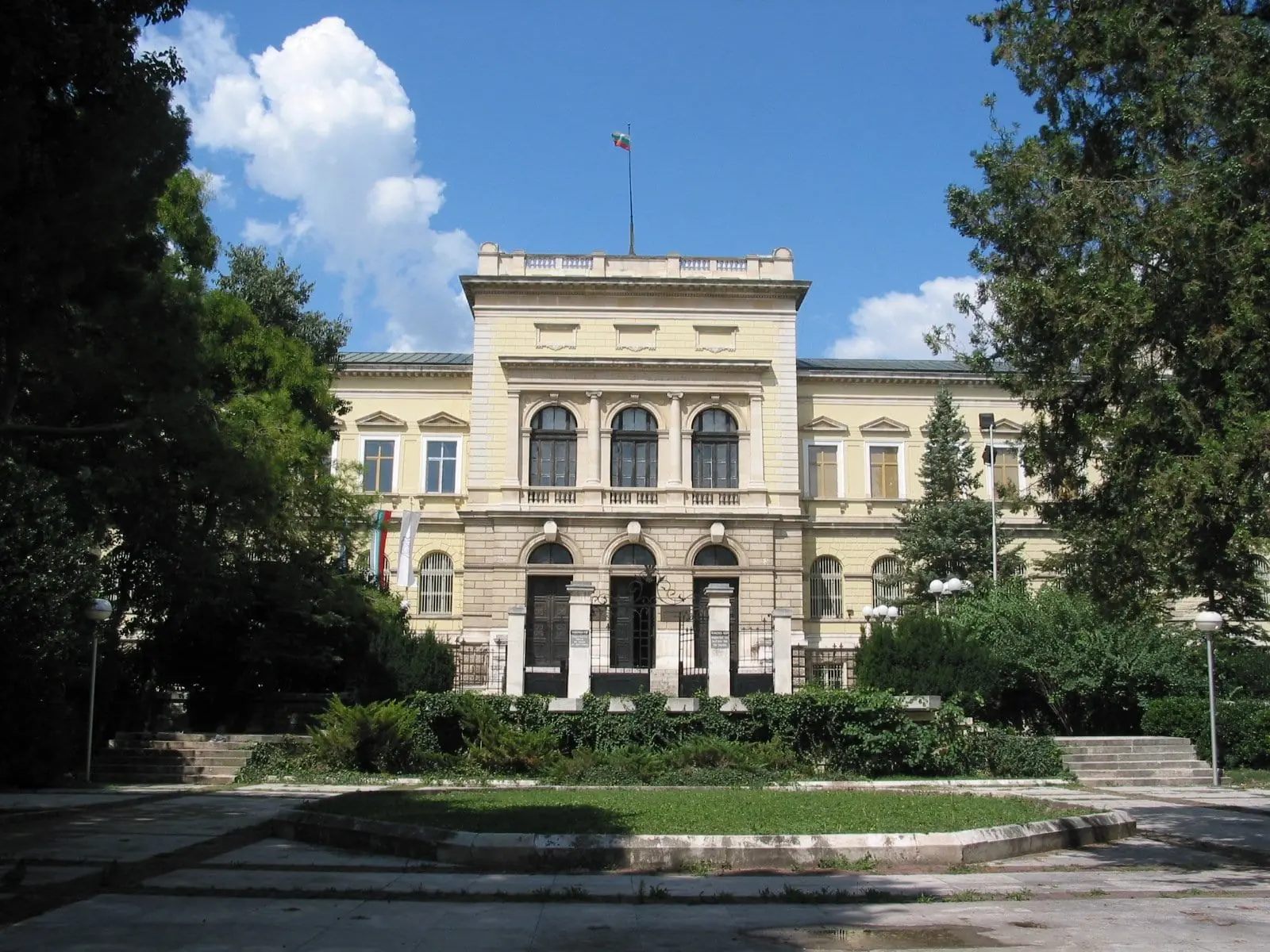
The last story is the oldest. In 1972 an excavator driver was digging a cable trench near Varna when the bucket of his machine brought up gold ornaments. The work stopped, archaeologists arrived, and the excavations went on for years. Beneath the ground lay a necropolis some 6,500 years old, with nearly 3,000 gold objects: among the oldest worked gold in the world.
6,500years
is the age of the Varna Necropolis gold, thousands of years older than any Thracian state.
The richest grave, No. 43, belongs to a man buried with more than one and a half kilos of gold: bracelets, ornaments and a sceptre sheathed in gold. He was probably a chieftain or a priest, one of the first people in history whose power shows in his gold.
Even more mysterious are the graves without bodies: instead of the dead, they hold clay masks with gold ornaments where the eyes and mouth should be. Whom the people who buried them were mourning, we do not know. We only know that the gold was here thousands of years before the Thracians, and today you can see it in the Varna Archaeological Museum.
Opening times:
| Season | Hours |
|---|---|
| May–September | Daily, 10:00–17:00 (closed 1, 6 and 24 May) |
| Winter (from 1 November) | Tuesday–Saturday, 10:00–17:00 |
Admission:
| Ticket | Price |
|---|---|
| Adult | €10 |
| Schoolchildren | €4 |
| Adult groups of 15 or more, per person | €8 |
| Children under 7 | Free |
Website:
- Allow about an hour for the gold hall. The pieces are small and the labels are easy to rush, and not every label is in English.
- Tickets are sold only at the ticket office.
One More Day: Vratsa and the Rogozen Treasure
Sofia → Vratsa: 1 h 30 – 2 h each way
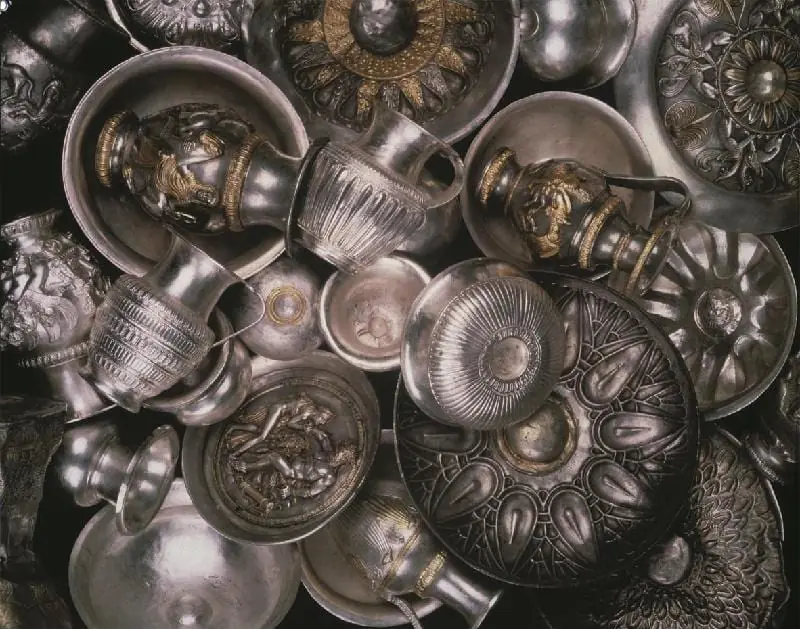
In autumn 1985 a tractor driver was digging in his garden in the village of Rogozen when his spade struck metal. Beneath the soil lay dozens of silver vessels. Word reached the museum in Vratsa, excavations began on the spot, and in January 1986 archaeologists found as many vessels again nearby: 165 vessels in all, over 20 kg of silver, some of it gilded.
165vessels
of silver from a single garden in Rogozen: over 20 kg, some of it gilded.
Once restorers cleaned the earth from the silver, the vessels began to tell their story: gods and heroes from the myths are shown on them, and some are inscribed with the names of the Odrysian kings Kotys I and Kersebleptes. That is why they are thought to have been royal gifts, gathered over generations.
The question remains why anyone would bury such wealth in a garden. Most likely in a time of danger, perhaps when Philip II’s army marched into Thrace, and they never came back for it. Today the treasure is in the Regional Museum of History in Vratsa.
Opening times:
| Day | Hours |
|---|---|
| Monday–Friday | 09:00–17:30 |
| Saturday, Sunday and holidays | 09:00–12:00 and 13:00–17:30 |
Admission:
| Price | |
|---|---|
| Adult | €4 |
| Pupil or student | €2 |
| Family ticket (1–2 parents and up to 3 children aged 7–18) | €4 |
| Child under 7, visitor with a disability | Free |
Website:
In seven days you will travel from the sanctuaries of Starosel and the rock cities of the Rhodopes, through the royal tombs around Kazanlak, to the oldest gold in the world in Varna. The Thracians left no books, but after this road you will be able to tell their story yourself, mound by mound.
Seasons
The mounds do not change through the year, but the road to them does. Spring wakes the Rose Valley, summer brings the Rose Festival and heat on the bare rocks, autumn is the mildest, and winter closes some of the sites.
March – May
Spring
Green and quiet. Sveshtari opens in mid-March, and at the end of May the rose harvest begins in the Rose Valley. After rain, gravel roads can be muddy, so wear good shoes.
June – August
Summer
Roses and heat. In early June Kazanlak holds its Rose Festival, but the bare rocks of Perperikon and Tatul have almost no shade. Start early and carry water.
September – November
Autumn
The best season. Soft light, the grape harvest in the vineyards around Starosel and every site still open. Sveshtari only closes at the end of November.
December – February
Winter
The season for museums. Sveshtari is closed, Abritus opens on weekdays only, and the open-air sites can be icy. The gold and silver in the museum cases, though, are waiting.
Practical Tips
Most of the trail’s sites are small and rural, so a little planning goes a long way.
- Many sites close one weekday: check before you drive out
- Carry cash: small ticket offices and village cafés often prefer it, and cards may not work in remote places
Check the closing day first
- Paths are uneven, so wear shoes with grip
- Check for ticks after walking in long grass
Shoes with grip
- Do not climb or move stones: mounds, walls and tombs are fragile
- Stay on the paths, and ask before you fly a drone
- The emergency number is 112
Look, do not touch
Additional Resources
- UNESCO: Sveshtari: the World Heritage listing.
- Where to stay: our stay pages for Sofia, Plovdiv and Varna.
- Related guides: our country guide, Sofia, Plovdiv, Varna and Beyond the Cities.
All details here are approximate, so check official sources before you go.
The Thracians are long gone, yet on this road they are easy to hear: in a painted couple clasping wrists under a dome, in silver cups that turned up in a garden in Rogozen, in a stone stair cut into the hill above Kardzhali, where legend says an oracle once spoke. See the gold in the museum, then stand on the mound it came from, and the quiet fields will tell the rest of the story.
Приятно пътуване! (pree-YAHT-noh puh-TOO-vah-neh) — Pleasant travels!