Sit down on the stone seats of the Roman theatre as the sun drops behind you. Plovdiv spreads out in front of the stage: the plain, the tiled roofs of the Old Town and, on a clear evening, the Rhodope foothills fading into haze. The seats are older than the Ottoman Empire, and they are only the first of the city's layers.
Plovdiv is Bulgaria's second city, one of the oldest continuously inhabited cities in Europe and European Capital of Culture in 2019, and it carries all that lightly. Walk a few minutes uphill and a nineteenth-century merchant's house still keeps its painted ceilings. Walk a few minutes down the other side and, in a lane that once belonged to craftsmen, someone is pouring a cocktail.
That is the trick of the place: three cities share one small centre, and you can cross all of them on foot. The Roman one is the theatre and the stadium. The Revival one is the Old Town, where merchants built tall painted houses that lean out over the cobbles. The one that stays awake after dark is Kapana, with the terraces of the pedestrian centre. Start with whichever you like, but end the day on one of the three hills, with the lights coming on below you.
Good to know: this guide was checked in October 2026. Hours, tickets, transport and prices change, so confirm them on the official websites before you go.
Top Highlights
Ten places that between them tell the story of the city, from a Thracian hilltop to a Roman running track and a merchant’s painted rooms. They come in pairs, so you can read across each row. Everything is in or close to the centre, and most of it is within walking distance of everything else.
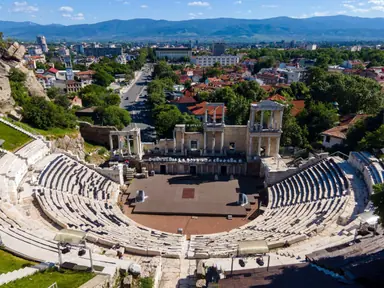
Source: Pexels Roman Theatre
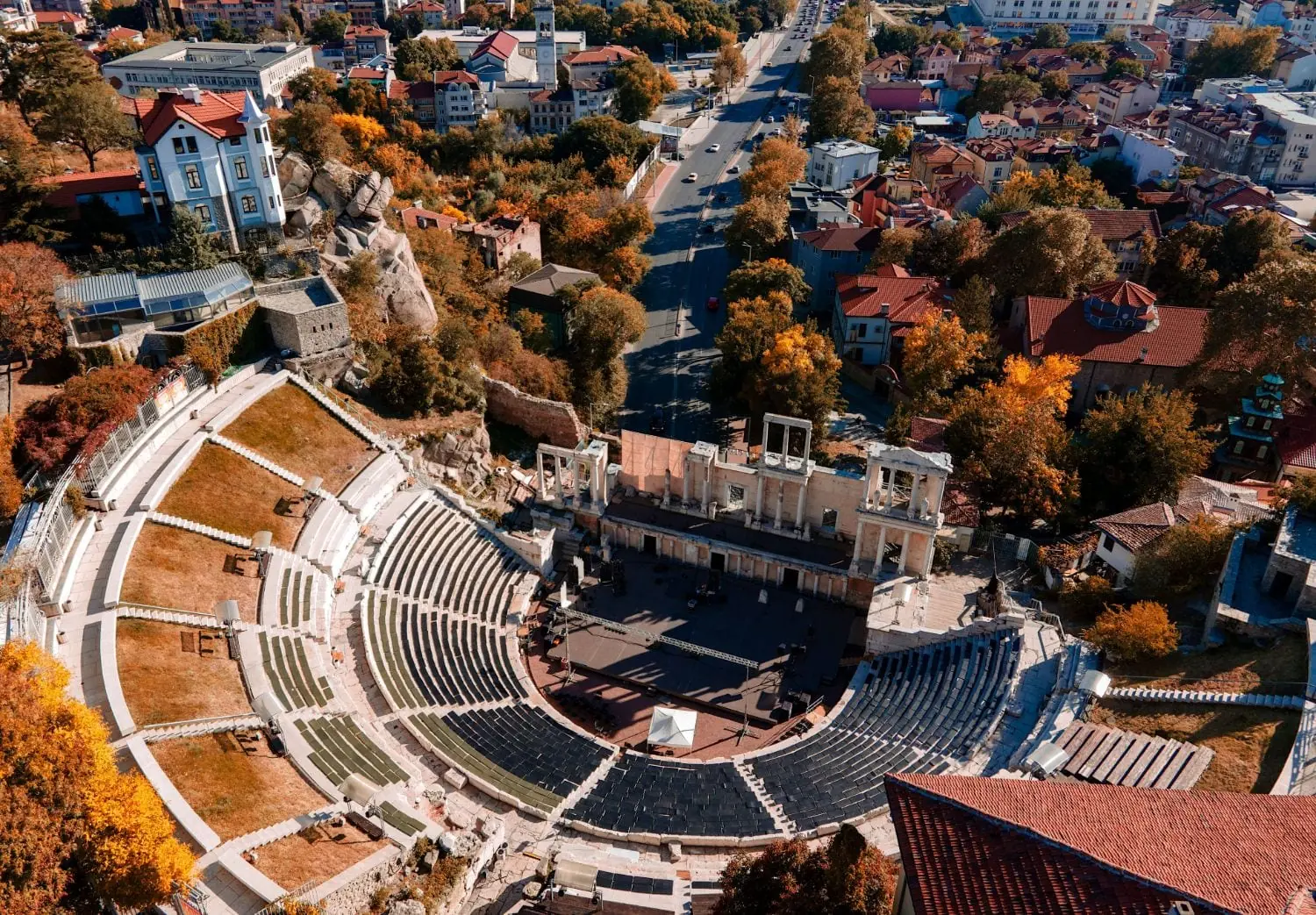
The Ancient Theatre of Philippopolis dates from Roman times (sources place it in the first or second century AD), and it lay buried in the hillside for centuries until excavations in the later twentieth century brought it back. Its stone seats face south over the plain. Today the theatre hosts concerts and opera again, and the reason to come is the golden hour, with the plain ahead of you and the Old Town roofs below.
More information
Opening times:
Period Hours April–October 09:30–18:00 November–March 09:00–17:30 Lunch break 12:30–13:00 Admission:
Ticket Price Adult €3.58 Students €1.53 Family ticket (parents with children aged 7–16) €7.16 Evening performances Sold separately, for example through Eventim Website: Visit Website
*The stone seats have little shade, so avoid midday in July and August.
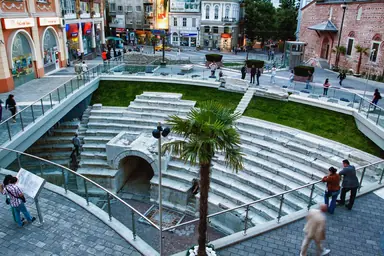
Source: Starinen Plovdiv Roman Stadium & Dzhumaya Square
The stadium of Roman Philippopolis held tens of thousands of spectators, and its track lies beneath the main pedestrian street, Knyaz Aleksandar I, right under the shoppers’ feet. Only the curved northern end is open to view, beside Dzhumaya Square, where café tables look straight down at the ancient stone. You can drink your coffee where athletes once ran, and entry to the stands is free.
More information
Opening times:
Period Hours April–October 09:30–18:00 November–March 09:00–17:30 Lunch break 12:30–13:00 3D film screenings 10:00–17:00 Admission:
Ticket Price Stadium stands (the sphendone) Free 3D film hall, adult €3.68 3D film hall, students and school children €1.23 Combined ticket, adult €5.11 Combined family ticket €10.23 Children under 7 and visitors with a disability above 50% Free Website: Visit Website
*The theatre was for the audience, the stadium for the spectacle. Seeing it under the shopping street shows the city’s scale.
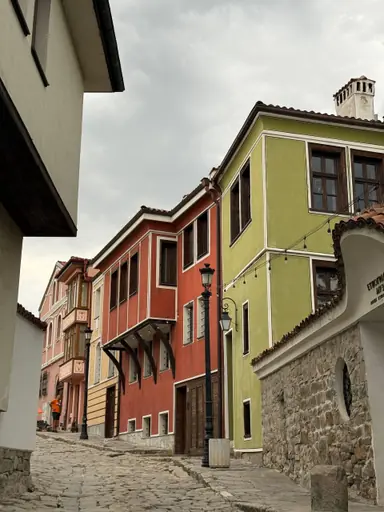
Source: Pexels Old Town Revival Houses
In the nineteenth century, Bulgarian, Greek and Armenian merchants grew rich on trade and built tall houses with overhanging upper floors and big windows facing the plain. Hindliyan House, built for an Armenian merchant, is known for rooms painted with views of Venice, Alexandria and Constantinople, and the Regional Ethnographic Museum occupies another merchant house. Pick one or two houses, then wander the lanes.
More information
Opening times:
Period Hours April–October 09:30–18:00 November–March 09:00–17:30 Lunch break About half an hour at midday (12:30 or 13:00, depending on the house) Closed days Monday for Balabanov, Hindliyan and Chomakov houses; Sunday for Nedkovich and Stambolyan; Klianti is open daily Admission:
Ticket Price Adult €3.58 Students €1.53 Family ticket (parents with children aged 7–16) €7.16 Combined ticket for up to 5 sites, adult €10.74 Combined ticket, students €4.09 Combined ticket, family €21.47 Children under 7 Free Website: Visit Website
*The cobbles are steep and polished, so wear flat shoes with grip, and go early before the day gets hot.
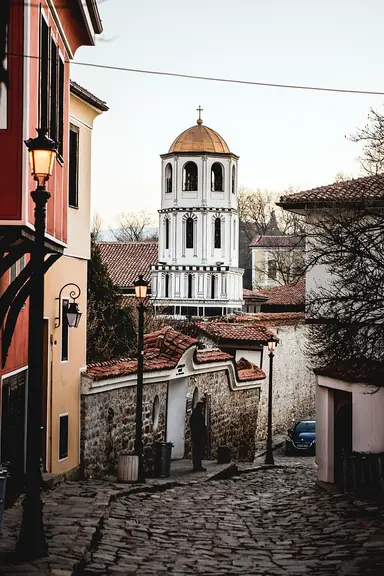
Source: Vilihristeva / Wikipedia Church of Saints Constantine and Helena & Hisar Kapiya
The Old Town’s church of Saints Constantine and Helena is a nineteenth-century building with a richly decorated Revival interior, where the community’s wealth and faith met under one roof. Nearby, Hisar Kapiya is a gate in the line of the old fortress walls, at the upper end of the Old Town. It is a good place to begin a downhill walk through the Old Town, with the church on the way. Both are free to visit.
More information
Opening times:Church – set by the parish, so check before you goHisar Kapiya – an open gate on the street
Admission:Church and gate – freeDonations are welcome in the church
Website: Visit Website
*Cover your shoulders and knees in the church, and ask before taking photographs inside.
Source: Visit Plovdiv Nebet Tepe
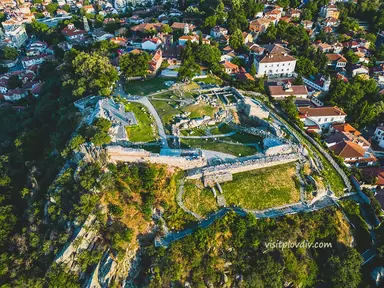
This is where the city began. Nebet is one of the three hills of ancient Trimontium, with Dzhambaz and Taksim, and a Thracian settlement stood here. Later rulers, among them Romans, Byzantines and Ottomans, fortified it again, and today you will find old stone walls, excavated remains and terraces with wide views. The climb from the Old Town is easy and the hill is a good sunset spot, but it is open to the sun.
More information
Opening times:Open-air siteCheck with the Regional Archaeological Museum for current access
Admission: Free
Website: Visit Website
*Bring water in summer, because there is little shade. Dzhambaz Tepe is a short walk away, and Taksim Tepe stands beside the theatre.
Source: Plovdiv24 Sahat Tepe & Bunardzhik
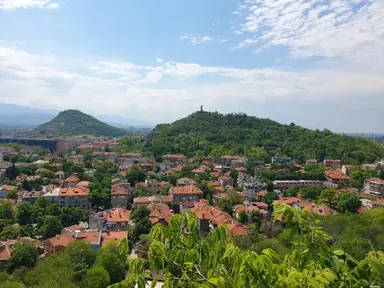
These two are the city’s viewpoint hills, and neither is one of the Three Hills. Sahat Tepe, the Clock Hill, is a short climb from the pedestrian centre, with its clock tower and wide views over the roofs, so it suits a first evening. Bunardzhik is the largest hill. A long staircase leads up to the communist-era monument known as Alyosha, unveiled in 1957 and visible from almost anywhere in the city.
More information
Opening times: Open all day
Admission: Free
*Choose one on a short stay: Sahat Tepe is closer, Bunardzhik has the broader view. Carry water and avoid midday in summer.
Source: Faiton.bg Kapana Creative District
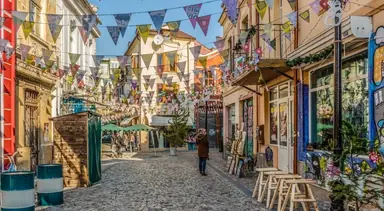
Kapana means ‘the trap’, and you see why once you lose your bearings in its maze of lanes, which once belonged to the city’s craftsmen and traders. It was a somewhat neglected corner at the foot of the Old Town until its revival in the 2010s, and it became a showpiece of the 2019 Capital of Culture year. Today galleries, studios, coffee and craft-beer bars and terraces fill the lanes, and the quarter comes alive from early evening.
More information
Opening times:The streets are always openShops, galleries, cafés and bars keep their own hours
Website: Visit Website
*It gets loud on Friday and Saturday nights, so book ahead for dinner and try the lanes without a map.
Source: Visit Plovdiv Tsar Simeon Garden & the Singing Fountains
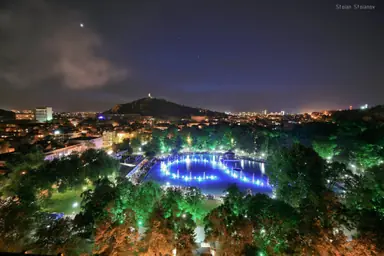
Tsar Simeon’s Garden is the city’s main park, laid out in the late nineteenth century where the pedestrian centre ends. Locals come for the shaded paths, the lake and the pavilions and, in the warm months, for the evening show of music, water and light at the Singing Fountains. It is less a sight than a habit: the stroll after dinner is the whole point. In winter the water is switched off, but the lake is still lit in the evening.
More information
Opening times:
What When The park Always open Singing Fountains show Warm months, usually Thursday to Saturday evenings; about 20–25 minutes, starting around 20:30–21:00 Winter The water is switched off, but the lake is still lit in the evening Admission: Free
Website: Visit Website
*The fountains run in the warm months only, so check before planning your evening around them.
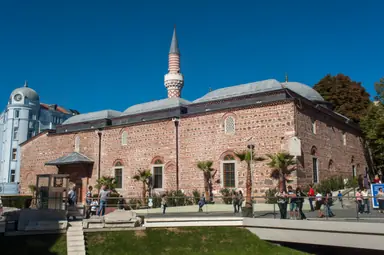
Source: Wikipedia Dzhumaya Mosque
Dzhumaya Mosque is Plovdiv’s Ottoman landmark, with origins in the fourteenth century and a present building from the fifteenth. It stands beside the Roman stadium on Dzhumaya Square, so the Ottoman and Roman cities are only a few steps apart. The mosque has a geometric exterior, a broad dome and a minaret, and it is a working place of worship, so visits follow prayer times. It rewards a few quiet minutes outside.
More information
Opening times: Active mosque: visits are limited during prayer times, especially the Friday midday prayer
Admission: Free
Website: Visit Website
*Dress modestly, with shoulders and knees covered, remove your shoes where asked and check the current visiting rules before you go in.
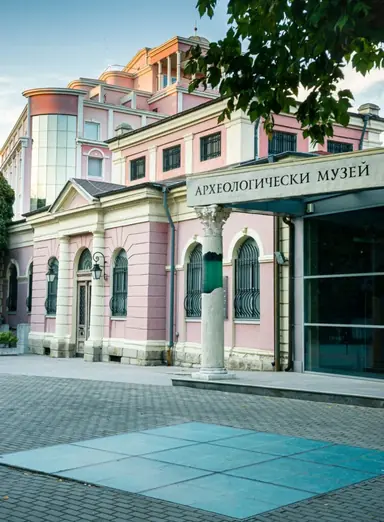
Source: ramplovdiv.com Regional Archaeological Museum
The archaeological museum holds finds from Thracian, Greek and Roman Plovdiv, the chapters that the theatre and stadium only begin. It is also a good refuge from the midday heat or a wet afternoon. The Thracian gold treasure from Panagyurishte is associated with the museum, but it has been shown elsewhere, so check before you go. The museum is closed on Sunday and Monday.
More information
Opening times:
Days Hours Tuesday–Saturday 09:30–17:00 (ticket sales end at 16:30) Sunday and Monday Closed Admission:
Ticket Price Standard €5 Student €1 Family (children up to 16) €10 Temporary exhibition only €2 Website: Visit Website
*Your ticket includes a free audio guide on your phone. One museum per day is plenty; check its closing day.
Neighborhoods & Where to Stay
The areas below are all within roughly fifteen minutes' walk of one another. So pick by mood: quiet, lively or simply convenient.
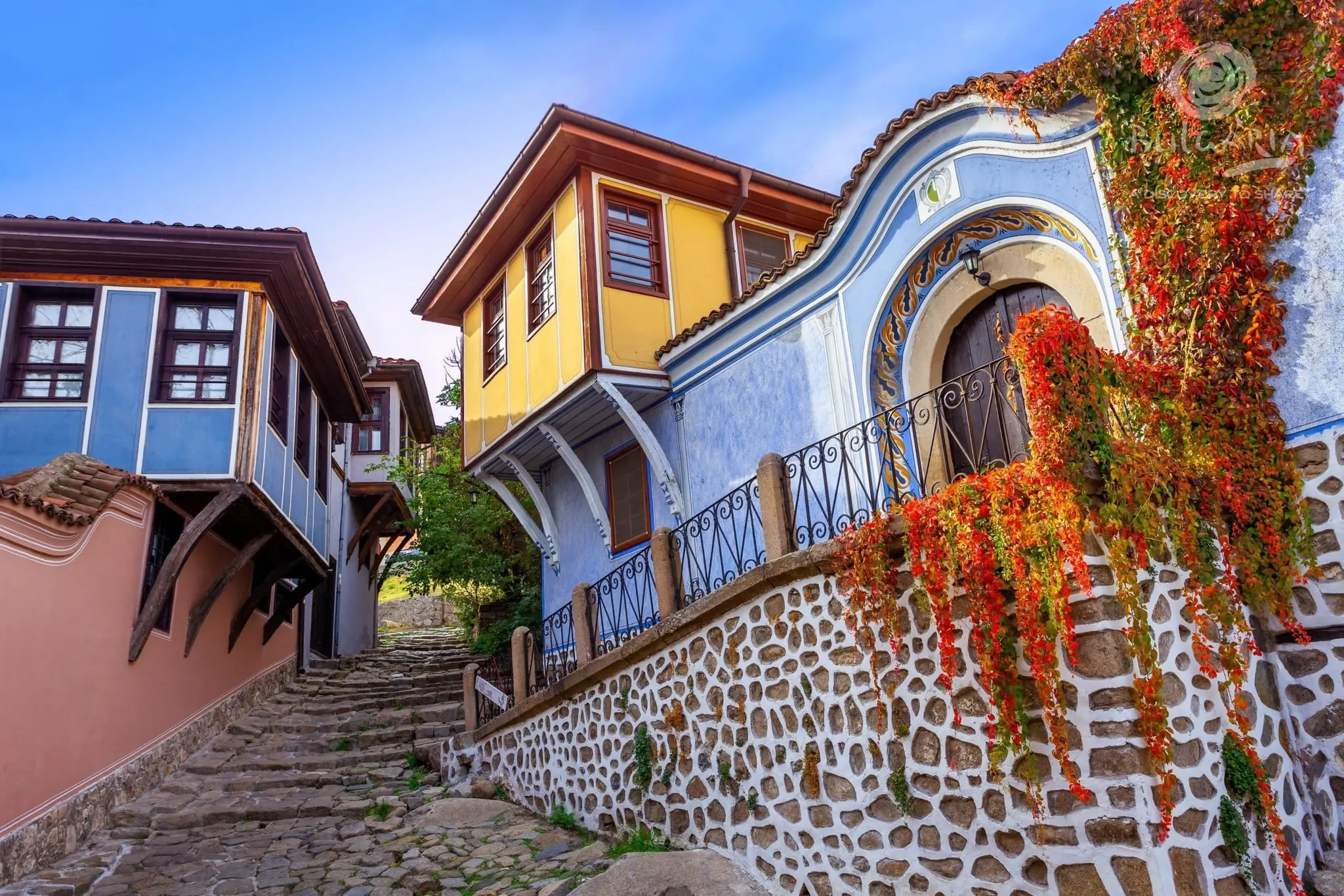
Old Town
The atmospheric choice. Guesthouses occupy old Revival houses on steep cobbled lanes, with the Roman theatre, Nebet Tepe and the museum houses at your door. Nights are quiet.
The catch is the cobbles, which are hard on wheeled suitcases. Cars can enter only with paid access, so ask your guesthouse where to park and how to get your luggage to the door. Best for couples and anyone who wants the setting.
Kapana
Small, central and lively. Kapana puts galleries, coffee bars and restaurants on your doorstep, and the Old Town is a short uphill walk away. The trade-off is noise, especially on Friday and Saturday nights, so ask for the quiet side of the building. Good for those who plan to go out in the evenings, and less good for light sleepers.
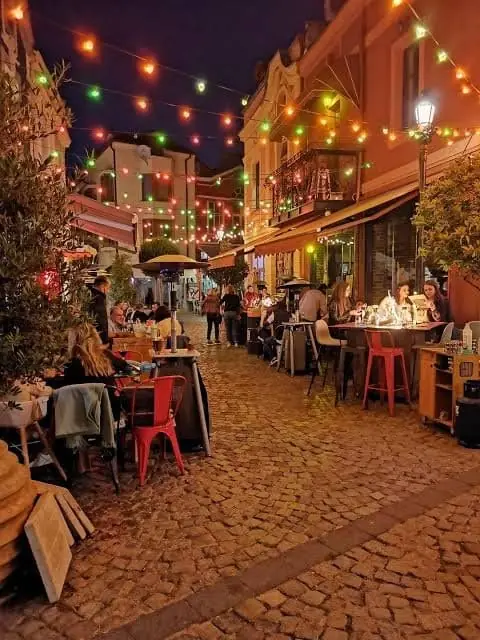
Centre & Knyaz Aleksandar I Street
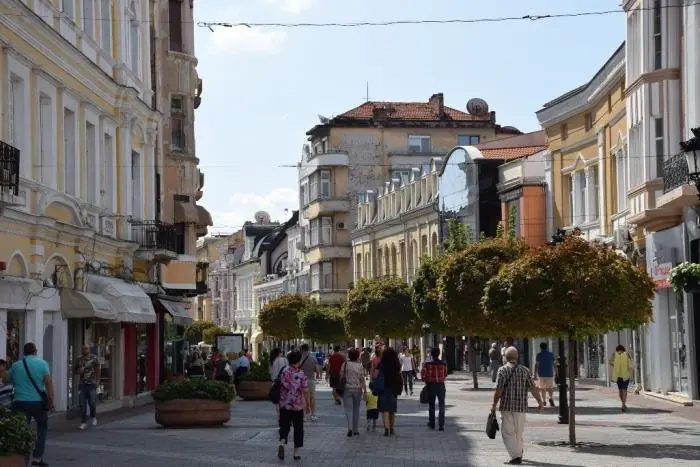
The flat, practical heart of the city. The pedestrian Knyaz Aleksandar I Street runs past the shops, Dzhumaya Mosque and the Roman stadium towards Tsar Simeon Garden, with larger hotels and plenty of cafés. It is the easiest base for a first visit and the best for arriving by coach. The Old Town and Kapana are both a short walk away.
For hotel and apartment options and current prices, see our Where to Stay in Plovdiv page.
Plovdiv Through Time
Plovdiv has answered to at least six names: Eumolpias, Philippopolis, Trimontium, Pulpudeva, Filibe, Plovdiv. Each one belonged to a different city, and the cities are stacked on top of one another like pages in a book.
The bottom page is Nebet Tepe, the rocky hill where Thracians settled long before the Greeks or Romans, and where stretches of their fortress wall still stand. Those hills shaped everything that followed. Plovdiv is the “city of seven hills”, though only six survive, and the Romans, who named the town Trimontium, “three hills”, after three of them, hollowed their theatre out of a south-facing slope. It still stages summer plays and concerts.
Down at the foot of the hills, their stadium now lies beneath the main pedestrian street, its curved end open to visitors. Walls and gates outlived the empires that raised them. The best example is Hisar Kapiya, the gate at the top of the Old Town. The Ottomans, who arrived in the late fourteenth century, called the town Filibe, and Dzhumaya Mosque stands beside the old stadium.
Trade made the town rich, and in the nineteenth century its merchants spent the money on the painted Revival houses that now climb the hillside. The April Uprising of 1876 began elsewhere, in Beyond the Cities.
The same skyline saw the city’s boldest night. In the early hours of 6 September 1885, armed rebels who had marched in from Golyamo Konare took Plovdiv, the capital of Eastern Rumelia, and it declared union with Bulgaria. The day is still a national holiday, and Plovdiv celebrates it as its own.
In 2019, as a European Capital of Culture, it gave Kapana a restored heart, new festivals and a street-art scene. Most of the Thracian and medieval city still lies underground, so what you walk through is the Roman, Ottoman and Revival layers.
Transportation
Plovdiv is easy without a car. The centre is compact, and the Old Town, Kapana and the pedestrian streets are all within about fifteen minutes’ walk of each other.
Getting There from Sofia
Coach
Often quickest
Frequent; arrives south of the centre
Car
1.5–2 hours
A1 motorway; road vignette needed
Train
2 h 40 min–3 h
Cheap, but old and slow
Flights
Limited
Most visitors fly into Sofia
Sofia has more than one bus station, so check which one your coach leaves from. For the vignette, see our country guide.
Tip: for Bachkovo, Asen’s Fortress, the Rhodopes or the Thracian valley, rent a car if you can, and pick it up the morning you leave instead of paying to park it in the city. Use buses where you would rather not drive.
Day Trips from Plovdiv
Plovdiv sits between the Rhodopes to the south and the Thracian plain to the north, so a day trip can mean a mountain monastery, a medieval fortress or a Thracian burial mound. Bachkovo and Asen’s Fortress are close enough to combine in one day, and the others need a long day or a night away.
Bachkovo Monastery
By car
Under an hour
A road along a river
Without a car
Bus to Smolyan
Get off at Bachkovo, then walk about 1 km
Allow
Half a day
Pairs well with Asen’s Fortress
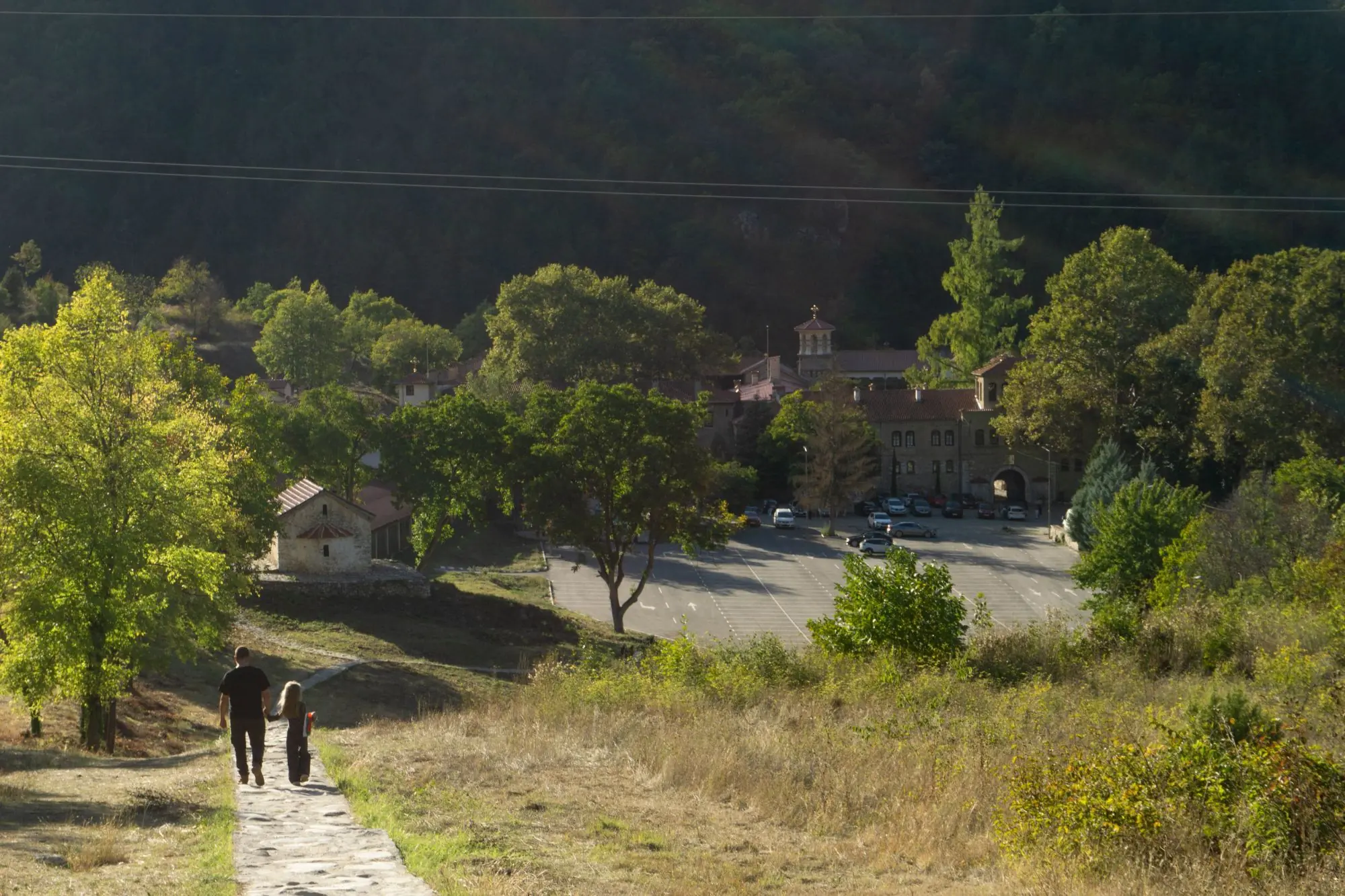
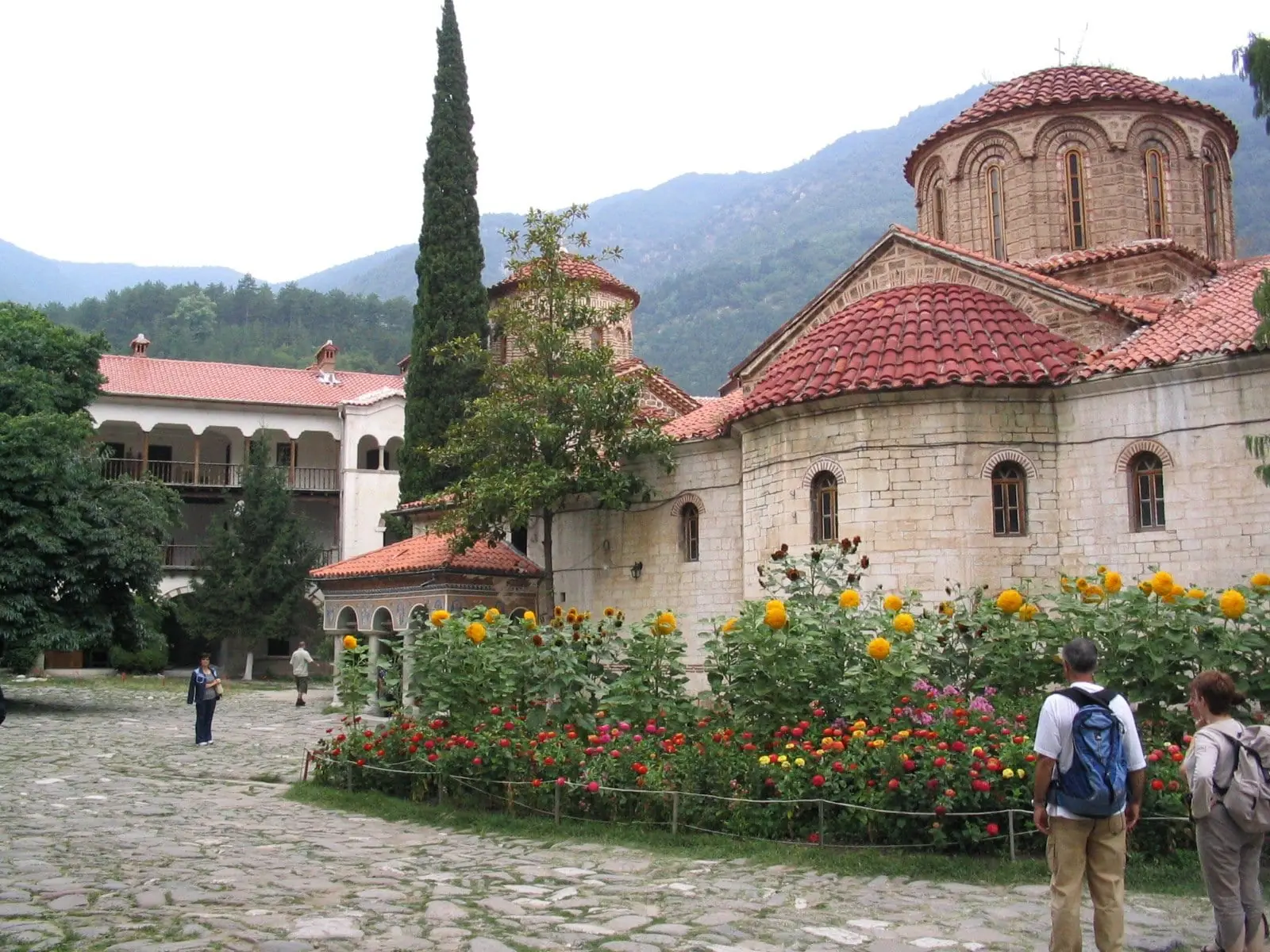
Bachkovo began as a Georgian monastery in Bulgaria. Gregory Pakourianos, a Georgian-born commander in Byzantine service, founded it in 1083, and his rules required the monks to know Georgian while Greeks were generally barred. The only part that survives from that time is the ossuary chapel, a short walk from the main complex, with a 14th-century portrait of the Bulgarian tsar Ivan Alexander inside.
The heart of the monastery is a Virgin Mary icon of about 1310, brought from Georgia. Legend says it flew here on its own and landed at a spot called Kluviyata, where a holy spring began to flow. Another tale says the monks hid it from the Turks. Every Easter Monday pilgrims carry it to that spot, and on the Assumption in mid-August, the main feast, the courtyard fills.
Wander the courtyard for the frescoes, including the panorama on the refectory wall that tells the monastery’s own story. The grounds are open daily and free to enter. Cover your shoulders and knees, and check the hours for the season before you go.
Asen’s Fortress & Asenovgrad
By car
20–30 minutes
Parking below the ridge
Without a car
Train or bus
To Asenovgrad, then a taxi or a walk up
Allow
1–1.5 hours
A little more for a full look
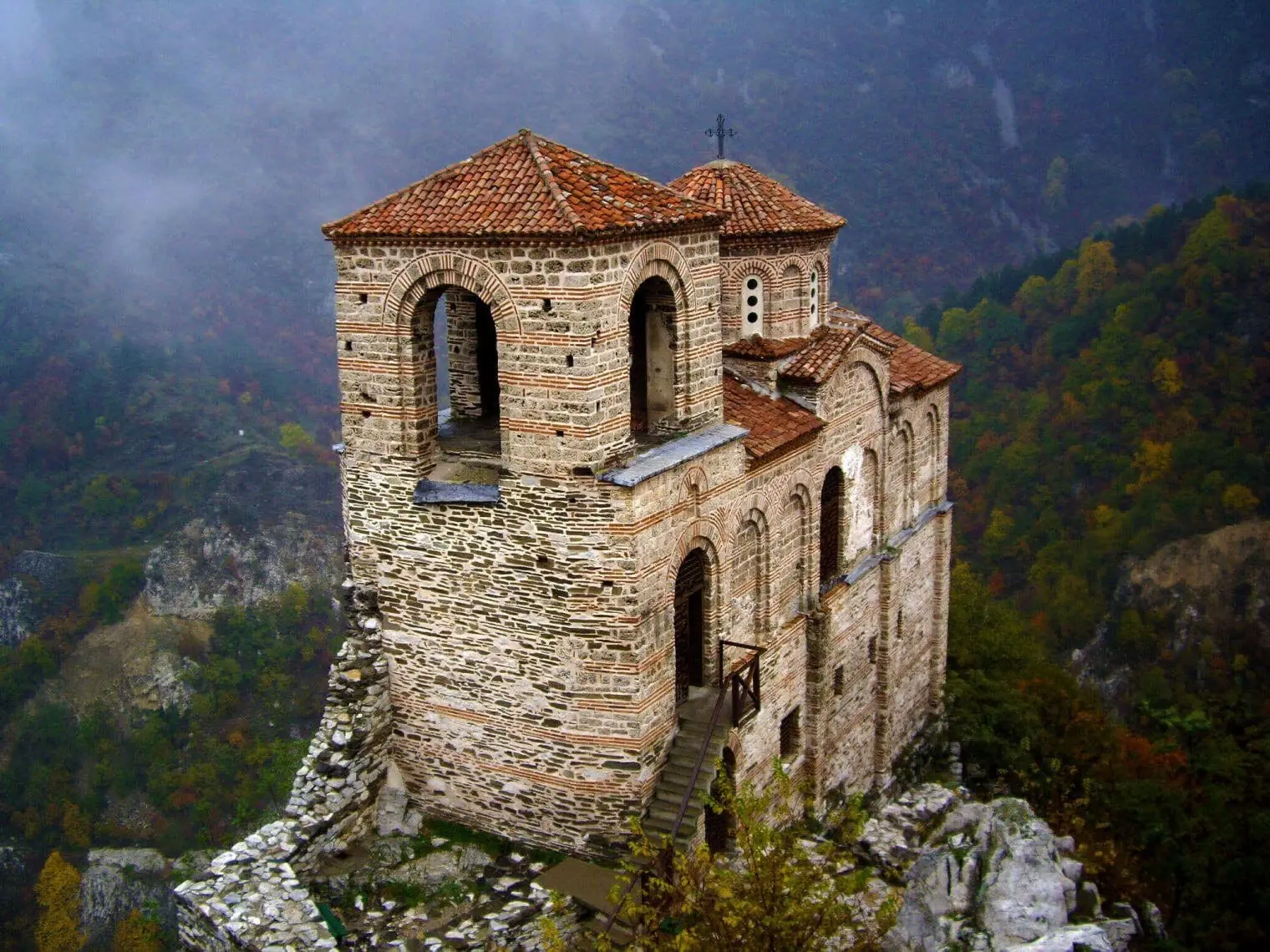
A medieval stronghold stands on a rocky ridge above the Asenitsa river, a few kilometres south of Asenovgrad, and it was built to hold a border. Thracians were here first, and Byzantium rebuilt the fortress in the ninth century to guard the mountain pass.
It takes its name from Ivan Asen II, who strengthened it in 1231. A carved inscription in the rock records the work, and in it the tsar calls himself ruler of the Bulgarians, the Greeks and other lands.
The fortress also has a siege story. In 1205 a Latin duke took refuge here and held out for eleven months with just forty knights, until help arrived.
The Ottomans destroyed the fortress in 1410, and only the small Church of the Holy Mother of God was left standing, because local Christians kept using it. The two-storey church dates from the 12th–13th century and still has 14th-century wall paintings.
A paved path climbs moderately steeply from the parking area, and a visit takes about 1–1.5 hours, so wear good shoes. It sits on the same road as Bachkovo: Asen’s Fortress in the morning and Bachkovo at midday makes an easy day.
The Rhodopes
By car
About 2.5 hours
Each way to Trigrad
Without a car
Hard
Join a guided tour
Allow
A long day
Or stay overnight
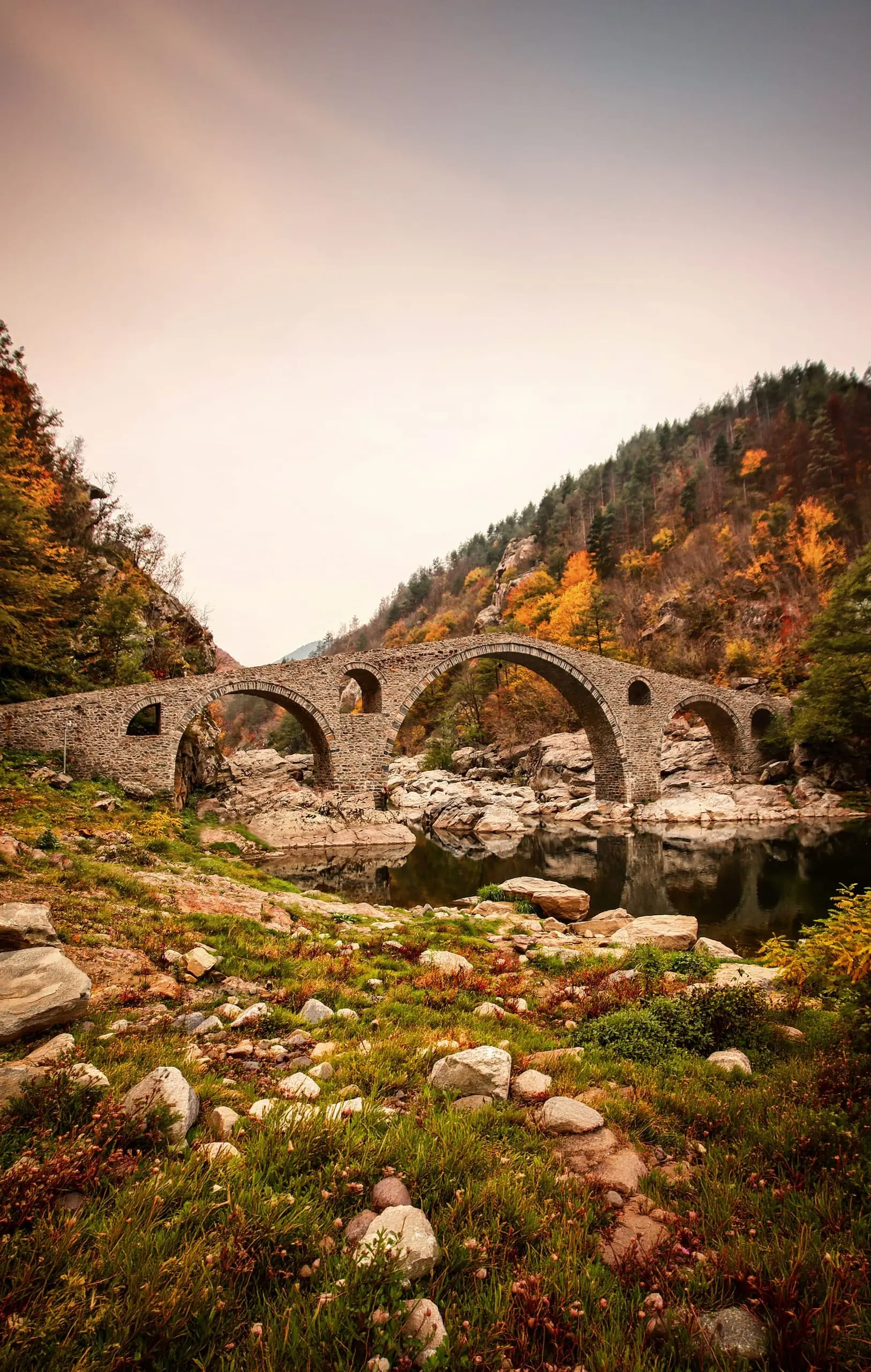
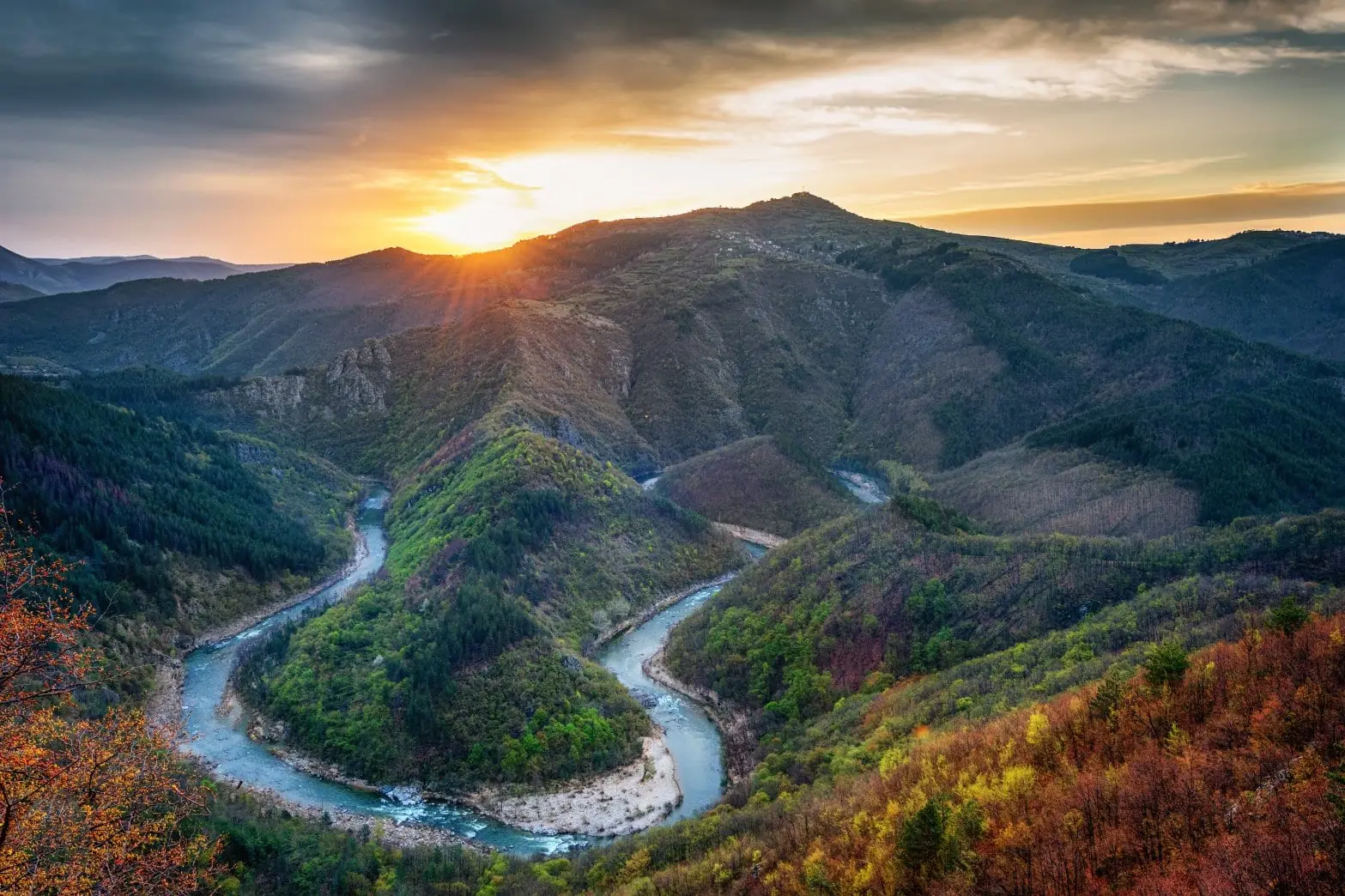
The Rhodopes are the land of Orpheus, the mythical Thracian singer. In the Devil’s Throat cave in Trigrad Gorge, one legend says, he went down to the kingdom of Hades to win back Eurydice. The entrance is said to look like a devil’s head. The river that vanishes into it falls as a waterfall inside the “Roaring Hall”, said to be the highest underground waterfall in Bulgaria.
Dye tests showed that the water takes more than an hour and a half to reappear at the other opening, so a whole underground river system must hide below. The cave is reached by about 300 steps and a short tunnel, and the tour lasts around half an hour.
It is a lot for one day, because the winding roads make for a slow drive. A car is by far the easiest way, and an overnight stay makes it far more relaxed. You can also look at guided options through Experiences.
Starosel & the Thracian Valley
By car
A long day
Sites are scattered
Without a car
Not practical
Go by car or on a tour
Allow
About an hour on site
More if you add other mounds
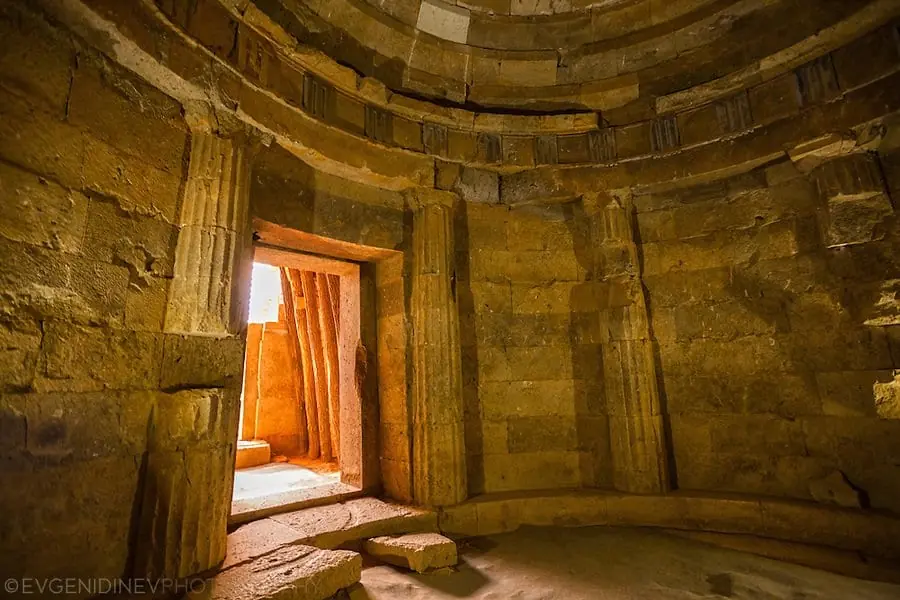
Starosel is where the Thracians buried a king and then, it seems, worshipped him. In 2000, the archaeologist Georgi Kitov found an underground temple beneath the Chetinyova Mogila mound. He came to see it as a shrine to its deified owner, not only a tomb, and it is described as the largest of its kind in the Balkans.
Scholars still argue about which king lies here. Amadocus II and Sitalkes are both named, and the dating is disputed.
The Horizon mound, found two years later, holds the only known Thracian temple with a colonnade. Its ring-shaped wall is said to stand for the Sun. Tourist literature links the rites held here to the Mother Goddess, her son the Sun and Orpheus, though scholars have not settled that reading.
Higher in the hills, at Kozi Gramadi, a royal palace fell to Philip II of Macedon in 341 BC. Lead sling bullets stamped with the names of his generals were found in the ruins, so the same Philip who gave Plovdiv its name once fought here.
The sites are scattered, so a car is essential, and about an hour on site is enough for the main temples. Our Thracian heritage trail guide covers the region in depth.
Koprivshtitsa
By car
About 2 hours
On the Sofia side
Without a car
Train with a change
About two hours at best
Allow
A day or a night
The house museums close on Mondays
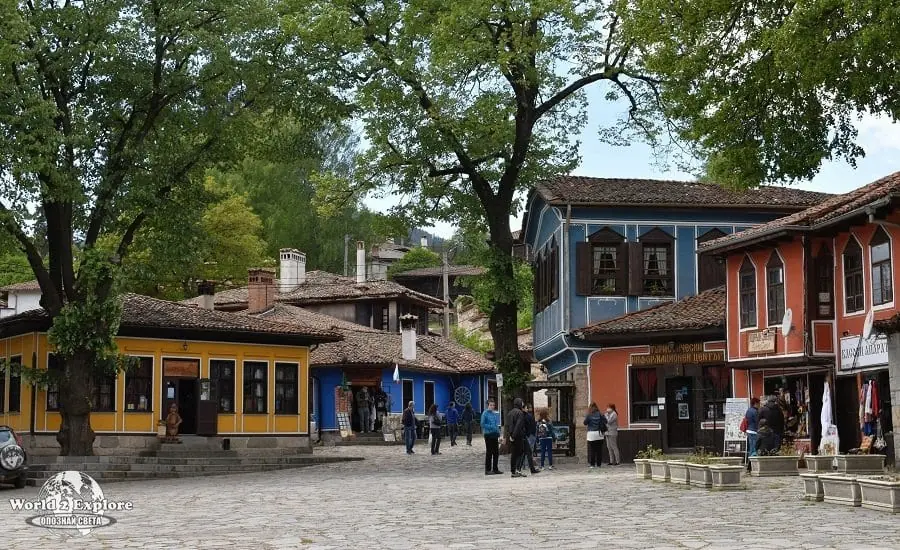
In Koprivshtitsa, a letter started a revolution. On 20 April 1876 (old style), Todor Kableshkov wrote the Bloody Letter here to the rebel committee in Panagyurishte and proclaimed the April Uprising. The name is linked to the blood of an Ottoman official killed shortly before, though historians are not sure where the blood came from. A young rider is said to have carried the letter over the hills in about two hours instead of the usual five.
The first shot is said to have been fired at the Kalachev bridge, built in 1813 and known as the Bridge of the First Shot. You can still cross it. Kableshkov and Georgi Benkovski both came from here, and so did the poet Dimcho Debelyanov.
The town keeps 383 architectural monuments from the National Revival, most of them restored to their original look. Among them are the Oslekov House (1853–1856) and the Kableshkov House, both open as museums. A national folklore festival has been held here since 1965, roughly every five years.
It makes a good stop on the road between Plovdiv and Sofia. Our Beyond the Cities guide has the details, and a night there before you carry on turns the drive into part of the trip.
No car? Book a tour
Guided day trips from Plovdiv to the Rhodope monasteries, fortresses and Thracian sites, with no driving needed.
Browse experiencesProposed Itinerary
The route below keeps to the level ground in the morning, climbs into the hills in the afternoon and comes back down to the terraces for the evening. The centre is small, so a day gives you the essentials and a second lets you slow down.
One Day: The Short Version
- Morning: Begin on the level. Walk the pedestrian street to the Roman stadium on Dzhumaya Square, step across to Dzhumaya Mosque and, if it is hot or wet, shelter in the Regional Archaeological Museum.
- Afternoon: Climb into the Old Town for a Revival house, the church and Hisar Kapiya, and Nebet Tepe if you have the energy.
- Golden hour: Take a seat in the Roman theatre, or catch an evening performance if one is on.
- Evening: Come down to dinner and drinks in Kapana, then drift on to the Singing Fountains if they are running.
Two Days: Roman, Revival and Right Now
- Day 1: The one-day route at a slower pace, with a long lunch in the pedestrian centre.
- Day 2 morning: Another Revival house or the Ethnographic Museum before the heat, or a climb up Sahat Tepe or Bunardzhik for the view.
- Day 2 afternoon: Browse the Kapana studios and galleries, then rest in Tsar Simeon Garden.
- Day 2 evening: The Singing Fountains, then a farewell dinner in a mehana. Car readers can swap the afternoon for Bachkovo or Asen’s Fortress.
Pacing tip: Plan one museum a day, not three. Many museums close one day a week, often Monday, so check before you set out. In summer, start early, rest through the midday heat and save the hills for the evening. For linking Plovdiv with Sofia and the Rhodopes, see the itineraries in our country guide.
Seasonal Events & Festivals
Plovdiv has hot summers, short cold winters and a festival in almost every month. Pick your season by the weather, then see what is on. Dates change from year to year, so check the official calendar before you book.
Spring
March to May
Day
16–25 °C
Night
4–14 °C
Mild and green. Showers are possible, and May is one of the wetter months, but the terraces fill up as soon as the sun is out.
What’s on
- MayNight of Museums and GalleriesFree visits until midnight.
- MayKapana FestMusic, dance, cinema, crafts and street art in the creative district.
- Late MaySpring crafts fairCraftspeople work in costume on the main street.
Pack a light layer for the evenings.
Summer
June to August
Day
29–32 °C
Night
17–19 °C
Hot, and often hotter than Sofia. Very hot days are normal on the plain, so give midday to museums and the hills to golden hour.
What’s on
- SummerOpera OpenClassical music and opera in the Roman theatre.
- JulyHills of RockA big rock festival by the Rowing Canal.
- SummerInternational Folklore FestivalDance groups from around the world on the theatre stage.
Book accommodation early if a festival weekend is on.
Autumn
September to November
Day
15–27 °C
Night
6–15 °C
Warm in September, then cooling fast. Often the nicest time to visit, with comfortable walking and thinner crowds.
What’s on
- 6 SeptUnification Day and Day of PlovdivThe city marks the 1885 Unification.
- OctoberCity Wine FestivalTastings from the Thracian Valley.
- NovemberPlovdiv Jazz FestConcerts around the city.
Bring a jacket for evenings from October.
Winter
December to February
Day
8–10 °C
Night
−1 to 1 °C
Cold and calm, with snow on around 15 days a year. The cobbles can be slippery, but the mehana fires are warm and the Old Town is quiet.
What’s on
- DecemberChristmas programme and crafts fairSeasonal markets and exhibitions.
- 14 FebTrifon ZarezanThe vine-pruning festival, with wine.
Wear shoes with grip.
Practical Tips
- Closing days. Many museums and houses close one day a week, often Monday, so check before you go.
- Money. Bulgaria uses the euro and cards are widely accepted, but carry a little cash for small cafés. Rounding up the bill is usual.
- Shoes. Wear flat soles with grip, because polished cobbles are slippery when wet.
- Dress code. Cover your shoulders and knees in churches and in Dzhumaya Mosque, and take off your shoes in the mosque where asked.
- Safety. Plovdiv is generally safe. Watch for pickpockets on crowded Kapana nights, take clearly marked taxis, and call 112 in an emergency.
Additional Resources
- Visit Bulgaria: the national tourist portal.
- Where to stay: our Where to Stay in Plovdiv page.
- Related guides: Discover Bulgaria, Bulgaria: Beyond the Cities, the Thracian heritage trail and Sofia.
All details here are approximate, so check official sources before you go.
End the day the way Plovdiv likes it: slowly. Watch the light fade from the Roman theatre, walk down through the Revival lanes, and finish in a Kapana courtyard with a glass of Mavrud. By the last sip the layers stop being a list and start to make sense.
Наздраве! (nahz-DRAH-veh) — Cheers!