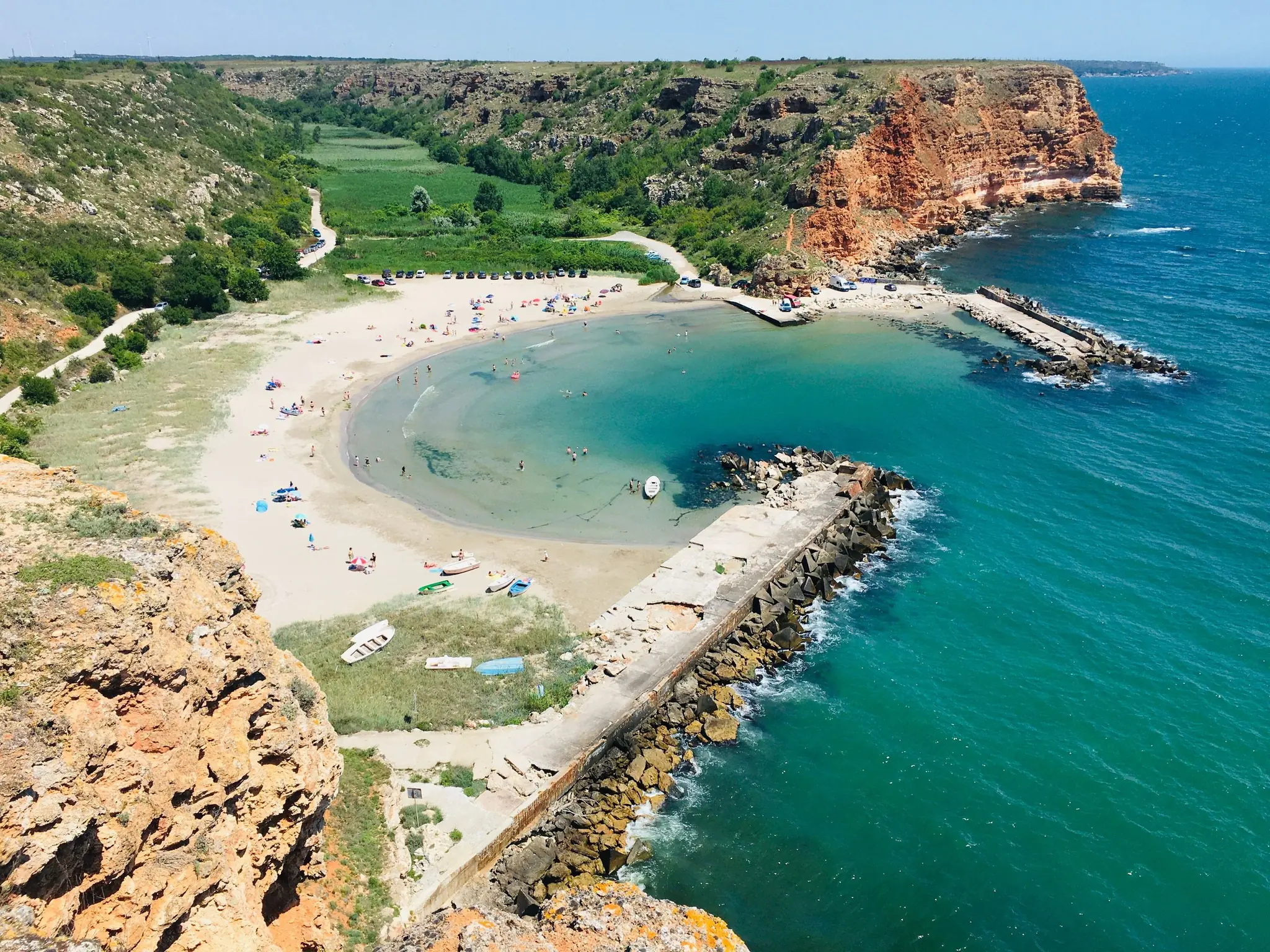
Bulgaria’s Black Sea coast is only a few hundred kilometres long, but it holds a little of everything. There are resorts built from scratch on empty dunes, towns that Greek colonists founded more than two and a half thousand years ago, and, near the Turkish border, beaches where a river meets the sea and the road simply ends.
The coast splits into two halves, each with its own airport. Around Varna in the north, the resorts sit among forests and cliffs, and around Burgas in the south, they spread along long sandy bays. Here are the best of them, and who each one suits.
Table of Contents
- Sunny Beach: A Resort Born From the Dunes
- Nessebar: Three Thousand Years Next Door
- Sozopol: The One With Atmosphere
- Primorsko and Kiten: Between the Sand and the Ropotamo
- Sinemorets and the Wild South
- Golden Sands: The Pirates’ Gold
- St Constantine and Helena: Spa by the Sea
- Pomorie: Salt, Mud and Quiet
- Quieter Corners
Sunny Beach: A Resort Born From the Dunes
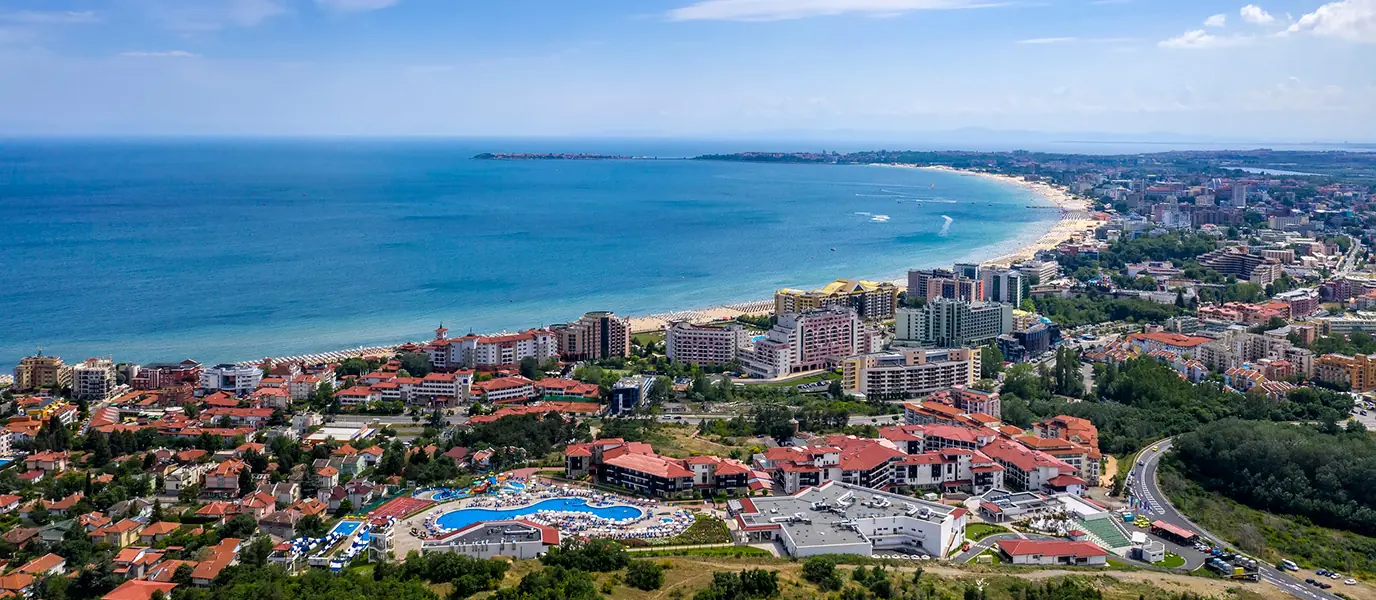
In 1958 there was nothing here but dunes, known locally as the "small Nessebar desert". To turn them into a resort, about 550,000 cubic metres of fertile soil and some 300,000 trees were brought in, and the result became Sunny Beach, Bulgaria’s largest resort. In 1995 it was the first Bulgarian resort to win the Blue Flag for clean beaches and water.
Today it is a long, gently shelving sandy beach backed by big hotels, bars and clubs, with two water parks close by, which makes it easy for families with small children and for groups who want nightlife. The central strip only really wakes up after dark, so if you want to sleep, stay at the calmer north end.
It is not the place for quiet or culture, and it gets pricey at the height of summer, but for an easy, sunny family week it is hard to beat. Our Sunny Beach stay page compares the hotels, and the Burgas Coast guide covers the water parks.
Nessebar: Three Thousand Years Next Door
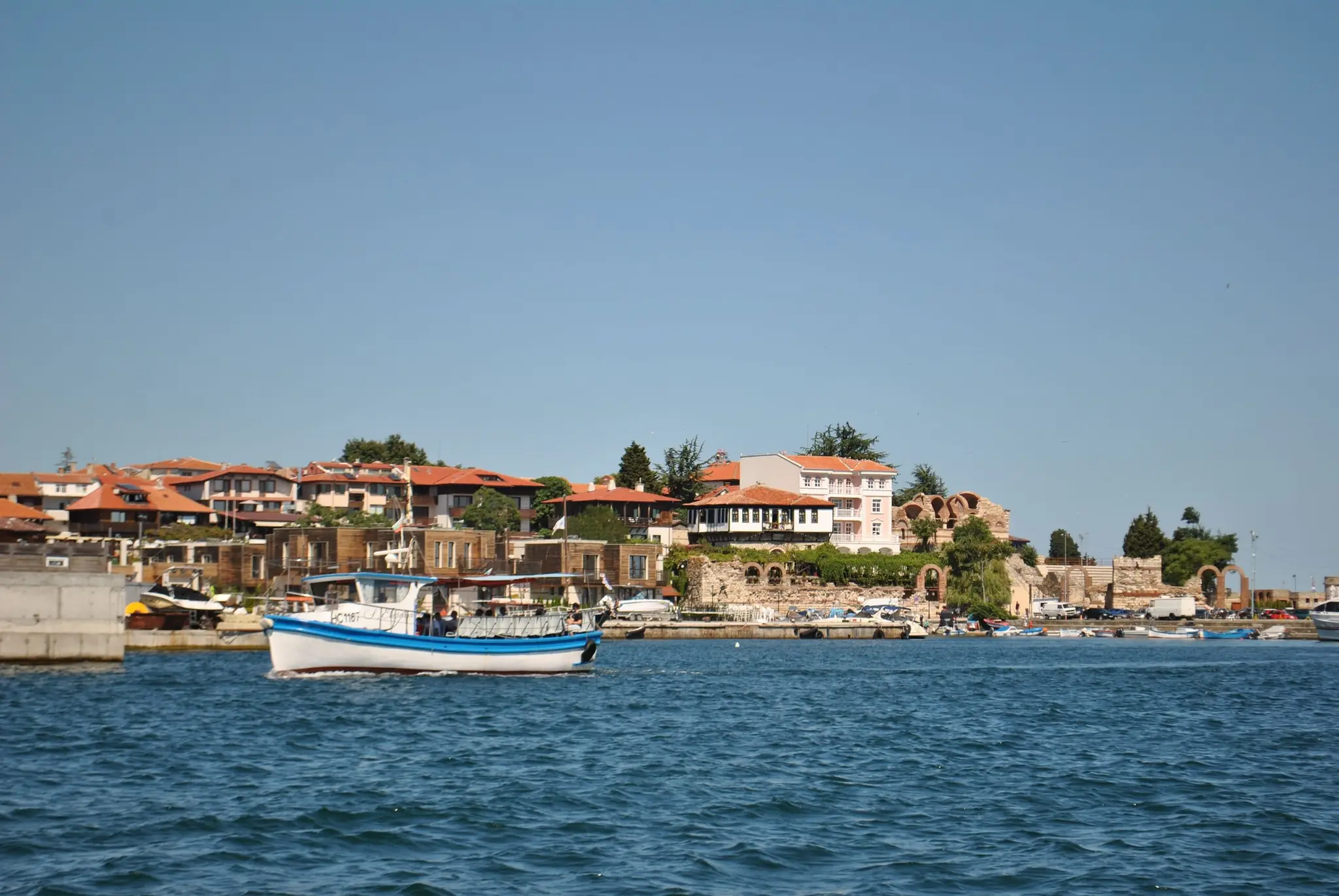
At the southern end of Sunny Beach, a narrow causeway leads to a different world. Nessebar has about 3,000 years of history, first as a Thracian settlement, then as the Greek colony of Mesembria, and its old town on a small rocky peninsula is a UNESCO World Heritage Site. About forty churches survive here, wholly or partly, among Revival houses with timber upper floors.
The old town has only small beaches, but the long sand of Sunny Beach is minutes away, which makes Nessebar the base for couples who want culture by day and a beach nearby.
In July and August the lanes fill with day-trippers, so walk them at dawn or at night, when the town is at its loveliest. Parking is limited, so leave the car outside the old town.
Sozopol: The One With Atmosphere
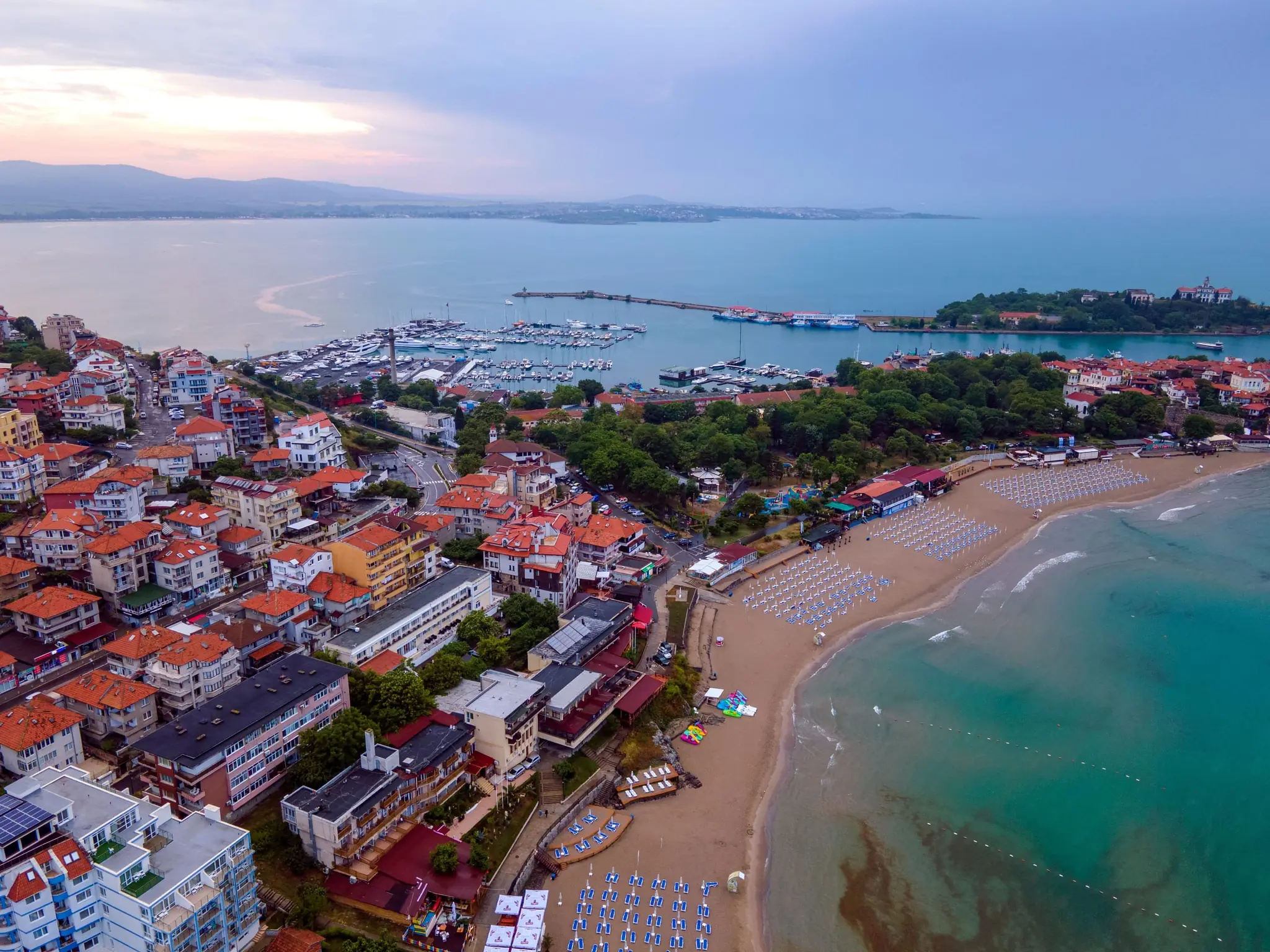
Ancient Apollonia, the town beneath Sozopol, once had a bronze statue of Apollo about 13 metres tall. In 72 BC the Roman general Lucullus carried it off to Rome, and it has never been seen again. What stayed behind are the steep lanes of wooden Black Sea houses, stone below and timber above, dropping to a small harbour and sandy coves.
Sozopol is the coast’s most atmospheric town, with an Archaeological Museum, long dinners by the water and, every September since 1984, the Apollonia Arts Festival. Bigger beaches lie just outside town, so it suits couples, divers and culture lovers who still want to swim.
It is busy and pricey in peak summer, and cars are restricted in the old town, so park outside and walk in. Come in June or September, when Sozopol is at its best.
Primorsko and Kiten: Between the Sand and the Ropotamo
Just north of Primorsko, the Ropotamo river slips out of a forest of oak, ash and elm into the sea, and in summer its quiet backwaters fill with white water lilies. Protected since 1940, the reserve is best seen from one of the seasonal boats that run up the river, past rocks where white-tailed eagles nest, the Lion’s Head cliff and what is said to be the highest dune in the Balkans.
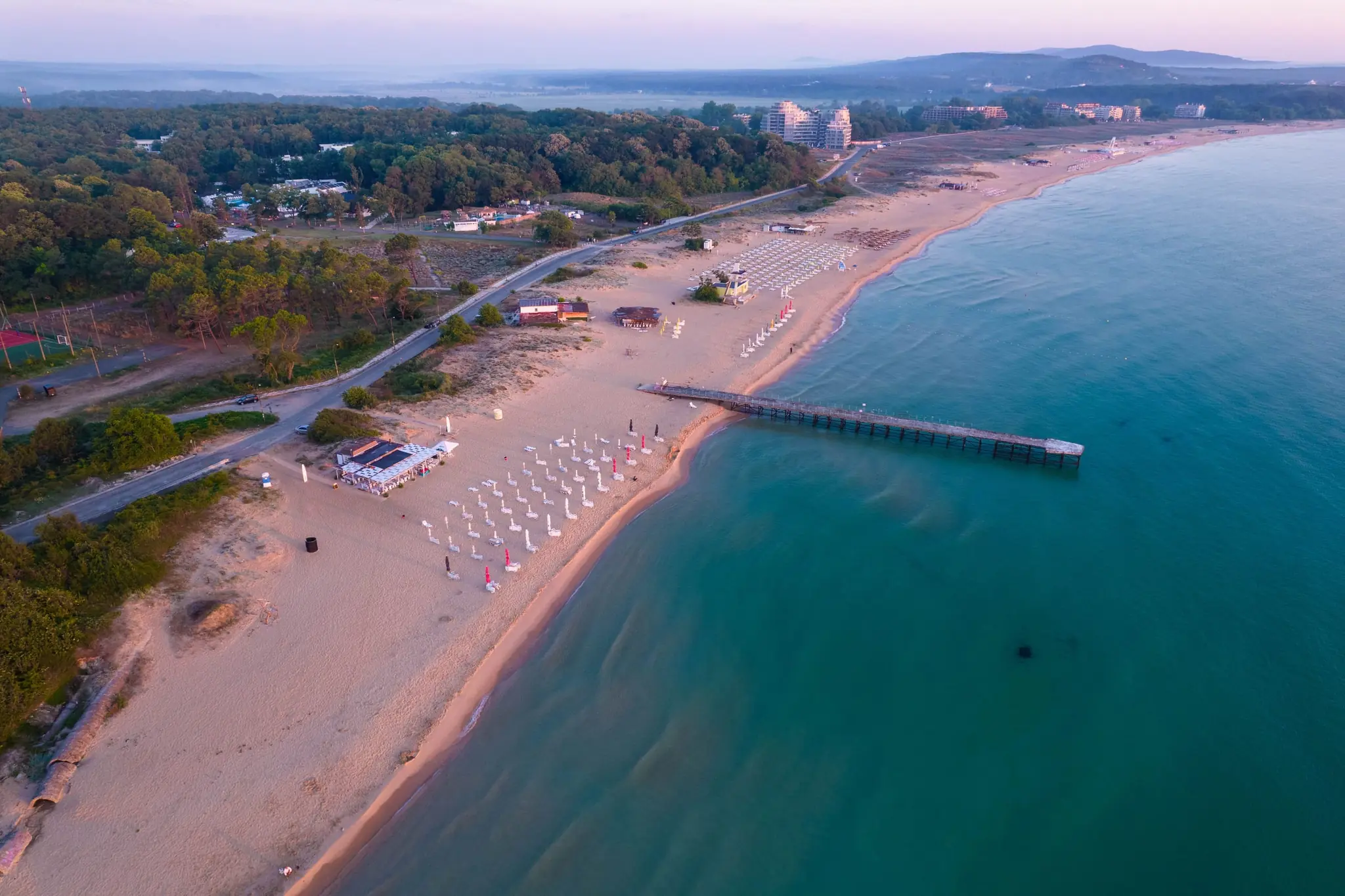
Then the coast opens into some of its widest sand. Primorsko, about 52 km south of Burgas, became a holiday town in the 1960s, when an international youth camp opened here, and it still lives for summer, with a long North Beach and a South Beach on either side of town. Just north lies the beach of Perla, by the former seaside residence of the communist leader Todor Zhivkov, which ordinary Bulgarians could barely reach before 1990. Inland, among the oaks, the Thracian sanctuary of Begliktash keeps megaliths that probably date from the Bronze Age, and some archaeologists think it once served as an observatory.
Six kilometres further on, Kiten was the ancient town of Urdovisa, a Thracian name said to mean "the upper fortress". Its 6th-century wall, still five to six metres high with three towers, stands by the shore, and legend says a beautiful woman named Byala Stana led its last defence against the Ottomans. Today Kiten has two beaches, Atliman to the north, backed by dunes, and a southern beach on the open bay by the mouth of the Karaagach river. With easy sand and real nature side by side, both towns suit families who want more than a pool: bring a car, take the boat up the Ropotamo early, and keep the afternoon for the beach.
Sinemorets and the Wild South
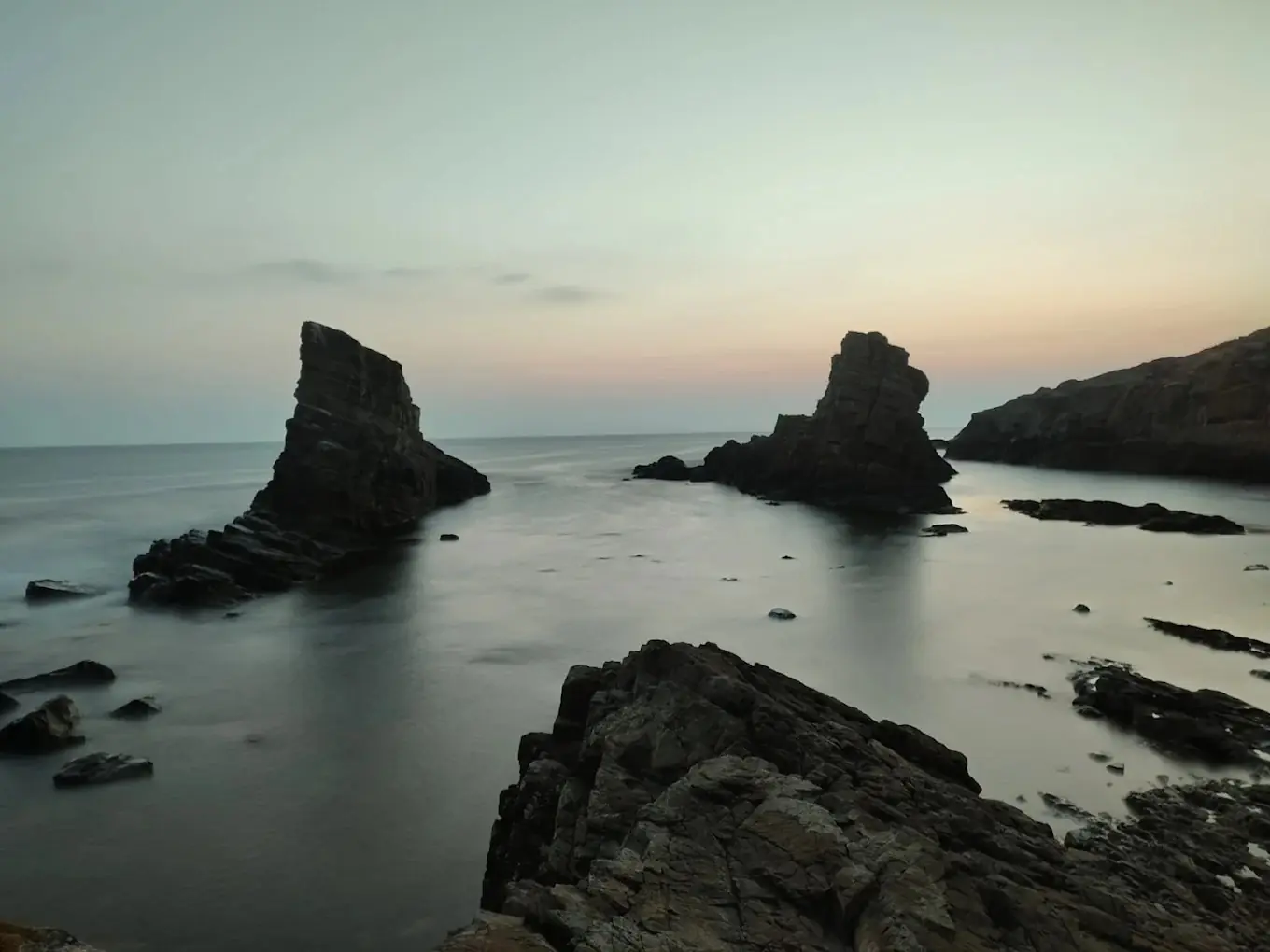
The Veleka river rises in the hills of Turkey and runs 147 km before it reaches the sea at Sinemorets, and its last few hundred metres are the most beautiful. Here it curls behind a 700-metre spit of sand, so that Veleka beach lies between the river on one side and the open sea on the other. South of the village, Butamya beach sits in a sheltered bay where the water is shallow, calm and warm. Both have lifeguards in season, and the village name, roughly "the place on the blue sea", tells you what to expect.
Behind the beaches begins Strandzha Nature Park, the largest protected area in Bulgaria, at some 116,000 hectares of oak forest and stone villages. In the Strandzha village of Bulgari, the nestinari still dance barefoot on embers around 3 June. On the drive south you pass Ahtopol, the southernmost town on the Bulgarian coast and ancient Agathopolis, an old fishing village on a headland, surrounded by the country’s largest persimmon and pomegranate plantation.
This is the coast for people who want space, not sunbeds in rows. A car is essential and services are thin, so carry water and shade, and come early, before the day-trippers from the resorts to the north arrive.
Golden Sands: The Pirates’ Gold
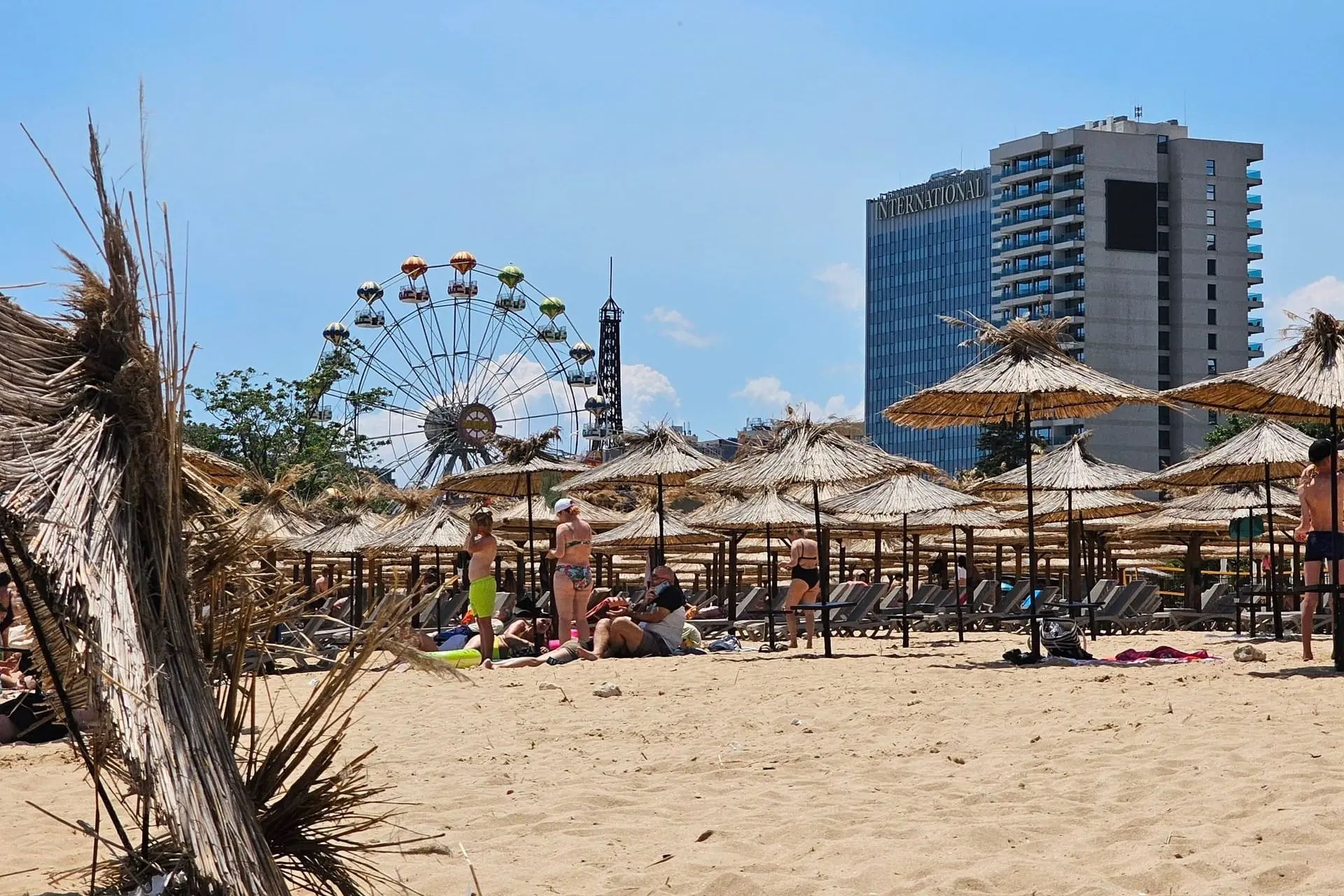
Legend says pirates once buried their gold on this shore, and the sea turned it into sand. The truth is less romantic but just as golden: in the late 1950s Bulgaria planned a resort from scratch about 18 km north of Varna, along a beach some 3.5 km long and up to 100 metres wide, covered in the fine quartz sand that gave Golden Sands its name.
What sets it apart is what lies behind the hotels. The forest of the Golden Sands Nature Park, protected since 1943, covers about 1,320 hectares, with marked trails and warm mineral springs. Three kilometres away, medieval monks carved the Aladzha Monastery into a 25-metre limestone cliff, with cells and chapels on several levels; its name comes from the Turkish for "motley", after the colourful murals that once covered its walls, and in summer it hosts evening light shows.
Golden Sands suits families and first-timers who want a lively beach with a forest walk on the side. It is crowded in July and August and largely closes outside the season, while the monastery shuts from December to February, so come in June or September for both. Our Varna guide covers the monastery and the rest of the northern coast.
St Constantine and Helena: Spa by the Sea
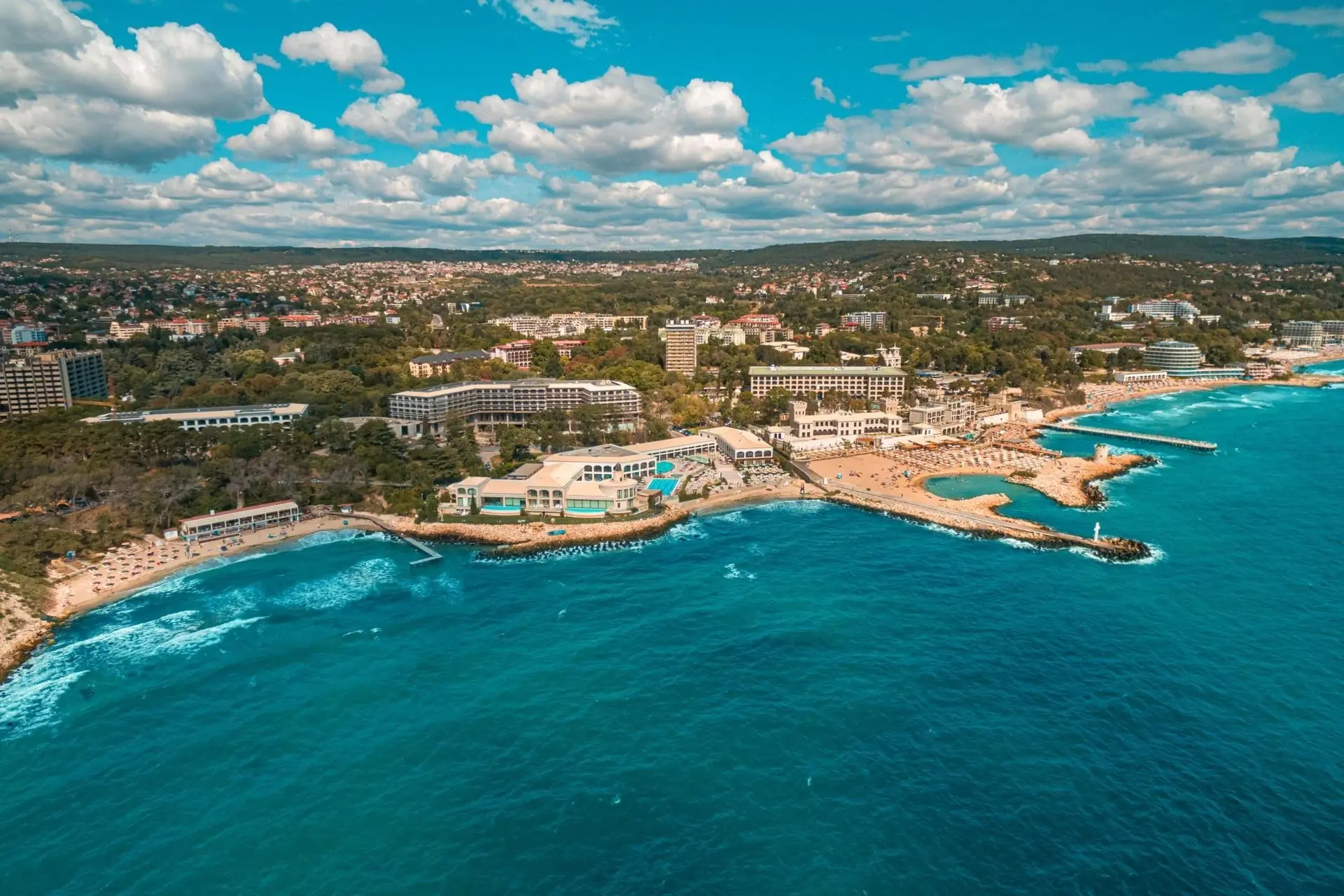
Before it was a resort, it was a monastery. No document says when the monastery of Saints Constantine and Helena was built, only legends of monks living here in the 15th century, but the seaside resort that grew around it calls itself the first in Bulgaria. In 1909 Queen Eleonora opened a summer sanatorium for children here, and Varna’s families followed.
Today St Constantine and Helena, just eight kilometres north of Varna, is the coast’s calmest big resort. Its large hotels stand among pine woods, and unlike most of the coast it stays open all year. It also sits on seven hot springs, drilled up to two kilometres deep, at 40–60 °C. At the Aquahouse thermal centre, with pools at 30–42 °C, a day costs about €31 on weekdays and €36 at weekends.
City buses 9 and 409 run into Varna, so you can spend the morning on the beach and the afternoon in the city’s museums, which makes this the choice for a spa-and-sea holiday with a city on call. It is less good if you want a lively street every night, but for a slower, greener week by the sea it is ideal. Our Varna guide covers the city, and our post on Bulgaria’s spa towns the rest of the country’s warm water.
Pomorie: Salt, Mud and Quiet
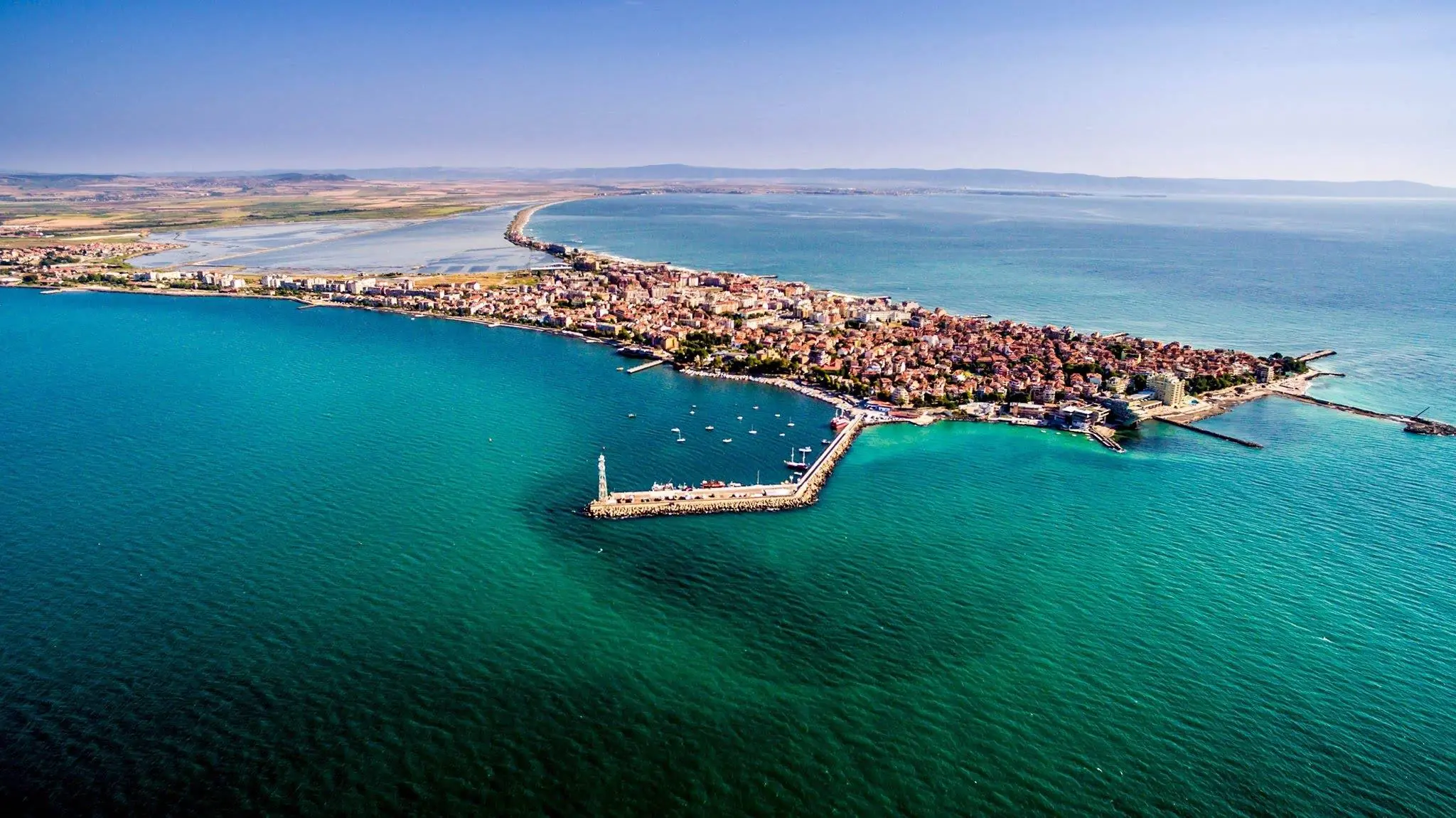
Since around the fifth century BC, people have taken salt from the lake beside Pomorie, when it was prized as "white gold". They still do: the town sits on a narrow peninsula about 3.5 km long between the sea and an ultra-salty lake, and beside its Salt Museum, billed as the only one of its kind in the Balkans, seawater still passes through a chain of pans until the crystals form. The lake is also a stop on the Via Pontica bird route, with more than 200 species seen, and its mud is used in local spa treatments.
Just south of town, a grassy mound hides one of the strangest tombs in the country. Locals call it Kuhata Mogila, "the hollow mound": a 22-metre tunnel leads to a round chamber from the 2nd to 4th century AD, its brick dome held up by a single column in the middle. A combined ticket for the tomb, the History Museum and the Salt Museum costs about €6, and on hot days Aquapark Pomorie, with 32 slides, is at the edge of town.
The town beaches have darker sand and the evenings are quiet, with little nightlife, which is exactly the appeal for couples and spa lovers. Add local wine and Pomorie brandy, spa hotels that stay open all year, and Burgas and Sunny Beach within easy reach. For the mud baths, see our post on Bulgaria’s spa towns, and for the salt works and the tomb, the Burgas Coast guide.
Quieter Corners
If the big resorts feel too busy, look to the edges of the coast. North of Varna, the village of Kranevo lies just 2 km from Albena, close enough to walk there along the shore. Its beach is wide, with light sand and a gently shelving bottom, so the shallow water is safe for children, and it is generally cheaper than Albena or Golden Sands. Buses connect it with Varna and Balchik.
In the far south, the beaches of Arkutino, near the Ropotamo, and Silistar, past Sinemorets, are quiet stretches of sand with dunes behind them; Silistar is edged by protected forest. Neither has much more than the beach itself, which is exactly the point.
Whichever you choose, the rules of the coast are the same. Check the flags every day and swim where the lifeguards are, expect to pay for sunbeds while a free strip stays open for towels, and come in June or September for warm water without the crowds.
The Bulgarian coast rewards a little planning. Choose Sunny Beach or Golden Sands for an easy family week, Nessebar or Sozopol for history with your swim, and the south for space, and the sea will do the rest.