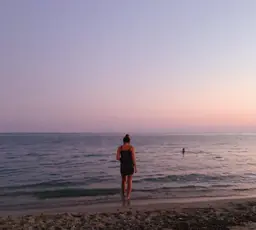
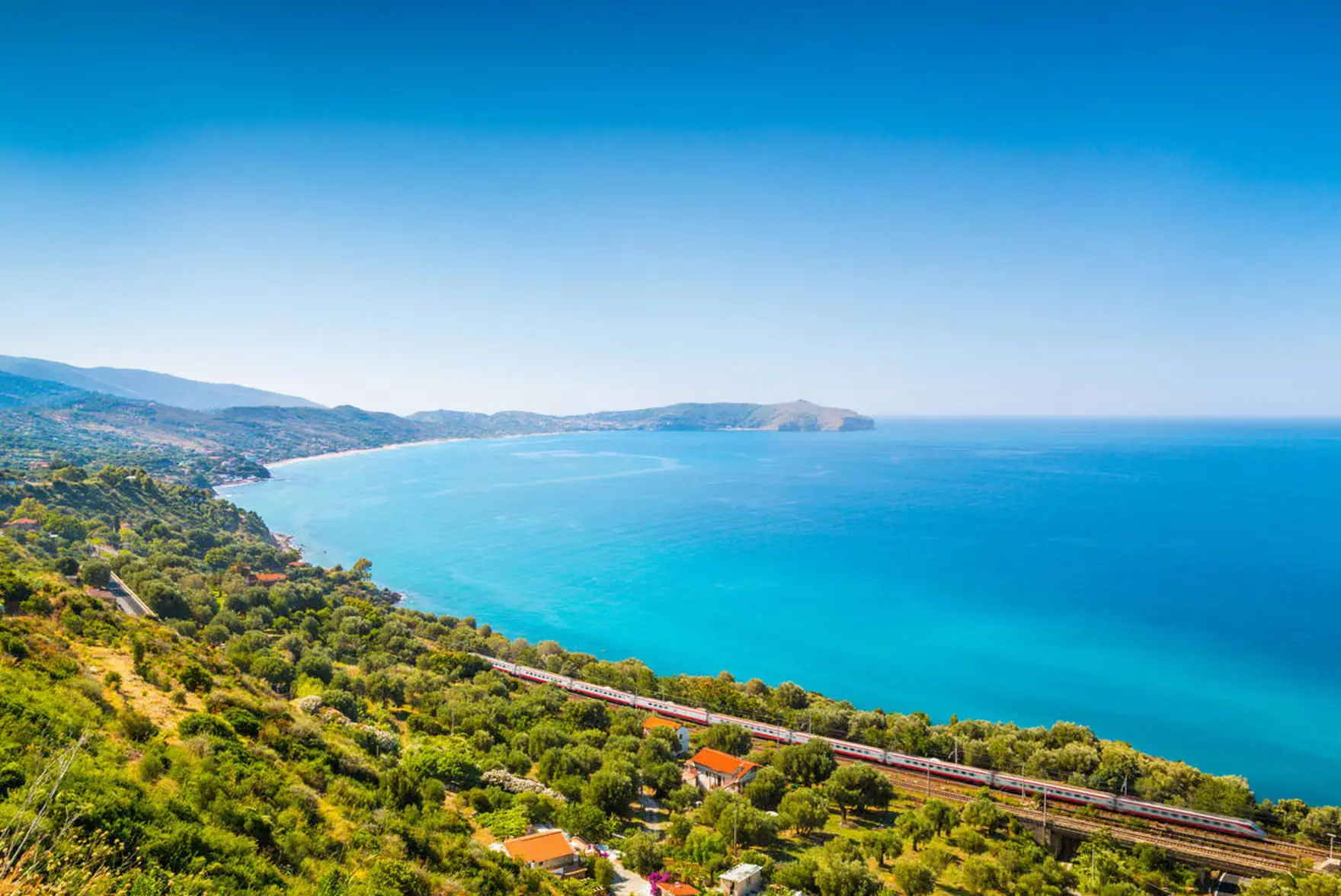
There is a particular pleasure in watching a landscape unspool past a train window. You are neither rushing nor sitting still — you are carried through the world at exactly the pace required to actually notice it. The light shifts. The geography changes its mind. Villages flicker into view and vanish again. And for a few hours, the only thing asked of you is to look.
Spring is the finest season for this. The tracks cut through valleys in full bloom. Alpine passes creak open after winter. Coastal routes reveal water at its clearest, bluest best. Vineyards erupt green across the hillsides.
These are the train journeys that feel, in spring, like someone designed the route specifically to move you — in every sense of the word.
Table of Contents
- The Bernina Express, Switzerland–Italy — The Highest Crossing in the Alps
- The Flåm Railway, Norway — From Mountain to Fjord
- The Cinque Terre Coast, Italy — The Blue Path by Rail
- The West Highland Line, Scotland — Lochs, Glens, and Viaducts
- The Transylvania Train, Romania — Through Fairytale Villages
- The Rhône-Alpes Scenic Routes, France — Alpine Light and Wildflower Meadows
The Bernina Express, Switzerland–Italy — The Highest Crossing in the Alps
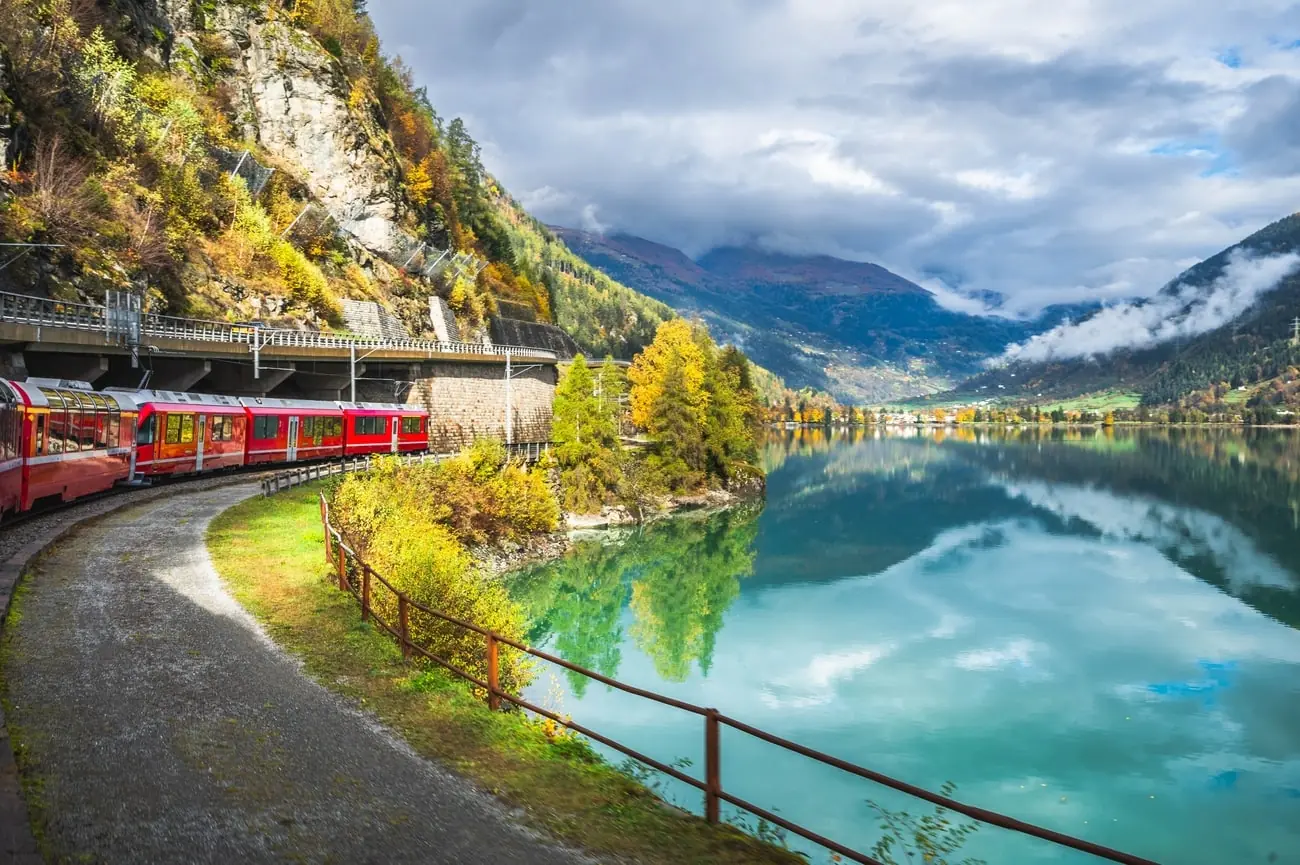
The Bernina Express climbs out of Chur or Davos in Switzerland, crests the Bernina Pass (2,253 metres, the highest point crossed by a regular train service in the Alps), and descends through the Italian valleys to Tirano. The entire journey, across 55 railway bridges and through 196 tunnels, is a UNESCO World Heritage Site — and it earns every inch of that title.
In spring, the combination of still-snowcapped peaks and the valleys below greening up and freckled with wildflowers is extraordinary. The famous Landwasser Viaduct — a curved stone bridge that seems to erupt straight out of the cliff face — is at its most dramatic framed against the snowline.
Book a panoramic car in advance. Sit on the left side heading south for the best glacier views. Take the slow train rather than the express for maximum time steeped in the scenery.
The Flåm Railway, Norway — From Mountain to Fjord
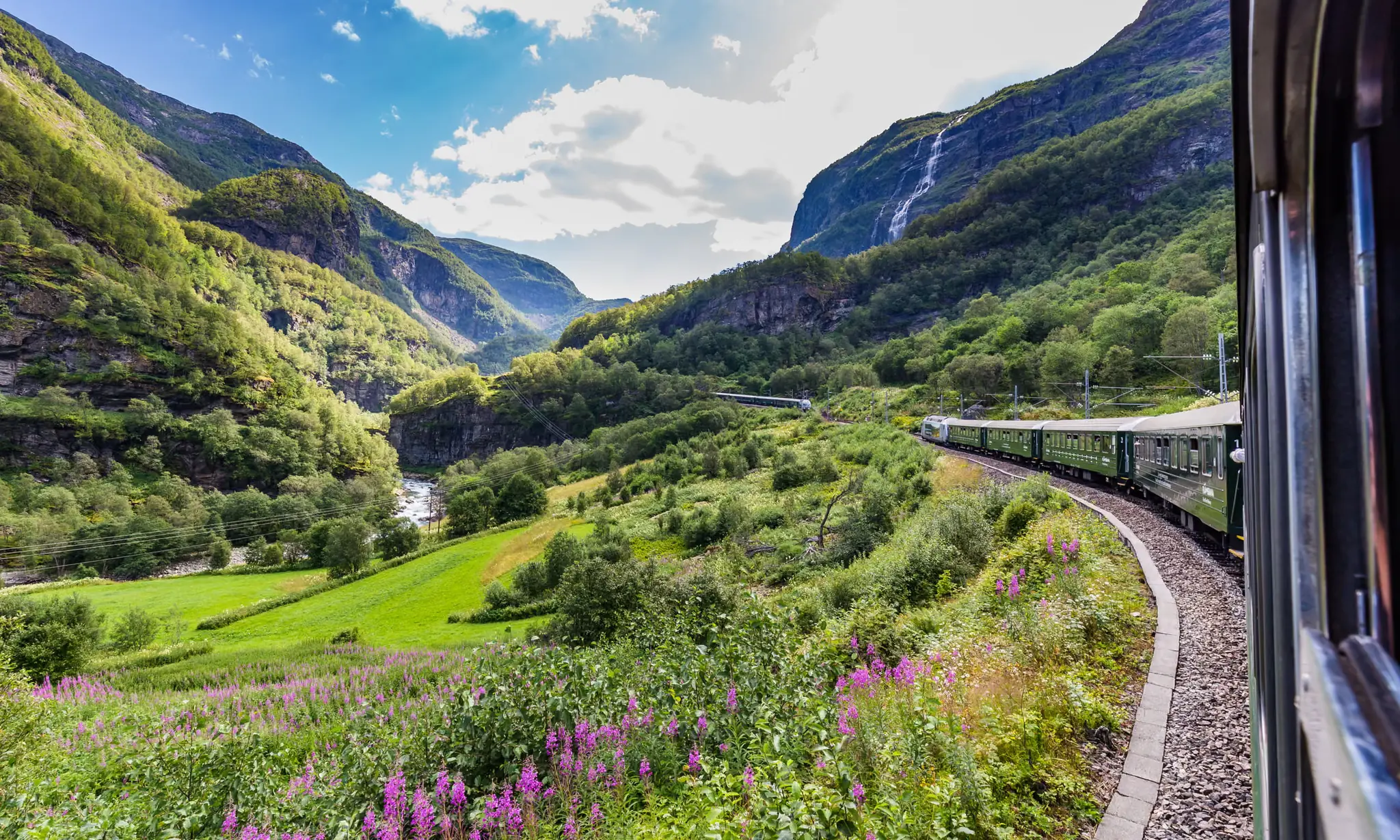
The Flåmsbana — the Flåm Railway — plunges 863 metres in just 20 kilometres, making it one of the steepest standard-gauge railways on Earth. That gradient means waterfalls at close range, hairpin views, and a constant sense that the landscape is pulling off something physically impossible.
In spring, the waterfalls roar at maximum power from the snowmelt, the birch trees along the lower valley are just easing into leaf, and the fjord at the bottom — the Aurlandsfjord, a branch of the Sognefjord — lies calm and mirror-clear. The train stops at Kjosfossen waterfall, where you can step out for a few minutes and stand right inside the mist.
Combine it with a Fjordcruise on the Nærøyfjord (another UNESCO site) from Flåm, and you've got one of the great travel days in northern Europe.
The Cinque Terre Coast, Italy — The Blue Path by Rail
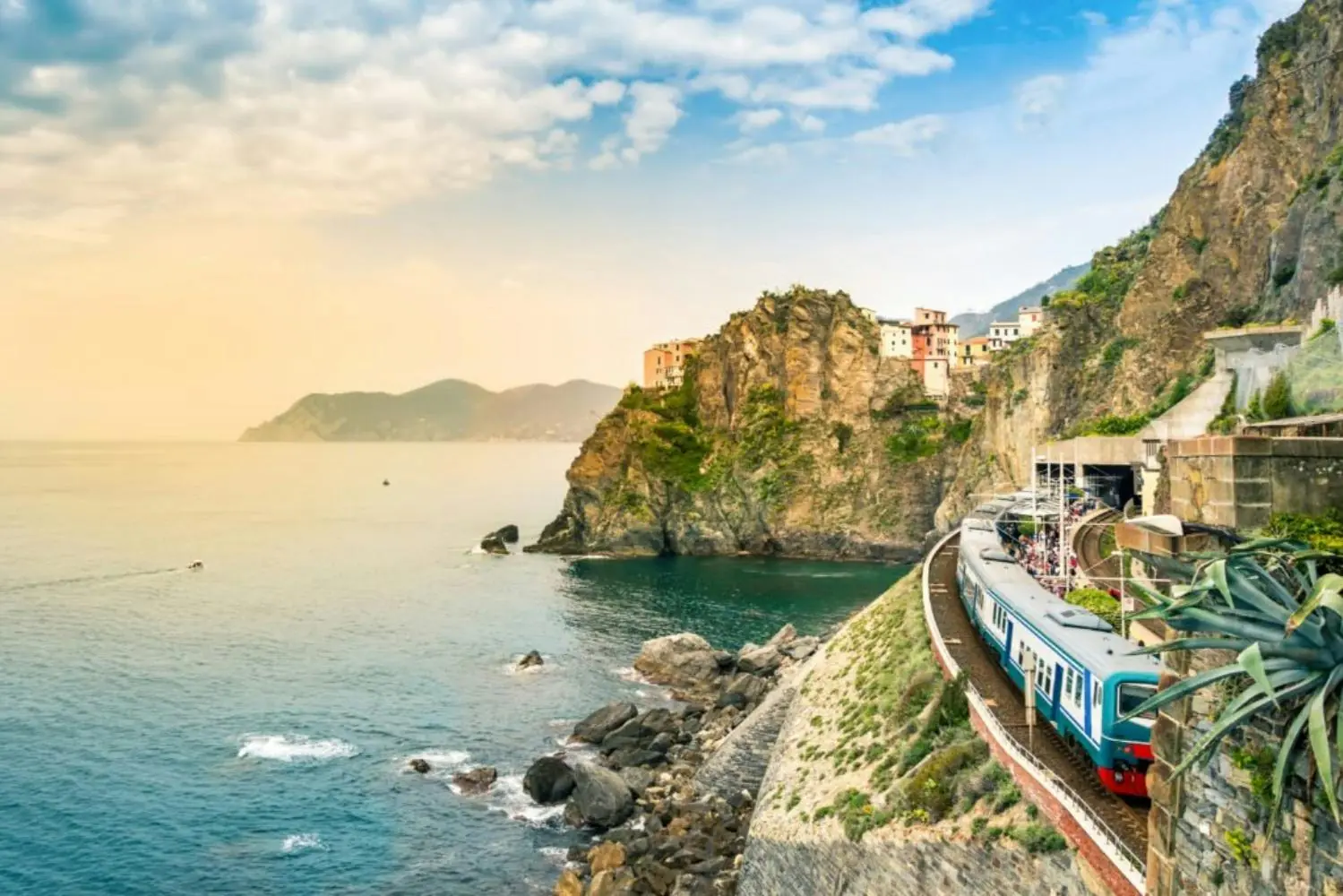
The five villages of the Cinque Terre — Monterosso, Vernazza, Corniglia, Manarola, and Riomaggiore — are strung together by a local train that bursts in and out of tunnels cut through the cliffs, flashing split-second views of the villages, the terraced hills, and the Ligurian Sea between each stretch of darkness.
It's barely ten minutes between each village. But the train isn't just the transfer — it is the view. Stand in the vestibule between carriages and you'll catch glimpses of the coast that the walking trails above simply can't match.
In summer, the Cinque Terre buckles under its own popularity. In May, the villages breathe easier, the wildflowers on the hillside paths are in full bloom, the basil (this is the birthplace of Ligurian pesto) is at its most fragrant, and the sea has turned blue but hasn't yet become the backdrop to a thousand selfie sticks.
Buy a day pass and ride the line back and forth. Eat in a different village each time.
The West Highland Line, Scotland — Lochs, Glens, and Viaducts
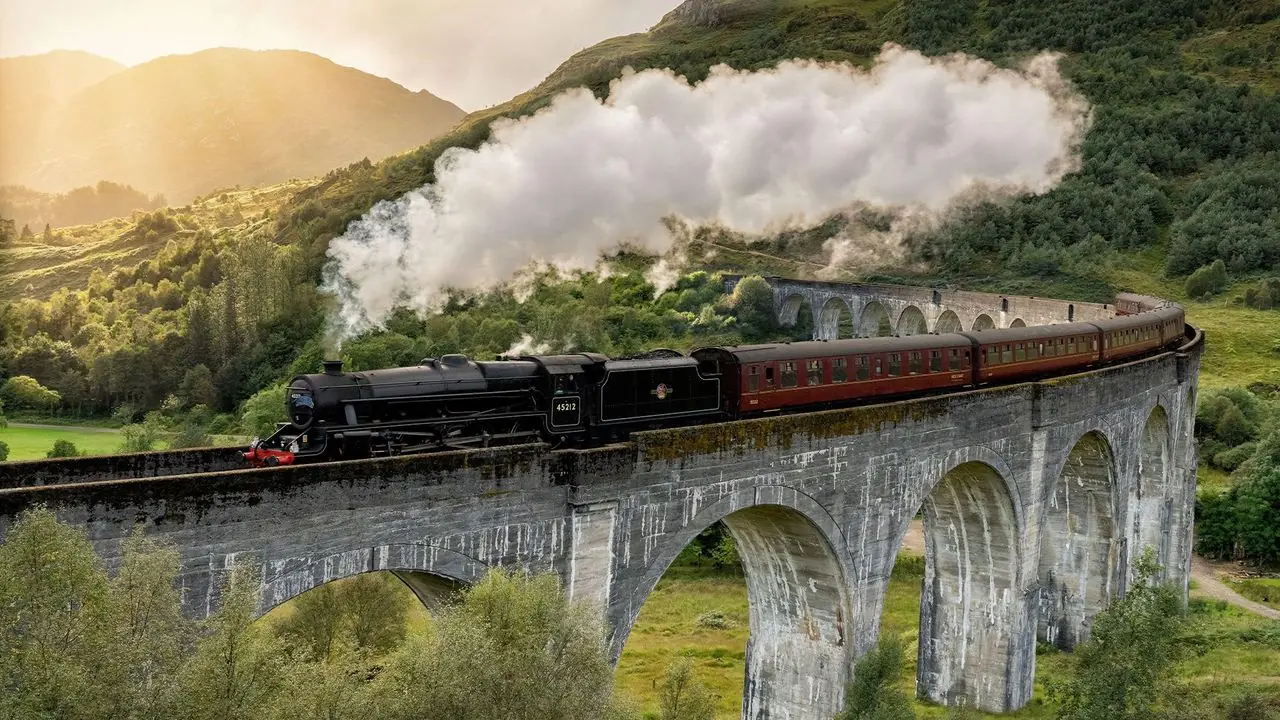
The West Highland Line runs from Glasgow to Mallaig via Fort William, cutting through landscapes that feel genuinely mythological. The Glenfinnan Viaduct — made internationally famous by a certain young wizard and his steam train — arcs across a glen above a loch with a military monument at its head, and the surrounding mountains stubbornly hold onto snow into May.
Beyond Glenfinnan, the line crosses Rannoch Moor (one of Europe's last great wildernesses) and skirts the edges of lochs that mirror the sky with extraordinary clarity in spring's long, clear light. The final stretch down to Mallaig runs through a landscape of sea-lochs, white sand beaches, and small islands that looks more like the Scottish isles than the mainland.
Take the Jacobite steam train in summer, or the regular ScotRail service in spring for fewer crowds and the exact same scenery. Either way, bring something to read for the return journey — you won't open it once.
The Transylvania Train, Romania — Through Fairytale Villages
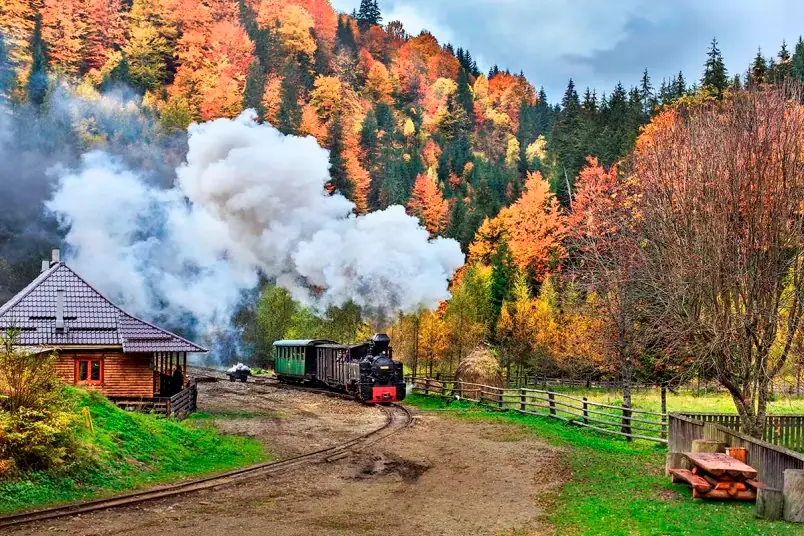
Romania's Transylvania is one of Europe's most underrated regions, and the slow train network stitching together its Saxon villages — Sighișoara, Brașov, Sibiu, Biertan — is one of the most quietly pleasurable ways to move through it.
In spring, the meadows of Transylvania are extraordinary. This is one of the last places in Europe where traditionally managed hay meadows still survive, producing a wildflower diversity that would have carpeted the entire continent a century ago. The train windows in May frame a countryside that looks lifted from a medieval illuminated manuscript: flower meadows, fortified churches, rolling hills, and the occasional glimpse of Carpathian mountain peaks still white with snow.
The journey from Brașov to Sighișoara takes around three hours on the slow train — and it is three hours you will not regret.
The Rhône-Alpes Scenic Routes, France — Alpine Light and Wildflower Meadows
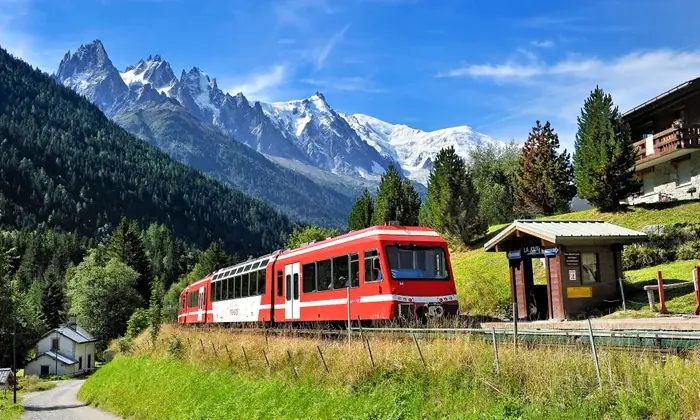
The French Alps have a network of scenic regional trains that, in spring, deliver some of the most visually rewarding rides in Europe. The Train des Pignes runs from Nice into the mountains through a string of gorges and viaducts to Digne-les-Bains; the Mont Blanc Express connects Chamonix to Martigny in Switzerland; the Train de l'Ardèche traces the gorge of the Ardèche river through a landscape of ancient stone villages and volcanic rock formations.
What unifies them is the spring light. The south-facing Alpine valleys come alive in May with wildflower meadows at lower altitudes and lingering snowfields above, and the quality of the mountain light in spring — clear, angled, golden in the late afternoon — makes the landscape look freshly painted.
None of these trains are fast. None of them need to be.