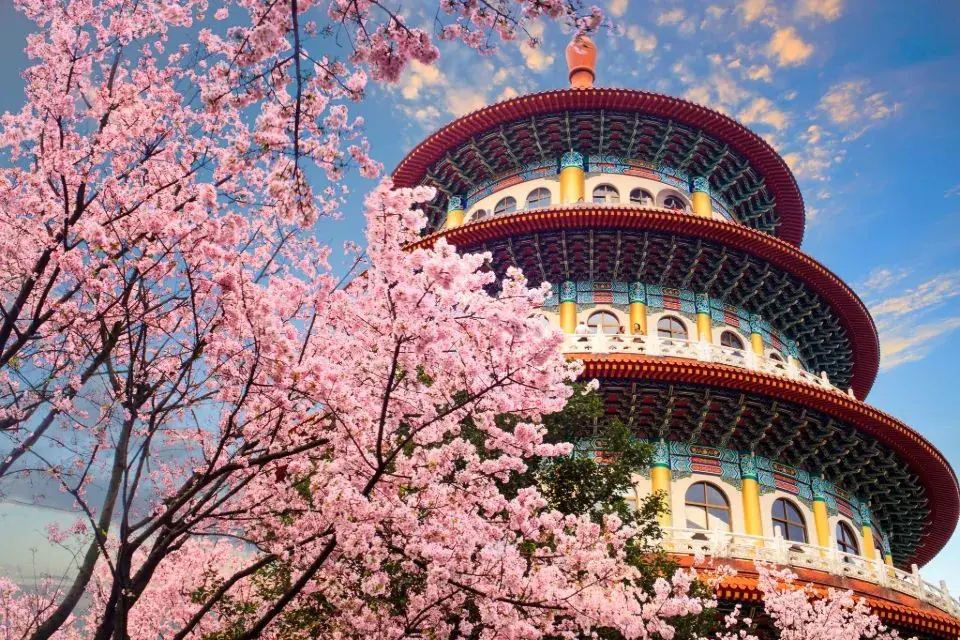
Every spring, millions of people plan pilgrimages to Japan for the sakura. And honestly, the photos earn their hype — cherry blossoms against a temple, a mountain, a train platform, anything really — it's a nearly impossible image to argue with.
But Japan in cherry blossom season has a shadow side: it's expensive, it's overrun, and climate shifts keep scrambling the bloom window just enough to wreck careful plans. The classic spots in Kyoto see queues before sunrise. Hotel prices triple overnight. The Shinkansen sells out weeks ahead, and suddenly your dream trip is a logistics exercise.
Here's the thing nobody tells you: cherry blossom trees grow all over the world. South Korea, Germany, the Netherlands, the United States, Georgia — each hides a blossom season that's every bit as spectacular, dramatically less visited, and often a fraction of the price. Some of these spots genuinely rival Japan for sheer beauty. None of them demand the same white-knuckle planning.
Contents
- Jinhae, South Korea — The World's Biggest Cherry Blossom Festival
- Bonn, Germany — A Cathedral of Blossoms
- Washington D.C., USA — The Tidal Basin in Spring
- Amsterdam & Keukenhof, Netherlands — Blossoms and Tulips Together
- Jeju Island, South Korea — The Volcanic Spring
- What to Know Before You Go
Jinhae, South Korea — The World's Biggest Cherry Blossom Festival
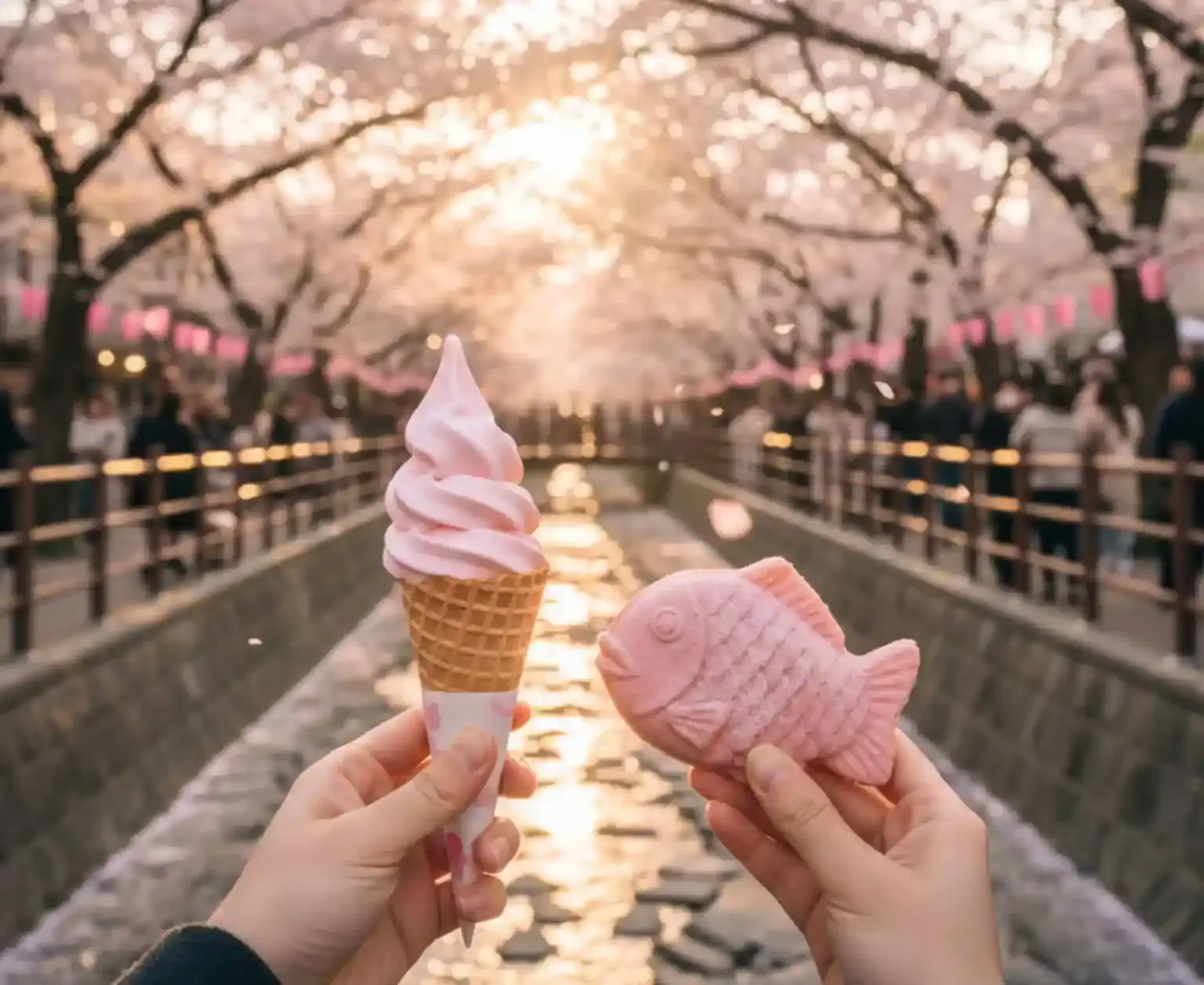
Shift your sights from Japan to its closest neighbor and you'll land in Jinhae, South Korea, home of the Gunhangje Festival every April — widely considered the largest cherry blossom festival on Earth. Around 360,000 cherry trees detonate into bloom across the city all at once, turning streets, streams, and hilltops entirely, improbably pink.
The postcard shot is Yeojwacheon Stream, where petals rain onto the water and drift downstream in slow pink currents while tourists angle for the perfect frame from the arched bridge above. It's unapologetically beautiful, and the festival throws in food stalls, naval band performances, and evening illuminations that Japan's hushed, contemplative blossom-viewing culture rarely bothers with.
Jinhae is roughly two hours by bus from Busan, itself worth bolting on a few extra days for. Accommodation runs far cheaper than Kyoto or Tokyo at their peak, and the festival's timing — usually late March to early April — slots neatly into a wider spring itinerary through South Korea.
Bonn, Germany — A Cathedral of Blossoms
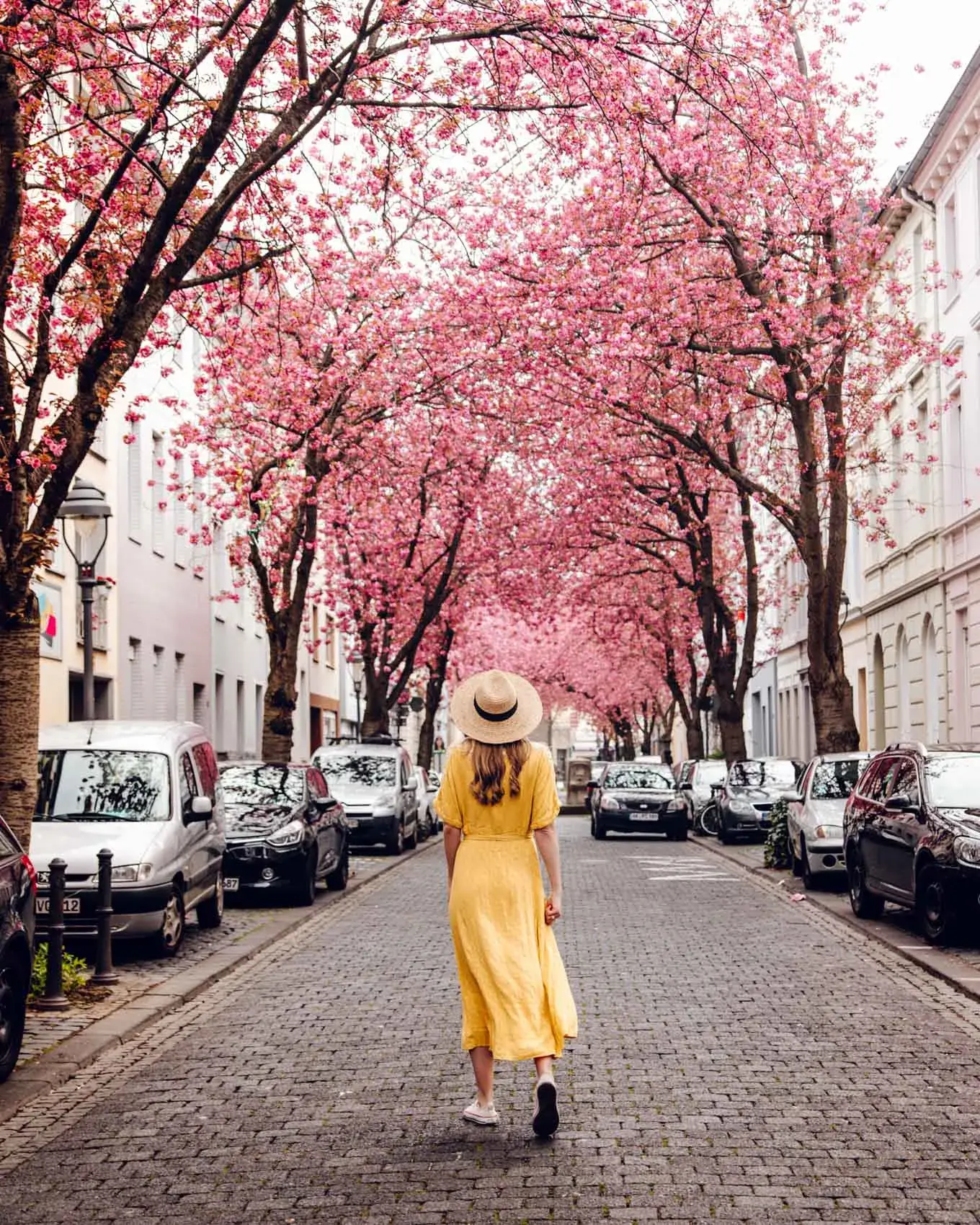
Heerstraße in Bonn's Altstadt district is one of Europe's most photographed spring streets, and one look explains why: its double row of Japanese cherry trees knits into a complete tunnel of blossoms overhead, turning the entire street a soft, glowing pink for two weeks each April. Petals blanket the pavement. Light filters down through the canopy in dapples. It looks, in short, exactly like a postcard from Japan — except you're standing in the Rhine Valley, a 90-minute train ride from Frankfurt.
Better still, the Bonn bloom is free, requires no advance booking, and sits inside a city that's worth exploring on its own merits — Beethoven's birthplace, superb Rhine-side dining, and easy day trips to Cologne, the Drachenfels, and the Ahr wine region.
Timing shifts year to year (late March to mid-April is typical), so check local forecasts before you book. The trees peak for roughly 10–14 days, but even a few days past prime, the street is still stunning.
Washington D.C., USA — The Tidal Basin in Spring
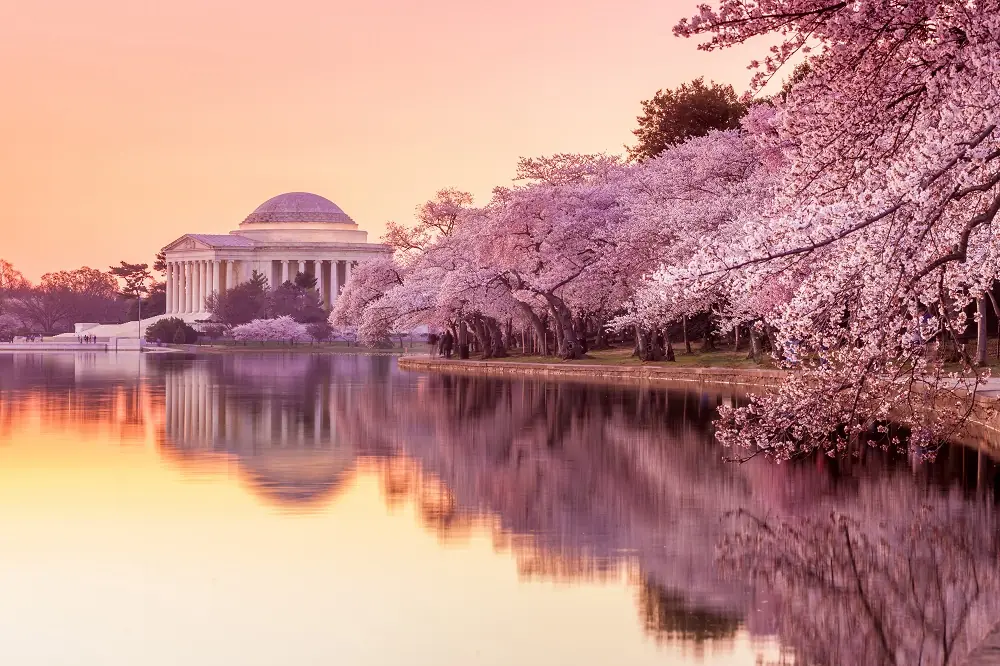
Washington D.C.'s National Cherry Blossom Festival is one of the most famous spring events in the United States — yet it draws a fraction of the international crowds Japan's version does, which makes it a genuinely realistic option for travelers from Europe or the Americas chasing an iconic blossom moment without crossing the Pacific.
The Tidal Basin is the heart of it: roughly 1,700 trees (a gift from Japan back in 1912) ringing a reflecting pool, framed by the Jefferson Memorial on one side and the Martin Luther King Jr. Memorial on the other. Show up before 8am and you'll get something genuinely serene — mist curling off the water, petals drifting, almost nobody else around.
The festival runs late March through mid-April and layers in kite-flying events, lantern ceremonies, and free outdoor concerts. Add a city where the Smithsonian museums cost nothing to enter, and you've got one of the best-value spring city breaks going.
Amsterdam & Keukenhof, Netherlands — Blossoms and Tulips Together
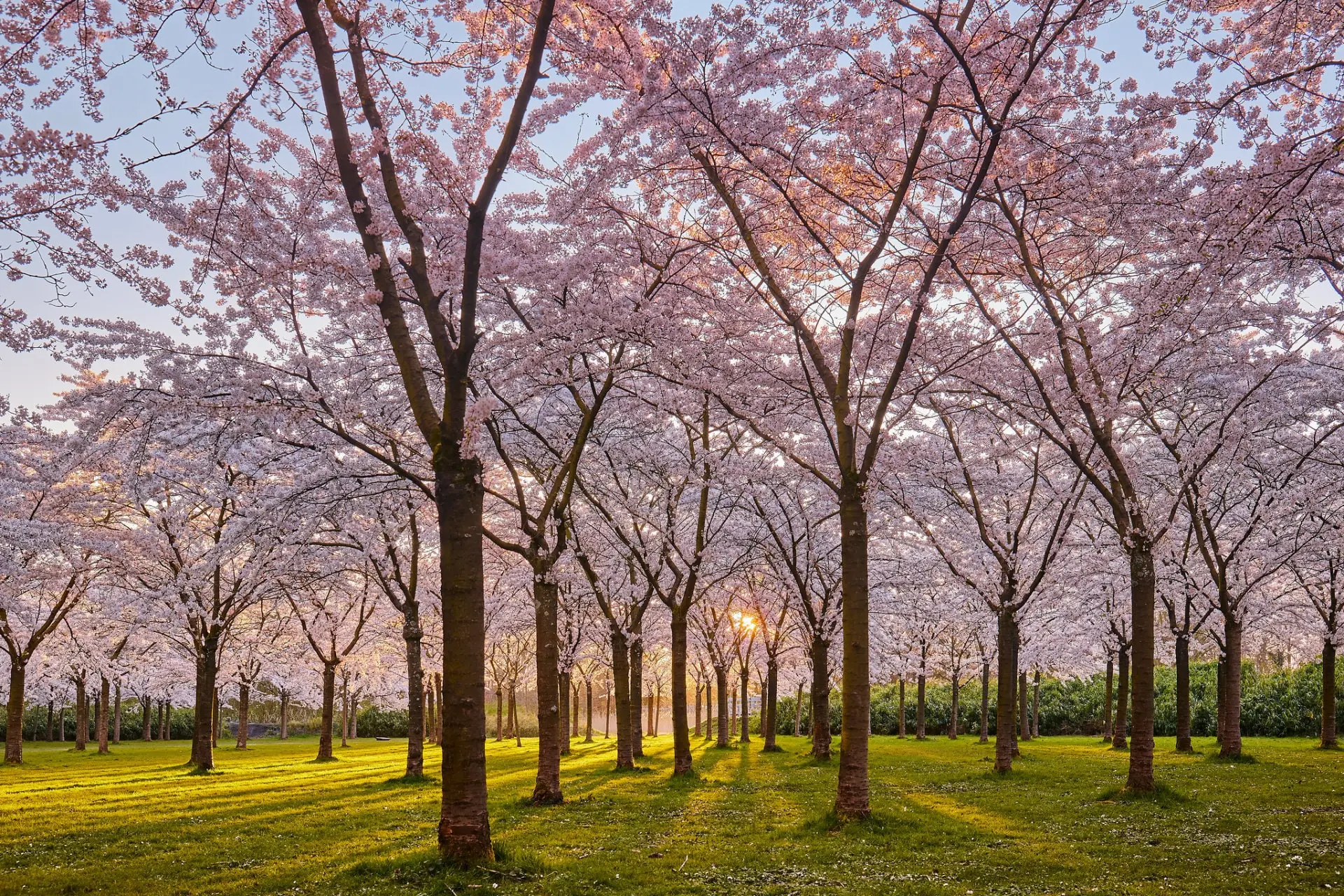
The Keukenhof — arguably the world's most famous flower garden — built its reputation on tulips, but its cherry blossom corner is quietly earning destination status all its own. The garden opens from late March to mid-May, and the blossom stretch in early April overlaps with peak tulip season, stacking two floral spectacles on top of each other in a way that's hard to find anywhere else.
Back in Amsterdam, Amsterdamse Bos — the city's sprawling forested park — blooms around the same time, and the canals threaded with blossom-heavy branches are, for once, genuinely as lovely as the tourist photos suggest.
The Netherlands is an easy reach from most European cities — often just a two-hour flight or train ride — which makes a short spring blossom trip realistic even on a tight schedule. Go early in the week, and get to Keukenhof right at opening to beat the crowds.
Jeju Island, South Korea — The Volcanic Spring
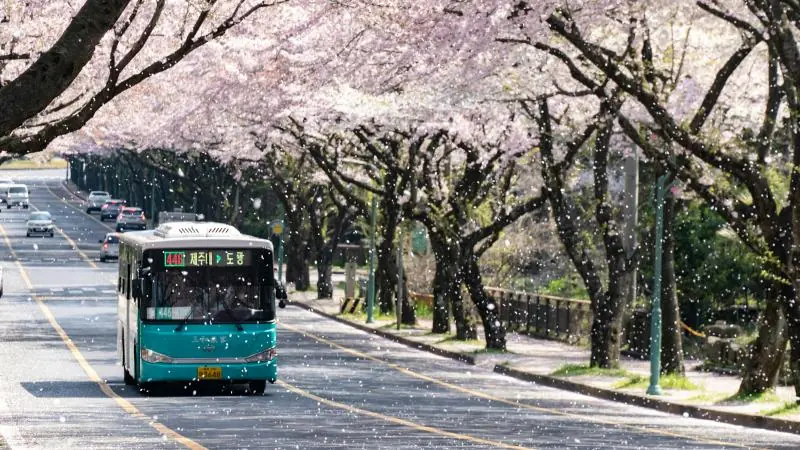
Jeju Island jumps the gun on the mainland, blooming as early as late March, and the setting makes the head start feel like a bonus prize. The island's cherry trees stand framed against the volcanic cone of Hallasan, Korea's highest peak, and against the dark lava-rock coastline that gives Jeju its unmistakable, otherworldly look.
The Jeju Cherry Blossom Festival centers on Jeonnong-ro Street, where a canopy of blossoms turns the avenue pink for its brief run. But the shot that stays with you is blossoms in the foreground against Hallasan's still-snowcapped summit — spring underfoot, winter still clinging to the peak, two seasons trading places in a single frame.
Jeju is an easy hop from Seoul (a short domestic flight) or from several international hubs across Asia, and the island offers plenty beyond the blossoms — lava tube caves, coastal cliffs, volcanic crater lakes — enough to make it a full destination rather than a one-note detour.
What to Know Before You Go
Timing is everything — and it's a moving target. Cherry blossoms peak for just 7–14 days in most locations, and shifting climate patterns keep nudging the exact dates around. Track local blossom forecasts (South Korea's national forecasting is excellent; the U.S. National Park Service tracks the D.C. bloom closely) and stay flexible wherever you can.
Book the hotel, not the itinerary. Lock in accommodation in the right city well ahead of time, but keep your daily plans loose so you can chase the bloom to wherever it peaks first.
Weekday mornings are a different world. At every destination on this list, showing up early on a Tuesday or Wednesday buys you an experience that a Saturday afternoon simply cannot.
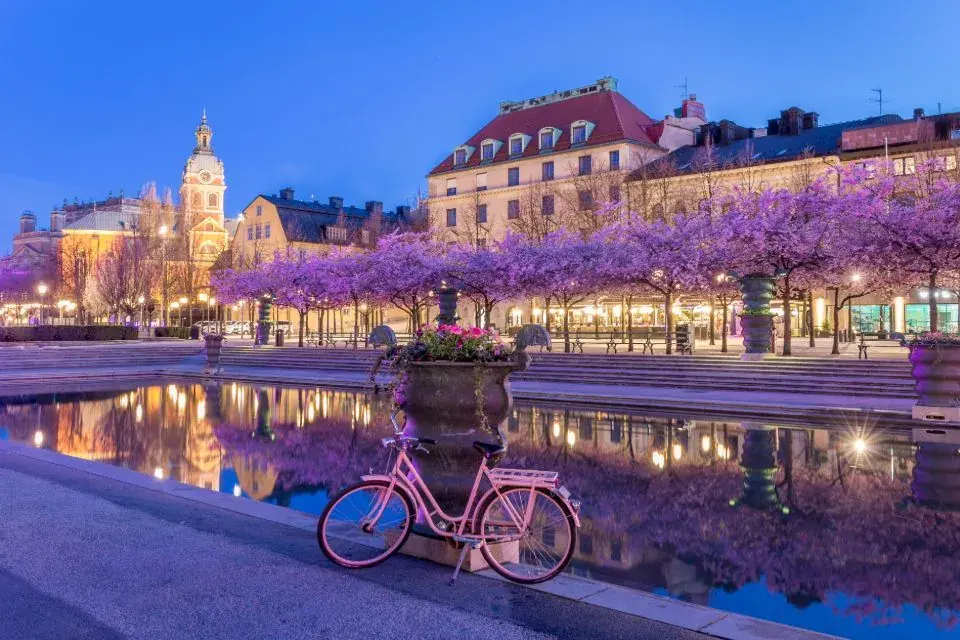
Don't skip the falling petals. Everyone chases full bloom and misses the equally magical hanafubuki — the "blossom blizzard" of petals swirling on the wind. A few days past peak is still absolutely worth the trip, often quieter, and sometimes even more beautiful.
The blossoms don't care which country they're in. They just bloom — and now, so can you, anywhere in the world.