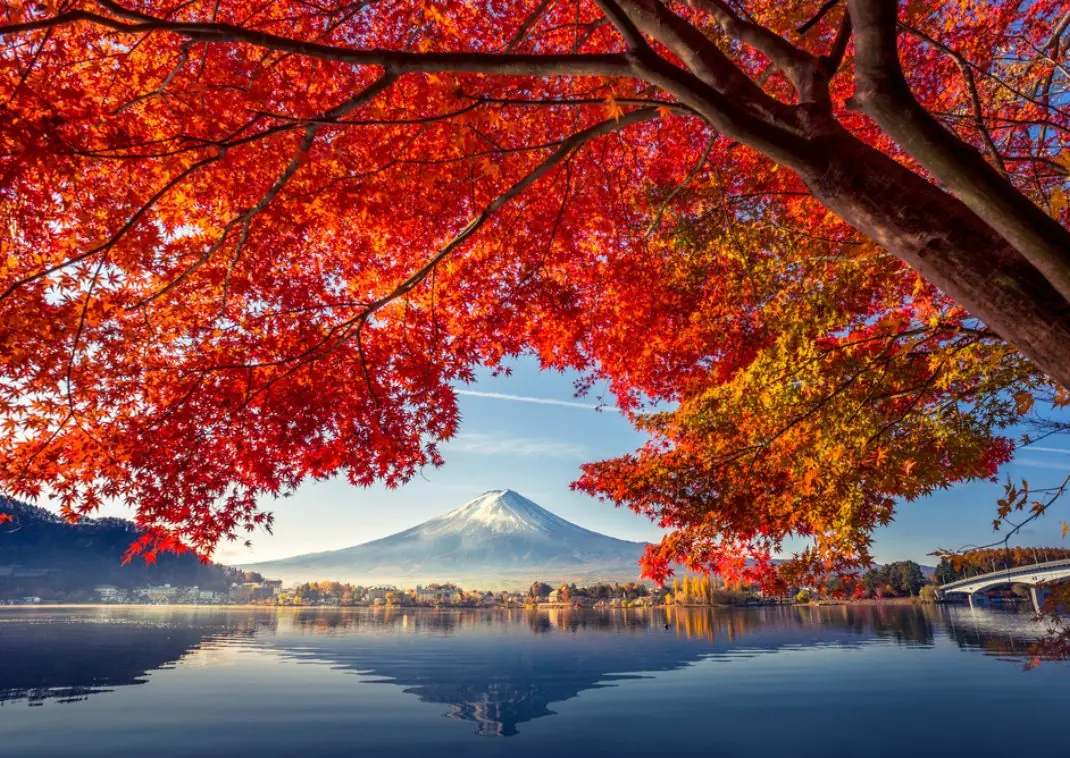
Walk into a Kyoto temple garden in late November and the first thing that hits you isn't the color — it's the silence it creates. Conversations drop to a murmur. Someone's camera shutter clicks, then stops, because no photo is going to hold what a thousand backlit maple leaves look like when the wind moves through them. This is koyo, and unlike cherry blossoms, which vanish in a week of pink confetti, autumn color in Japan lingers, deepens, and travels the length of the country over nearly three months — which means, if you time it right, you get to chase it.
Table of Contents
- 1. How Koyo Moves Across Japan
- 2. Hokkaido — The Earliest Color
- 3. Nikko — Shrines Among the Maples
- 4. Mount Takao — Tokyo's Easiest Escape
- 5. Kyoto's Arashiyama — Bamboo and Fire-Red Leaves
- 6. Kyoto's Tofuku-ji — The Valley of Maples
- 7. Viewing Tips for a Better Trip
1. How Koyo Moves Across Japan
Run the cherry blossom front in reverse, then slow it down, and you have koyo: it starts in the mountains of the far north in September and takes until early December to finally reach the southern coastline, a color wave rolling downhill and southward at roughly the pace of a slow train. That three-month window is the whole appeal — it means "autumn in Japan" isn't one trip, it's a moving target you can actually catch, whether you land in September or the first week of December.
- Hokkaido: mid-September to mid-October, with Mount Asahidake's alpine slopes sometimes catching fire as early as late August.
- Tohoku and northern Honshu (Nikko, Sendai): early to late October.
- Tokyo and Mount Takao: mid-to-late November.
- Kyoto and Osaka: mid-November through early December, with the very last week of November typically the sharpest, deepest color of the whole season.
2. Hokkaido — The Earliest Color
Ride the Asahidake Ropeway up through the clouds in mid-September and you'll step out into something that looks less like autumn and more like the mountain is smoldering — deep red alpine shrubs (kobayo, the tough dwarf plants that cling to volcanic scree) blaze across the slopes weeks before a single leaf has turned anywhere else in the country. Daisetsuzan National Park earns its reputation as the true starting gun of koyo season here, and standing above the treeline with your breath visible in the cold, watching color spread down a live volcano, feels like being let in on a secret the rest of Japan hasn't found out about yet.
- The Asahidake Ropeway carries visitors up to around 1,600 meters, where color often peaks in mid-September — arrive by 9am, before the cloud layer that frequently rolls in by midday.
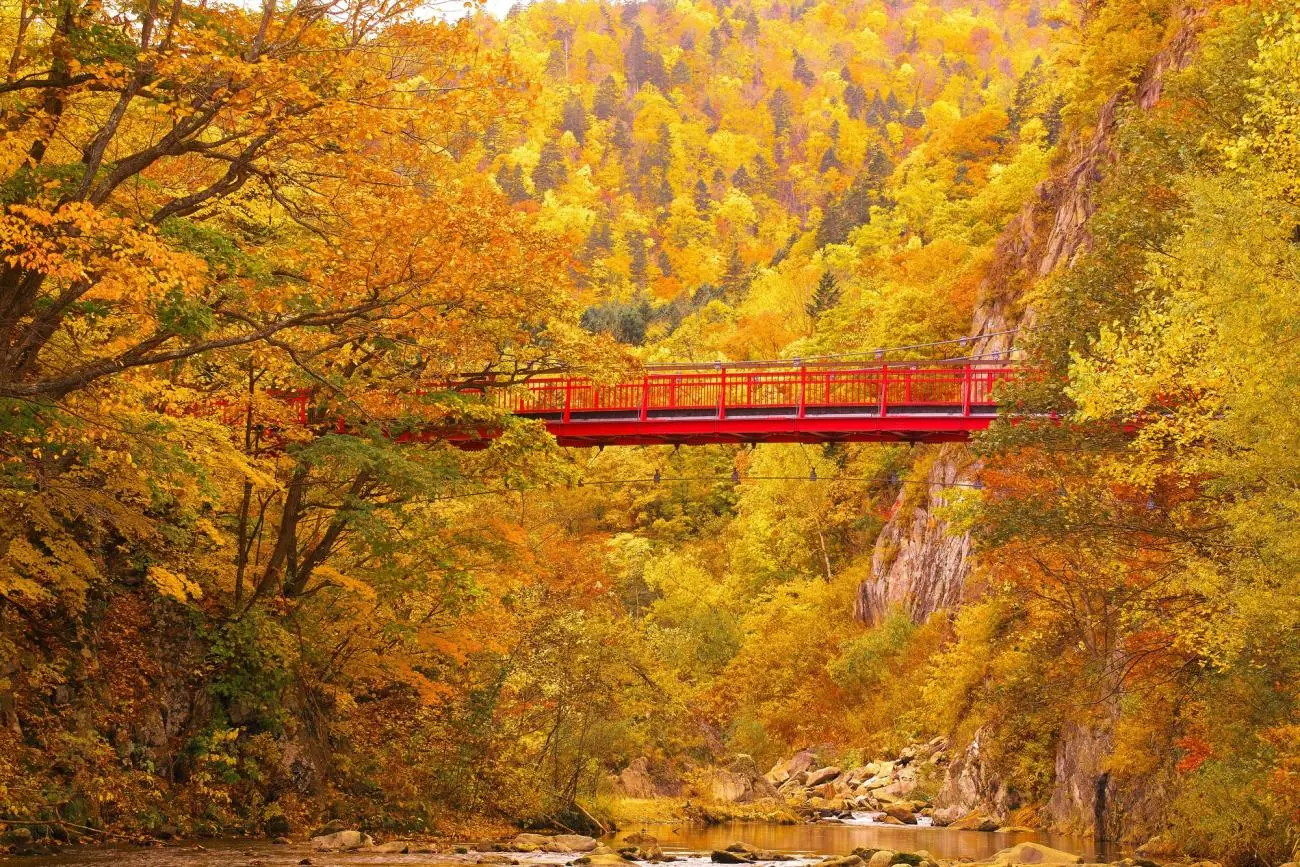
- Sounkyo Gorge, a short drive away, follows a week or two behind the alpine peaks, its cliffside maples framing a dramatic river canyon — pair the two as an easy two-stop loop.
- Sapporo makes a convenient base, with Daisetsuzan roughly a three-hour drive or bus ride northeast.
- Pack real cold-weather layers — mornings at altitude can dip close to freezing even in early September, and the wind at the ropeway summit cuts hard.
3. Nikko — Shrines Among the Maples
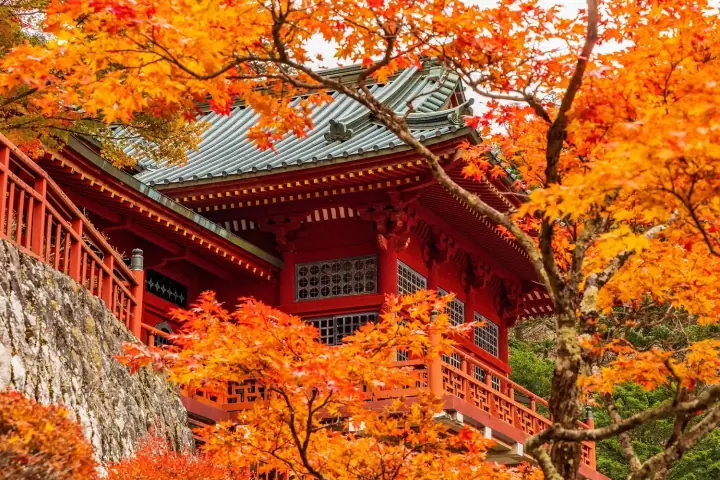
There's a moment on the approach to Toshogu Shrine, its gold leaf and vermillion carvings catching the late-October light through a canopy gone entirely red, where Nikko stops looking like a place you're visiting and starts looking like a woodblock print you've somehow walked into. This UNESCO-listed town, about two hours north of Tokyo, is where Japan's most elaborate shrine architecture meets some of its most theatrical foliage — and the pairing is no accident, since the temple grounds were planted with color in mind centuries ago.
- Peak color typically falls in the last two weeks of October, roughly a month ahead of Tokyo itself.
- The Irohazaka Winding Road, with its 48 hairpin turns each named for a character of the old Japanese alphabet, is a dramatic (if slow) drive through the color belt toward Lake Chuzenji.
- Kegon Falls, a 97-meter drop framed by red and gold maples, is one of the most-photographed waterfalls in Japan during this window — the observation elevator down to the base platform is worth the small fee for the head-on view.
- Day trips from Tokyo are possible via the Tobu-Nikko limited express, but staying one night lets you catch Toshogu at 8am, alone in the mist, before a single tour bus arrives.
4. Mount Takao — Tokyo's Easiest Escape
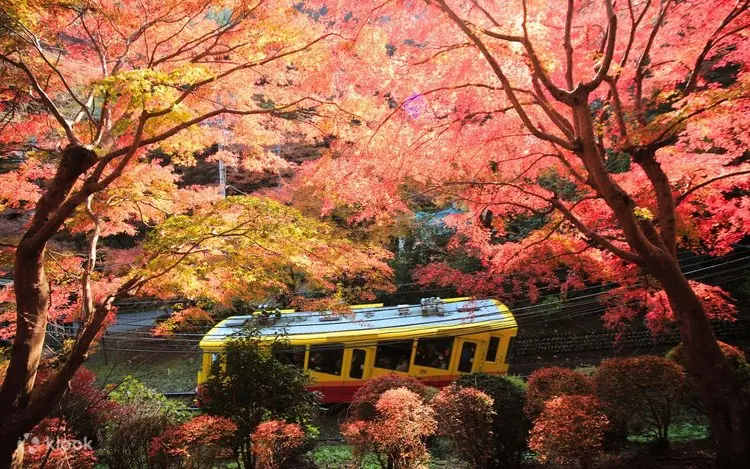
Fifty minutes after boarding a train at Shinjuku Station, you can be standing in a maple grove with the entire Kanto Plain spread out below you and no memory of ever having left a city of 14 million people. That's the trick of Mount Takao: a genuine mountain, with a cable car for anyone who'd rather not hike it, that turns Tokyo's autumn color into a half-day trip instead of an expedition.
- The Keio Line runs directly from Shinjuku to Takaosanguchi Station in about 50 minutes, making this the single easiest koyo outing from central Tokyo.
- A cable car or chairlift covers the steepest section, leaving a manageable walk to the summit and its views over the Kanto Plain — clear days reveal Mount Fuji in the distance.
- Yakuoin Temple, partway up the mountain, is especially striking framed by turning maples in late November, incense smoke drifting through red leaves.
- Weekends get genuinely crowded — a weekday visit, or an early Saturday start before 8am, makes for a far more peaceful walk.
5. Kyoto's Arashiyama — Bamboo and Fire-Red Leaves
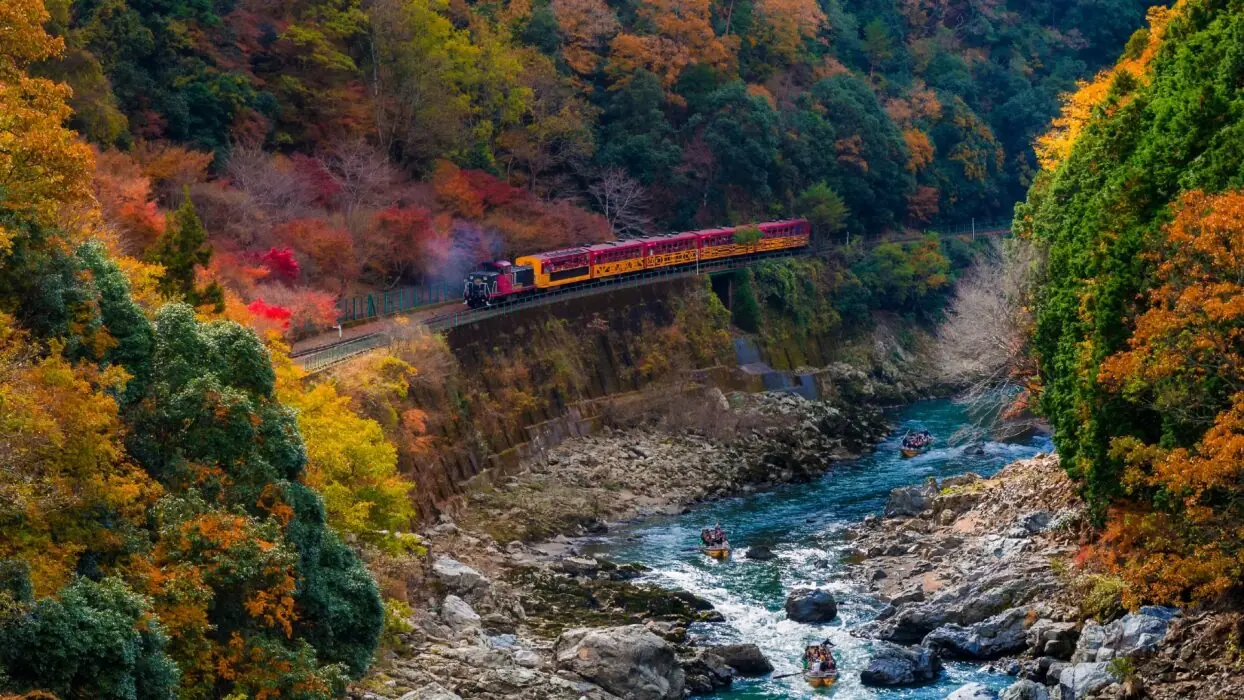
Everyone comes to Arashiyama for the bamboo grove, that famous green tunnel of light and shadow — but arrive in late November and you'll find the district has a second, louder act waiting past the grove's edge: maples along the Katsura River burning a red so saturated it looks retouched, even in person. Walk from the cool green hush of the bamboo straight into that color and the contrast does something almost physical — it's the closest this whole guide comes to a "wow" you can't plan your way around.
- Tenryu-ji Temple's garden, a UNESCO site, is one of the best places to see maples reflected in still water — arrive at opening for a mirror-flat pond before the wind picks up.
- The Togetsukyo Bridge, crossing the Katsura River, frames the surrounding hillside color especially well at sunset, when the whole slope goes gold-to-red.
- A rickshaw ride through the bamboo grove and nearby lanes costs roughly ¥4,000–9,000 depending on route and length, and the driver's running commentary is worth the price alone.
- Arrive before 8am to beat both the day-trippers from central Kyoto and the tour groups that fill the grove by mid-morning — by 10am, the same path is shoulder-to-shoulder.
6. Kyoto's Tofuku-ji — The Valley of Maples
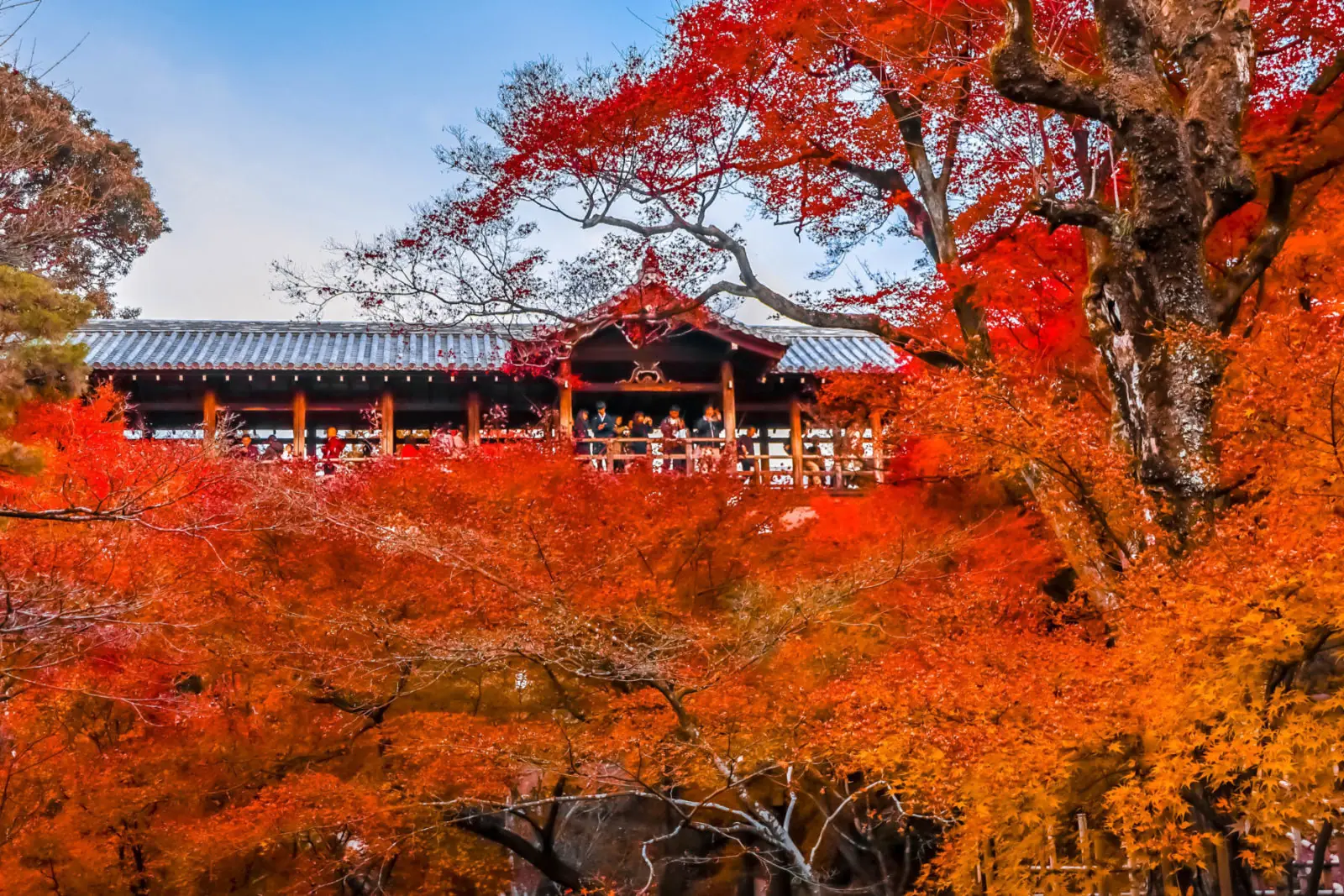
Stand on the Tsutenkyo Bridge at Tofuku-ji during the last week of November and look down: an entire ravine, packed wall-to-wall with maples, appears to be on fire beneath your feet. This is, without much competition, the single best maple-viewing spot in Kyoto — a valley so densely planted with color that photographers plan entire trips around this one bridge.
- Peak color usually falls in the last ten days of November, among the latest — and most reliable — in the Kyoto area, a useful hedge if an early trip elsewhere in Japan missed the window.
- Entry to the maple valley runs around ¥400–600 (roughly $3–4), with timed entry sometimes required during the busiest days.
- Arrive right at opening (around 8:30am) — by late morning, the bridge viewpoint can be shoulder-to-shoulder, several rows deep.
- The nearby Kaisan-do garden offers a quieter, less crowded alternative view of the same valley, with a raked-gravel garden as a calm counterpoint to the crowds on the bridge.
7. Viewing Tips for a Better Trip
- Check real-time forecasts: Japanese weather services and tourism sites publish koyo forecasts each September, updated weekly — color timing shifts by up to two weeks year to year depending on temperatures, so lock in the region, not the exact date, until closer to your trip.
- Book Kyoto accommodation early: Hotel rates during peak koyo weeks in late November can run 30–50% above baseline, and rooms sell out months ahead — this is Kyoto's second-busiest season after cherry blossom time.
- Go early or go late in the day: The soft, low-angle light just after sunrise or before sunset makes the reds look genuinely luminous, almost backlit, and crowds are noticeably thinner.
- Layer up: autumn mornings can be cold even in southern Japan, especially at temples that open before dawn.
Chasing koyo across Japan means chasing a moving target, but that's exactly what makes it so rewarding — plan the right region for the right week, stand under the right maple at the right hour, and you'll catch a version of autumn that photographs beautifully but somehow feels even better in person.