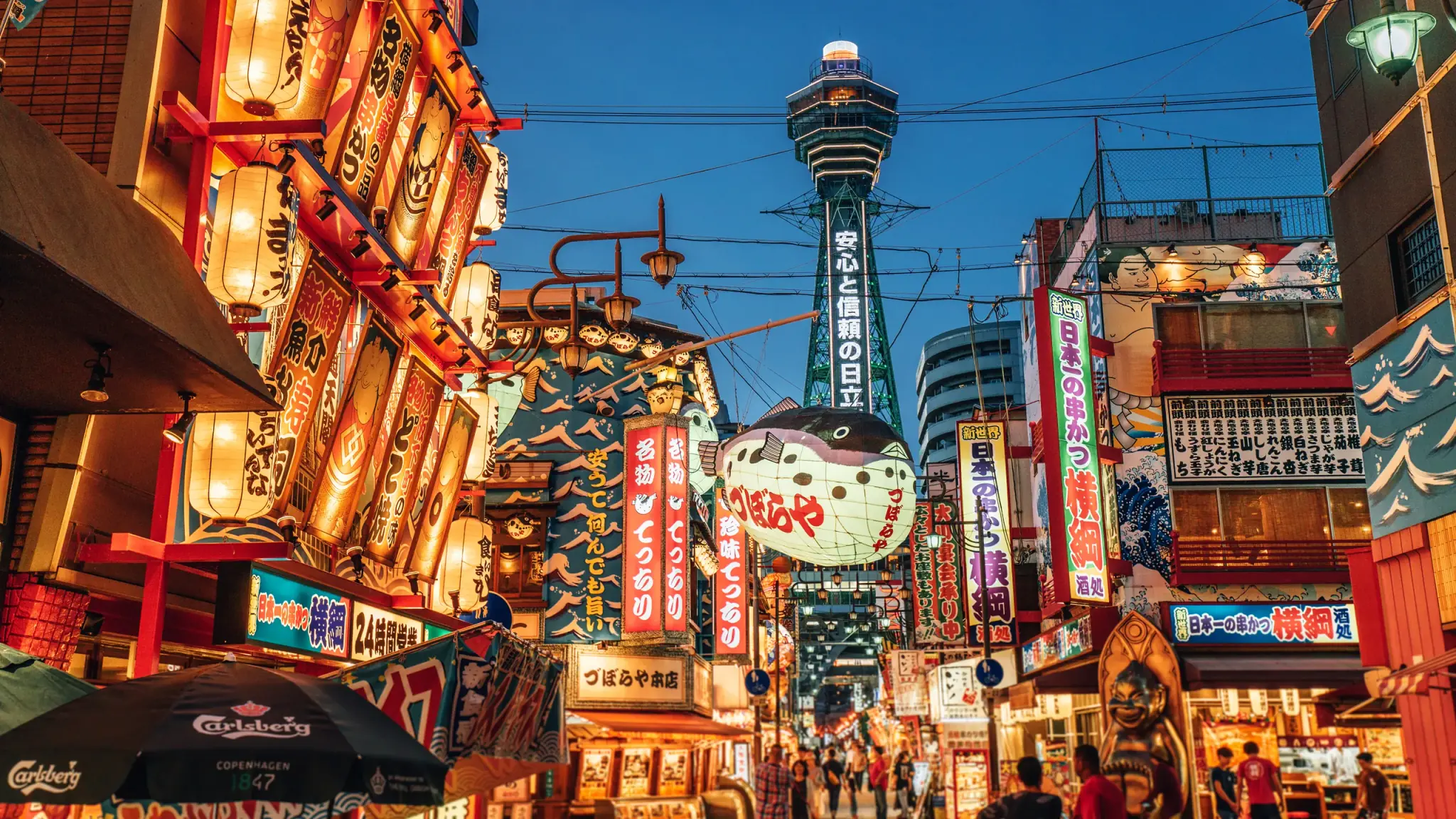
Osaka talks with its mouth full, and it wants you to join in. This is the city that coined kuidaore — "eat yourself bankrupt" — and it lives up to the phrase on nearly every block: octopus balls hissing on cast-iron griddles, skewers frying two-for-one under paper lanterns, the Glico Running Man lighting up a canal that never quite goes quiet. Where Kyoto whispers and Tokyo hums with precision, Osaka shouts, laughs, and pulls up a stool next to you.
Locals have a reputation for being blunt, funny, and quick to strike up conversation — Osaka is often called the comedy capital of Japan, and the local dialect (Kansai-ben) is louder and more expressive than standard Japanese. Beyond the eating and the banter, there's a 16th-century castle, canal-side neon that rivals anything in Asia, and enough day-trip options — Kyoto, Nara, Kobe — that Osaka works equally well as a base or a destination in its own right.
Top Highlights
Source: osakacastle.org Osaka Castle
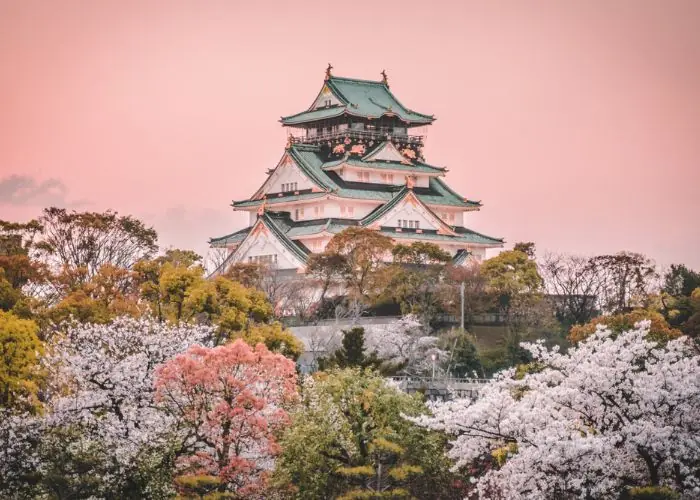
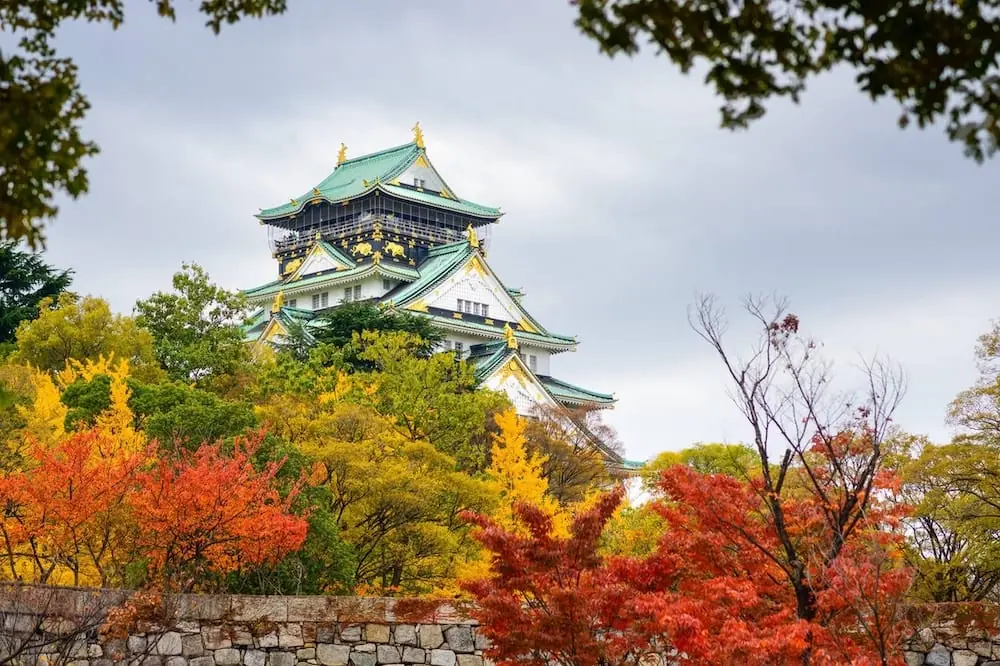
Toyotomi Hideyoshi built this fortress in 1583 to declare himself the most powerful man in Japan, and even after fires, sieges, and lightning strikes, its green-and-gold keep still dominates the skyline. The museum inside traces his rise from foot soldier to warlord, and the top-floor observation deck delivers a 360-degree view over the moat, the park, and the city beyond.
More information
Opening times: 9:00–17:00 (last entry 16:30)
Admission: Adults - ¥1200 / Student - ¥600
Location: View on map
Website: Visit Website
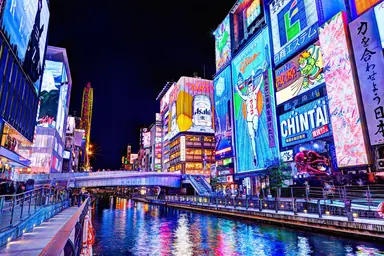
Source: blog.gaijinpot.com Dotonbori & Namba
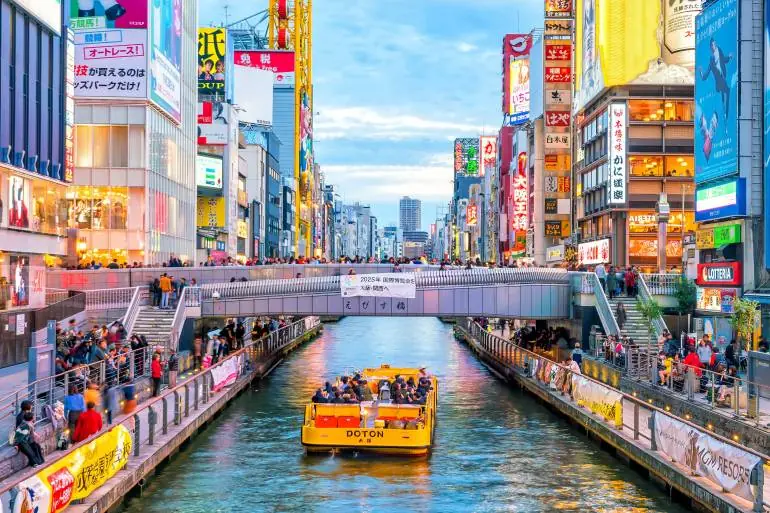
The neon heart of Osaka. Famous for the giant Glico man sign, canal-side dining, and endless street food stalls offering takoyaki, okonomiyaki, and kushikatsu. Come at night when the signs are lit for the most iconic view, and stay late — Dotonbori never really sleeps and the energy only grows. The Ebisu Bridge is the classic photo spot, shoulder to shoulder after dark and worth the wait.
More information
Opening times: 10:00–23:00
Location: View on map
Website: Visit Website
*Some restaurants are open 24 hours.
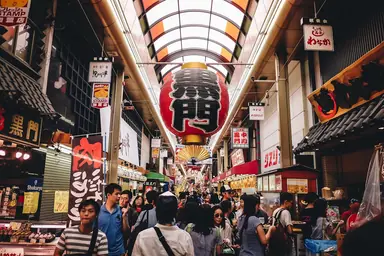
Source: triptojapan.com Kuromon Ichiba Market
A covered arcade of some 150 stalls where fishmongers shout the day's catch and grills send up clouds of smoke, Kuromon has fed Osaka's home cooks and restaurants for nearly two centuries. Order grilled scallops still in the shell, a slab of fresh tuna sashimi, or a wagyu skewer seared to order, then eat standing up at the counter — that's how the locals do it.
More information
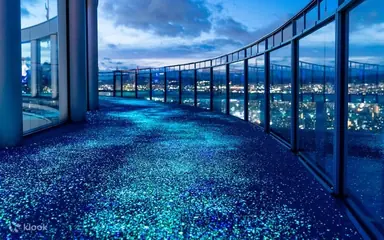
Source: Umeda Sky Building Umeda Sky Building
A striking piece of modern architecture, the Umeda Sky Building consists of two towers connected at the top by a futuristic Floating Garden Observatory. Take the dizzying open-air escalator up between the towers and visit at dusk for stunning sunset views across the entire city skyline. The rooftop deck is open to the sky, so dress for wind — the escalator ride is half the fun.
More information
Opening times: 9:30–22:30
Admission: Adult - ¥2000 / Child - ¥500
Location: View on map
Website: Visit Website
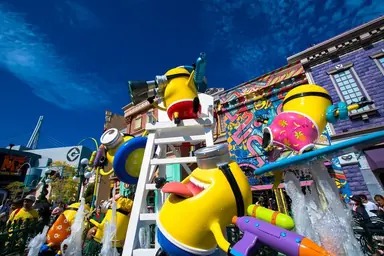
Source: jrpass.com Universal Studios Japan
A must for families and pop-culture fans, USJ features rides and attractions themed around Harry Potter, Minions, Mario, and classic Universal movies. Book Express Passes ahead to skip the longest queues, and time your visit for one of the seasonal events that transform the entire park.
More information
Opening times: 8:30–22:00
Admission: Adult - from ¥7,900 / Child - from ¥5,100
Website: Visit Website
*USJ uses variable pricing by date — prices and opening times can vary significantly, so check the official site before you go.
Source: Klook Travel Osaka Aquarium Kaiyukan
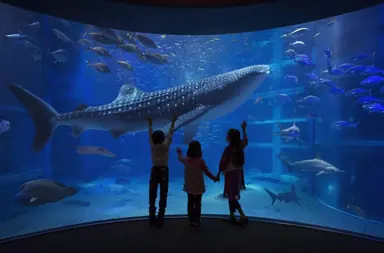
One of the largest aquariums in the world, Kaiyukan takes you on a vertical journey through the Pacific Rim, where whale sharks glide past schools of rays and brightly colored fish. Walkways descend through habitats from the Arctic to the tropics, with a different scene at every turn. Allow a couple of hours.
More information
Opening times: 9:30–20:00
Admission: Adult - roughly ¥2,400–2,700 (dynamic pricing)
Website: Visit Website
*Kaiyukan uses date-based pricing — weekdays run cheaper than weekends and holidays, so check the official site before booking.
Neighborhoods & Where to Stay
Source: iStock.com/f11photo
Namba / Dotonbori
The beating heart of Osaka, where neon lights reflect on the canal and the smell of takoyaki fills the air. This area is perfect for solo travelers and night owls alike — you’ll find endless izakayas, karaoke bars, street food stalls, and shops that stay open late. Staying here means you can step right out of your hotel into Osaka’s most famous entertainment district.
Umeda / Kita
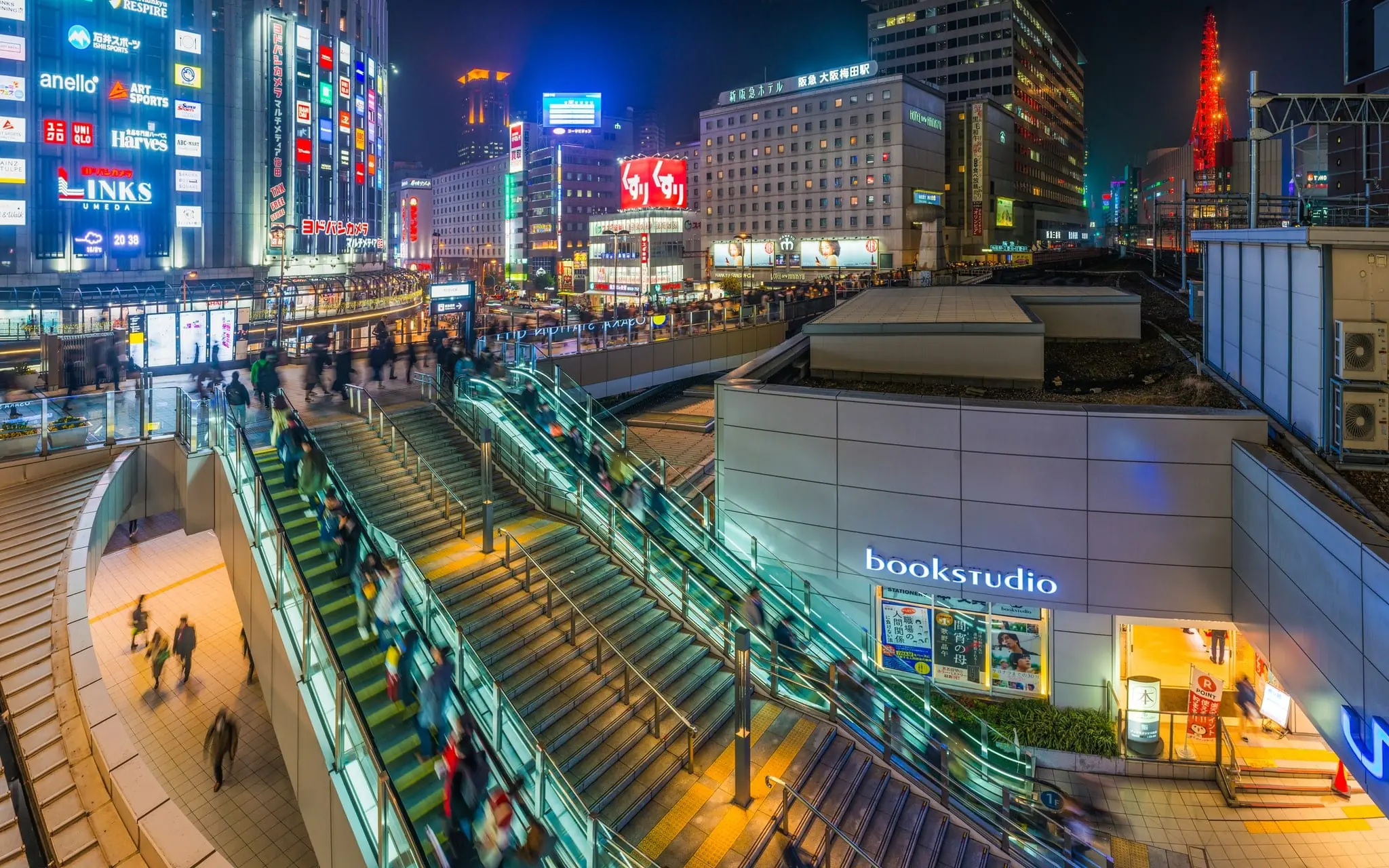
Osaka’s modern business hub doubles as a shopper’s paradise, with massive department stores, underground malls, and observation decks like the Umeda Sky Building. It’s also one of the best-connected spots in the city, with Osaka and Umeda stations linking you to Kyoto, Kobe, and Nara in under an hour — ideal if you’re planning day trips.
Source: Getty Images
Source: Will Fly For Food
Shinsaibashi
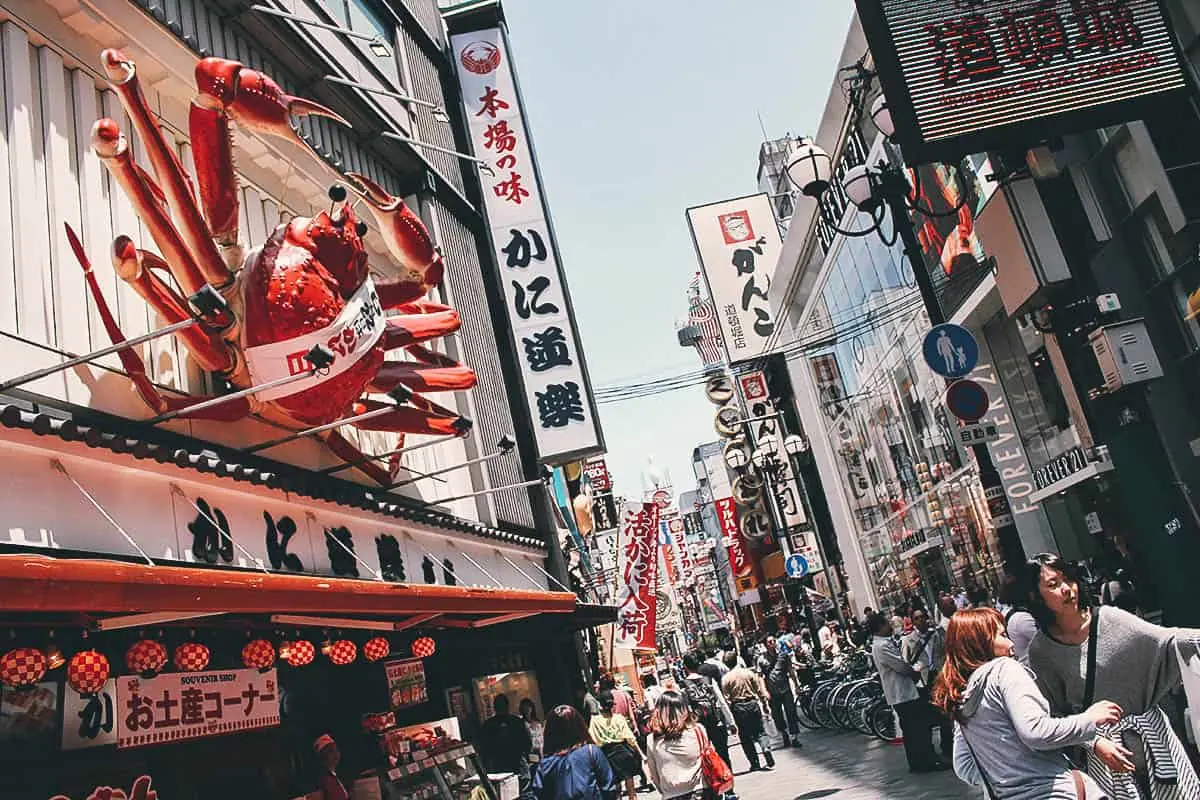
A covered shopping arcade a short walk from Dotonbori, Shinsaibashi puts you within stumbling distance of both the canal-side chaos and quieter side streets lined with cafés and boutique hotels. It's a solid middle ground for travelers who want Osaka's energy close by without sleeping directly above it — see the Shopping & Nightlife section below for what to actually do here.
Osaka Bay / Tempozan
A great choice for families and theme park fans, this waterfront area is home to Universal Studios Japan, the Osaka Aquarium Kaiyukan, and a giant Ferris wheel. Hotels here tend to be spacious and family-friendly, and while it’s a bit outside the city center, good transport links make it easy to balance sightseeing with fun-filled days by the bay.
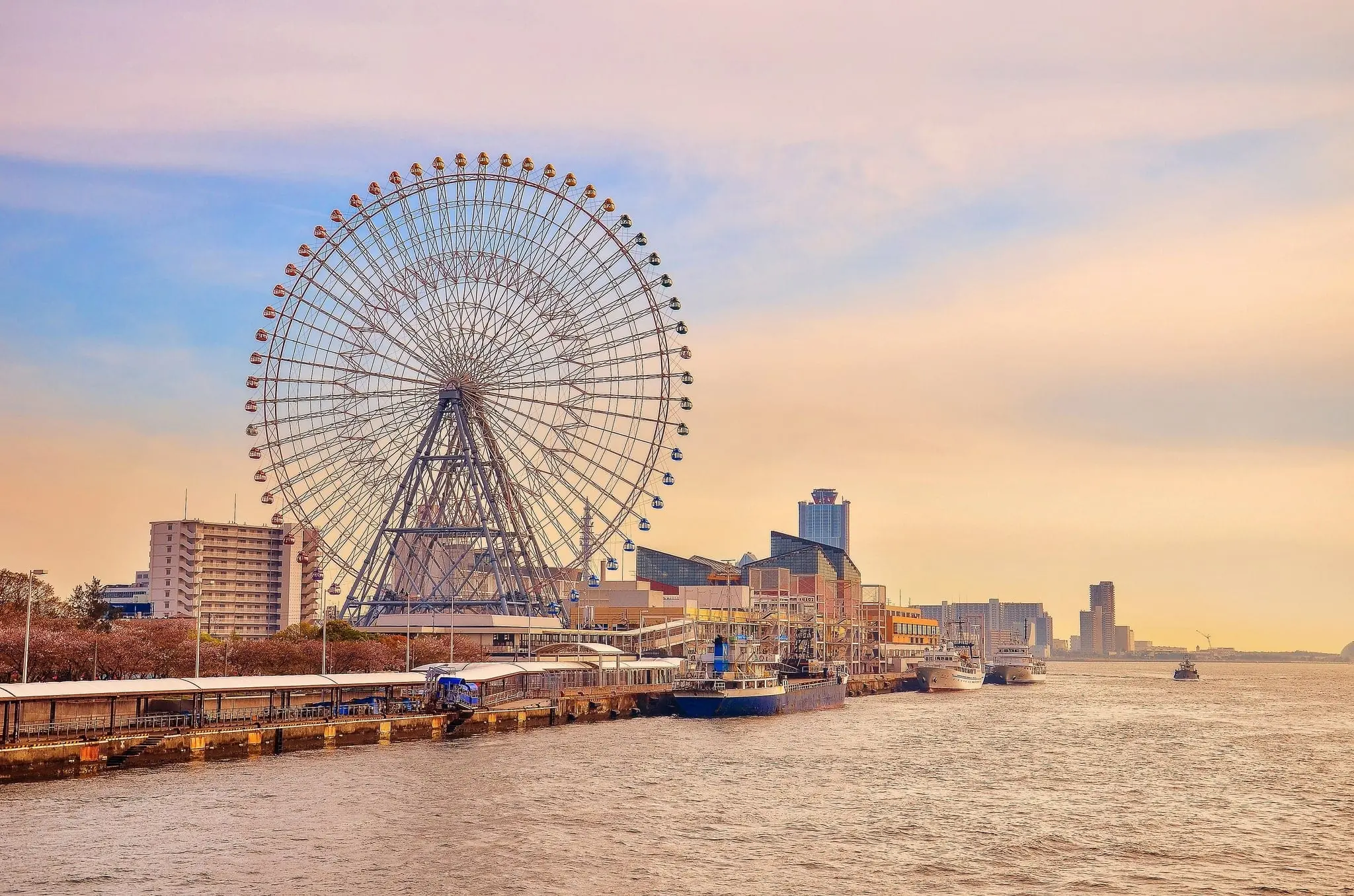
Source: Expedia
Food & Drink
Osakans call their city kuidaore territory — "eat until you drop" — and they mean it as a point of pride, not a warning. Meals here are loud and hands-on: batter hisses on griddles a few feet from your table, vendors call out orders, and nobody blinks if you eat standing at a counter with sauce on your chin. Come hungry and skip the sit-down breakfast; the street is where Osaka actually eats.
-
Takoyaki — Ball-shaped fritters of batter and diced octopus, cooked in cast-iron molds until the outside crisps and the inside stays molten, then finished with a sweet-savory sauce, kewpie mayo, and a flutter of bonito flakes that curl in the rising heat. Namba and Dotonbori are packed with stalls, but ask a local for their favorite hole-in-the-wall — everyone has one.
-
Okonomiyaki — Sometimes translated as a "Japanese pancake," but it's closer to a cabbage-and-batter griddle cake loaded with pork belly, seafood, or cheese, sealed under mayonnaise and a glossy brown sauce. At many restaurants you mix and grill it yourself on a built-in teppan — order a beer and treat it like a small kitchen project.
-
Kushikatsu — Skewered, panko-crusted, and deep-fried to order — meat, seafood, and vegetables all get the same treatment. Shinsekai, the retro neighborhood under the Tsutenkaku Tower, is the spiritual home of kushikatsu, and its shared dipping sauce comes with one hard rule, posted on the wall of every shop: no double-dipping.
-
Ramen and sushi — Beyond the street food, Osaka holds its own in more familiar categories: rich tonkotsu ramen shops tucked down narrow alleys, and conveyor-belt sushi chains where the fish is fresher and the bill smaller than the format suggests. Both are ideal for solo diners who'd rather order by pointing than by conversation.
Insider tip: Many casual restaurants use ticket machines at the entrance — just pick your dish by photo or number, pay, and hand the ticket to staff.
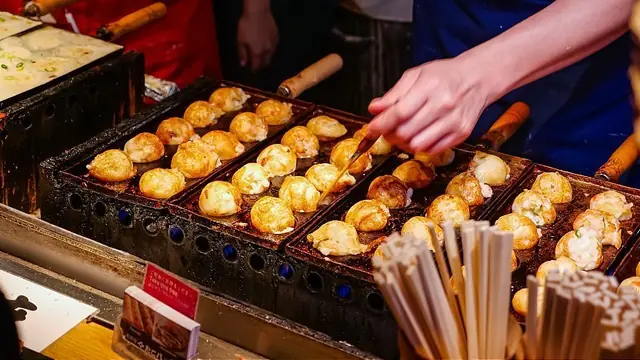 Takoyaki
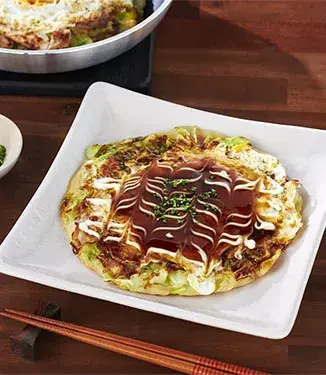 Okonomiyaki
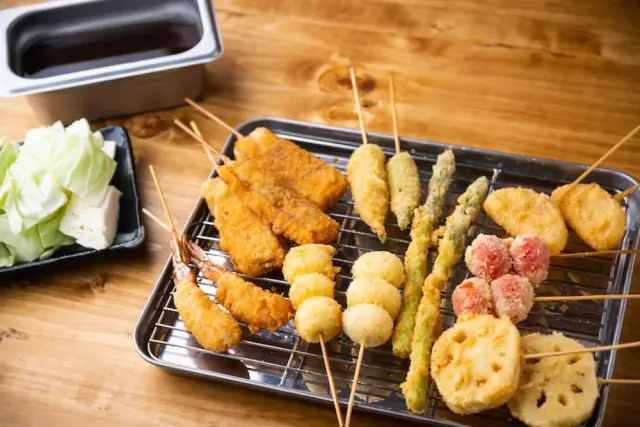 Kushikatsu
Transportation
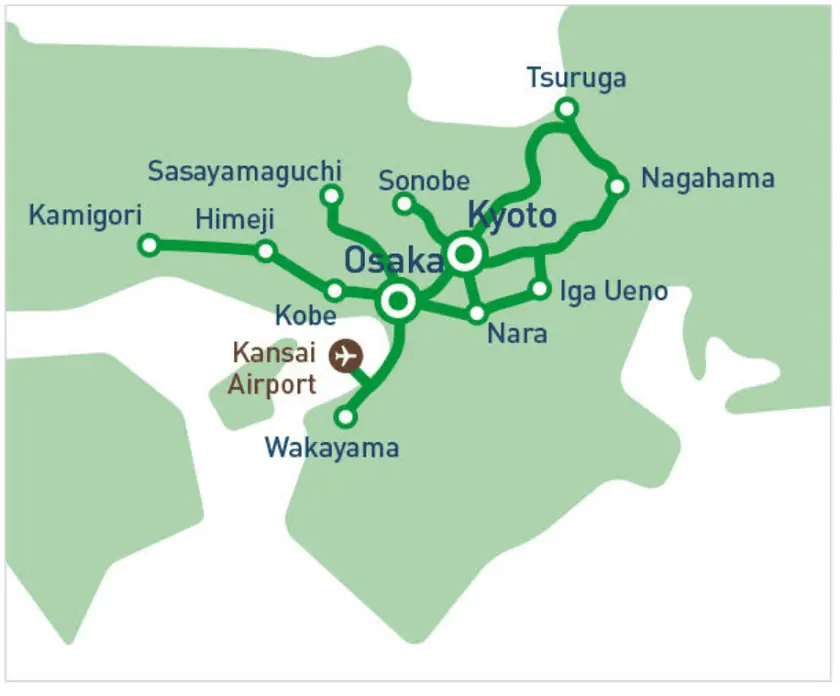
Getting around Osaka (and most of Japan) is straightforward once you know the basics: the city has an extensive subway system, local trains, and regional connections that link you to Kyoto, Nara, and beyond. Everything runs on time, signage is bilingual, and Google Maps is surprisingly accurate for schedules, routes, and prices.
Getting Around Osaka
Osaka Metro's subway lines cover all major neighborhoods—Namba, Umeda, Shinsaibashi, Tennoji, and more. Single-ride fares run roughly ¥190–¥420, depending on distance. Day passes are available: the Osaka Metro Enjoy Eco Card costs ¥820 (weekdays) or ¥620 (weekends/holidays) for unlimited rides on the subway and city bus network.
Prepaid IC cards (ICOCA, Suica, Pasmo) are accepted on all public transport—just tap to pay.
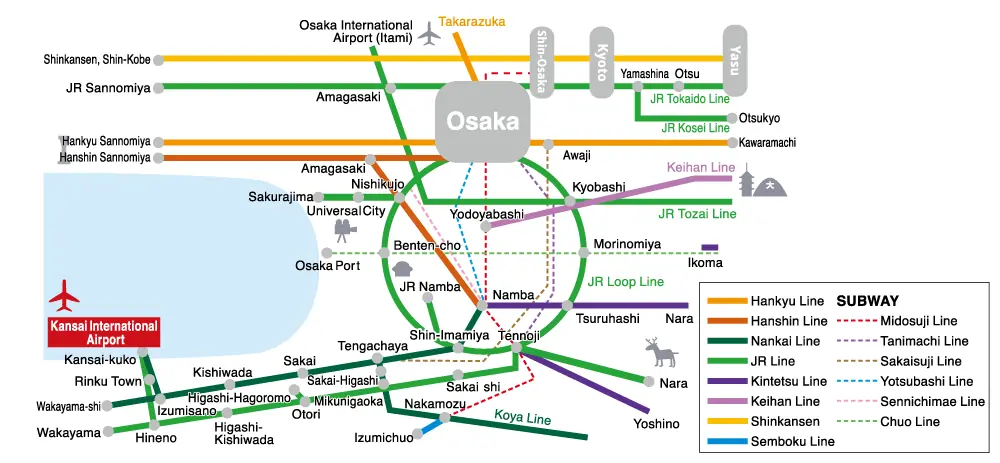
JR lines connect Osaka to Kyoto, Nara, Kobe, and other cities. Rough one-way fares:
- Osaka ↔ Kyoto (~30 min, around ¥570)
- Osaka ↔ Nara (~45 min, around ¥810)
- Osaka ↔ Kobe (~30 min, around ¥410)
Fares shift with periodic price revisions, so treat these as ballpark figures. The JR Loop Line (Osaka Kanjo-sen) circles the city center and is handy for hopping between major hubs like Osaka, Tennoji, and Kyobashi stations.
Tip: Google Maps is reliable for planning routes and checking schedules.
From Kansai Airport
The fastest way to central Osaka is the Nankai Limited Express Rapi:t to Namba Station (~35 min, around ¥1,500 for a reserved seat, e-ticket pricing), or the slower, cheaper Nankai Airport Express (~45 min, under ¥1,000) if you'd rather save the yen than the minutes.
The JR Haruka Express also connects Kansai Airport to Tennoji, Shin-Osaka, and Kyoto — figure roughly 50 minutes to Shin-Osaka, with the discounted ICOCA & HARUKA combo ticket (an IC card bundled with a one-way Haruka fare) usually the cheapest way to book it. Fares on both lines rise periodically, so check current prices before you travel.
JR West Pass
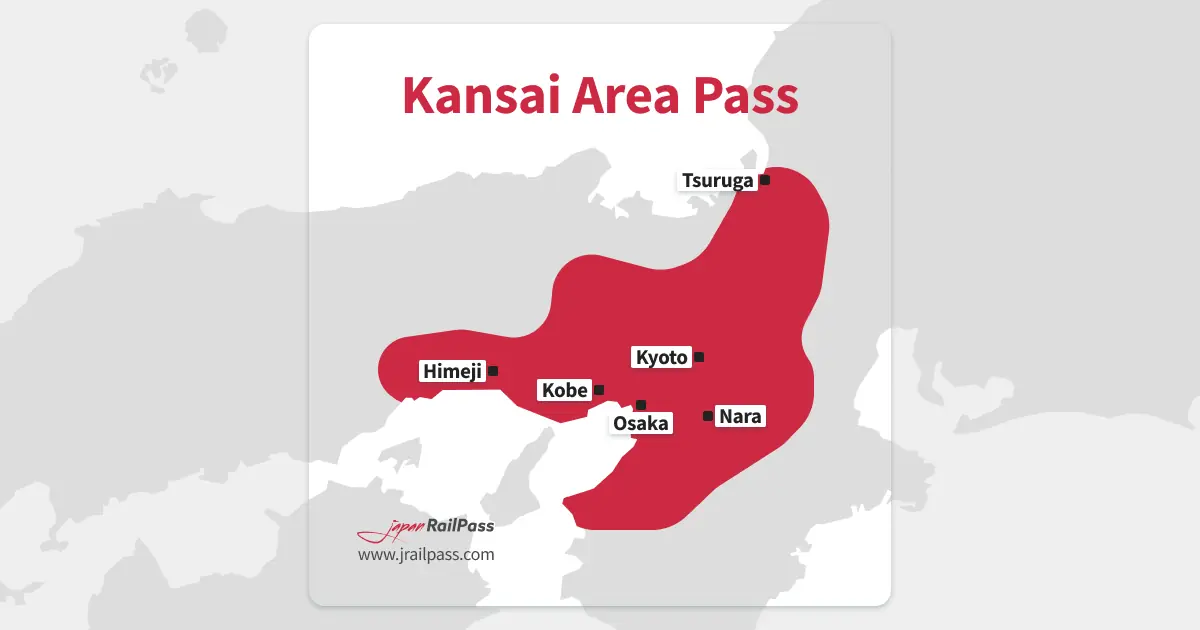
The JR Kansai Area Pass is great value for day trips, sold in 1-, 2-, 3-, and 4-day versions (prices are periodically revised, so check the official JR West site for the current rate). It gives unlimited travel on JR trains — including the Haruka airport line and the JR Loop Line — around Osaka, Kyoto, Nara, Kobe, Himeji, and Kansai Airport. Even a single round trip to Kyoto and back can nearly cover the 1-day cost. Passes are available online, at stations, or at the airport.
Wider passes (Kansai-Hiroshima, Kansai-Wide Area Pass) are available if you’re venturing further.
For more details: JR Kansai Area Pass.
Day Trips from Osaka
Source: Japan Wonder Travel Blog
Kyoto (30 min by train)
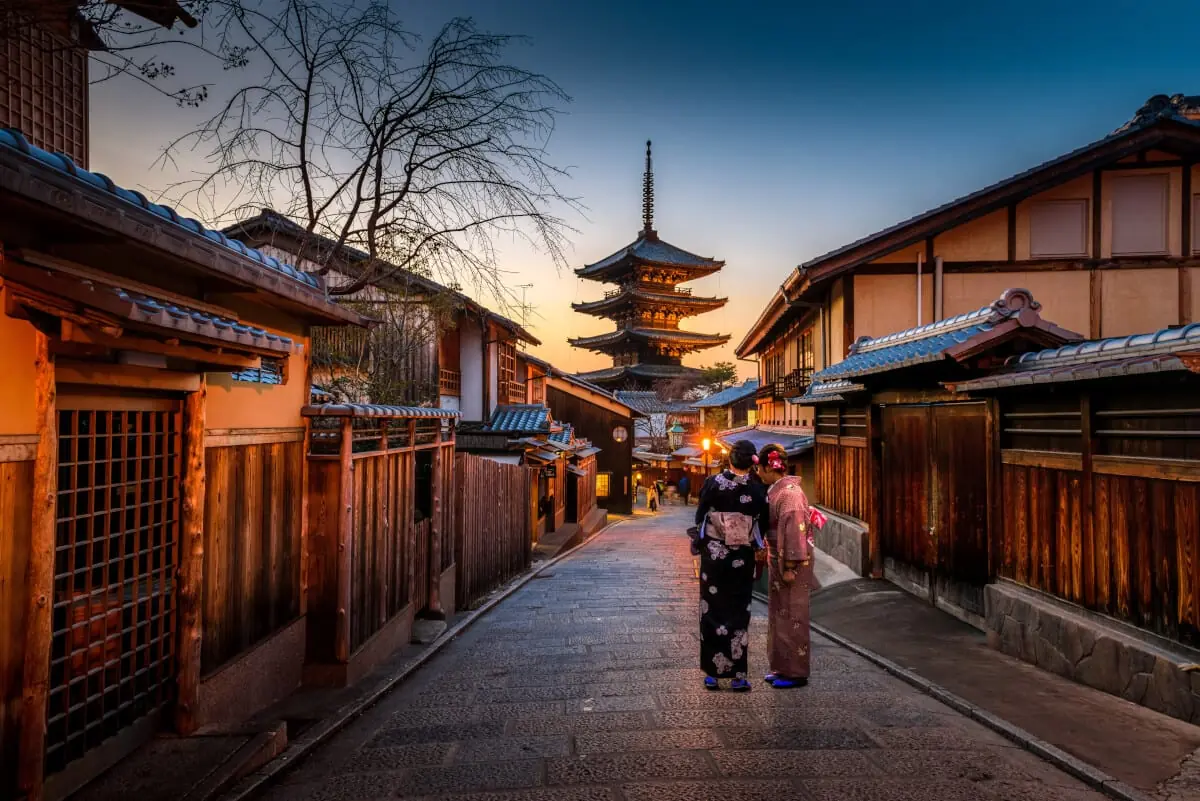
Step back into Japan’s cultural heart, where hundreds of temples, shrines, and traditional teahouses line quiet streets. Highlights include the golden pavilion at Kinkaku-ji, the red torii gates of Fushimi Inari Shrine, and the historic Gion district, where you might glimpse a geisha at dusk. For more tips on temples, neighborhoods, and hidden corners, see our full Kyoto guide.
Nara (45 min by train)
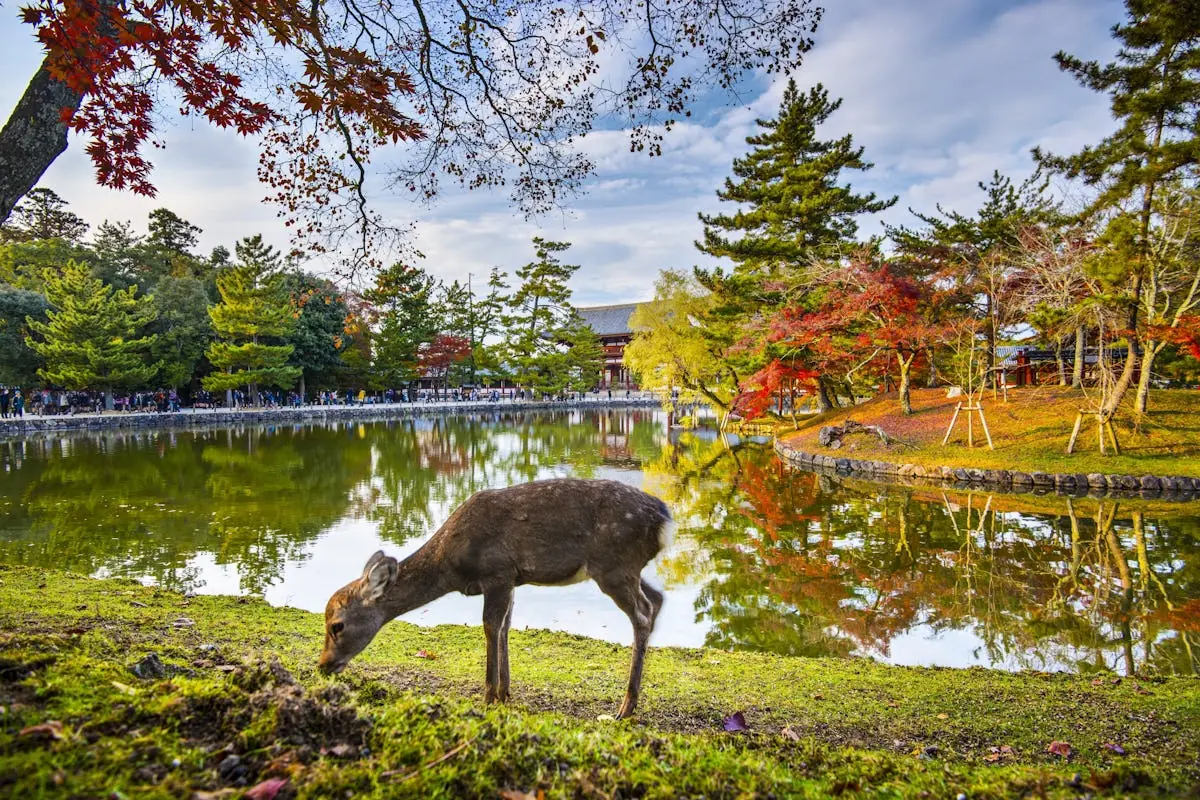
Famous for its friendly, free-roaming deer that bow for treats and the colossal Great Buddha housed in Tōdai-ji Temple, one of Japan’s most impressive wooden structures. Nara’s peaceful parks, ancient shrines, and charming old streets make it a compact, walkable city ideal for a slower-paced day trip filled with history, nature, and a touch of whimsy. For insider tips and hidden gems, check out our dedicated Nara.
Source: Sean Pavone/Shutterstock
Source: Getty Images
Kobe (40 min by train)
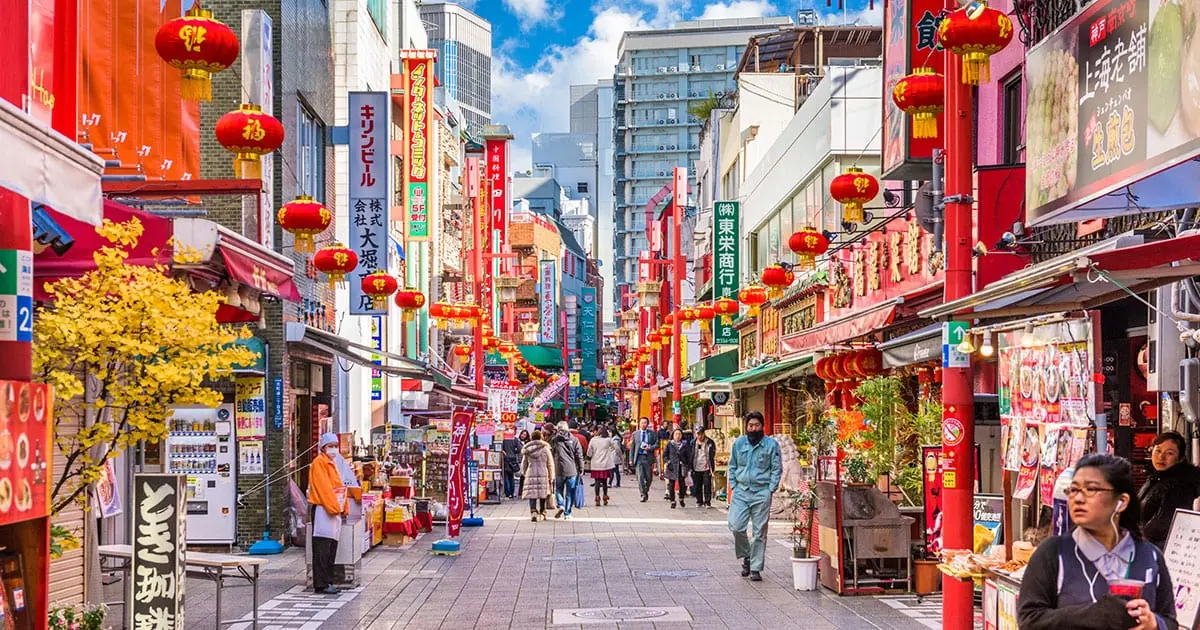
A cosmopolitan port city where skyscrapers meet historic streets, Kobe is framed by mountains and sea. Stroll Harborland for waterfront views, ride a cable car up Mount Rokko for panoramas, and wander the old settlement for a taste of Kobe’s international flair. Don’t miss melt-in-your-mouth Kobe beef in the city where it was born.
Himeji (1 hour by train)
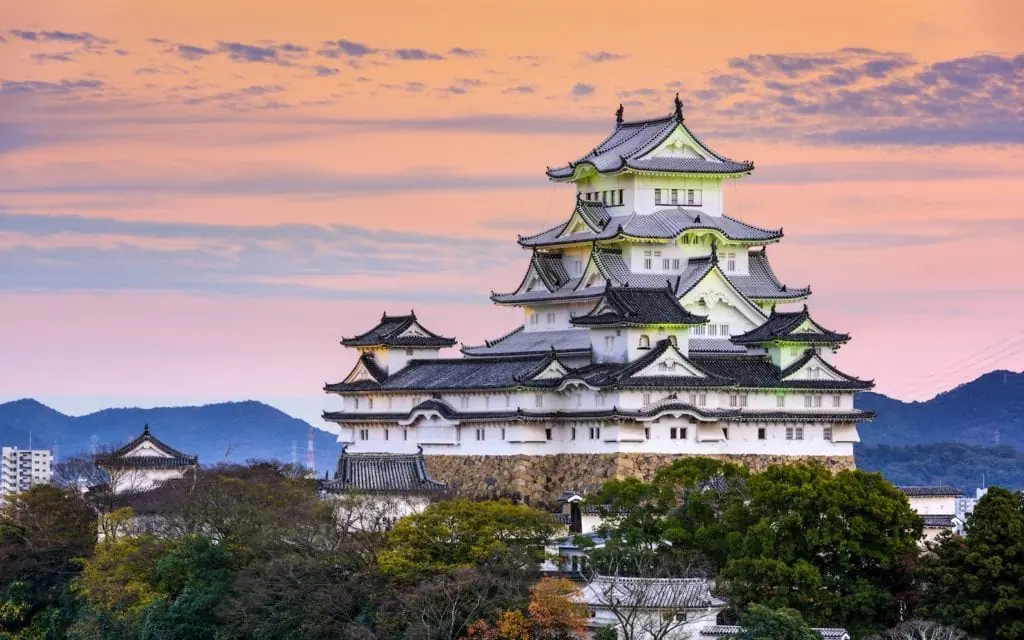
Home to Japan’s most magnificent surviving feudal castle, Himeji Castle—nicknamed the “White Heron” for its graceful, soaring silhouette—is a UNESCO World Heritage site celebrated for its elegant architecture, labyrinth-like defenses, and storied history. Wander the castle’s sprawling grounds in spring for cherry blossoms or autumn for fiery foliage, and soak in panoramic views from the keep.
Source: GaijinPot Travel
Proposed Itinerary
Osaka rewards a fast pace: two days covers the highlights easily, day one working the city center block by block and day two handed over to the easiest day trip going — Kyoto, just 30 minutes by train.
Day 1: Castle, Markets & Neon Nights
Historic castle by morning, a market lunch and an arcade detour through the middle, neon canal by night.
- Morning: Beat the crowds at Osaka Castle — tour the museum inside, then ride up to the top-floor observation deck for the 360-degree view over the moat and city.
- Afternoon: Eat standing up at Kuromon Ichiba Market (grilled scallops or a seared wagyu skewer make a fine lunch), then drift through the covered Shinsaibashi-suji arcade before ducking into Amerikamura for its scruffier, more creative streets.
- Evening: Ride down to retro Shinsekai for a round of kushikatsu (no double-dipping the sauce), then loop back to Dotonbori for takoyaki and okonomiyaki, and close the night with a slow walk along the canal as the signs flicker on.
Day 2: A Kyoto Day Trip, Then Back for the Night
Kyoto's close enough that skipping it would be a waste — go early, be back for dinner.
- Morning: Catch an early train to Kyoto and head straight for the red torii gates of Fushimi Inari Shrine — get there as early as you can, before the lower gates clog with day-trip buses.
- Afternoon: Wander central Kyoto's Gion district over lunch. Kinkaku-ji is worth seeing, but it sits across town from Fushimi Inari and Gion — save it for a Kyoto-focused trip rather than squeezing it into this one.
- Evening: Ride back into Osaka for sunset from the Floating Garden Observatory atop the Umeda Sky Building, then wind down over izakaya small plates in Namba.
Tip: If Day 2 doubles as your Kyoto trip, an ICOCA card or a 1-day JR Kansai Area Pass covers the round trip and skips the ticket-machine fumbling at the station.
Seasonal Events & Festivals
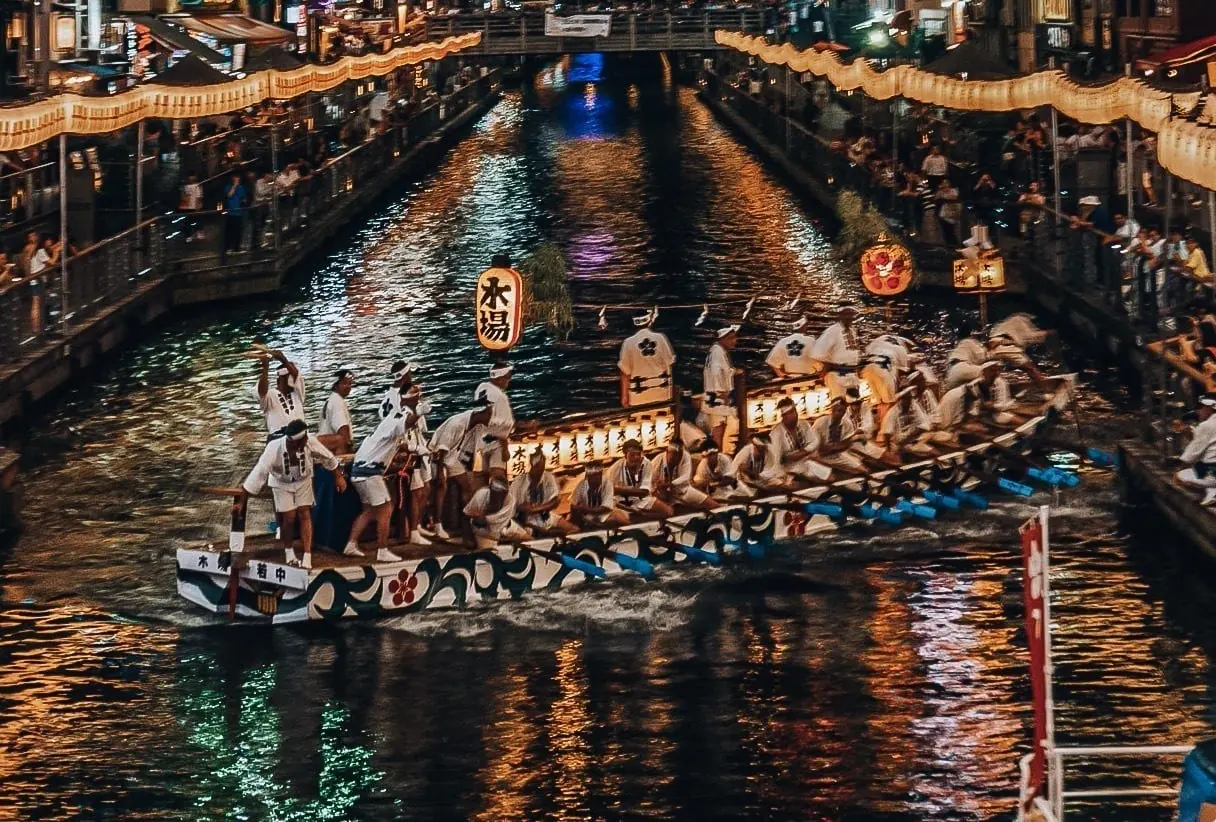
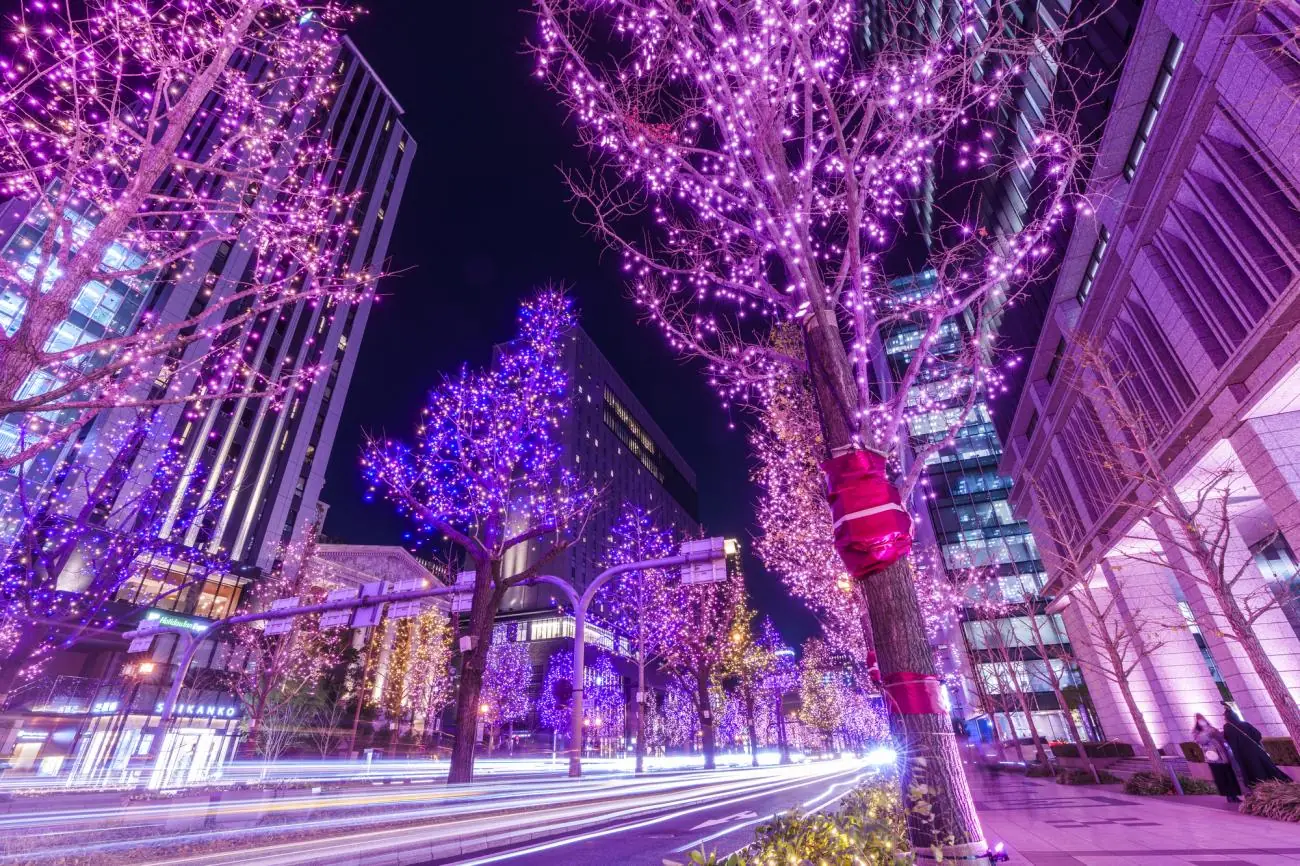
Shopping & Nightlife
Shinsaibashi & Amerikamura
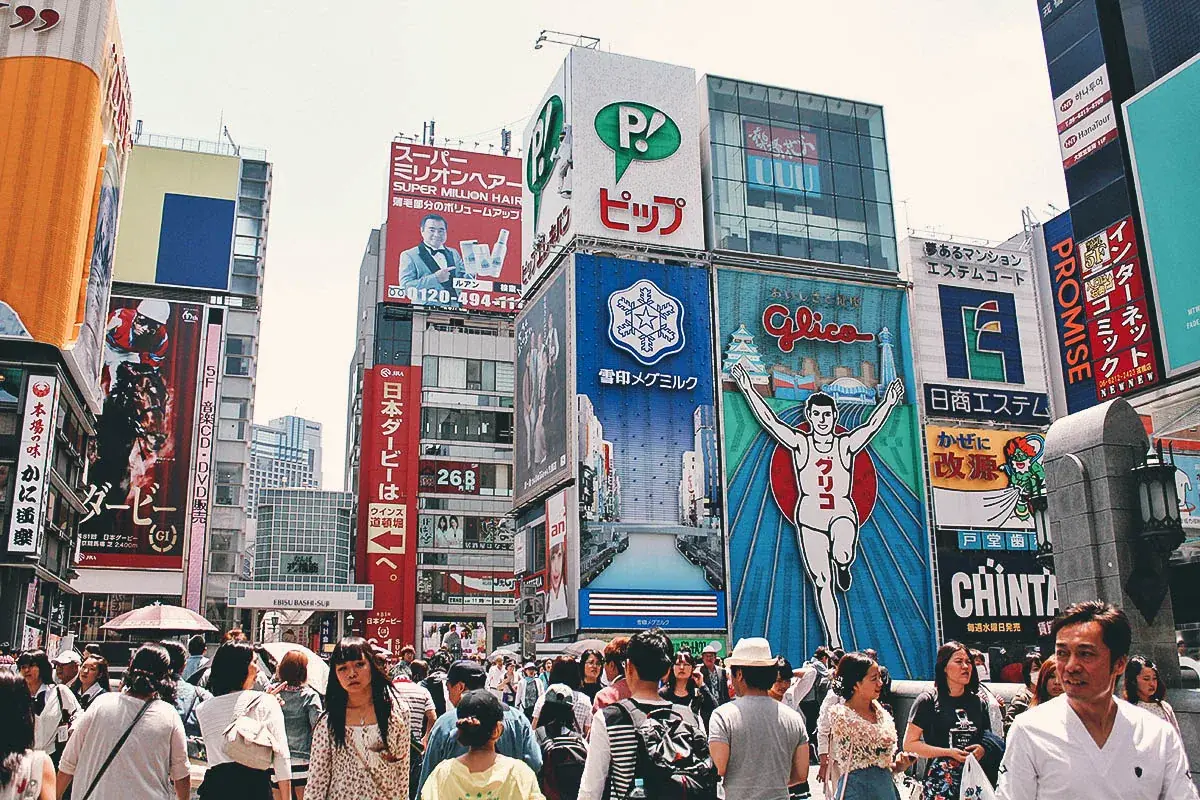
Shinsaibashi-suji is a covered arcade that runs for roughly 600 meters, packed shoulder-to-shoulder with flagship stores, drugstores, and century-old confectioners selling okashi by the box. Duck a few streets west and you're in Amerikamura ("Amemura" to locals) — Osaka's answer to Harajuku, where graffiti-covered walls, secondhand denim shops, and skate culture spill out of Triangle Park. It's the scruffier, more creative counterpoint to Shinsaibashi's polish.
Namba Parks
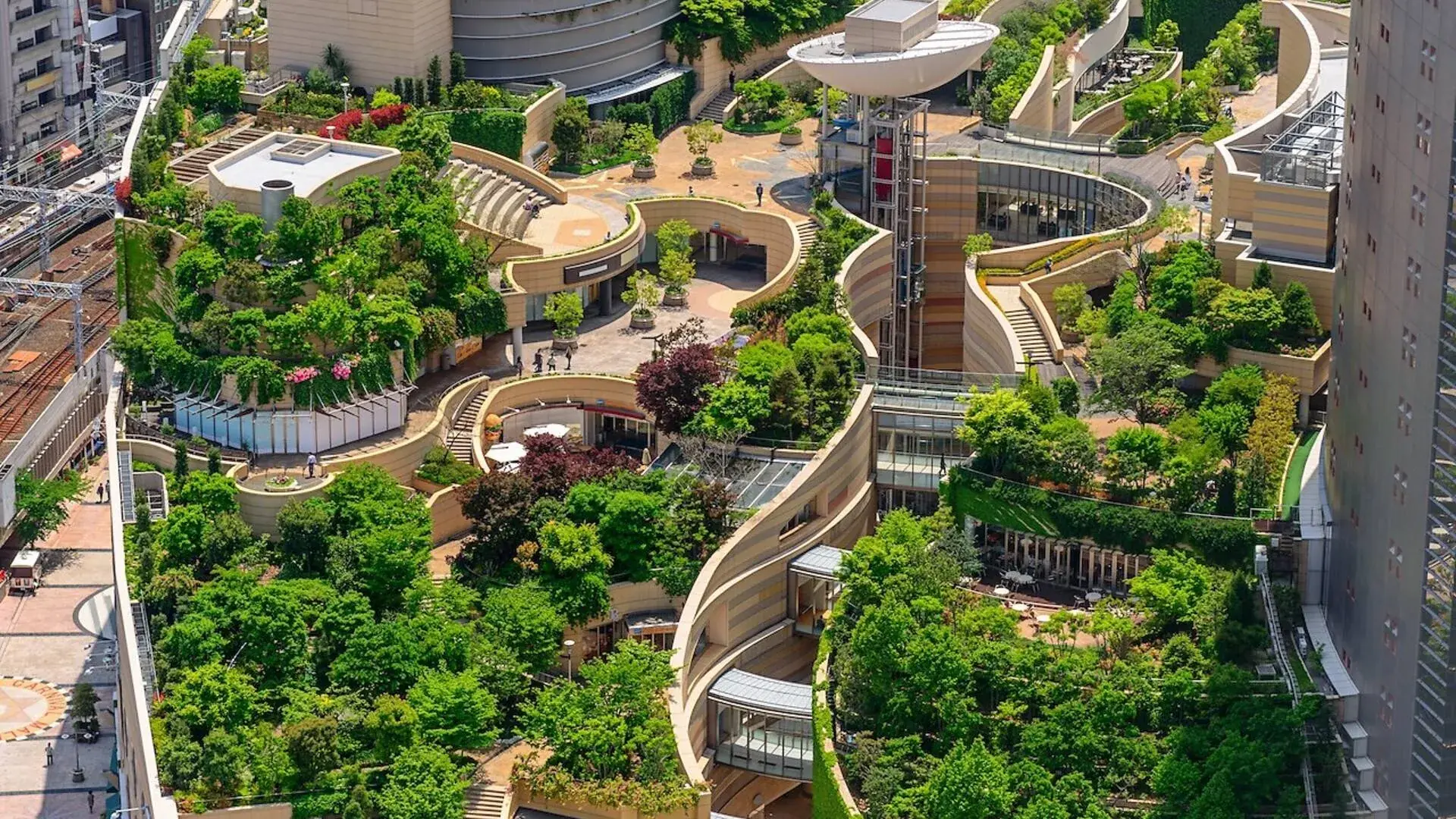
An architectural marvel blending shopping, dining, and greenery. Namba Parks is ideal for a leisurely stroll through cascading rooftop gardens, fountains, and cozy cafés tucked between designer stores. It’s a peaceful shopping escape in the heart of a bustling city.
Nightlife
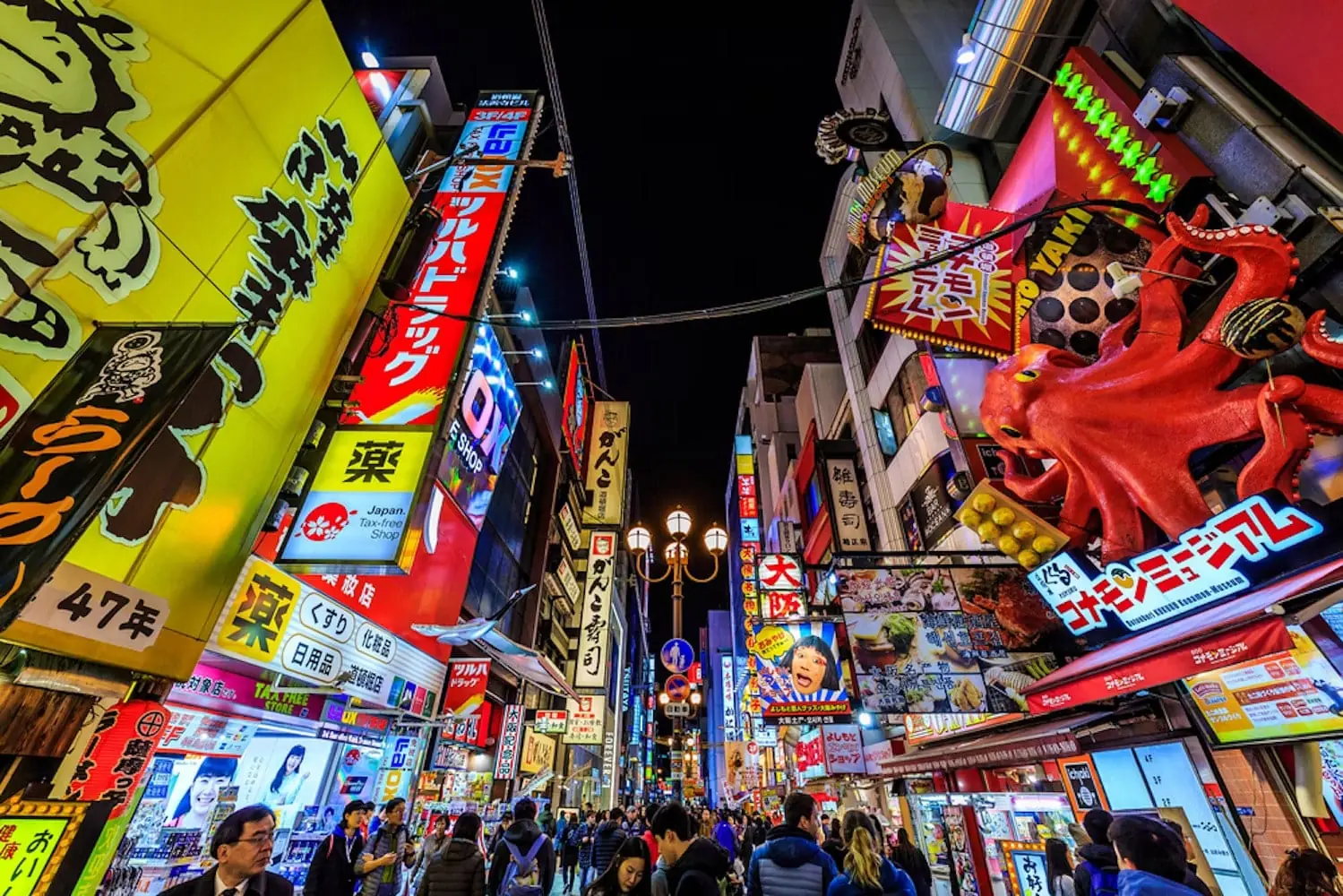
Dotonbori and Namba are where Osaka's nightlife concentrates after dark. Tucked-away izakayas fill up with after-work crowds trading small plates and beer, karaoke bars rent out private rooms by the hour, and clubs around Namba keep going well past midnight. For something calmer, walk the Dotonbori canal itself — the water turns into a ribbon of reflected neon, and it's free.
Osaka doesn't ask you to slow down and admire it the way Kyoto does — it hands you a skewer, points you toward the nearest neon sign, and tells you to keep moving. Between the castle by day and the canal by night, the arcades and the alleyway izakayas, that's really the whole pitch: show up hungry, stay out late, and let the city do the talking.
Additional Resources
For more information on Japan, including top highlights, immigration, useful applications and bullet train bookings, head to our Discover Japan: From Trains to Temples guide.