Nara, Japan's first permanent capital, moves at a gentler pace than its more famous neighbors — a compact old city where over a thousand tame deer wander freely through a park anchored by one of the largest bronze Buddhas on Earth. It's an easy day trip from Osaka or Kyoto, small enough to see on foot, and unhurried enough to make you want to slow down and stay a little longer.
Top Highlights
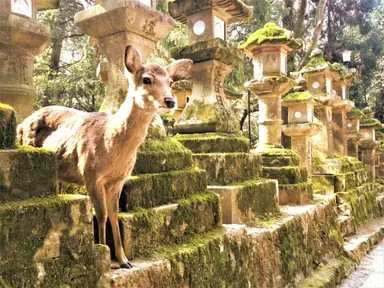
Source: Kansai Chan Guide Nara Park & Deer
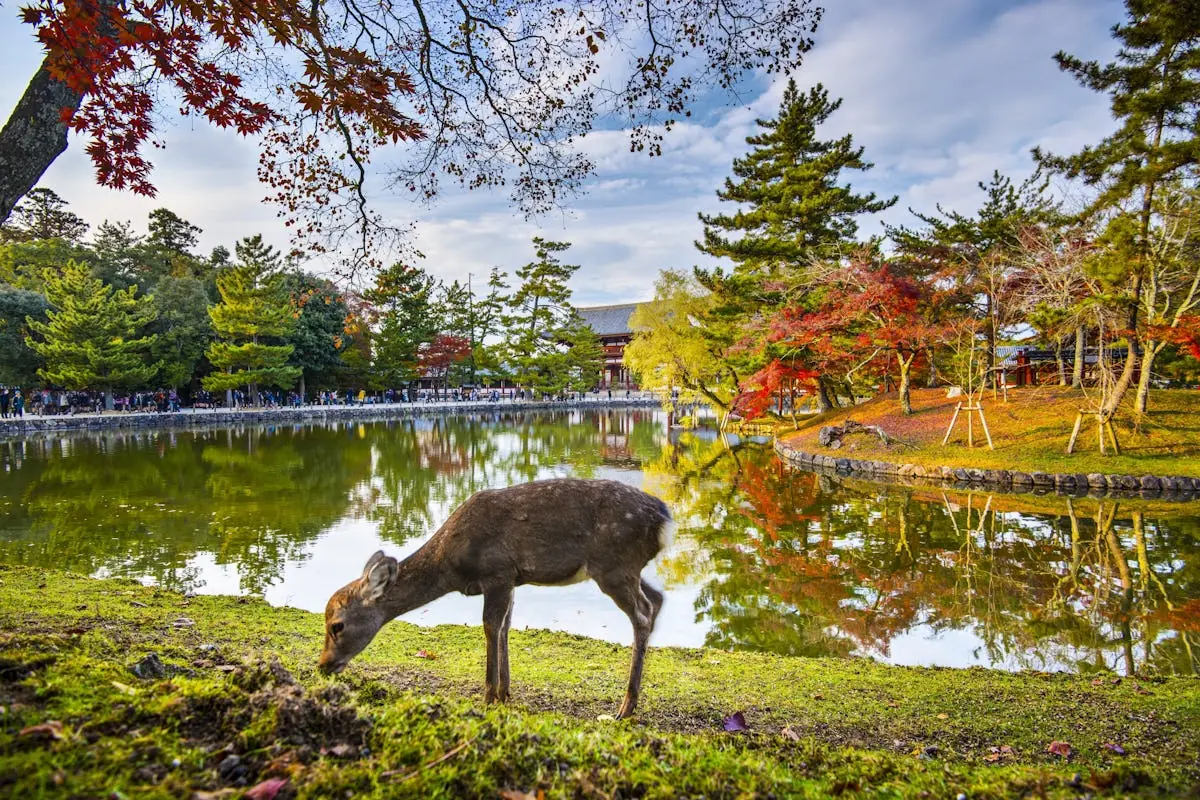
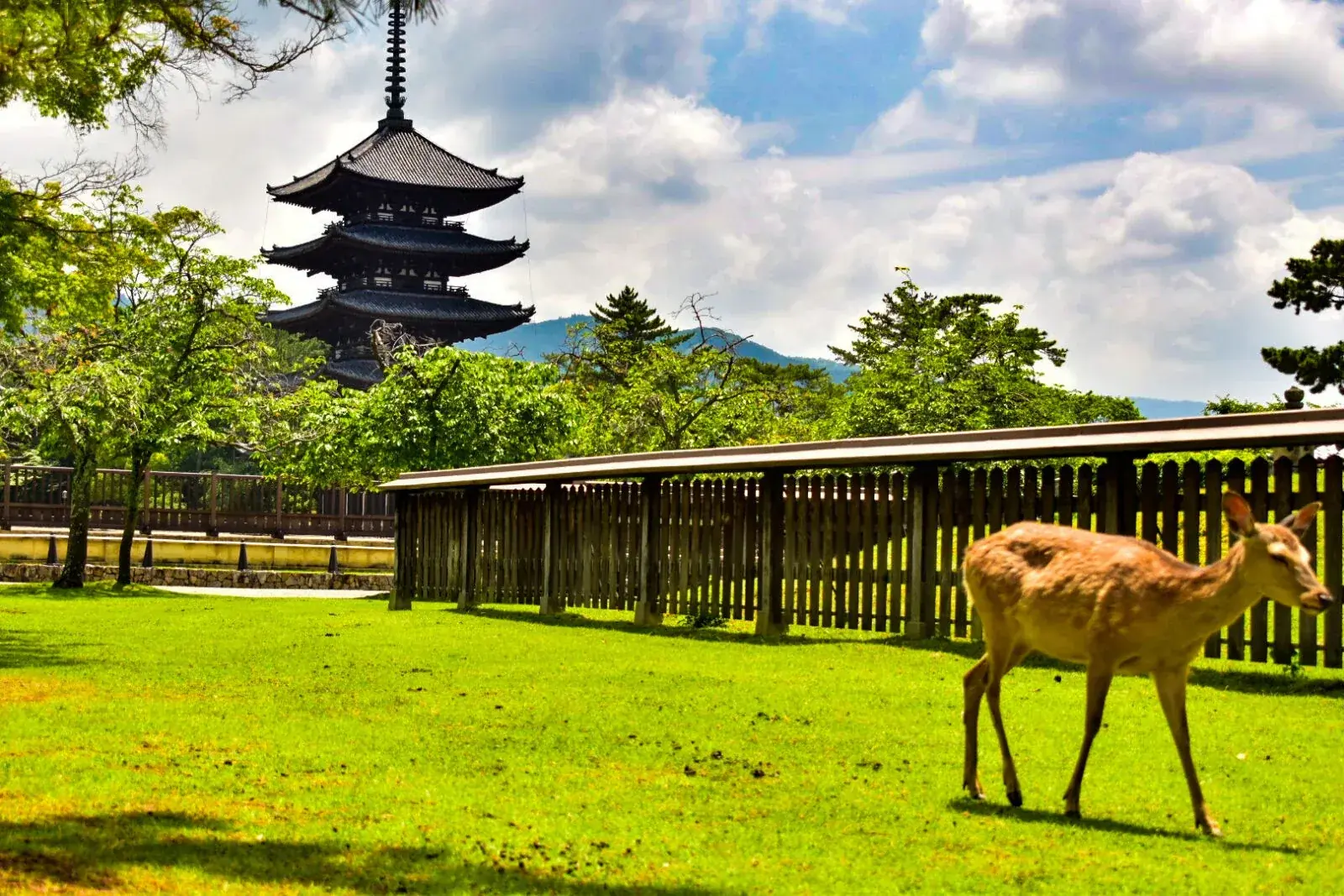
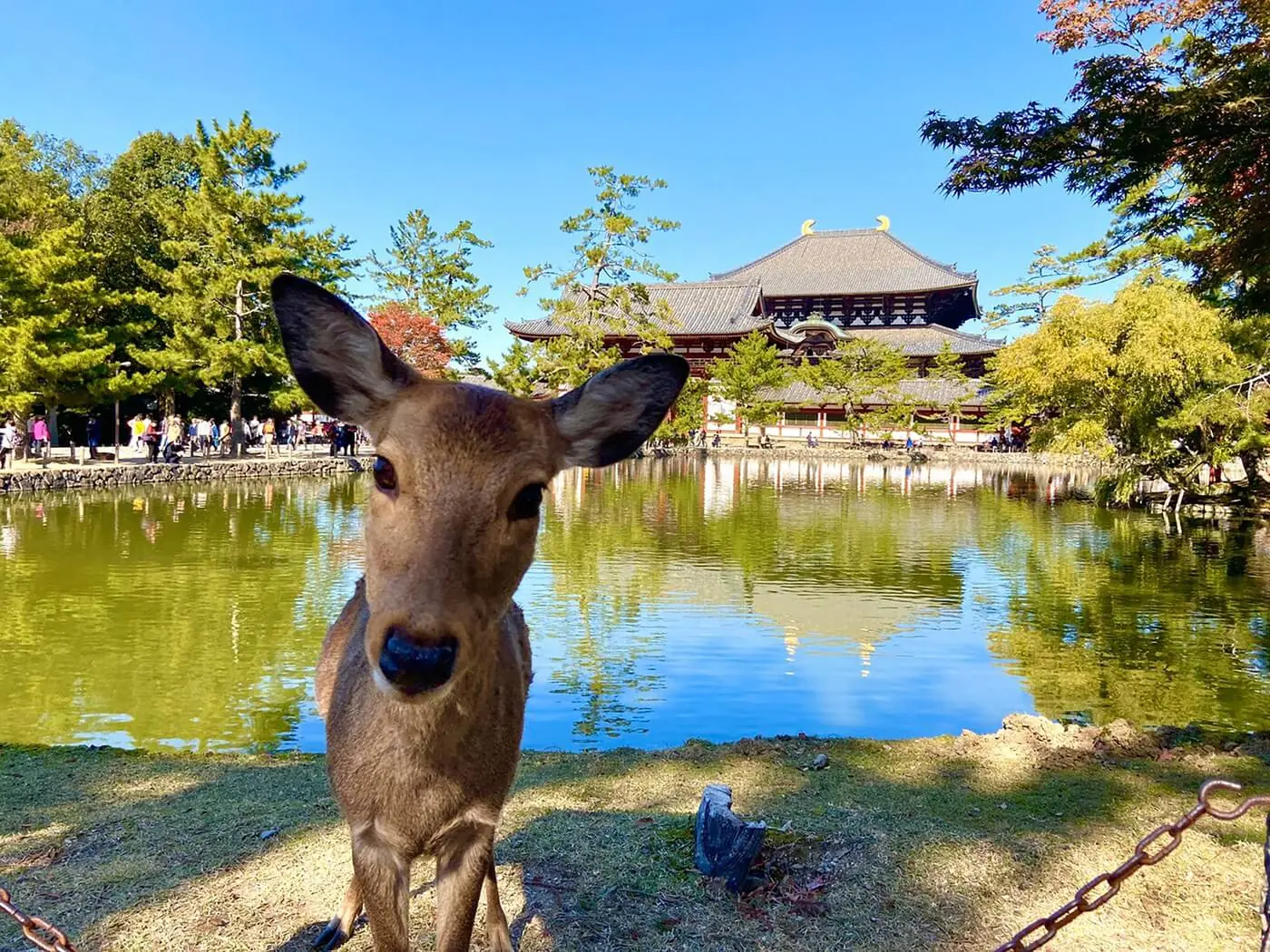
Over a thousand wild deer roam Nara Park, long considered sacred messengers of the gods. Buy a stack of shika senbei crackers from a vendor and many deer will bow their heads before taking one — a habit visitors love to test. Beyond the crackers, the park's wooded paths, ponds, and moss-covered stone lanterns reward a slow wander in their own right.
More information
Opening times: Open 24/7
Admission: Free
Location: View on map
*These are wild animals, not pets — a hungry deer that's out of crackers may nudge, headbutt, or nip at clothing and bags, so keep snacks out of sight until you're ready to feed and stay a bit more cautious around fawns in early summer.
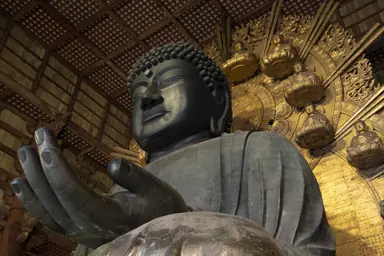
Source: Nara Visitors Bureau Todai-ji Temple
Step into the Daibutsuden and the bronze Great Buddha still stops people mid-sentence — nearly 15 meters tall, cast over 1,250 years ago, and housed in what's among the largest wooden buildings on Earth. Kids and flexible adults line up to squeeze through a pillar with a hole said to match one of the Buddha's nostrils; clearing it is supposed to guarantee enlightenment.
More information
Opening times: 8:00–17:00
Admission: ¥800
Website: Visit Website
*There is a separate fee for the Great Buddha Hall and Todai-ji Museum.
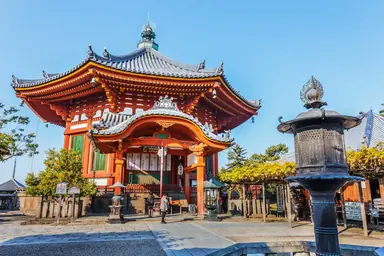
Source: GaijinPot Travel Kofuku-ji Temple
Kofuku-ji's five-story pagoda is Japan's second-tallest and has become the postcard image of Nara, rising over the pond at Sarusawa-ike. The temple's Eastern Golden Hall and treasure hall hold some of the country's finest Buddhist sculpture, including the striking three-faced, six-armed Ashura statue. Floodlit after dark, and photogenic from the pond path.
More information
Opening times: 9:00–17:00
Admission: ¥1600 (Combined ticket)
Website: Visit Website
*Different types of tickets are available. The temple accepts only cash payments.
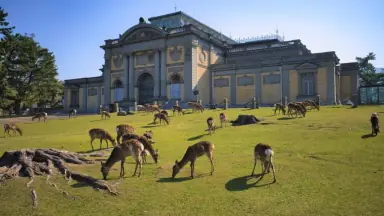
Source: Snow Monkey Resorts Nara National Museum
Renowned for its world-class collection of Buddhist art, the Nara National Museum hosts seasonal exhibitions and special events year-round, especially during the spring Omizutori festival. Don't miss the historic Buddhist Sculpture Hall — a quiet space showcasing centuries of religious craftsmanship in remarkable detail.
More information
Opening times: 9:30–17:00 (closed Mondays)
Admission: ¥700
Website: Visit Website
*Special exhibition ticket grants access to Permanent Collection exhibitions.
Source: Japan Experience Horyuji Temple
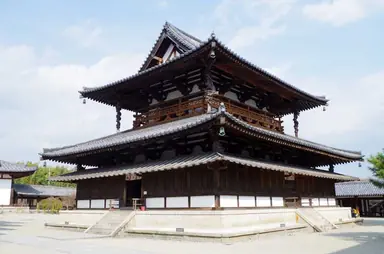
One of the world's oldest wooden buildings, Horyuji Temple is a UNESCO World Heritage site located just outside central Nara. Its ancient pagoda, halls, and treasures offer a fascinating glimpse into early Japanese Buddhism, and the wooded grounds make for a peaceful half-day trip from the city center. Wide gravel courtyards and cedar-lined paths keep it calm even at midday, when the coaches arrive.
More information
Source: coward_lion / iStock Kasuga Taisha Shrine
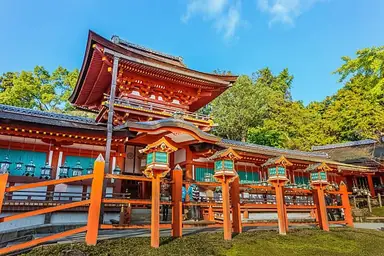
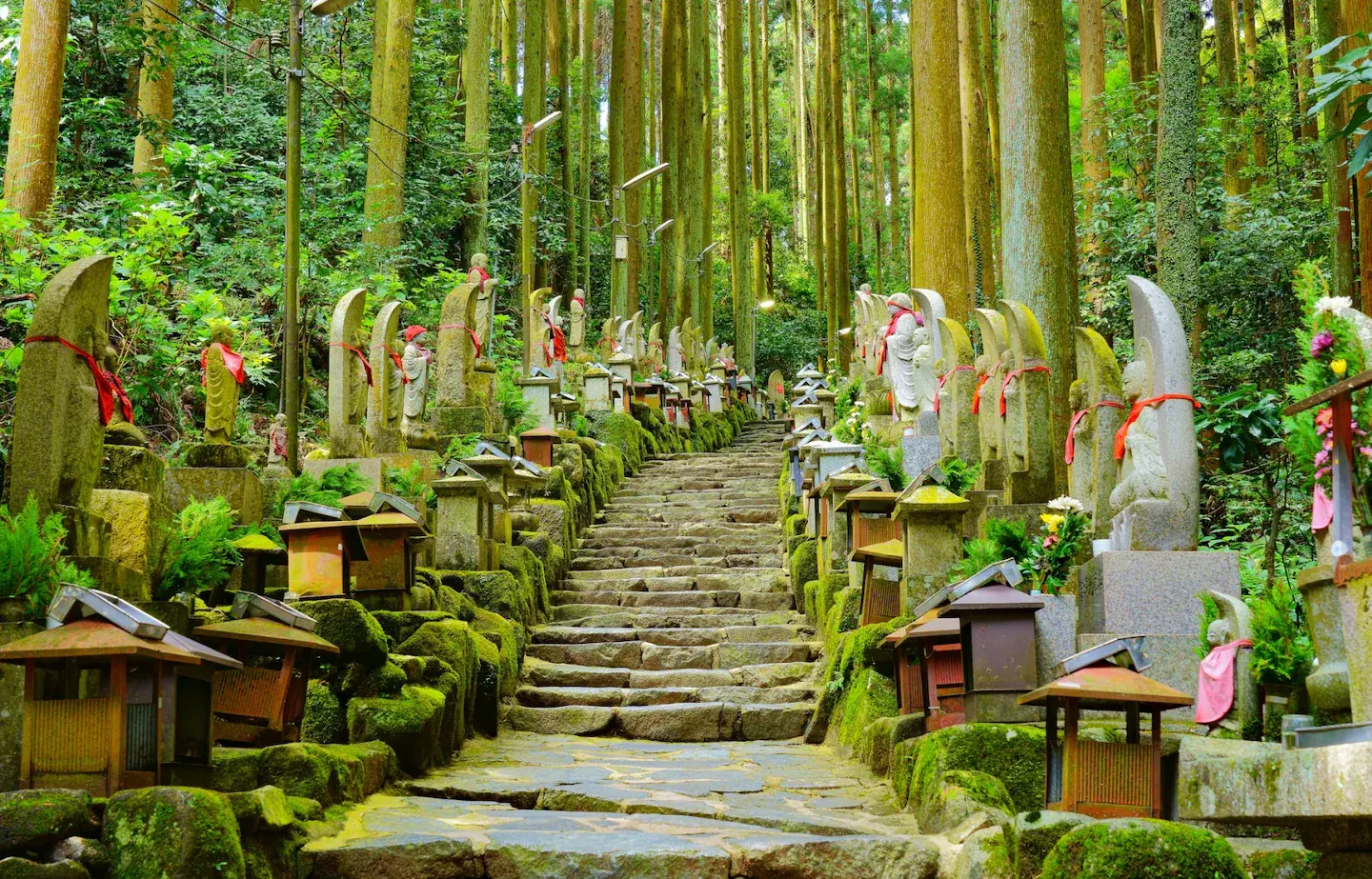
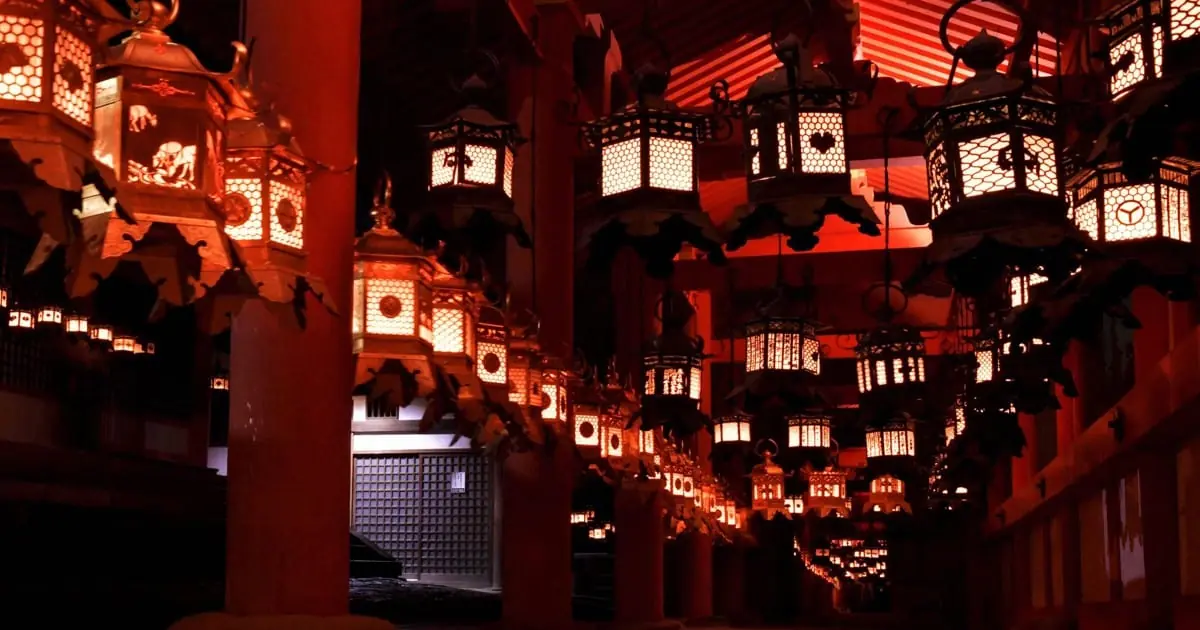
The path to Kasuga Taisha is lined with roughly 2,000 moss-covered stone lanterns winding through a primeval forest, and another 1,000 bronze lanterns hang from the shrine's vermillion eaves — all donated by worshippers over the centuries. Twice a year, every one of them is lit at dusk for the Mantoro lantern festivals, turning the whole approach into a flickering, golden corridor.
More information
Neighborhoods & Where to Stay
Nara Station Area
JR Nara and Kintetsu Nara stations sit about ten minutes' walk apart, with the city's densest cluster of hotels, restaurants, and shops in between. It's the most practical base: Sanjo-dori street runs straight from the stations toward Nara Park, so you can walk out the door and be feeding deer within twenty minutes, with plenty of konbini and bakeries along the way for an early snack or breakfast.
Naramachi (Old Town)
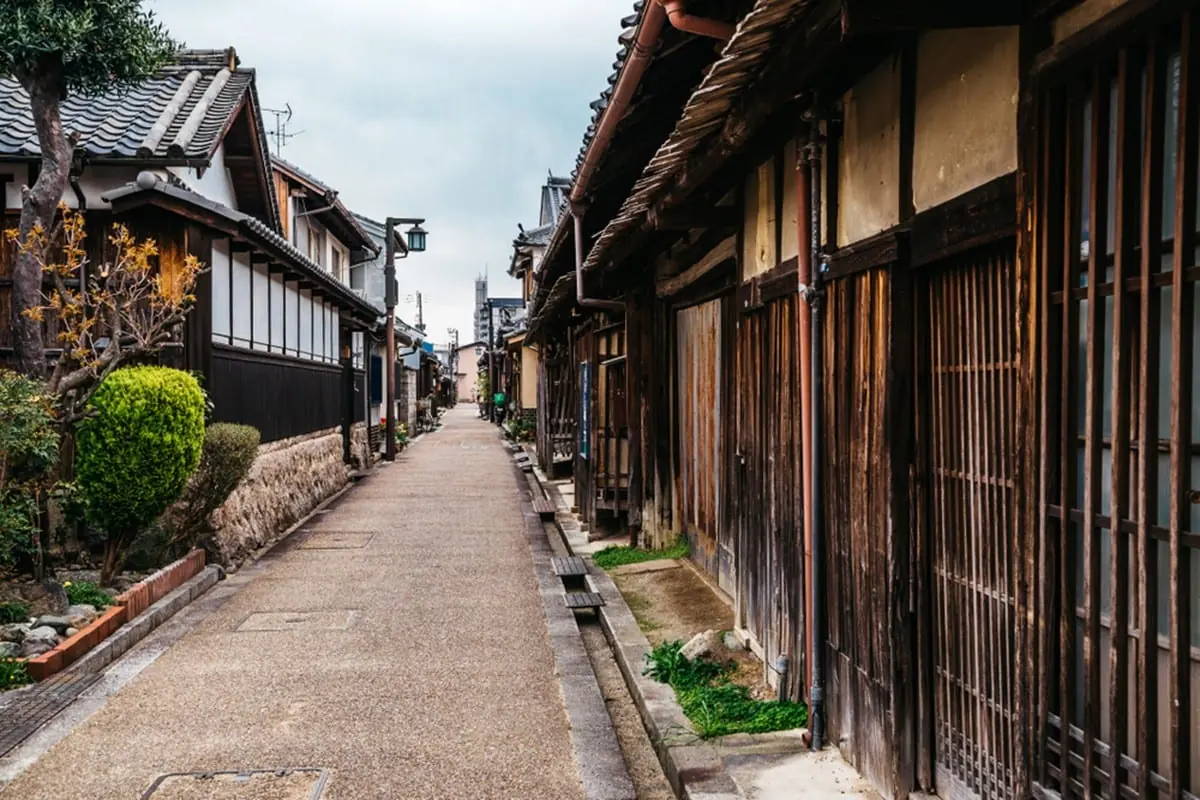
South of Sanjo-dori, Naramachi's grid of narrow lanes still runs through blocks of latticed machiya townhouses, many now converted into weaving studios, incense shops, and tiny cafes. It's the pick for travelers who want lantern-lit streets at night rather than a hotel lobby view — wander past Gango-ji Temple's mossy tiled roof, stop into the Naramachi Museum for local history, and browse workshops selling handmade brushes, pottery, and Nara-zuke pickles.
Nara Park Vicinity
A handful of ryokan and hotels sit right against the park itself, close enough that deer sometimes wander past the entrance in the early morning before the day-trip crowds arrive. It's the splurge option: you're a short stroll from Todai-ji, Kofuku-ji, and the Nara National Museum, and can catch the park at its quietest — dawn light through the trees, or the lantern paths glowing after the crowds thin out at dusk.
Food & Drink
Being landlocked and inland, Nara built its food culture around preservation rather than fresh catch — pickling, wrapping, and fermenting techniques that are still the backbone of the local table today.
-
Kakinoha Sushi — Slices of mackerel or salmon pressed onto vinegared rice and wrapped tightly in a persimmon leaf. Merchants once used the leaves to keep sushi fresh on the journey inland from the coast; today they mostly lend a faint, herbal fragrance that seeps into the rice as it sits.
-
Nara-zuke — Vegetables — usually cucumber or melon — pickled for months in sake lees left over from brewing. The result is dark, intensely savory, and faintly boozy, with a crunch that makes it a favorite side dish or drinking snack.
-
Sake — Nara claims to be the birthplace of Japanese sake brewing, and several breweries here still use techniques first recorded at local temples centuries ago. A few open their doors for tours and tastings, pairing seasonal or limited-edition bottles with the same soft, mineral-rich spring water that shaped the region's brewing tradition.
Tip: Many restaurants offer vegetarian options, and the area around Naramachi is great for food hopping.
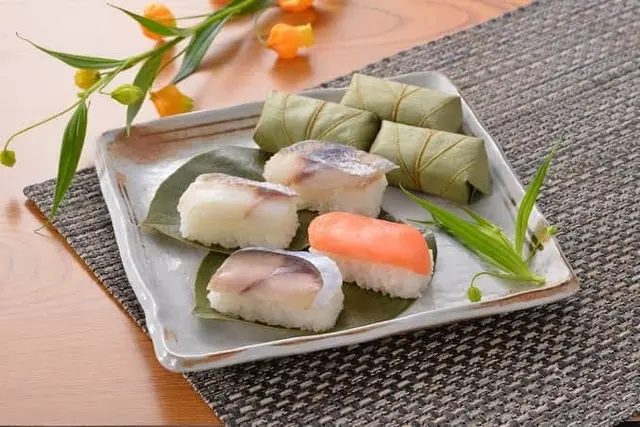 Kakinoha Sushi
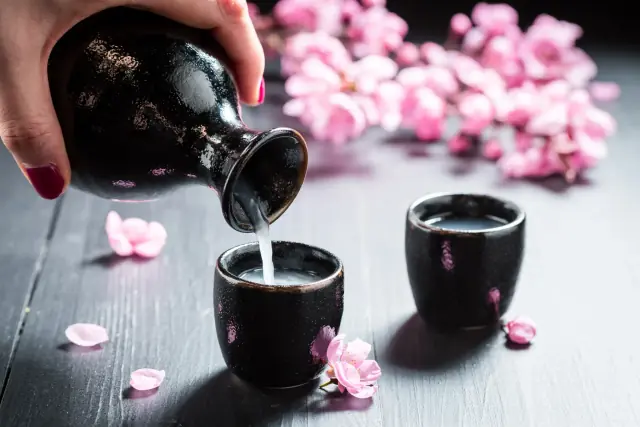 Sake
Sake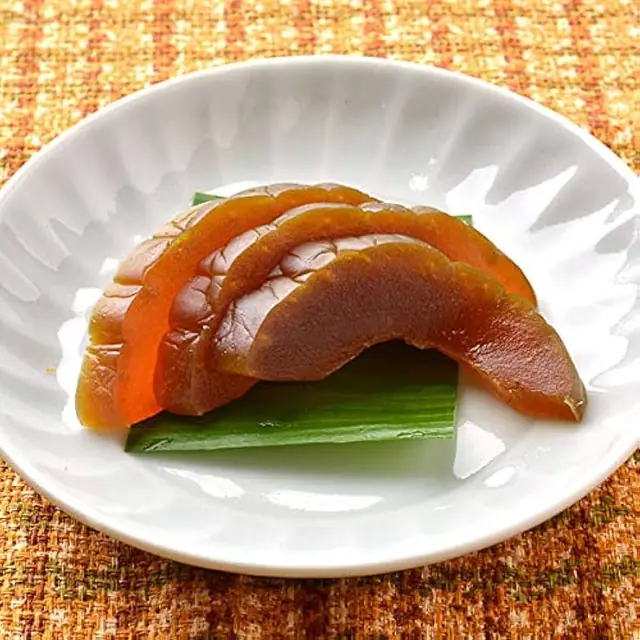 Nara-zuke
Transportation
Nara is easy to reach by JR and Kintetsu trains from Osaka, Kyoto, and Kobe. The city is compact and walkable, with local buses and taxis for further sights.
Getting to Nara
Two railways run into central Nara, and it's worth knowing which one suits your route. From Kyoto, the JR Nara Line runs direct to JR Nara Station in about 45 minutes (faster on rapid services, around ¥720). From Osaka, the Kintetsu Nara Line runs direct from Namba to Kintetsu Nara Station in roughly 35–40 minutes (around ¥680); if you're starting from JR Osaka or Tennoji instead, the JR Yamatoji Line gets you to JR Nara Station in about the same time. From Kobe, it's easiest to connect via Osaka. JR and Kintetsu Nara stations are both within walking distance of each other and of Nara Park, and trains run frequently in both directions throughout the day. Fares fluctuate, so treat the numbers above as a rough guide and check current prices before you travel.
If you’re arriving from Kansai Airport, the Haruka Express to Tennoji followed by a JR Yamatoji Line transfer, or a Nankai/Kintetsu combination via Namba, will get you into Nara in a little over an hour with one change either way.
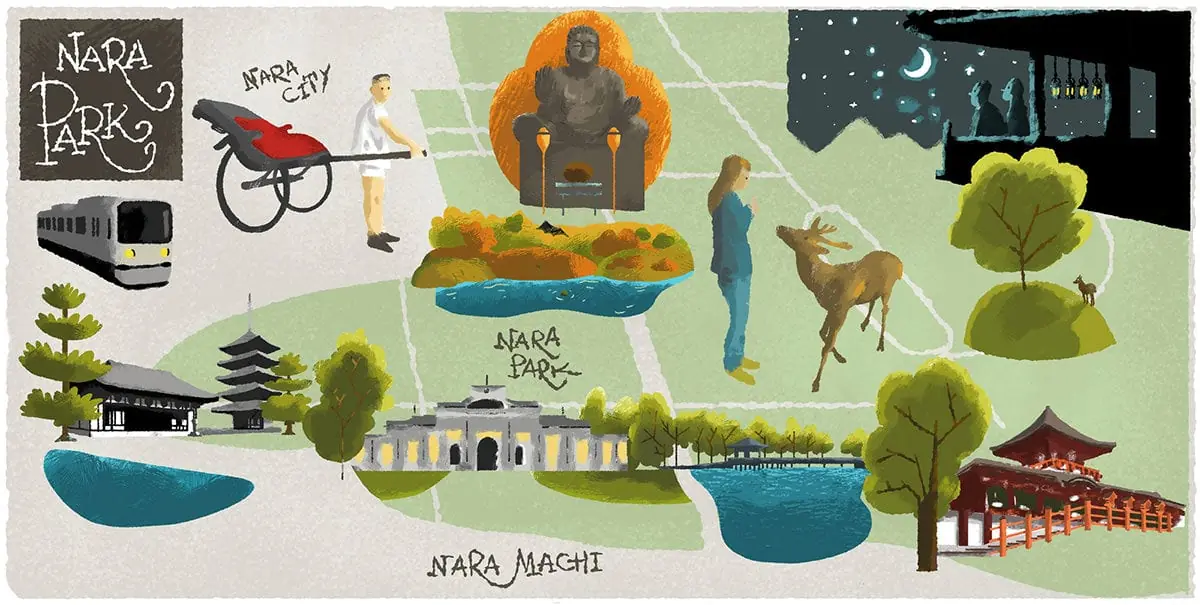
Getting Around Nara
Getting around Nara is easy. Most sights are within walking distance of the stations and Nara Park, so exploring on foot is both convenient and enjoyable.
For destinations further out, local buses connect to major temples, shrines, and suburban areas, and you can use IC cards for quick and easy payment.
Taxis are available at the stations and park, making them a good choice for groups, families, or late-night travel. All options are safe, reliable, and well-suited for visitors.
Tip: The main sights are walkable, but buses are handy for Kasuga Taisha and Todai-ji.
JR West Pass
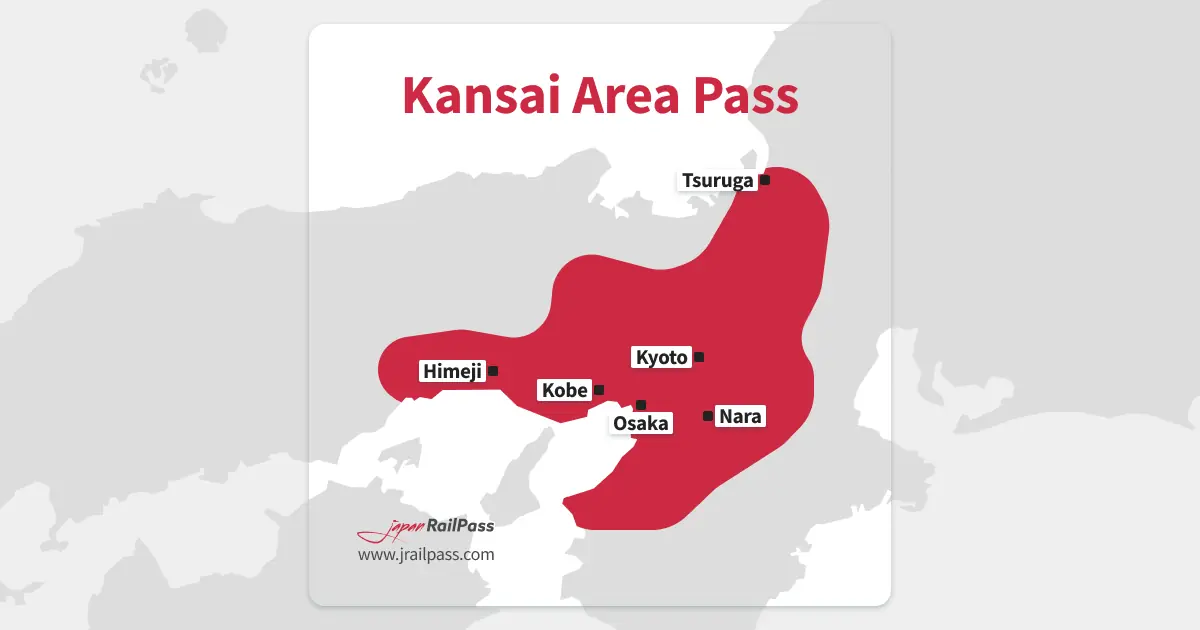
If you're planning several day trips around the region, the JR Kansai Area Pass is worth pricing out — it comes in 1-, 2-, 3-, and 4-day versions and covers unlimited travel on JR trains (including the airport line) around Osaka, Kyoto, Nara, Kobe, Himeji, and Kansai Airport. A single round trip to Osaka can already come close to covering a 1-day pass, so it pays off fastest for multi-city itineraries. Fares are revised periodically, so check current prices before buying. Passes are available online, at stations, or at the airport.
Wider passes (Kansai-Hiroshima, Kansai-Wide Area Pass) are available if you’re venturing further.
For more details: JR Kansai Area Pass.
Beyond Nara
Most visitors actually arrive the other way around, treating Nara itself as a day trip from Kyoto or Osaka — and given how much fits into a single day here, that's a fine way to do it. But Nara sits right between the two, so if you're staying overnight and want to keep moving, either city makes an easy add-on.
Kyoto (about 45 min by train)
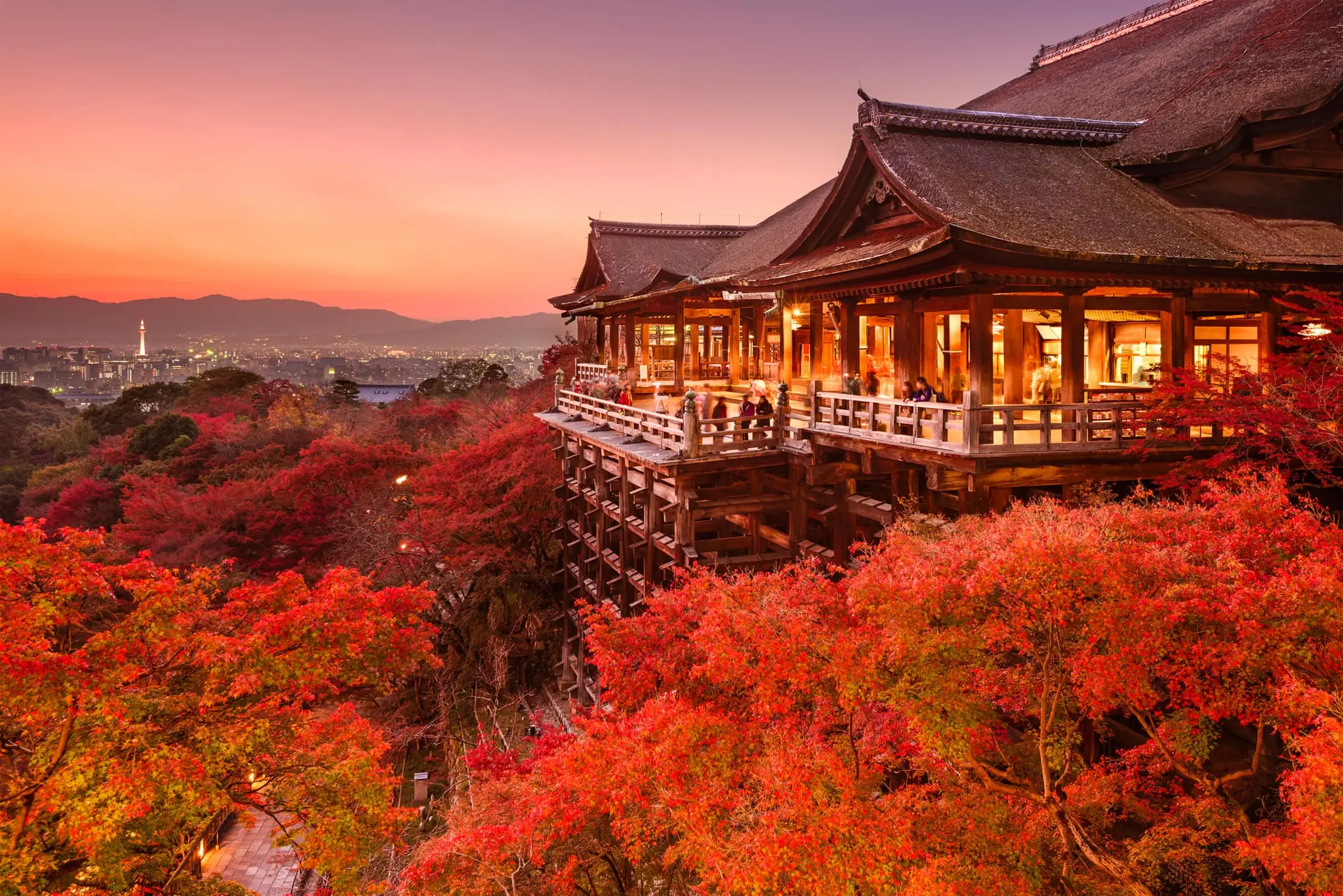
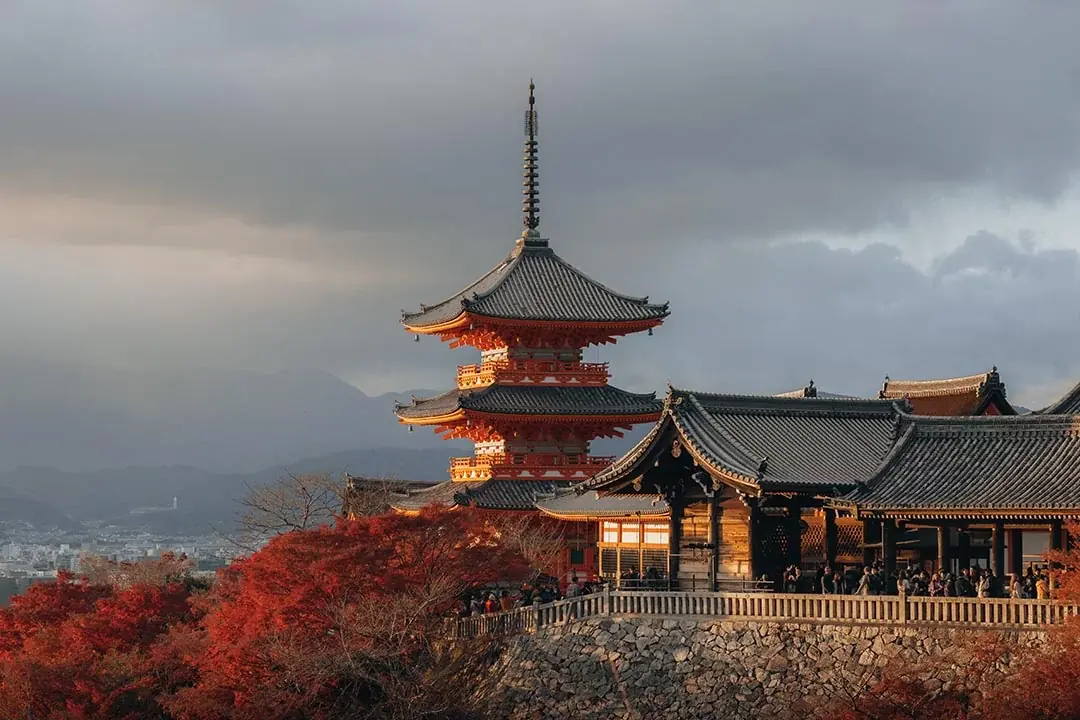
Kyoto trades Nara's small-town calm for sheer scale — thousands of temples and shrines, geisha districts, and gardens that reward days rather than hours. Fushimi Inari Taisha's thousands of vermillion torii gates, Kiyomizu-dera's wooden stage, and the historic Gion district are the classic first stops, with Arashiyama Bamboo Grove, Nanzen-ji, and the Philosopher's Path worth the trip if you have more time. For a complete itinerary, see our Kyoto guide.
Osaka (about 35 min by train)
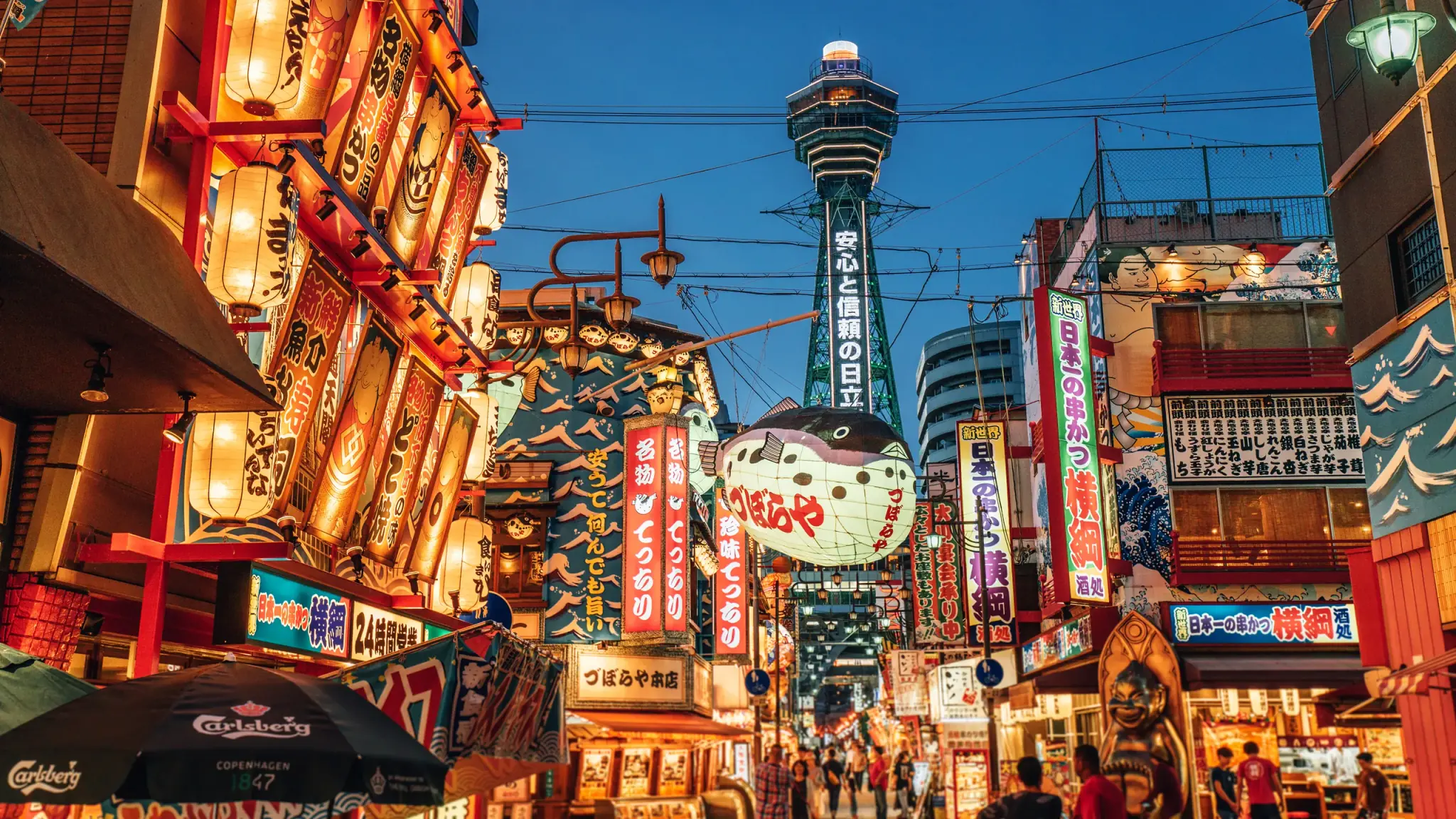
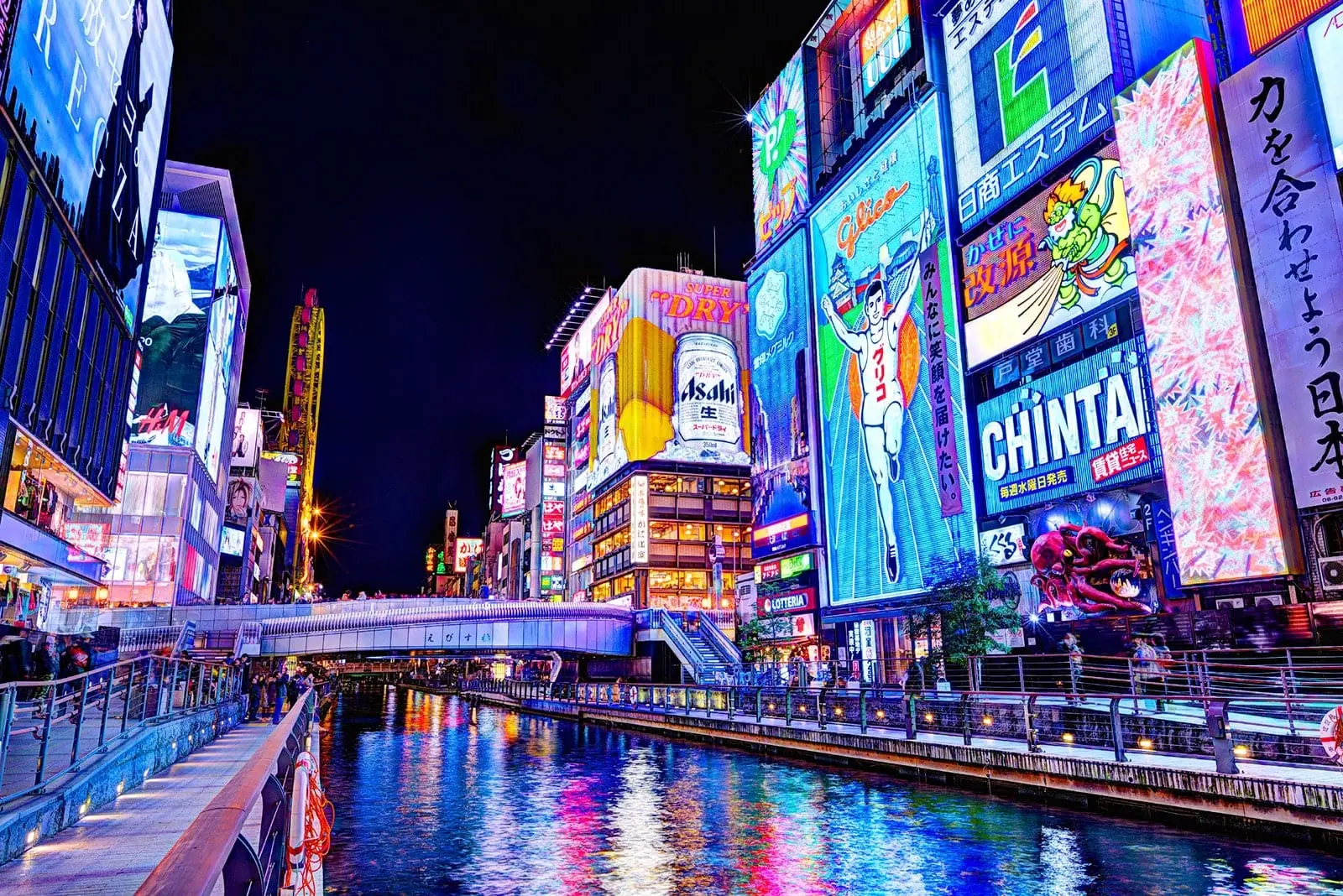
Osaka is Nara's polar opposite after dark — neon, street food, and a city that keeps going well past midnight. Dotonbori's glowing signs and canal-side food stalls, Kuromon Market for a grazing lunch, and Osaka Castle's grounds are all easy half-day targets, with the Umeda Sky Building for skyline views and Shinsaibashi and Namba for shopping into the evening. For more tips, see our Osaka guide.
Proposed Itinerary
One day is really all Nara asks for — everything worth seeing sits within a twenty-minute walk of the station. Here's how to spend it without feeling like you're racing the clock.
-
Morning: Walk Sanjo-dori from Nara Station into Nara Park, breakfast in hand from a konbini or bakery along the way. Grab a stack of shika senbei and let the deer do their bowing act before the crowds roll in — the paths, ponds, and mossy lanterns are calmest this early too.
-
Midday: Kofuku-ji's pagoda marks where Sanjo-dori meets the park — duck in before pushing deeper (cash only, no cards). Next door, the Nara National Museum's Buddhist Sculpture Hall is worth a look if it's not a Monday — closed then, so bump straight to Todai-ji instead. Refuel on kakinoha sushi at a nearby restaurant before carrying on.
-
Afternoon: Push further into the park for Todai-ji and give the Daibutsuden real time — let kids, or flexible adults, try the pillar-hole squeeze while you're there. Then follow the lantern-lined forest path to Kasuga Taisha, one of the best short walks in the city and a good note to close sightseeing on before the temples shut around 17:00.
-
Evening (optional, if staying overnight): Cross into Naramachi as the machiya lanes light up and settle into an izakaya or sake bar for a tasting and a plate of Nara-zuke. Quiet by Osaka standards — which, after a full day on foot, is exactly the point.
Tip: Todai-ji and Kasuga Taisha are the two stops most worth building your day around — if you're short on time, it's better to trim the museum or Naramachi than to rush either of them.
Seasonal Events & Festivals
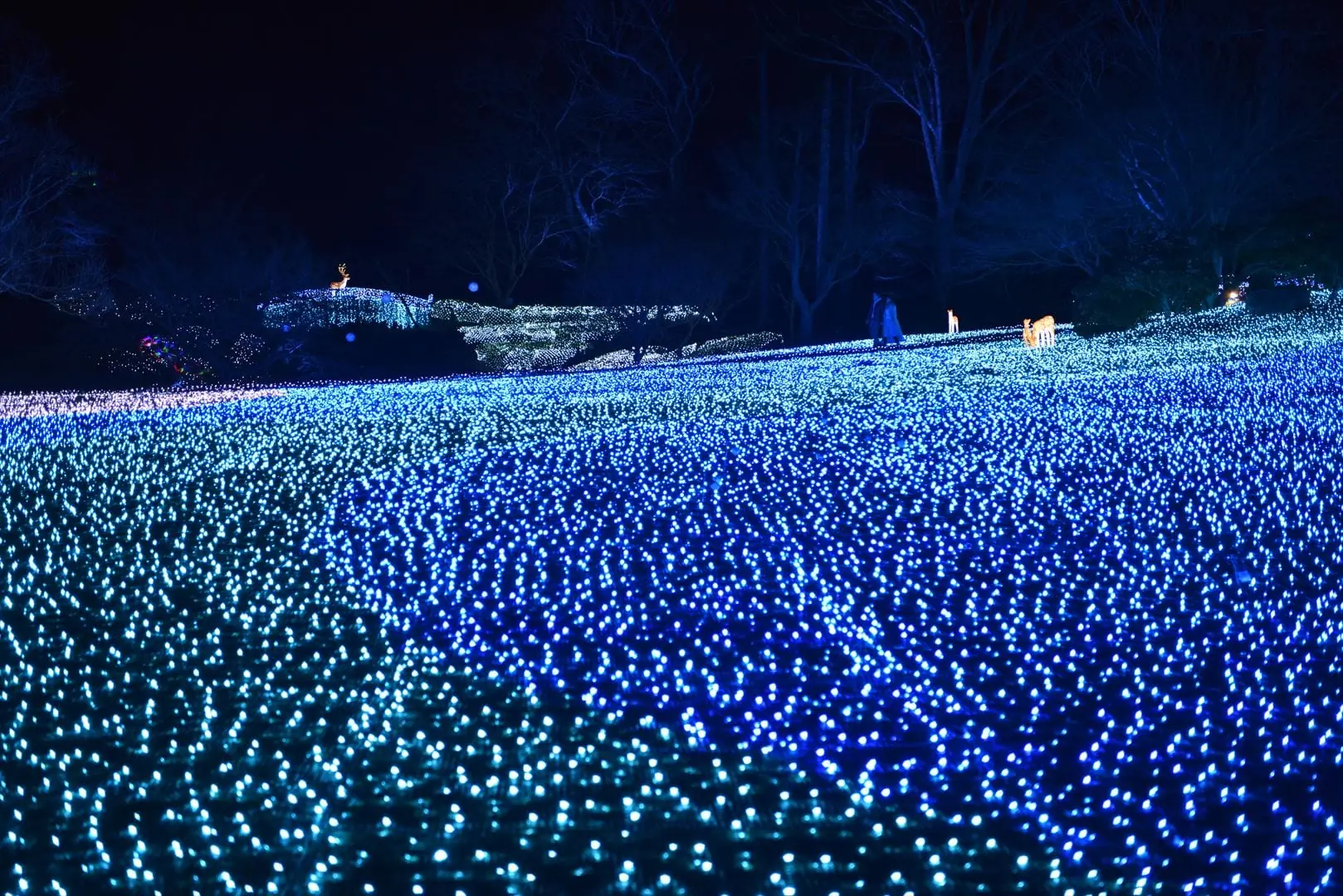
Shopping & Nightlife
Sanjo-dori & Higashimuki-dori
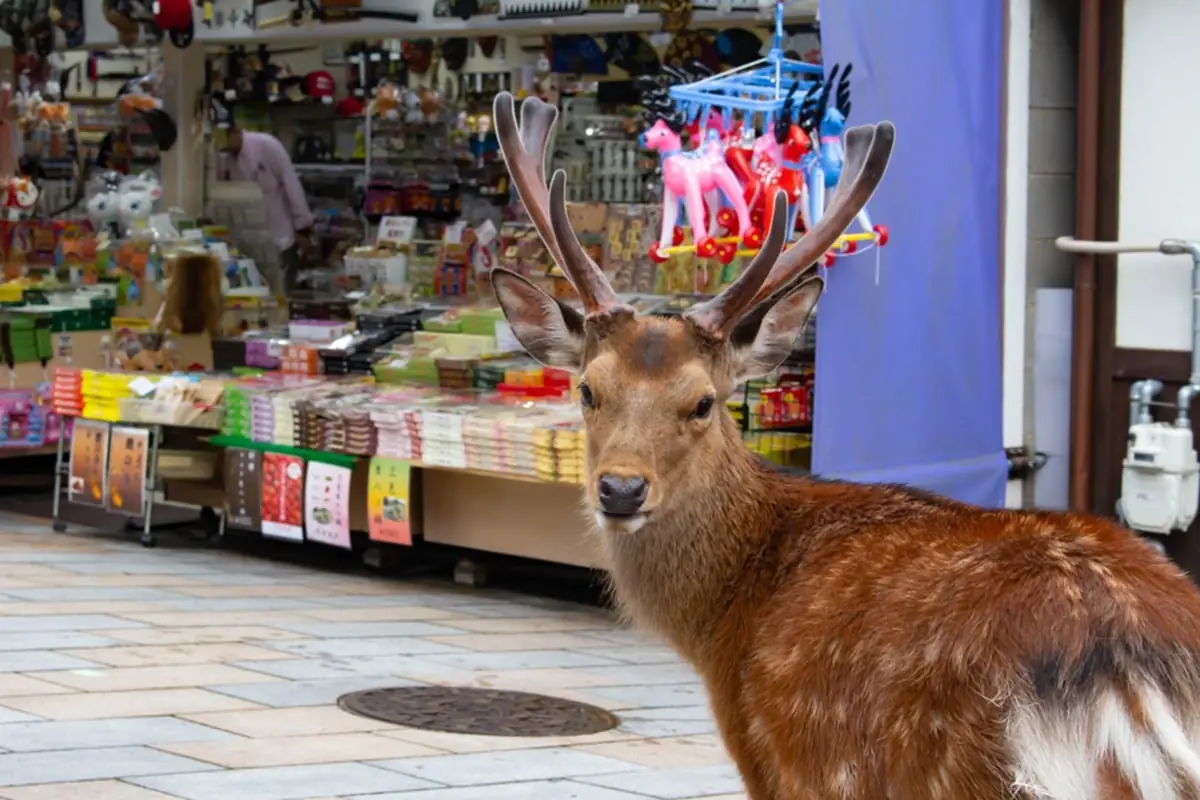
Sanjo-dori and Higashimuki-dori, both running off the station area toward Nara Park, are the city's main shopping streets — a mix of boutiques, souvenir shops, and covered arcades that stay open roughly 10:00–19:00. Look past the standard souvenirs for local crafts like Nara-fude calligraphy brushes and Akahada-yaki pottery, and graze on mochi, takoyaki, and matcha soft-serve from the street stalls as you go.
Nightlife
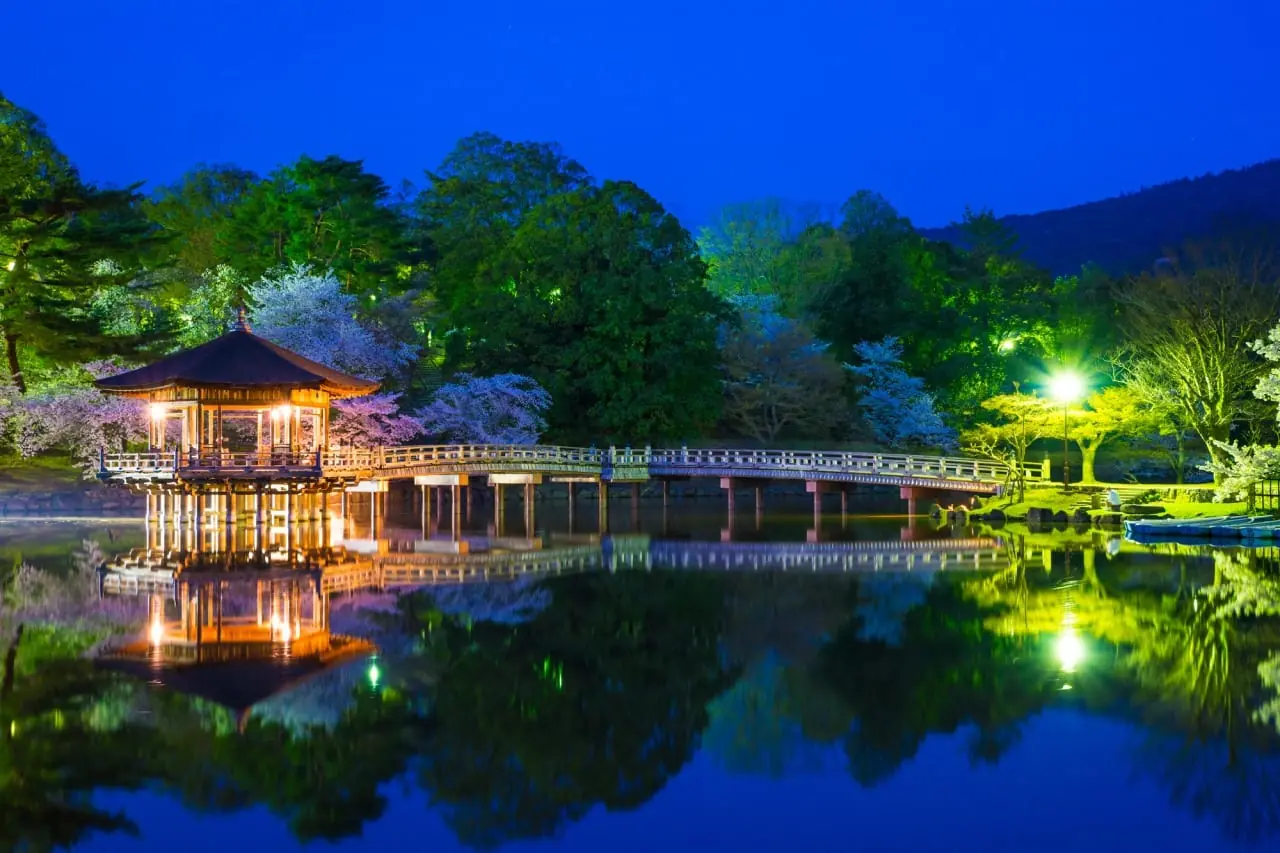
Don't expect Osaka-style neon — Nara's nightlife is a handful of streets near the station where izakayas, sake bars, and small pubs fill up from around 18:00 into the late evening. It suits a quiet night out more than a big one: settle into a counter seat for a sake tasting, work through a plate of Nara-zuke with a cold beer, or book a karaoke room with friends. English menus turn up often enough, but many smaller places are cash-only, so carry yen.
Whether you're in for a few hours or staying the night, Nara rewards a slow pace — one more temple, one more deer, one more cup of sake before you head back to the train.
Additional Resources
For more information on Japan, including top highlights, immigration, useful apps, and bullet train bookings, head to our Discover Japan: From Trains to Temples guide.