
China is a country of staggering scale and contrast—where 2,000-year-old temples sit minutes from glass skyscrapers, and a single high-speed rail network stitches together deserts, rice terraces, karst mountains, and megacities of over 20 million people. From the imperial grandeur of Beijing to the neon skyline of Shanghai, every region tells a different chapter of the country's story—and thanks to that rail network, you can move between chapters in a matter of hours.
This guide is designed to be your ultimate companion for exploring China, whether you're traveling solo, with friends, or as a family. Inside, you'll find everything you need in one place: practical travel tips, advice on money, connectivity, and getting online, cultural etiquette, seasonal events, transport guidance, and insights into cities and experiences.
We've also included must-visit attractions and culinary highlights—so you can plan your trip with confidence and make the most of every moment. Whether it's riding a bullet train across the country, tasting hotpot in Chengdu, or standing on a glass skywalk above Zhangjiajie's sandstone pillars, this guide has you covered from start to finish.
Get ready to explore China with ease, curiosity, and wonder.
Before You Go
China rewards travelers who prepare a little before departure—visa rules, connectivity, and payments all work differently here than in most of the world. A bit of planning goes a long way toward a smooth trip.
Visa, Immigration & Customs
Check whether your nationality qualifies for visa-free entry (many countries now get up to 30 days) or the 144/240-hour visa-free transit available in select city clusters.
If you need a visa, apply at a Chinese embassy or consulate well ahead of your trip—processing can take a week or more.
Make sure your passport is valid for at least 6 months beyond your travel dates, with blank visa pages if required.
Visa-free policies change frequently and vary by nationality and entry point. Always check current rules on the official Ministry of Foreign Affairs of China website before booking.
Customs is generally straightforward—cash amounts over RMB 20,000 (or the equivalent of USD 5,000 in foreign currency) must be declared on arrival, and standard restrictions apply to firearms, drones without proper documentation, and printed materials deemed sensitive.
The Great Firewall: Get Online Before You Land
Important: Google, Gmail, WhatsApp, Instagram, Facebook, X, and YouTube are all blocked in mainland China. Install and test a VPN app on your phone and laptop before you leave home—VPN provider websites and app stores are often unreachable once you're already inside the firewall.
- Keep a local app alternative ready too: WeChat, Baidu Maps or Amap, and Alipay all work fine without a VPN and cover messaging, navigation, and payments.
- Hotel Wi-Fi and China's excellent 5G coverage are both fast and reliable—connectivity itself is rarely the problem, access is.
| VPN | Why it's worth considering |
|---|---|
| ExpressVPN | The most consistently reliable option inside China—good speeds for browsing, video calls, and streaming alike. |
| Astrill | Built with China specifically in mind; a long-time favorite among expats, with a stealth mode designed to dodge blocks. |
| NordVPN / Surfshark | Solid, budget-friendly alternatives with good general speeds, though reliability inside China varies more than the two above. |
Pro tip: Install two different VPN providers before you go. Whichever one is running best can shift week to week as China's firewall updates—having a backup means you're never fully cut off.
Packing Tips

Packing for China means balancing a huge range of climates and city styles—from Beijing's dry winters to Guilin's humid summers. A few things to keep in mind:
-
Comfortable shoes are essential: Great Wall sections, temple complexes, and Zhangjiajie's stairs all involve serious walking and climbing.
-
A VPN, set up in advance (see above) — arguably more important than any physical item on this list.
-
Adapters: China mainly uses Type A/C/I sockets at 220V. Bring a universal adapter, though many newer hotels have USB ports built in.
-
Light layers: The country spans subtropical south to sub-arctic north — check the specific season and region you're visiting rather than "China weather" as a whole.
-
Passport copies: Many attractions, train stations, and hotels require ID checks—keep a digital and physical copy of your passport handy.
Pro Tip: Book your flights, trains, and hotels through Trip.com—it's China-based, has a full English interface, accepts foreign credit cards, and lets you manage your entire itinerary from one app.

Getting Around
China's transport network is enormous but impressively efficient once you understand the basics—especially the bullet trains, which have turned cross-country trips that once took days into a matter of hours.
High-Speed Rail (Gaotie)
China's high-speed rail (高铁, gaotie) network is the largest in the world, connecting nearly every major city at speeds up to 350 km/h (217 mph). It's usually faster door-to-door than flying once you factor in airport transfers and check-in.
All high-speed rail seats are reserved—there's no non-reserved option like in Japan, so book ahead, especially around Chinese New Year and National Day (Golden Week).
Booking is straightforward once you know where to look:
-
Real-name registration is mandatory: Every ticket is tied to the passport of the passenger traveling, and you'll need that same passport to pass through station security and ticket gates.
-
Tickets go on sale up to 15 days in advance for most routes. Book via Trip.com for an English interface and foreign card support, or the official 12306 app/website if you're comfortable navigating it in Chinese.
Pro tip: Arrive at the station 30–45 minutes early. Chinese train stations use airport-style security screening for every passenger, and queues can be long during peak travel periods.
- Luggage: Standard checked-in-cabin allowances apply; oversized items may need to travel in the designated luggage car on longer routes.
Domestic Flights
For longer hops—like Beijing to Zhangjiajie or Chengdu to Guilin—a domestic flight booked through Trip.com is often faster and cheaper than the train, especially on routes that skip the high-speed rail network entirely.
Subways & Buses
Subways and buses cover the rest of your trip once you're inside a city.
- Security screening (bags through an X-ray scanner) is standard at every subway entrance.
- Let passengers exit first, then board.
- Pay by scanning a QR code with Alipay or WeChat Pay.
- Announcements are usually bilingual (Chinese/English) in major cities.
Tip: Amap (高德地图) or Baidu Maps are far more accurate than Google Maps for routes, transit times, and walking directions inside China.
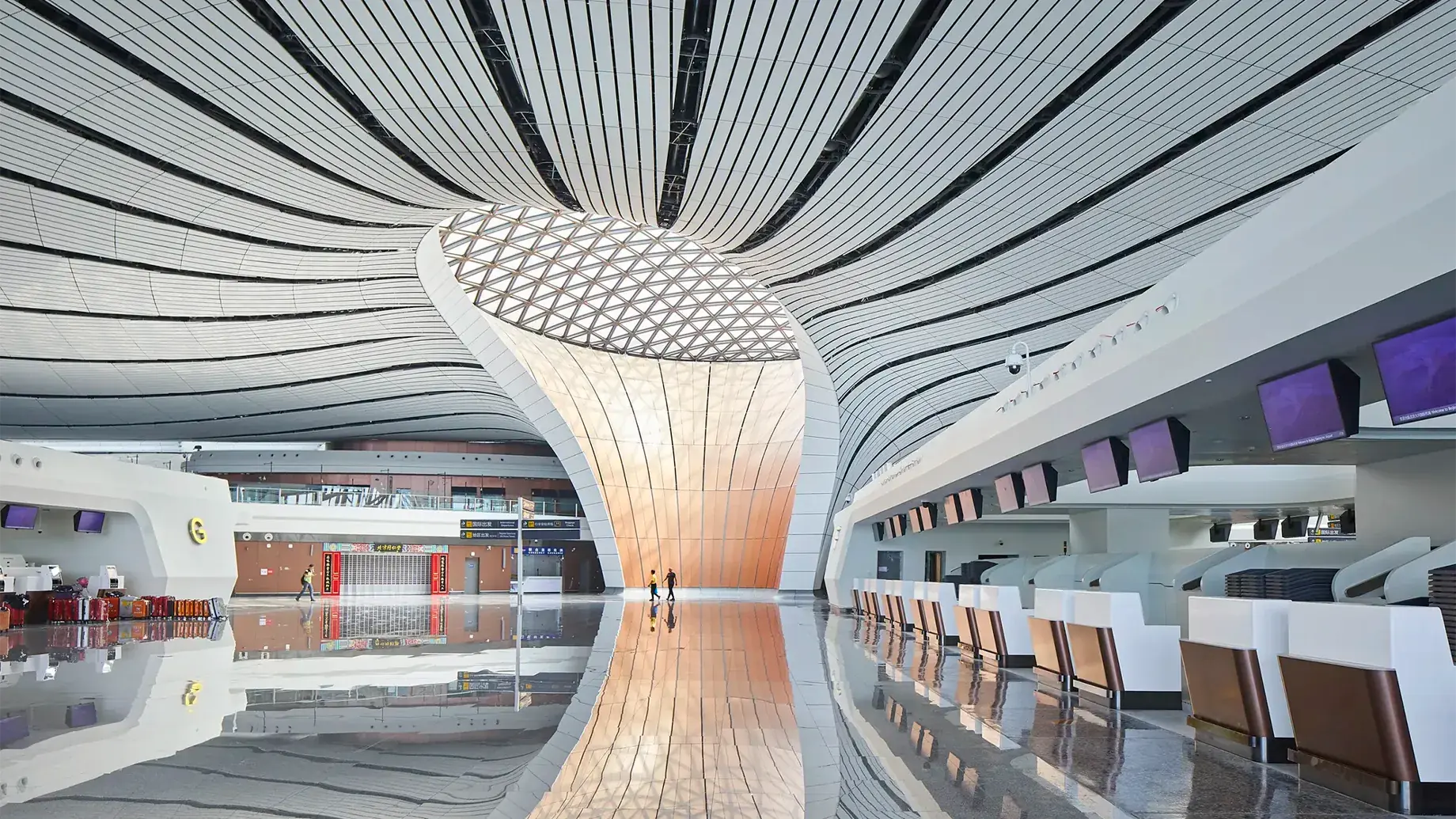
Didi (Ride-Hailing)
For anything a subway or bus doesn't cover, Didi—China's Uber equivalent—is fast, cashless, and available in English.
- Download the Didi app and switch it to English.
- Book and pay in-app—no cash needed.
- Match the license plate shown in the app before getting in.
Mobile Pay: Your Real "Transit Card"
Unlike Japan's nationwide IC cards, China's city transit cards generally don't work outside the city that issued them. In practice, most travelers get by on mobile pay alone.
Skip the transit card: Alipay and WeChat Pay QR codes work on subways, buses, taxis, and Didi in every major city, plus shops, restaurants, and vending machines nationwide.
- Both apps now offer a tourist mode (Alipay's "Tour Pass" / WeChat Pay's international version) that links a foreign credit or debit card—no Chinese bank account required.
- Top up or link your card directly in the app; transfers between the two systems aren't possible, so pick one as your primary.
- Carry a small amount of cash as backup—some older shops, markets, and rural areas still don't accept mobile pay.
- Foreign-friendly ATMs are available at Bank of China and ICBC branches in major cities.
Alipay verification isn't instant. You can upload your passport and set up Tour Pass before your trip, but it will show as "unverified" until you complete facial recognition verification—which can only be done once you've actually landed in China (via the app's ID-verification prompt). Until then, your daily spending limit is capped. Do this on your first day, ideally with Wi-Fi, so you're fully unlocked before you need to pay for anything significant.
If you'd rather have a physical transit card as a backup (or your phone dies mid-trip), here's how to get one:
- Buy at any staffed subway station ticket window in the city you're visiting—look for the city's own card (e.g. Beijing's Yikatong, Shanghai's Metro Card, Chengdu's Tianfutong). You'll pay a small refundable deposit plus your top-up amount.
- Top up with cash at station machines or the ticket window; most machines don't take foreign cards.
- Refund the deposit at a staffed window before you leave the city, if you want the deposit back—cards aren't usable once you cross into a different city's system.
Useful subway apps: Beyond Amap and Baidu Maps, dedicated metro-only apps like Metro Man (地铁通) and Explore Metro show live line maps, transfer times, and fares for every Chinese city's system in one place—handy for quickly checking a route without loading a full navigation app.
China's Seasons: Weather & Festivals
China spans a huge range of climates, so "the best time to visit" really depends on where you're going. Here's what to expect region by region, and when to visit for the best mix of events and weather:




Tip: Avoid traveling during Golden Week (early October) and Chinese New Year unless you enjoy crowds—transport and hotel prices spike and trains sell out fast. Book well ahead on Trip.com if you must travel then.
Cities & Regions to Explore
Imperial history, futuristic skylines, and otherworldly landscapes all sit within a few hours of each other by bullet train. Whether you're a history buff, foodie, or nature seeker, there's a region that feels tailor-made for you.
Beijing – The Imperial Capital

Beijing is where China's past and present sit side by side. The Forbidden City takes the better part of a day to properly cross—courtyard after courtyard of red walls and gold-tiled roofs, built to make visitors feel small on purpose. Climb a section of the Great Wall at Mutianyu or the wilder, less-restored Jinshanling, both a couple of hours outside the city, and get lost for an afternoon in the hutongs, the capital's narrow grey-brick alleyways, where old men play chess on upturned crates and the smell of coal smoke and street food drifts between courtyard homes. Round it out with the Temple of Heaven at dawn, when locals come to practice tai chi under its circular halls, and a proper Peking duck dinner in the evening. Beijing is dense with history but increasingly modern too—world-class subways run directly beneath 600-year-old palace walls.
Shanghai – China's Modern Face

Shanghai is China's showcase of ambition—glittering skyscrapers rise across the river from colonial-era architecture. Walk The Bund at night, when the century-old banks along the waterfront light up in gold facing the neon towers of Pudong across the river, then lose yourself in the rockeries and koi ponds of Yu Garden before shopping (or just people-watching) along Nanjing Road. The leafy, plane-tree-lined French Concession is perfect for a slower afternoon of cafes and boutiques tucked into old villas. Shanghai is also China's easiest city for first-time visitors, with excellent English signage and infrastructure.
Xi'an – Home of the Terracotta Warriors

Xi'an was the starting point of the ancient Silk Road, and its biggest draw is the astonishing Terracotta Army—thousands of life-sized soldiers, horses, and chariots, each with individually sculpted faces, discovered by farmers digging a well in 1974 and still being excavated today. Back in the city, rent a bike and circle the complete ancient City Wall at sunset, then spend the evening in the Muslim Quarter, where the alleys around Beiyuanmen fill with smoke, sizzle, and shouted orders as vendors grill lamb skewers and hand-pull noodles late into the night.
Chengdu – Pandas & Sichuan Spice
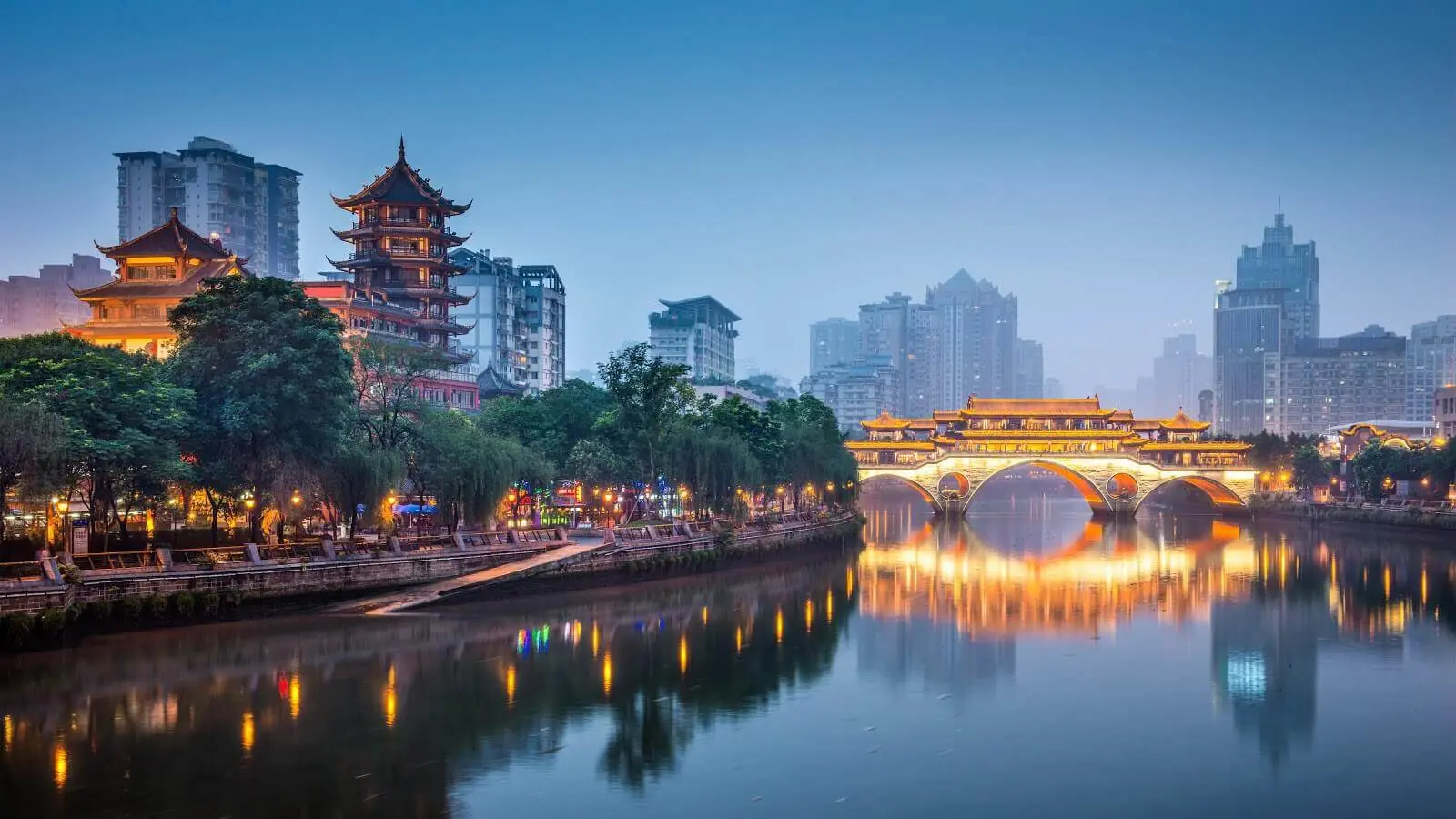
Chengdu moves at its own relaxed pace—famous for giant pandas, fiery Sichuan food, and a deep teahouse culture. Visit the Chengdu Research Base of Giant Panda Breeding in the morning to catch the pandas at their most active, munching bamboo before the midday heat sends them back to napping, then spend the afternoon in a traditional teahouse, cup of jasmine tea in hand, or getting a Sichuan-style ear-cleaning. Come hungry: this is the birthplace of mapo tofu, and the numbing, tingling hit of Sichuan peppercorn shows up in nearly everything on the table.
Guilin & Yangshuo – Karst Mountain Scenery

Guilin's dramatic limestone karst peaks—hundreds of them, rising straight out of flat farmland like something out of a scroll painting—have inspired Chinese landscape art for centuries, and seeing them in person makes the resemblance obvious. Cruise the Li River to nearby Yangshuo, where the peaks crowd in even closer, then rent a bike and pedal through rice paddies and water-buffalo villages, or climb up to the terraced fields at Longji (Dragon's Backbone), their contours following the hillside like fingerprints. It's one of the most photogenic corners of the country, and easily reached by high-speed rail.
Zhangjiajie – Otherworldly Sandstone Peaks

Zhangjiajie's thousands of soaring quartz-sandstone pillars—reportedly an inspiration for the floating mountains in Avatar—make it one of China's most surreal landscapes, especially when morning mist pools in the gorges and leaves only the pillar tops visible. Ride the Bailong Elevator, a glass-walled lift built straight into the cliff face that climbs over 300 meters in under two minutes, take in the Tianmen Mountain glass skywalk and cable car (not for anyone with a fear of heights—the glass walkway clings to a sheer cliff edge), and hike through Zhangjiajie National Forest Park, China's first national forest park. Wear sturdy shoes—there's a lot of stair climbing.
Chongqing – The Mountain Megacity
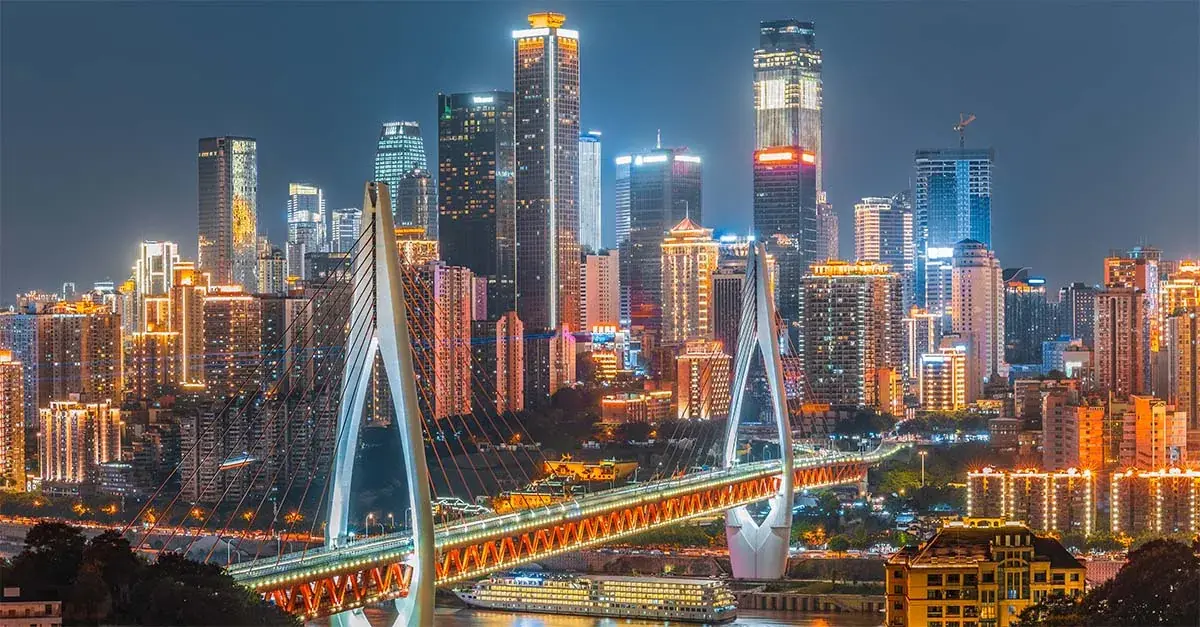
Built across steep hills where the Yangtze and Jialing rivers meet, Chongqing is China's most disorienting—and most fun—major city, a place where you might enter a building on the sixth floor and exit at street level. Ride the Liziba monorail as it passes straight through an apartment building (yes, actually through it, floors 6 to 8), take the cross-river cable car for skyline views over the water, and brace yourself for the fiery, numbing hotpot that's said to have originated here—the boatmen who first cooked cheap cuts of meat in a peppercorn-laced broth by the docks would recognize it today. Chongqing's tangle of bridges, tunnels, and multi-level streets has earned it the nickname "the 8D city."
Hangzhou – Lakes, Gardens & Tea Culture

Just 45 minutes from Shanghai by bullet train, Hangzhou is built around the serene West Lake, a UNESCO World Heritage site ringed by pagodas, arched bridges, and willow-lined causeways that have drawn poets and painters for a thousand years. Rent a bike to circle the lake at your own pace, wander the terraced tea plantations of the Longjing (Dragon Well) hills—where you can sit down for a cup grown on the slope right in front of you—and stroll the lantern-strung shops of historic Hefang Street. It's an easy, worthwhile day trip—or an overnight escape—from Shanghai.
Food & Drink
China is one of the world's great food destinations, and the cuisine changes dramatically from region to region—what you eat in Sichuan bears little resemblance to what you'll find in Shanghai or Xi'an.
Must-Try Dishes









Tip: Ordering by pointing at photos or dishes at neighboring tables is completely normal—many restaurants also have picture menus or QR-code menus with English translations.
Popular Chains for Convenience
 Haidilao
 Luckin Coffee
 HEYTEA
 Mixue
Mixue Xibei
XibeiTip: Meituan and Dianping (like a Chinese Yelp/DoorDash) are hugely useful for reviews, reservations, and food delivery straight to your hotel.
Culture & Etiquette
Visiting China is a joy, but understanding a few cultural norms can make your experience smoother and more respectful. Here's what to keep in mind:
Tech & Apps
China's daily life runs on a small set of "super-apps," and having the right ones installed—plus a working VPN—makes the difference between a frustrating trip and a seamless one.
China is a country of contrasts—where ancient wonders meet futuristic megacities, and a bullet train can carry you from a 2,000-year-old army of clay soldiers to a glass skywalk over sandstone peaks in a single day. From navigating the high-speed rail to savoring regional street food, the little details are part of what makes traveling here so memorable.
Whether you're wandering the hutongs of Beijing, cruising the Li River, or riding a cable car above Zhangjiajie's peaks, China offers endless discoveries for every kind of traveler. With the practical tips in this guide, you'll be ready to explore with confidence and appreciation.
Enjoy your journey—yí lù píng ān! (一路平安)