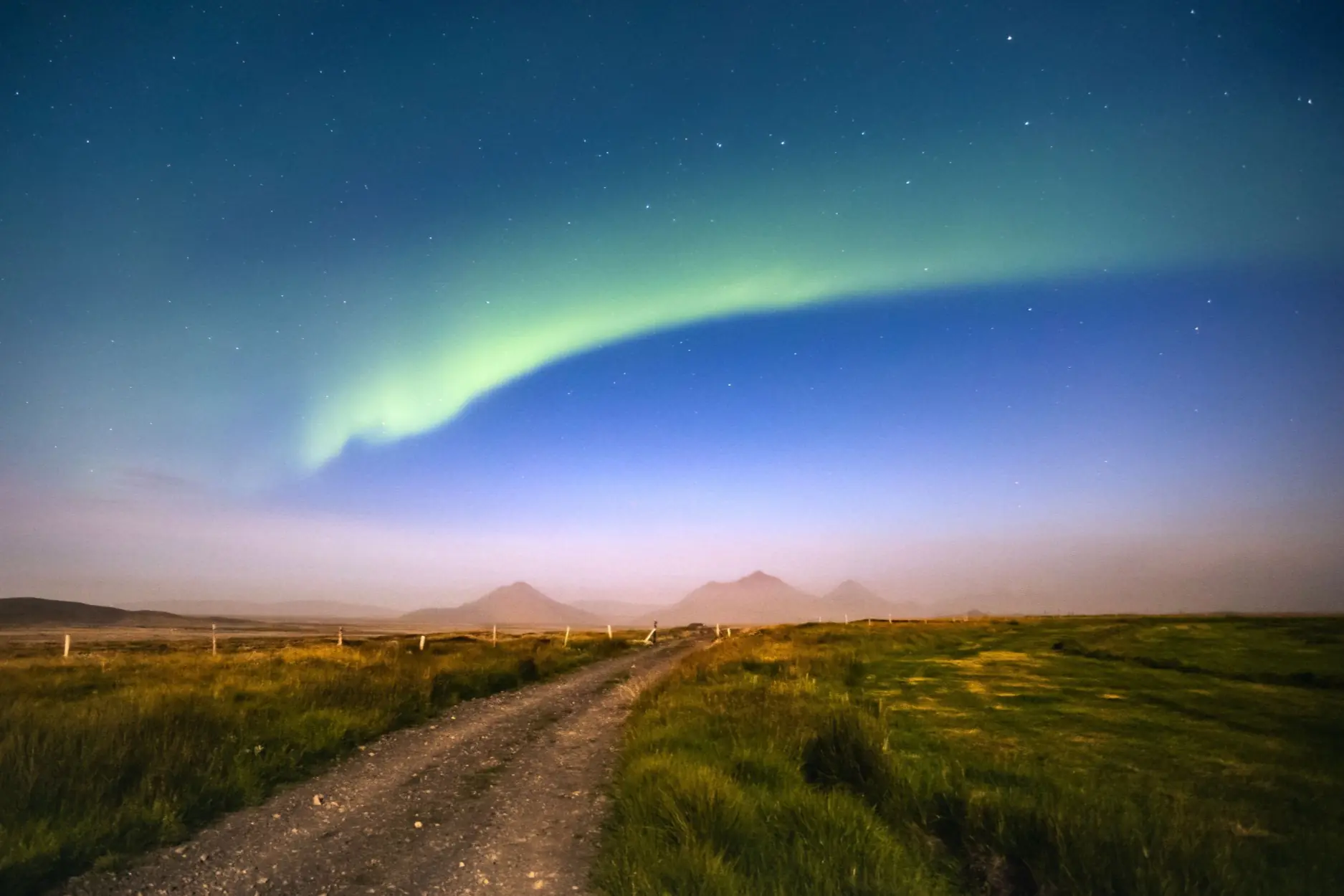
There's a moment you never forget: the sky goes quiet, then a pale smudge overhead sharpens into a ribbon of green, twisting and pulsing as if some vast curtain caught the wind. That's the aurora—and chasing it is the great winter pilgrimage. The catch is that the lights answer to nobody; no one can promise you a show. But some corners of the far north stack the odds hugely in your favor, pairing long dark nights with clear skies and wide-open horizons. Here are the places worth pointing yourself at this winter—a companion to our winter 2026/27 roundup.
Table of Contents
- Tromsø, Norway
- Abisko & Swedish Lapland
- Rovaniemi & Finnish Lapland
- Iceland
- Yukon, Canada
- Fairbanks, Alaska
- The Lofoten Islands, Norway
- Chasing the Lights: Tips
1. Tromsø, Norway – The Easy Classic
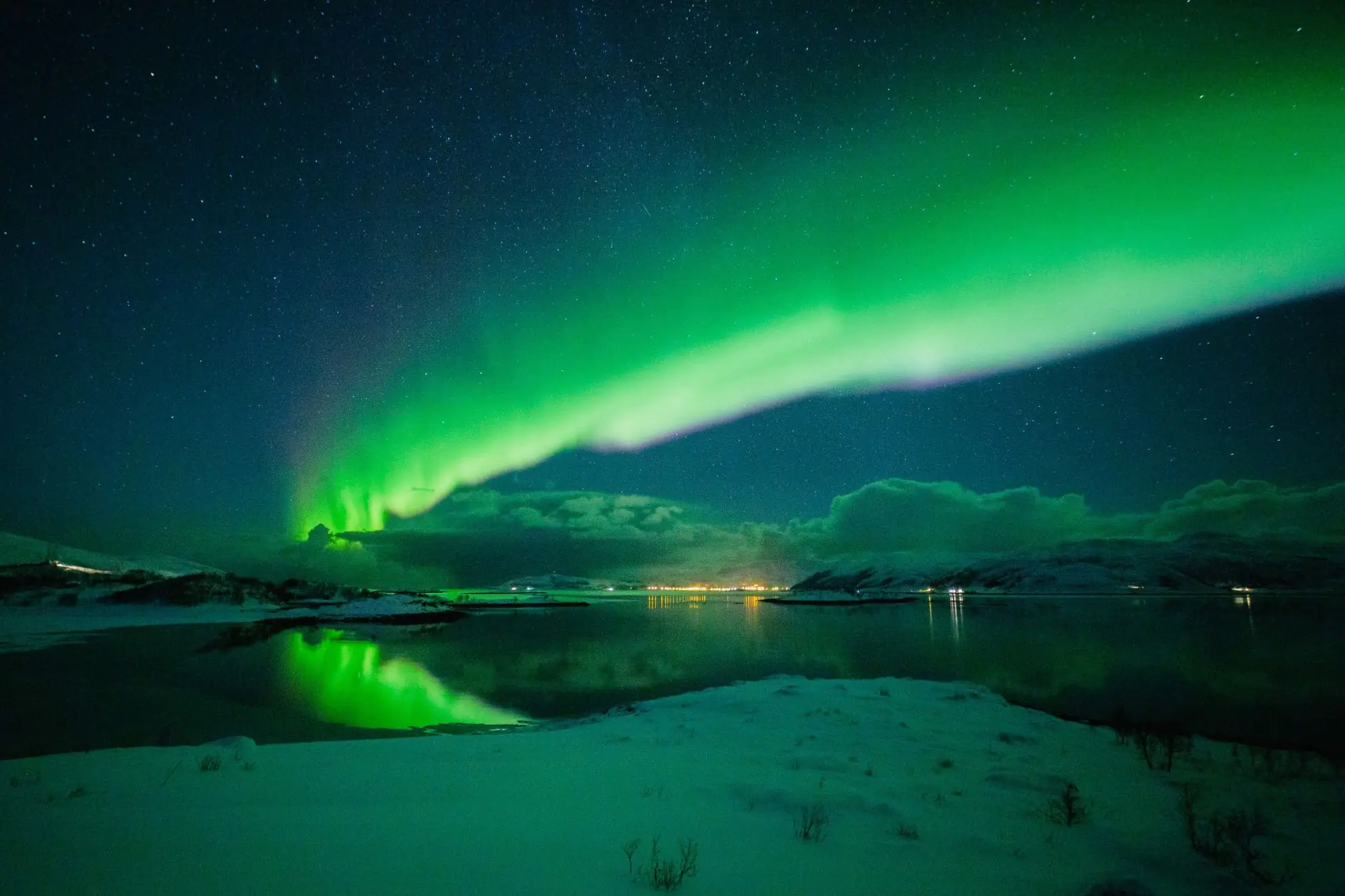
If you want the aurora without the expedition, start here. Tromsø sits far above the Arctic Circle yet stays gloriously easy to reach—direct flights, real restaurants, a buzzing harbor—so you can watch green veils flare over the fjords one hour and be warming up over a beer on the quay the next. It's the reliable classic for a reason: the city makes the Arctic feel welcoming rather than daunting.
The lights here come with scenery to match. Join a chase tour that drives you inland toward the clearest sky of the night, ride the cable car to the lookout above town, or mush a husky team across the tundra by day. When the clouds roll in over the coast—and they do—a good guide simply chases the weather to a better patch. Sort your flights early; Tromsø's aurora season books out fast.
2. Abisko & Swedish Lapland – The Clear-Sky Bet
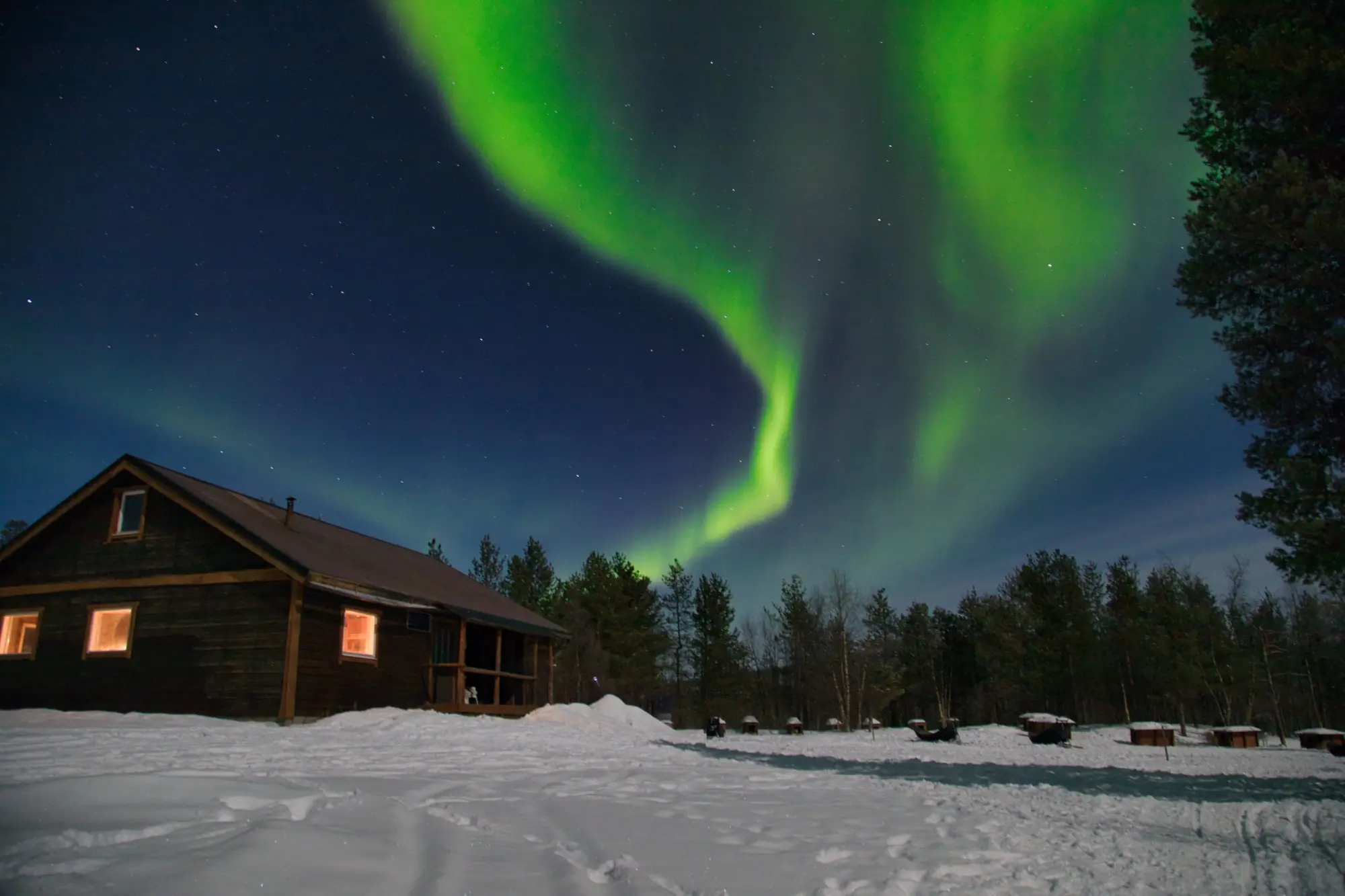
Serious aurora hunters whisper one name: Abisko. This tiny national park in Swedish Lapland sits in a rain shadow of the surrounding mountains, and the result is a famous microclimate—a "blue hole" of clear sky that holds open even when the rest of the region clouds over. On the odds alone, few places on earth do better.
The ritual is the Aurora Sky Station, reached by chairlift up Mount Nuolja, where you stand above the valley lights and wait with nothing but dark horizon all around. Fill the daylight hours with snowshoeing, a dog-sled run, or a night in a wilderness cabin, and keep every evening free. Even the best bet is still a bet—but this is about as good as the gamble gets.
3. Rovaniemi & Finnish Lapland – Aurora From Bed
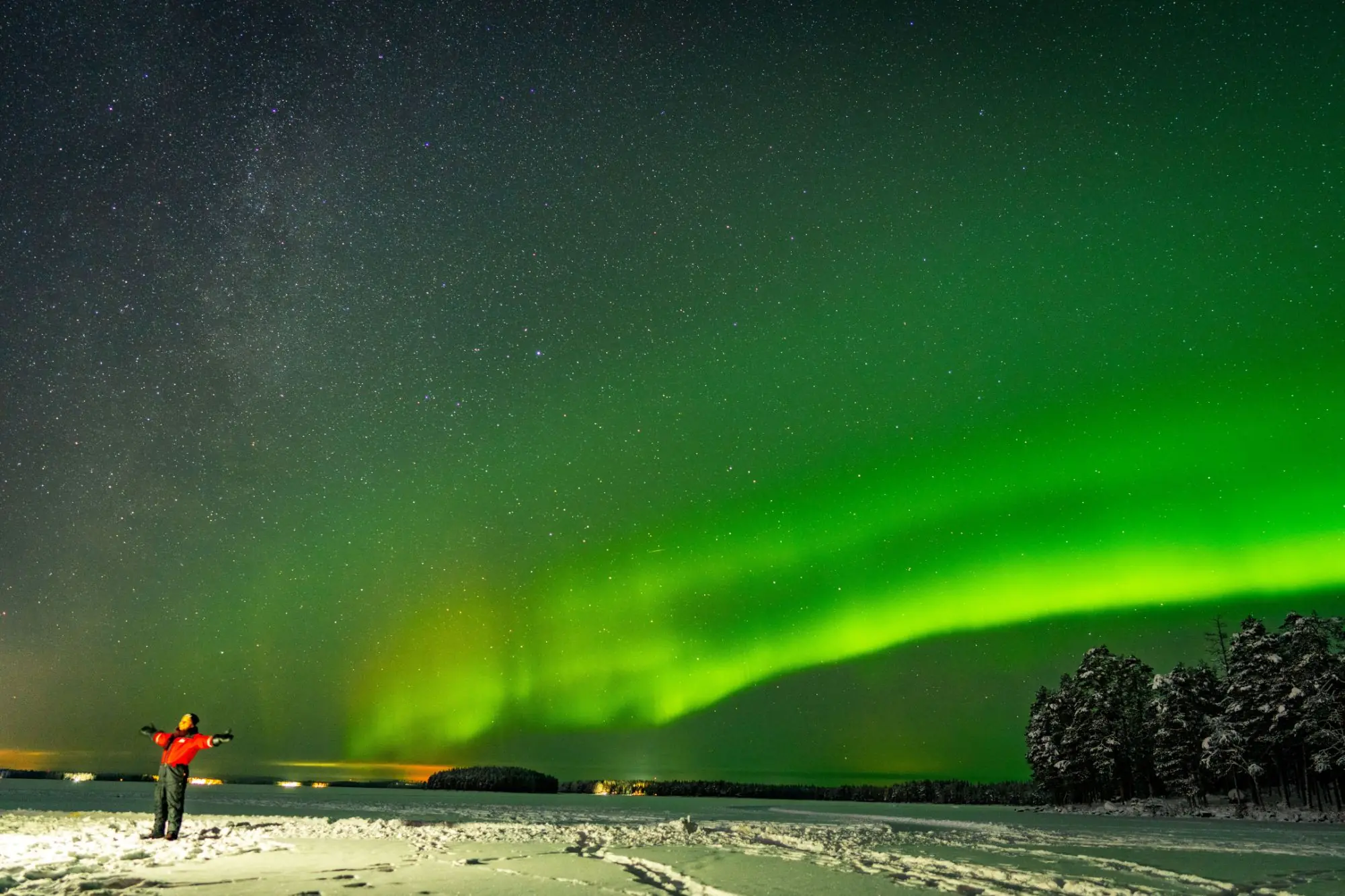
Finnish Lapland turns aurora-watching into pure comfort. The signature stay is a glass igloo—a heated, glass-roofed cabin where you lie back in the warmth and let the sky do the work, so if the lights appear at 2 a.m. you don't miss them for the sake of staying cozy. It's the softest way imaginable to wait out a clear night.
Rovaniemi, the regional hub, doubles as the official home of Santa Claus, which makes this the easy pick for families chasing the lights. Spend the short days on a reindeer sleigh or a snowmobile run to a frozen lake, thaw out in a wood-fired sauna, then settle in and watch. Book the glass-roofed cabins painfully early—they are the first beds in Lapland to vanish.
4. Iceland – Aurora & Waterfalls
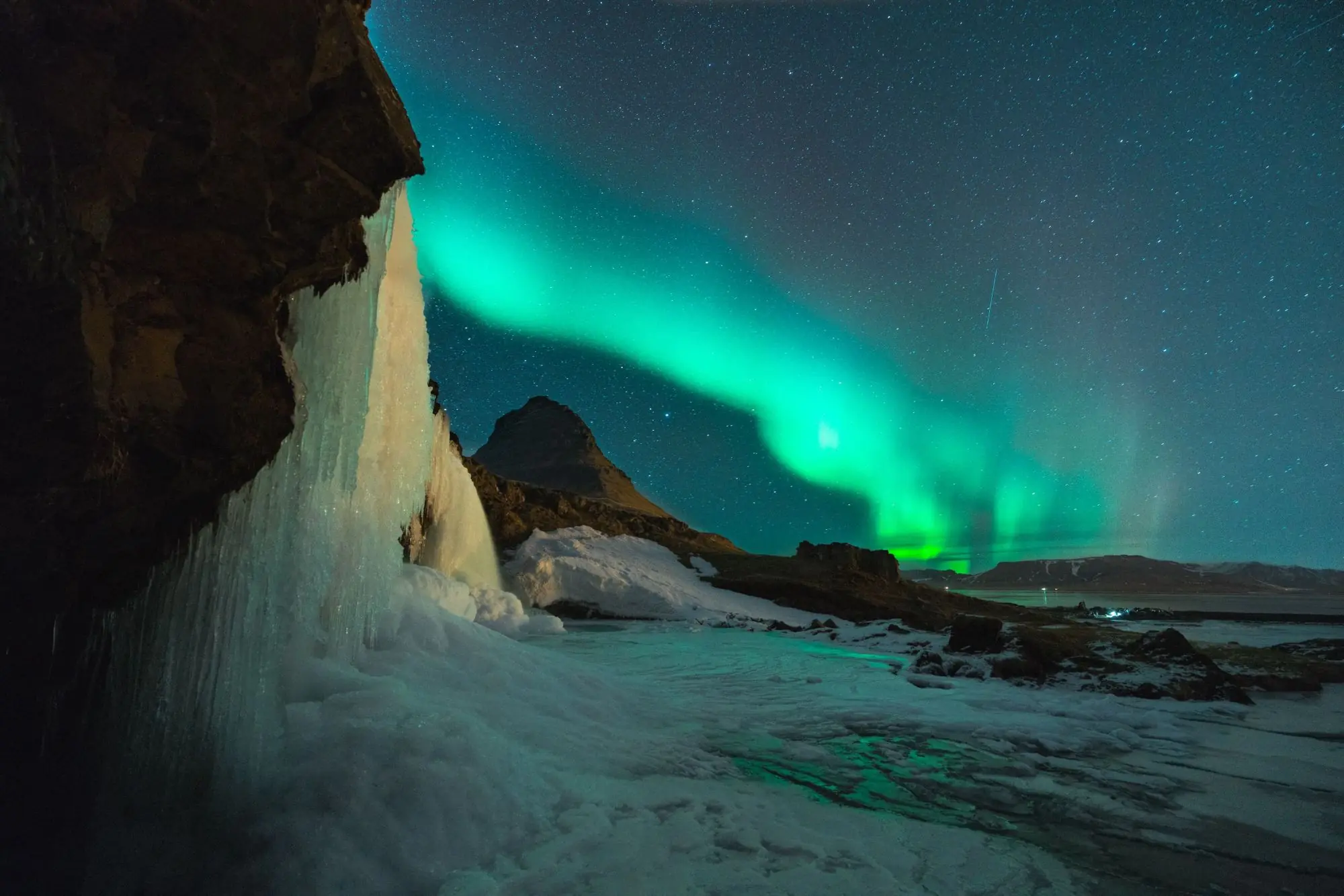
Iceland hands you two trips in one. By night you chase the aurora across black-sand coasts and lava fields; by day you've got thundering waterfalls, glaciers, and geothermal pools steaming in the cold. Few places let you fill the daylight so dramatically while you wait for dark—and the island is compact enough to road-trip between the sights.
The move is to rent a car and drive out from Reykjavík along the Ring Road, away from the city glow, then soak in a geothermal pool while you watch the sky—there is no better way to pass the hours until the lights flicker on. Iceland's weather is famously moody, so give yourself several nights and stay mobile. When a clear window opens, you'll want to already be chasing it.
5. Yukon, Canada – Wide Dark Skies
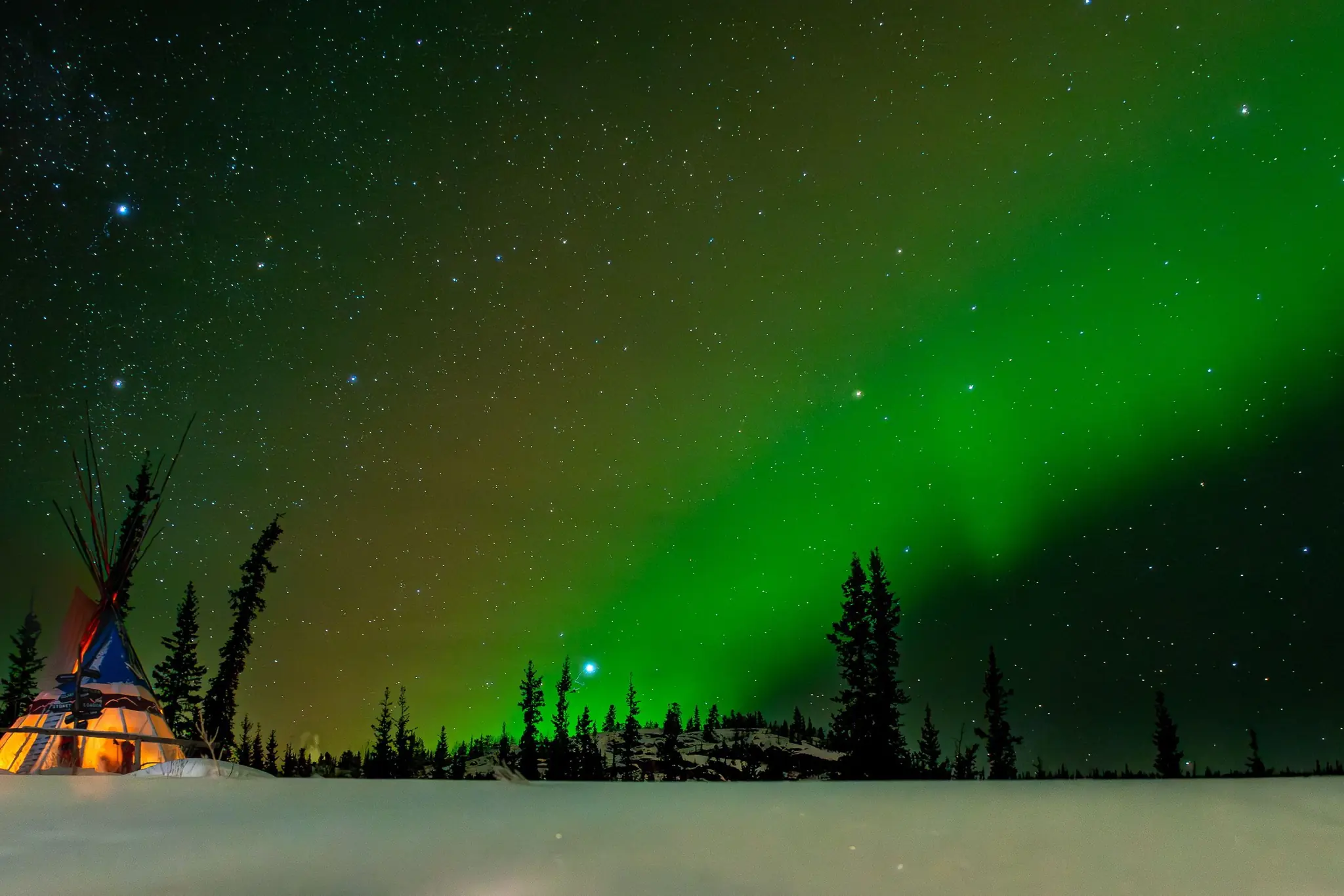
For sheer wilderness, point yourself at Canada's Yukon. Up here around Whitehorse the skies run vast, dark, and dry, with so little light pollution that the aurora reflects off frozen lakes in near-total silence. It's the kind of emptiness that makes the show feel like it's being staged for you alone.
The days are just as good as the nights. Hitch up a dog-sled team through the boreal forest, then end the evening sunk to your chin in a steaming hot spring while the green glow builds overhead. Many lodges run heated aurora cabins out under open sky, so you can wait in comfort for the clouds to clear and the lights to climb.
6. Fairbanks, Alaska – Under the Oval
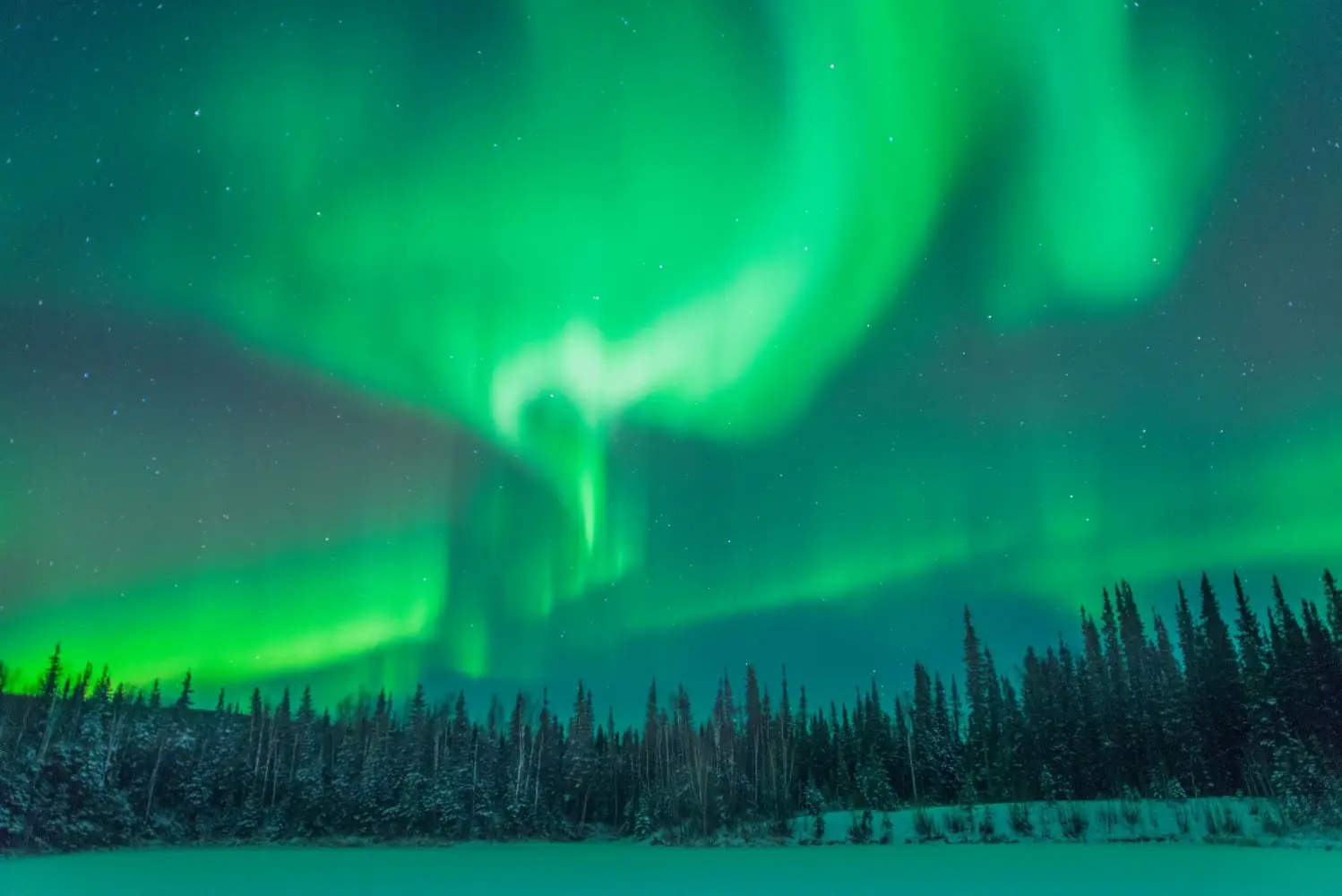
If hit rate is what you're after, Fairbanks is hard to beat. The city sits almost directly beneath the auroral oval—the ring where the lights are most active—which means that on any clear, dark night through the season your chances are genuinely high. Stay a few nights and the odds tilt firmly your way.
Local lodges lean all the way into it, with aurora wake-up calls and cabins built for the long wait. Fill the days with a dog-sled run or a soak at nearby Chena Hot Springs, then head somewhere dark and simply look up. It's about the most dependable aurora address in North America—though, as always, the sky still makes the final call.
7. The Lofoten Islands, Norway – Lights & Drama
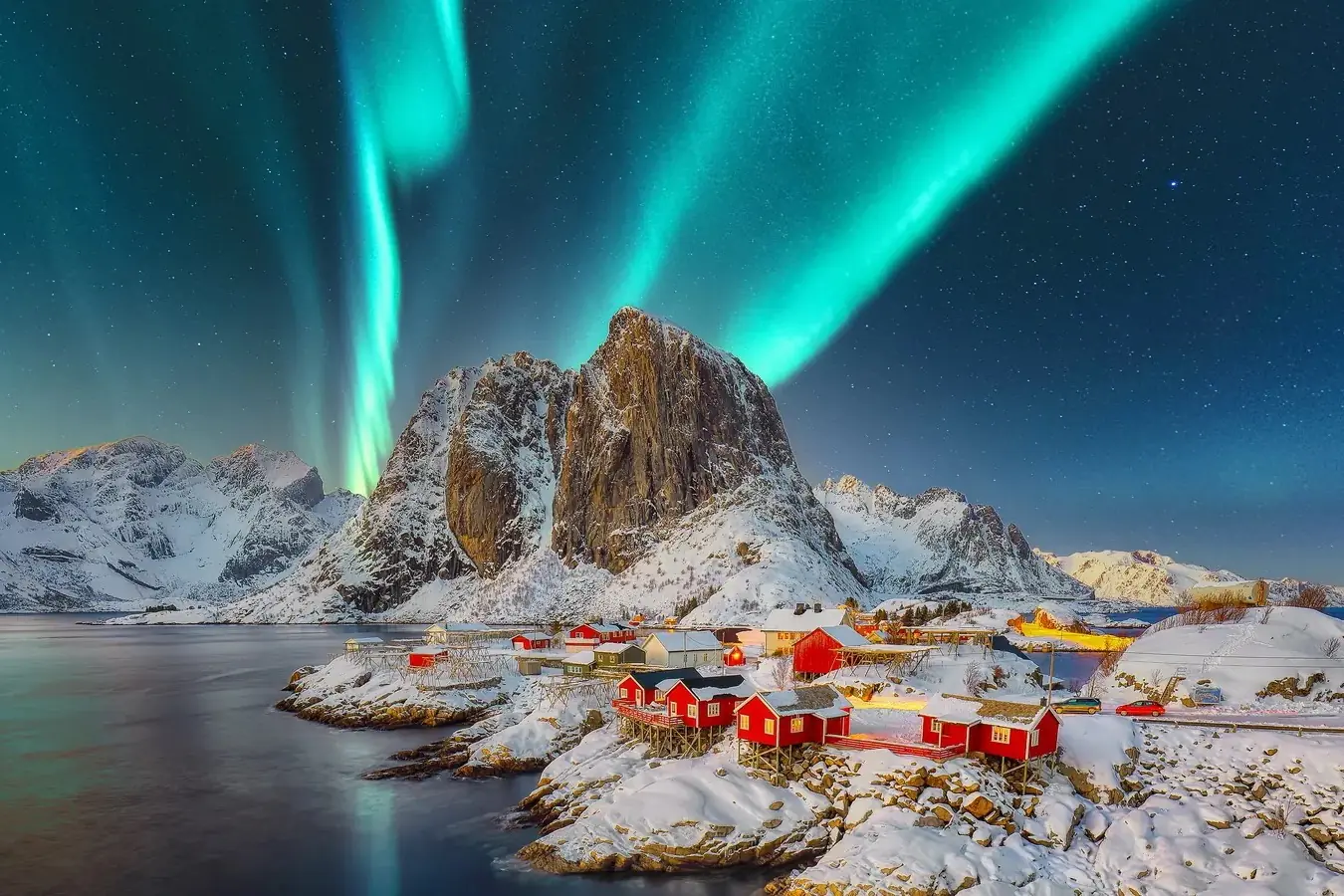
Save the most cinematic for last. Norway's Lofoten Islands throw jagged peaks straight up out of the sea, and when the aurora unspools above them—mirrored in a still fjord, framing a cluster of red fishing cabins—it's the kind of scene that ends up on magazine covers. The scenery alone would justify the trip; the lights make it unforgettable.
Base yourself in a traditional rorbu—a fisherman's cabin on stilts over the water—and wander the beaches and harbors by day before the sky goes dark. Being coastal, Lofoten can cloud over fast, so stay flexible and give it time. When it all aligns, no aurora backdrop on earth beats it. Sort your stays ahead; the photogenic cabins go quickly.
Chasing the Lights: Tips
- Go in the dark months. Aurora season runs roughly late September to March, when the far-north nights are long enough for real darkness. You need a clear, dark sky—so the deeper into winter and the farther from a full moon, the better your window.
- Watch the forecast, ditch the glow. Check the KP index and the aurora forecast each evening, then get well away from town lights. A guided chase tour is worth it precisely because the driver will drive you to wherever the sky is clearest that night.
- Give it several nights—and look up. No one can promise the aurora, so stack the odds: plan three or more nights, keep your evenings free, and actually step outside and watch. Lock your flights and stays early, since aurora season sells out fast.
Chase the lights with the right expectations and the north rarely disappoints: even a quiet night under a sky full of stars is worth the trip, and when the curtains finally ignite, you'll understand why people come back again and again. Pick your spot, pack your warmest layers, and go look up.